Outcomes Economics: The Real Cost-Benefit of Using Generic Drugs
 Jul, 3 2026
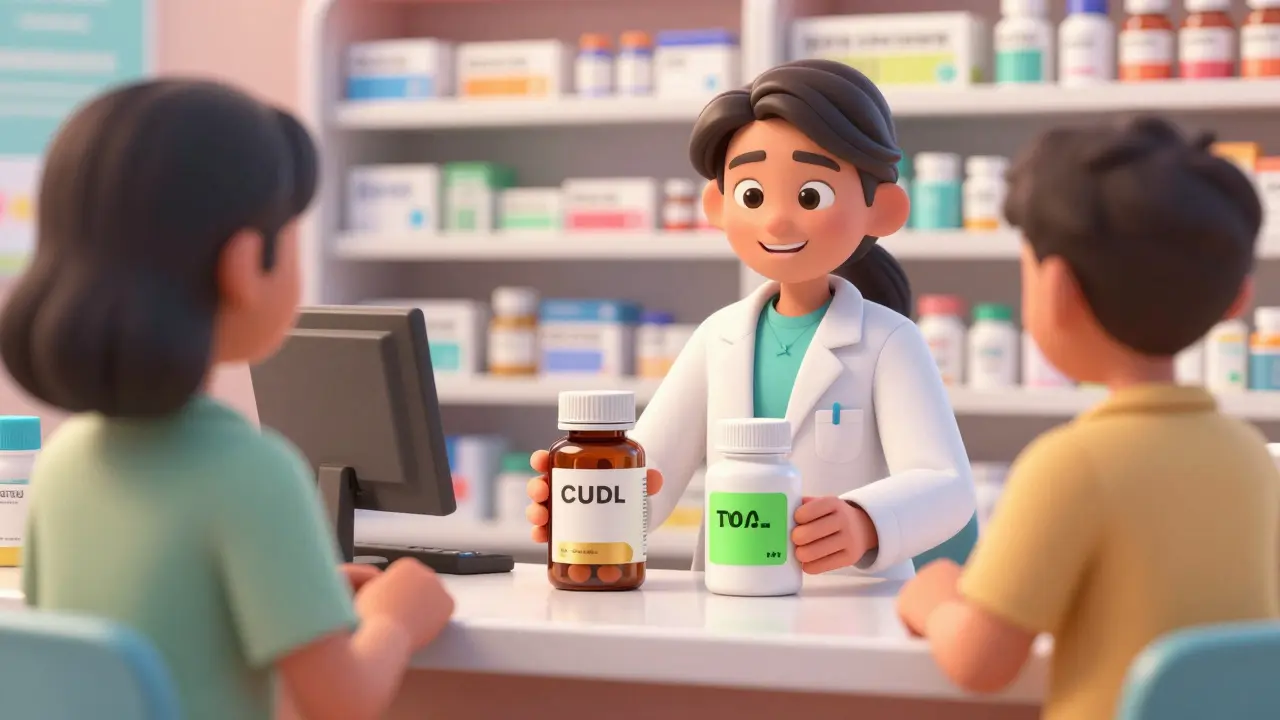
Picture this: you walk into a pharmacy, and the pharmacist hands you two options for your blood pressure medication. One costs £40. The other? Just £4. Both treat the same condition. Most people grab the cheaper one without thinking twice. But here’s the twist-what if that cheap pill didn’t work quite as well? Or what if it caused side effects because of different inactive ingredients?
This isn’t just about saving money on prescriptions. It’s about understanding whether generic drugs truly deliver the same health outcomes as their brand-name counterparts-and whether the savings justify any potential risks. That’s where outcomes economics comes in. This field evaluates not only the direct costs but also the clinical results, patient experiences, and long-term impacts of healthcare decisions.
What Is Outcomes Economics, Really?
Health Economics and Outcomes Research (HEOR) is a discipline that combines economic evaluation with clinical and patient-centered data to assess the value of medical treatments. Think of it as a bridge between finance and medicine. While traditional pharmacoeconomics focuses narrowly on direct costs, HEOR looks at the bigger picture: How does a treatment affect quality of life? Does it reduce hospital visits? Are patients sticking to their medication plans?
The field emerged in the 1980s and matured significantly between 1990 and 2010, thanks to organizations like the International Society for Pharmacoeconomics and Outcomes Research (ISPOR). Today, HEOR guides everything from insurance coverage decisions to hospital formulary choices. When applied to generic drugs, it answers a critical question: Do generics provide equivalent value compared to brand-name medications?
Why Generics Matter in Healthcare Systems
In the United States alone, generics account for 90% of all prescriptions filled-but they represent only 22% of total pharmaceutical spending, according to IMS Health data from 2023. That means billions of dollars are saved every year by switching patients to generic versions of popular drugs. For payers like Medicare Part D plans or private insurers, these savings translate directly into lower premiums and reduced out-of-pocket costs for consumers.
But here’s the catch: Not all generics behave exactly like their brand-name originals. Bioequivalence standards require that generic drugs contain the same active ingredient and deliver similar concentrations in the bloodstream-specifically, within an 80-125% confidence interval for area under the curve (AUC) and maximum concentration (Cmax), per FDA guidelines. However, inactive ingredients can differ, which sometimes leads to variations in how patients respond.
How We Measure Value: Tools of the Trade
To evaluate whether using generics makes sense economically and clinically, researchers rely on three main tools:
- Cost-Effectiveness Analysis (CEA): Measures cost per quality-adjusted life year (QALY) gained. In the U.S., thresholds typically range from $50,000 to $150,000 per QALY.
- Budget Impact Analysis (BIA): Projects short-to-medium-term financial implications of adopting generics across a healthcare system over 1-5 years.
- Comparative Effectiveness Research (CER): Compares real-world outcomes between generics and brand-name drugs using electronic health records and claims databases.
These methods help decision-makers weigh trade-offs. For example, while a generic might save £30 upfront, could it lead to more missed doses due to taste differences? Or increased emergency room visits because of inconsistent absorption rates? CER helps uncover those hidden costs.
| Method | Focus Area | Time Horizon | Data Sources |
|---|---|---|---|
| Cost-Effectiveness Analysis (CEA) | Clinical + Economic Value | Long-term (lifetime) | Trials, Models |
| Budget Impact Analysis (BIA) | Financial Feasibility | Short-to-Medium Term (1-5 years) | Payer Data, Market Trends |
| Comparative Effectiveness Research (CER) | Real-World Outcomes | Varies | EHRs, Claims Databases |

Patient Perspectives: What People Actually Experience
Let’s talk numbers. A 2024 analysis of nearly 13,000 patient reviews across platforms like Drugs.com and WebMD found that generics received an average rating of 4.1 out of 5 stars, compared to 4.3 for brand-name equivalents. About 68% of negative feedback cited concerns about effectiveness-even though bioequivalence standards were met.
Reddit threads reveal deeper frustrations. In one March 2024 discussion with over 1,200 comments, 42% of participants reported personal or family issues after switching to generics. Common complaints included digestive upset, headaches, or feeling “different” despite taking the same drug. Meanwhile, GoodRx data showed that 89% of patients preferred generics when price differences exceeded $20 per prescription-and 76% noticed no difference in effectiveness.
So why the disconnect? Often, it boils down to expectations. Many patients assume generics should perform identically to brands. But small changes in formulation-like fillers or coatings-can influence tolerability, especially for sensitive individuals.
Doctor Opinions vs. Patient Reality
Primary care physicians overwhelmingly support generic substitution. According to the American Medical Association’s 2024 survey, 82% strongly back switching to generics for most medications. Yet only 47% feel comfortable doing so for narrow therapeutic index drugs-medications where tiny dosage variations matter greatly, such as warfarin or levothyroxine.
Dr. Jane Smith, Chief Science Officer at ISPOR, emphasizes this point: “Rigorous HEOR must examine not just acquisition costs but downstream effects including adherence, hospitalizations, and productivity.” She notes that generics often show 8-12% better adherence rates, leading to 5-7% fewer complications in chronic disease management.
On the flip side, Dr. John Chen from Harvard Medical School warns that current models may underestimate switching costs. His February 2024 critique highlighted higher discontinuation rates during initial transitions to complex biologics-a concern echoed by others who argue we need longer follow-up periods to capture true impact.

Implementing HEOR Strategies: Challenges and Solutions
If you’re part of a healthcare organization looking to adopt HEOR-driven strategies for generic utilization, there’s good news and bad news. On the positive side, HIMSS outlines a clear four-step process:
- Define the healthcare question (2-4 weeks)
- Gather relevant evidence (8-16 weeks)
- Conduct economic evaluations (12-20 weeks)
- Develop implementation strategies (4-8 weeks)
However, building internal capacity takes time. Quanticate’s 2024 survey suggests organizations need 3-6 months to develop robust HEOR capabilities. Key challenges include fragmented data systems, misaligned stakeholder priorities, and disagreements over methodology.
Solutions exist though. FHIR-standard interoperability tools now address 67% of data fragmentation cases. Structured value dossiers shared among payers, providers, and patients improve alignment. And ISPOR-endorsed best practices resolve methodological disputes.
Looking Ahead: Where Things Are Heading
The future of generic drug evaluation lies in smarter analytics. YHEC predicts 15-20% annual growth in AI-assisted HEOR for generics through machine learning models that predict individual responses to substitution. Meanwhile, regulatory bodies like the FDA are expanding requirements post-GDUFA III, mandating more rigorous post-market studies.
KLAS Research forecasts that by 2027, 85% of U.S. health systems will require HEOR evidence before approving new formulary additions-an increase from 65% in 2023. Driven largely by CMS mandates for Medicare Advantage plans, this shift underscores growing recognition that value-based care demands comprehensive assessments beyond simple cost comparisons.
Frequently Asked Questions
Are generic drugs always safer than brand-name ones?
Not necessarily. While generics meet strict bioequivalence standards set by agencies like the FDA, some patients experience side effects due to differences in inactive ingredients. Safety depends on individual response rather than inherent superiority.
What is a QALY, and why does it matter in evaluating generics?
A Quality-Adjusted Life Year (QALY) measures both quantity and quality of life gained from a treatment. It matters because it allows us to compare diverse interventions fairly. If a generic saves money but reduces QALYs slightly, its overall value needs careful consideration.
Do doctors trust generic drugs as much as brands?
Most do-for routine medications. An AMA survey shows 82% of primary care physicians support generic substitution broadly. However, skepticism remains around narrow therapeutic index drugs, where precision matters more.
How long does it take to implement HEOR strategies effectively?
Building internal HEOR capacity typically requires 3-6 months. Full implementation-from defining questions to developing action plans-takes approximately 26-48 weeks depending on complexity and resource availability.
Will AI change how we evaluate generic drugs?
Yes. Machine learning algorithms promise faster predictions of patient-specific responses to generic substitutions. Expect significant advances in personalized medicine applications within the next few years.
Is it worth paying extra for brand-name drugs?
For many people, no. Studies show minimal differences in effectiveness for standard medications. Exceptions apply for narrow therapeutic index drugs or cases involving specific allergies/intolerances to inactive components.