St. John’s Wort and SSRIs: The Dangerous Risk of Serotonin Syndrome
 Jun, 13 2026
Serotonin Syndrome Symptom Checker
Select any symptoms you are currently experiencing. Note: This assessment assumes recent use of serotonergic agents (SSRIs or St. John's Wort).
Mild / Early Symptoms
Severe / Critical Symptoms
Risk Assessment
Select symptoms to see your risk assessment.
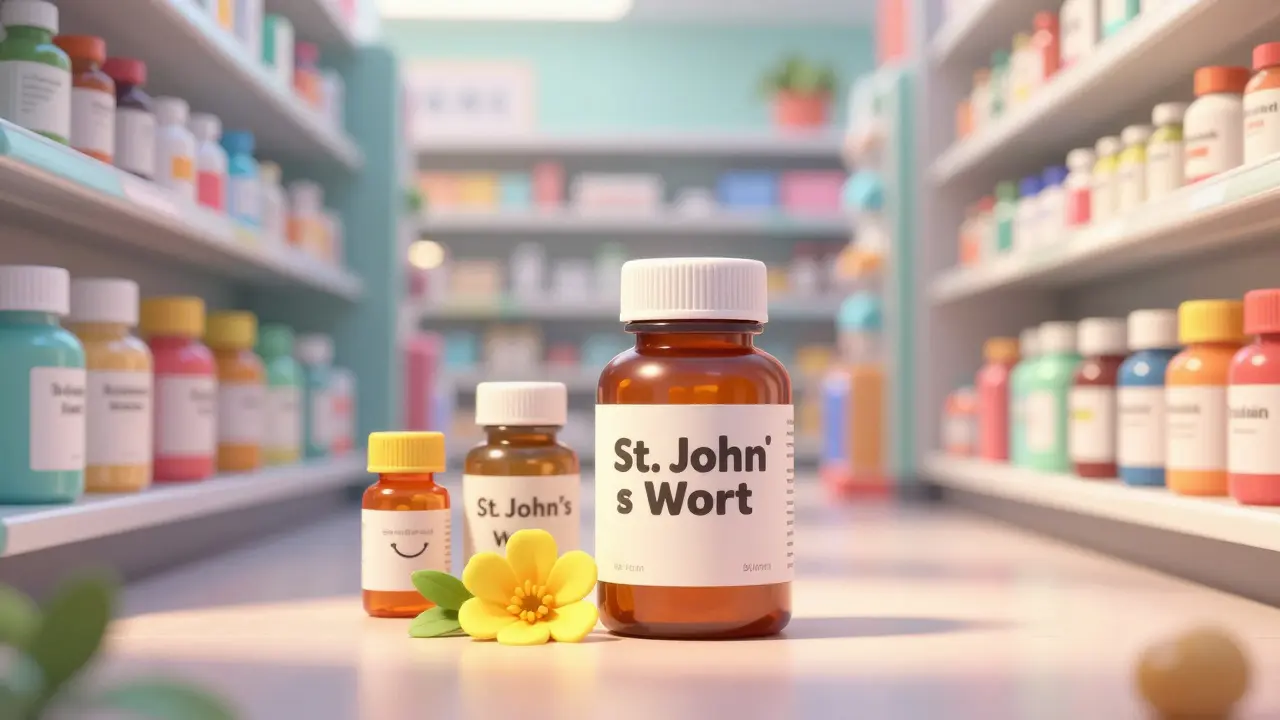
It sounds like a safe, natural fix. You pick up a bottle of St. John’s Wort is an herbal supplement derived from the flowering plant Hypericum perforatum, widely used for mild depression. at the pharmacy because you want to avoid the side effects of prescription medication. Maybe you’re already taking an SSRI for anxiety or depression and think adding this herb will give you that extra boost. It feels harmless. After all, it’s sold in the same aisle as vitamins.
But mixing St. John’s Wort with selective serotonin reuptake inhibitors (SSRIs) is not just ineffective-it can be deadly. This combination creates a perfect storm for Serotonin Syndrome is a potentially life-threatening condition caused by excessive accumulation of serotonin in the central nervous system., a medical emergency that strikes when your brain gets flooded with too much of this neurotransmitter. The risk isn’t theoretical; it’s documented in clinical case reports and warned against by every major health authority, from the FDA to the European Medicines Agency.
How the Interaction Works
To understand why this mix is dangerous, you have to look at what both substances do inside your body. They attack the problem of low mood from two different angles, but they end up crashing into each other.
First, there is the pharmacodynamic effect. Both SSRIs and St. John’s Wort increase serotonin levels. SSRIs block the reabsorption of serotonin, keeping more of it available in your brain. St. John’s Wort acts as a weak monoamine oxidase inhibitor (MAOI) and also inhibits serotonin reuptake. When you take them together, you get an additive effect. It’s like pressing the gas pedal on your car while simultaneously cutting the brakes. Your serotonin levels spike beyond safe limits.
Second, there is the pharmacokinetic mess. St. John’s Wort contains a compound called hyperforin. This substance activates the pregnane X receptor (PXR) in your liver, which triggers the production of cytochrome P450 enzymes, specifically CYP3A4, CYP2C9, and CYP2C19. These enzymes are responsible for breaking down many drugs, including some SSRIs. If St. John’s Wort speeds up the metabolism of your SSRI, your blood levels of the antidepressant might drop, making it seem less effective. Paradoxically, this can lead patients to increase their dose, unknowingly setting themselves up for a severe reaction when the enzyme induction wears off or fluctuates. However, the primary danger remains the direct increase in serotonin activity, which overrides these metabolic changes in terms of immediate toxicity.
Recognizing Serotonin Syndrome
You need to know what to look for. Serotonin syndrome doesn’t always hit like a truck immediately. Symptoms can range from mild discomfort to organ failure within hours or days of starting the combination. The onset typically occurs between 24 hours and 14 days after concurrent use begins.
Mild symptoms often mimic flu-like illness or general unease. You might experience:
- Nausea and diarrhea: Gastrointestinal distress is often one of the first signs.
- Tremors and shivering: A fine shaking in your hands or limbs.
- Sweating (diaphoresis): Excessive sweating even without physical exertion.
- Dilated pupils: Your eyes may appear larger than usual.
If ignored, these symptoms escalate rapidly to severe, life-threatening conditions:
- Hyperthermia: Body temperature soaring above 41.1°C (106°F).
- Rigidity and muscle breakdown: Severe muscle stiffness leading to rhabdomyolysis, where muscle tissue breaks down and poisons the kidneys.
- Confusion and agitation: Mental status changes, hallucinations, or extreme anxiety.
- Irregular heartbeat: Cardiovascular instability that can lead to shock.
The Hunter Serotonin Toxicity Criteria helps clinicians diagnose this. If you have taken a serotonergic agent and exhibit three or more of the following-mental status changes, agitation, myoclonus (muscle twitching), hyperreflexia (overactive reflexes), diaphoresis, shivering, tremor, diarrhea, incoordination, or fever-you likely have serotonin syndrome. This requires immediate emergency care.

Which SSRIs Are Most Dangerous?
Not all SSRIs interact with St. John’s Wort in exactly the same way, but all carry significant risk. The interaction potential depends largely on how your liver metabolizes the specific drug.
| SSRI Name | Metabolism Pathway | Interaction Risk Profile |
|---|---|---|
| Citalopram / Escitalopram | CYP2C19 / CYP3A4 | High. St. John’s Wort induces CYP2C19, potentially altering drug levels while adding serotonergic load. |
| Sertraline | CYP2C19 / CYP3A4 | Very High. Clinical data shows sertraline involved in a majority of severe serotonin syndrome cases linked to this herb. |
| Paroxetine | CYP2D6 | High. While less affected by CYP induction, its strong serotonergic effect creates high additive risk. |
| Fluoxetine | CYP2D6 / CYP2C9 | High. Long half-life means risks persist even if one medication is stopped. |
A 2025 review by the European Psychiatric Association highlighted that severe cases were frequently associated with sertraline and paroxetine. However, don’t assume other SSRIs are safe. The pharmacodynamic overlap-the fact that both drugs push serotonin-is universal across the class. The metabolic differences just change the timing and intensity of the crash.

The "Natural" Trap
Why does this happen so often? Because people trust the word "natural." There is a pervasive myth that herbal supplements are benign. In reality, St. John’s Wort is a potent pharmaceutical agent in disguise. It interacts with far more than just antidepressants.
Because it induces liver enzymes, it reduces the effectiveness of many critical medications:
- Birth Control Pills: It can increase the metabolism of hormonal contraceptives by 30-50%, leading to unplanned pregnancies. Studies show pregnancy rates among users can reach 1.8-4.2 per 100 woman-years.
- Blood Thinners: It lowers INR levels in patients taking warfarin, increasing the risk of clots and strokes.
- Immunosuppressants: For transplant patients, it can reduce cyclosporine and tacrolimus levels by up to 70%, risking organ rejection.
- HIV Medications: It significantly reduces the efficacy of protease inhibitors, compromising viral suppression.
The regulatory gap makes this worse. In the United States, St. John’s Wort is classified as a dietary supplement under the Dietary Supplement Health and Education Act of 1994. This means it does not undergo the rigorous pre-market safety and efficacy testing required for prescription drugs. Manufacturers don’t have to prove it works or that it’s safe to combine with other meds. In contrast, countries like Canada have restricted it to prescription-only status due to these very risks.
What Should You Do?
The guidance from medical authorities is clear and uncompromising: Do not mix them. The American Psychiatric Association explicitly contraindicates the concurrent use of St. John’s Wort with SSRIs. The Cleveland Clinic states that the risks significantly outweigh any potential benefits.
If you are currently taking an SSRI and want to try St. John’s Wort, you must stop the SSRI first. But you can’t just switch instantly. You need a washout period. Dr. B. Peterson and other experts recommend waiting at least two weeks after stopping St. John’s Wort before restarting an SSRI, and vice versa. This allows your liver enzymes to reset and clears the drugs from your system.
However, the most important step is communication. A 2021 study in JAMA Internal Medicine found that only 32.7% of patients disclose their herbal supplement use to their doctors. Many hide it because they fear judgment or believe it’s irrelevant. This silence kills. Tell your doctor about every pill, powder, and tea you consume. Ask specifically: "Does this interact with my current medications?"
If you are struggling with depression and SSRIs aren’t working or causing side effects, talk to your psychiatrist about alternatives. There are non-serotonergic options, therapy modalities like CBT, and lifestyle interventions that don’t carry this lethal interaction risk. Don’t gamble with your neurochemistry based on a label that says "natural."
Can I take St. John’s Wort if I’m on Zoloft (sertraline)?
No. Combining St. John’s Wort with sertraline carries a very high risk of serotonin syndrome. Clinical data indicates sertraline is involved in a significant number of severe cases. You should consult your doctor before making any changes to your medication regimen.
How long does it take for serotonin syndrome to develop?
Symptoms can appear anywhere from 24 hours to 14 days after starting the combination. Mild symptoms like nausea or tremors may start early, progressing to severe issues like high fever and confusion if left untreated.
Is St. John’s Wort regulated by the FDA?
In the US, St. John’s Wort is regulated as a dietary supplement, not a drug. This means it does not require pre-market approval for safety or efficacy. The FDA has issued consumer alerts regarding its interactions, but oversight is limited compared to prescription medications.
Does St. John’s Wort affect birth control pills?
Yes. St. John’s Wort increases the metabolism of hormonal contraceptives, reducing their effectiveness by 30-50%. This has led to documented cases of unplanned pregnancies. Women using oral contraceptives should avoid this herb or use backup contraception.
What is the washout period between St. John’s Wort and SSRIs?
Experts recommend a washout period of at least two weeks. If you are stopping St. John’s Wort to start an SSRI, wait two weeks. If you are stopping an SSRI to start St. John’s Wort, also wait two weeks to allow enzyme levels to normalize and drugs to clear your system.