Red Yeast Rice and Statins: Why Duplicate Therapy Is Dangerous
 Jul, 19 2026
Red Yeast Rice & Statin Interaction Checker
Select your current regimen and habits to evaluate potential interaction risks.
Select options above and click Assess.
Imagine taking a prescription medication to lower your cholesterol, then adding a "natural" supplement that does the exact same thing. It sounds like a safe way to boost results, right? In reality, this combination is one of the most dangerous mistakes people make with heart health. Red yeast rice (RYR) is not just a harmless grain; it contains monacolin K, which is chemically identical to lovastatin. When you take red yeast rice alongside a statin drug like atorvastatin or simvastatin, you are essentially doubling up on the same active ingredient without knowing the exact dose.
This isn't a minor side effect issue. We are talking about a significantly increased risk of muscle damage and kidney failure. If you are considering adding red yeast rice to your current regimen, or if you are already doing it, you need to understand why doctors call this "duplicate therapy" and how to navigate these risks safely.
The Hidden Identity of Red Yeast Rice
To understand the danger, we first have to look at what is actually inside that capsule. Red yeast rice is produced by fermenting rice with the mold Monascus purpureus. For centuries, it was used in traditional Chinese medicine for digestion and blood circulation. But in 1979, Japanese scientist Akira Endo made a discovery that changed everything: he isolated monacolin K from red yeast rice and found it was structurally identical to lovastatin, the first statin drug ever created.
Here is the problem: unlike prescription statins, where every pill contains an exact milligram amount of the drug, red yeast rice is a natural product. The concentration of monacolin K varies wildly depending on how the rice was fermented, the strain of mold used, and even the brand of the supplement. One study found monacolin K levels ranging from undetectable amounts to 34 mg per gram of powder.
When you buy a bottle of red yeast rice, you might be getting 3 mg of monacolin K, or you might be getting 10 mg. You often won't know until it's too late. Prescription statins, by contrast, are standardized. A 20 mg pill of lovastatin always contains 20 mg of the active drug. This unpredictability makes red yeast rice pharmacologically unstable when mixed with other medications.
| Feature | Prescription Statins (e.g., Atorvastatin) | Red Yeast Rice Supplements |
|---|---|---|
| Active Ingredient | Standardized synthetic compounds | Variable monacolin K (identical to lovastatin) |
| Dosing Precision | Exact milligram dosage guaranteed | Highly variable; depends on fermentation |
| Regulation | FDA-approved drugs | Unregulated dietary supplements |
| Contaminants | Strict purity standards | Risk of citrinin (kidney toxin) in some brands |
| LDL Reduction | 20-60% depending on potency | 21-30% (comparable to low-dose statins) |
Why Duplicate Therapy Causes Muscle Damage
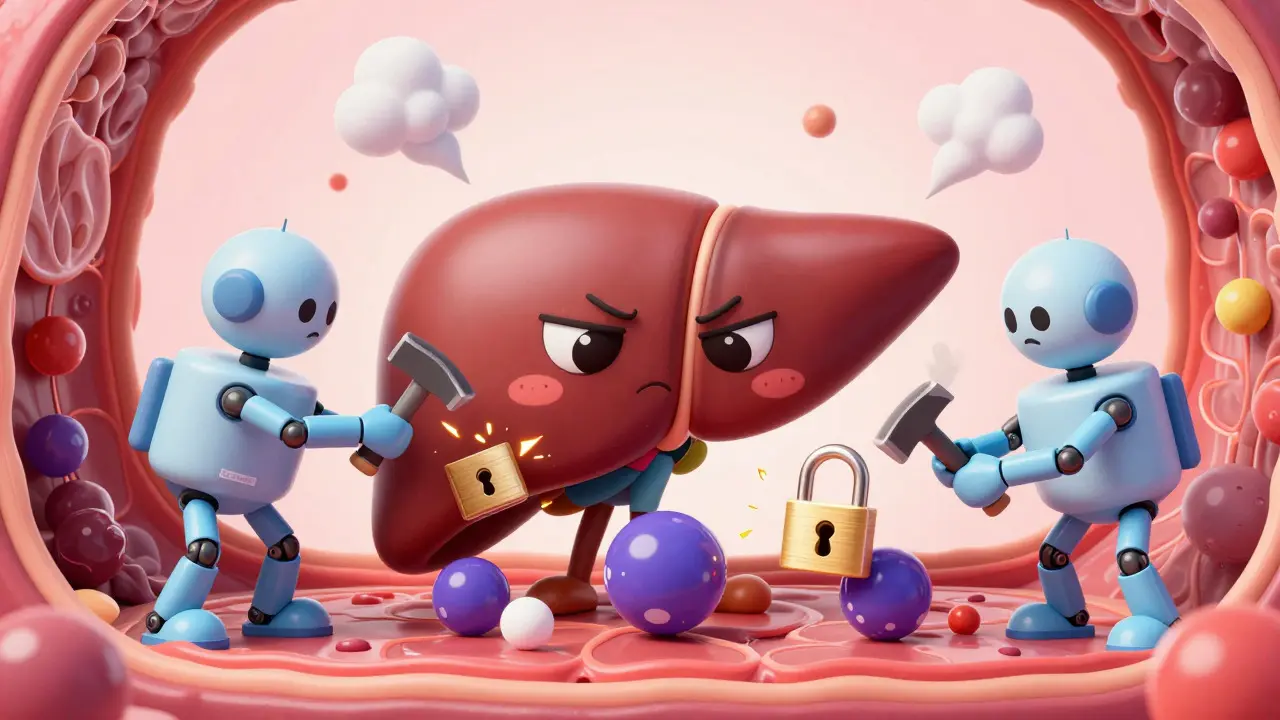
Statins work by inhibiting an enzyme called HMG-CoA reductase, which your liver uses to produce cholesterol. This is effective, but it can also cause muscle pain, weakness, or in rare cases, severe muscle breakdown known as rhabdomyolysis. Rhabdomyolysis releases proteins into your bloodstream that can clog and damage your kidneys.
When you add red yeast rice to a statin, you are hitting that same enzyme twice. The American Heart Association explicitly warns against this combination because the risk of myopathy (muscle disease) increases exponentially. Data from the FDA Adverse Event Reporting System shows a 3.7-fold increase in myopathy risk when these two are combined.
Real-world stories back this up. On online health forums, patients report hospitalizations after combining 1,200 mg of red yeast rice with 20 mg of atorvastatin. Their creatine kinase (CK) levels-a marker of muscle damage-spiked to over 18,000 U/L (normal is under 200 U/L). These aren't outliers; they are documented cases of accidental overdose caused by duplicate therapy.
The Citrinin Contamination Risk
There is another layer of danger beyond the double dose of statin-like compounds. Red yeast rice can contain a toxic substance called citrinin. Citrinin is a nephrotoxin, meaning it damages the kidneys. A 2017 report by the European Food Safety Authority found that 25-30% of commercial red yeast rice products contained detectable levels of citrinin.
If you are already taking a statin, your body is processing a significant chemical load. Adding a potentially contaminated supplement puts extra stress on your kidneys. While prescription statins undergo rigorous testing to ensure they are free from such toxins, supplements do not. The FDA has issued warning letters to multiple manufacturers since 2008 for containing unapproved active pharmaceutical ingredients or contaminants, yet the market persists due to regulatory gaps in the Dietary Supplement Health and Education Act of 1994.
Who Actually Benefits from Red Yeast Rice?
So, is red yeast rice useless? Not entirely. It has a specific place in healthcare, but it is not where most people think it belongs. Red yeast rice is most beneficial for patients who are statin-intolerant. About 7-29% of people cannot tolerate prescription statins due to severe muscle pain or other side effects.
For these individuals, switching from a statin to red yeast rice (monotherapy) can be a viable option. Studies show that 60% of statin-intolerant patients could tolerate red yeast rice at a dose of 1,800 mg daily, achieving LDL reductions of 25-30%. However, this must be done under strict medical supervision. You stop the statin, start the supplement, and monitor your blood work closely.
The key word here is switching, not adding. Using red yeast rice as a replacement for a statin is one thing. Using it as a booster on top of a statin is dangerous.
How to Navigate Supplement Safety
If your doctor agrees that red yeast rice is right for you, or if you are currently using it, follow these steps to minimize risk:
- Never combine with statins: Unless explicitly instructed by a cardiologist who is monitoring your CK levels weekly, keep them separate.
- Check for third-party verification: Look for seals from USP (United States Pharmacopeia) or NSF International. Only about 15% of the market meets these high standards for purity and potency. ConsumerLab.com found that only 30% of tested products matched their label claims.
- Monitor your liver and muscles: Baseline liver function tests and CK levels are required before starting. Follow-up testing should happen at 3 months and annually thereafter.
- Avoid grapefruit juice: Both statins and red yeast rice are metabolized by the CYP3A4 enzyme system. Grapefruit juice inhibits this enzyme, causing higher levels of the drug to stay in your system longer, further increasing toxicity risk.
- Be honest with your doctor: A Mayo Clinic study found that 45% of patients did not disclose their supplement use to their physicians. This leads to misdiagnosed side effects. Always tell your provider what you are taking.
The Future of Red Yeast Rice Regulation
The landscape is shifting. The FDA has been pushing for stricter controls, issuing draft guidance in 2023 on botanical drug products. There is a push toward creating pharmaceutical-grade red yeast rice with consistent dosing and no citrinin. Until then, the supplement remains a "dangerous gamble," according to Dr. Steven Nissen of the Cleveland Clinic.
For now, the safest approach is clear. If you are on a statin, stick to the statin. If you are intolerant to statins, talk to your doctor about switching to a verified red yeast rice product or exploring other alternatives like ezetimibe or PCSK9 inhibitors. Do not mix them. Your muscles and kidneys will thank you.
Can I take red yeast rice and atorvastatin together?
Generally, no. Combining red yeast rice with atorvastatin creates a "duplicate therapy" situation because red yeast rice contains monacolin K, which is chemically identical to lovastatin. This combination significantly increases the risk of myopathy (muscle damage) and rhabdomyolysis. The American Heart Association advises avoiding this combination unless under strict medical supervision.
Is red yeast rice safer than prescription statins?
Not necessarily. While some patients find red yeast rice more tolerable than prescription statins, it carries unique risks. The active ingredient concentration varies widely between brands, and some products may contain citrinin, a kidney toxin. Prescription statins are standardized and rigorously tested for purity and safety.
What are the symptoms of red yeast rice and statin interaction?
Symptoms include unexplained muscle pain, tenderness, or weakness (myalgia), dark urine (a sign of rhabdomyolysis), and fatigue. If you experience these symptoms while taking both, seek medical attention immediately, as they can indicate severe muscle breakdown and potential kidney damage.
Does red yeast rice really lower cholesterol?
Yes, studies show red yeast rice can reduce LDL cholesterol by 21-30%, which is comparable to low-dose statin therapy. However, the effectiveness depends heavily on the monacolin K content of the specific product, which can vary significantly.
Should I switch from statins to red yeast rice?
If you are experiencing severe side effects from statins, discuss switching with your doctor. Red yeast rice may be a suitable alternative for statin-intolerant patients. However, do not make this switch on your own, and ensure you choose a third-party verified product to avoid contaminants.