Medication Side Effects in Elderly Patients: Why Age Changes How Drugs Affect the Body
 Jan, 16 2026
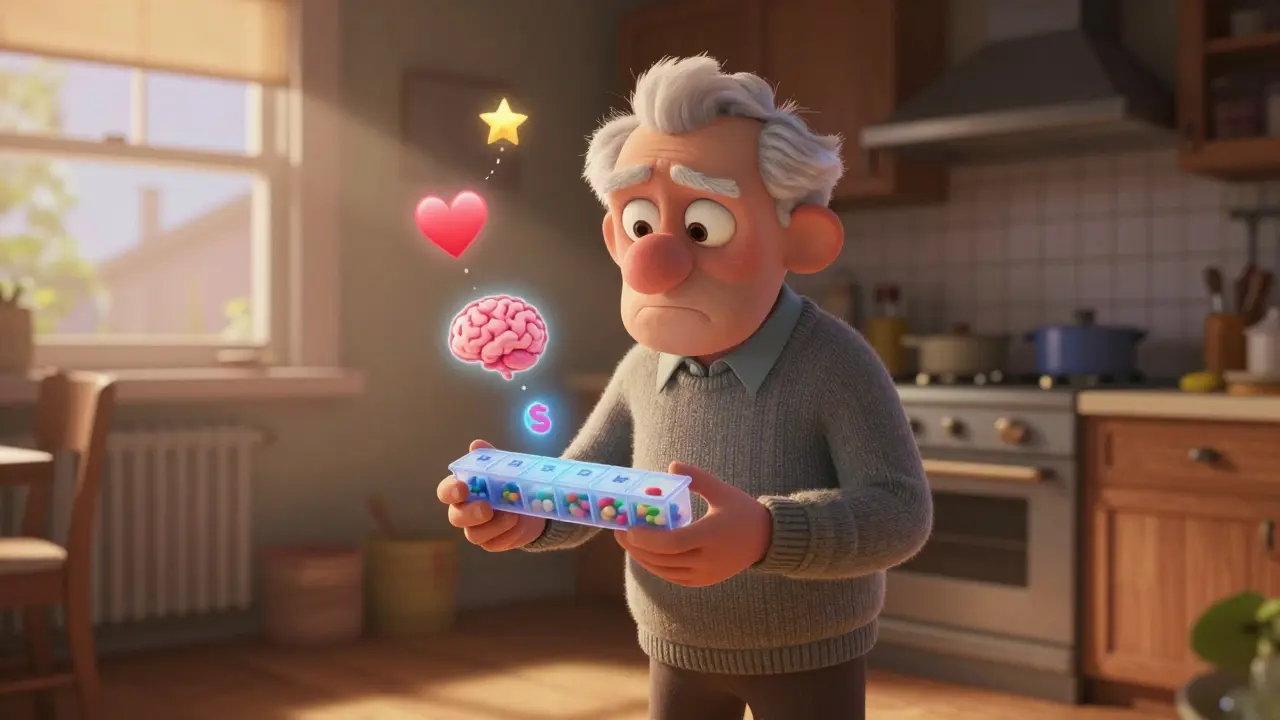
When you’re 70, a simple pill can do more than heal-it can make you dizzy, confused, or even cause a fall. That’s not rare. In fact, elderly medication side effects are one of the most common reasons older adults end up in the hospital. And it’s not because they’re taking too many pills by accident. It’s because their bodies handle drugs differently now than they did at 40.
Why Older Bodies React Differently to Medicines
Your liver and kidneys don’t work the same way after 65. Blood flow to the liver drops by 30-40% between ages 25 and 75. Kidneys filter blood more slowly, losing about 0.8 mL per minute every year after 40. That means drugs stick around longer. Take diazepam, for example. In a 30-year-old, it clears in about 24 to 48 hours. In someone over 70? It can linger for days. That’s why sedatives and sleep aids often leave older adults groggy, unsteady, or disoriented the next morning. Body composition changes, too. Fat increases while muscle and water decrease. That shifts how drugs spread through the body. Fat-soluble drugs like some antidepressants or antipsychotics build up in fatty tissue and release slowly-leading to unexpected buildup over time. Water-soluble drugs, like lithium or some diuretics, become more concentrated because there’s less water to dilute them. These aren’t minor tweaks. They’re fundamental changes that turn a safe dose for a 50-year-old into a dangerous one for a 75-year-old.The Big Risk: Taking Too Many Pills
Most older adults aren’t on one or two meds. They’re on five, seven, even ten. That’s called polypharmacy-and it’s the #1 driver of bad reactions. Each extra pill adds a new chance for interactions. Take a common combo: an NSAID like ibuprofen for arthritis, plus a blood thinner like warfarin. Together, they can spike the risk of a bleeding stomach ulcer by 15 times compared to someone taking neither. Corticosteroids mixed with NSAIDs? Same problem. SSRIs (common antidepressants) plus certain painkillers? That can trigger a dangerous drop in sodium levels. Even something as simple as St. John’s Wort, a popular herbal supplement, can interfere with heart meds, blood thinners, and antidepressants. It’s not just drug-drug interactions. It’s drug-disease clashes. For instance, glyburide-a diabetes pill-can cause dangerously low blood sugar in seniors because their bodies can’t bounce back as easily. Sliding-scale insulin, often used in hospitals, can lead to wild swings in glucose levels and is now flagged as risky for older adults at home.Side Effects You Might Not Recognize
In younger people, side effects are obvious: nausea, rash, diarrhea. In older adults? They’re sneaky. You might think your mom is just getting forgetful. But what if it’s the anticholinergic in her bladder medication? Or her blood pressure pill is making her dizzy when she stands up? That’s orthostatic hypotension-and it’s a top cause of falls. Falls are terrifying. One in three seniors falls each year. And 20-30% of those falls are directly tied to medications. Sedatives, antipsychotics, even some heart meds can throw off balance. Confusion? That’s not just aging. It could be a reaction to pentazocine, an opioid that’s more likely to cause hallucinations in older brains. Weight loss? Could be an under-the-radar side effect of an antidepressant or a thyroid med. These aren’t “normal” signs of getting older. They’re red flags.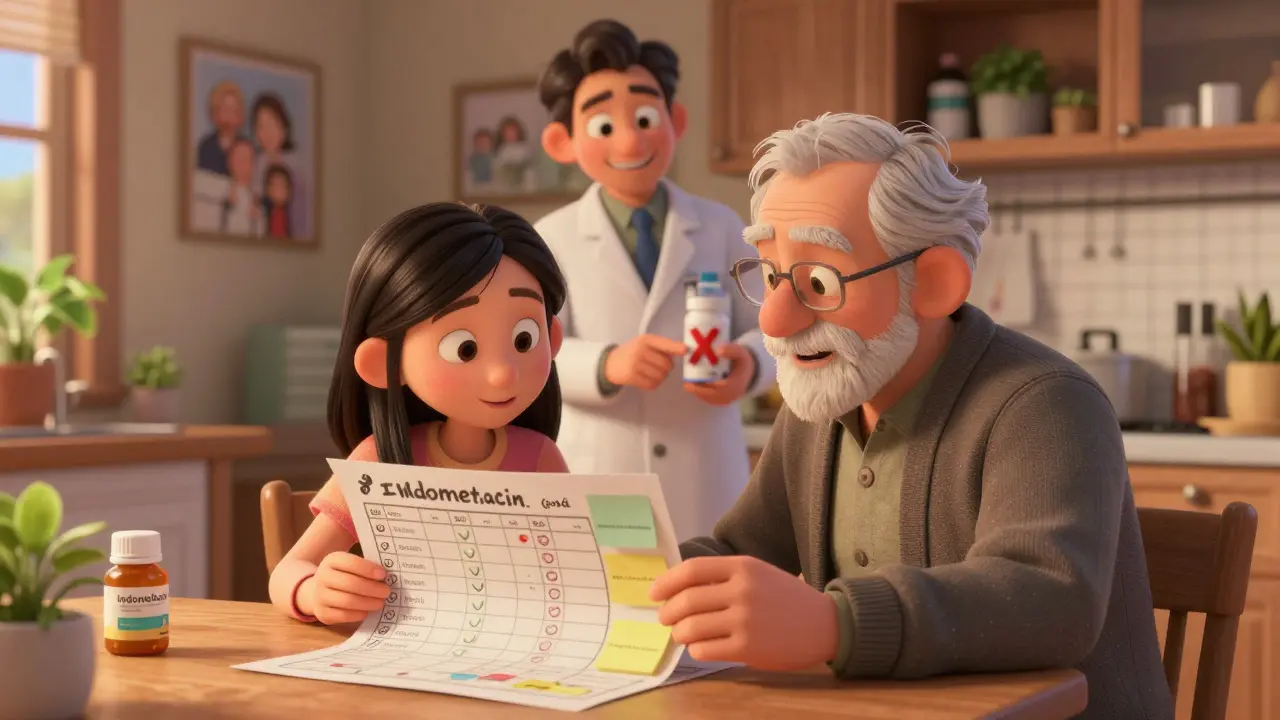
The Beers Criteria: A Lifesaving Checklist
Since 1991, doctors have used the Beers Criteria-a list of medications that are risky for older adults. Updated in 2012 and again in 2019, it’s the most trusted tool in geriatric care. It doesn’t say “never use these.” It says: “Use with extreme caution-or avoid altogether-if you’re over 65.” Here’s what’s on the list:- Propoxyphene (no longer sold in the U.S., but still found in old prescriptions)-minimal pain relief, high risk of confusion.
- Indomethacin-an NSAID with the highest rate of brain-related side effects in seniors.
- Phenylbutazone-can wipe out blood cell production.
- Megestrol (Megace)-used for appetite, but increases risk of blood clots and death.
- Acetylcholinesterase inhibitors-like donepezil for Alzheimer’s-can slow the heart too much in people with existing slow heart rates.
- Glitazones (pioglitazone, rosiglitazone)-worsen heart failure.
- SSRIs in patients with a history of falls or fractures-can lower sodium and increase bleeding risk.
What to Do: A Practical Plan
You don’t have to stop all meds. But you need to question them. Here’s how:- Keep a full list-every prescription, over-the-counter pill, vitamin, herb, or supplement. Include doses and why you take them.
- Bring it to every appointment-not just your doctor’s. Bring it to the pharmacist, the physical therapist, the specialist.
- Ask: “Is this still necessary?” Every six months, review each med with your doctor. Can one be stopped? Can a lower dose work?
- Watch for new symptoms-if you start feeling foggy, off-balance, or unusually tired after starting a new drug, don’t wait. Call your provider.
- Use a pill organizer-but make sure it’s paired with someone who checks it. Cognitive decline or vision problems make self-management risky.
When Less Is More
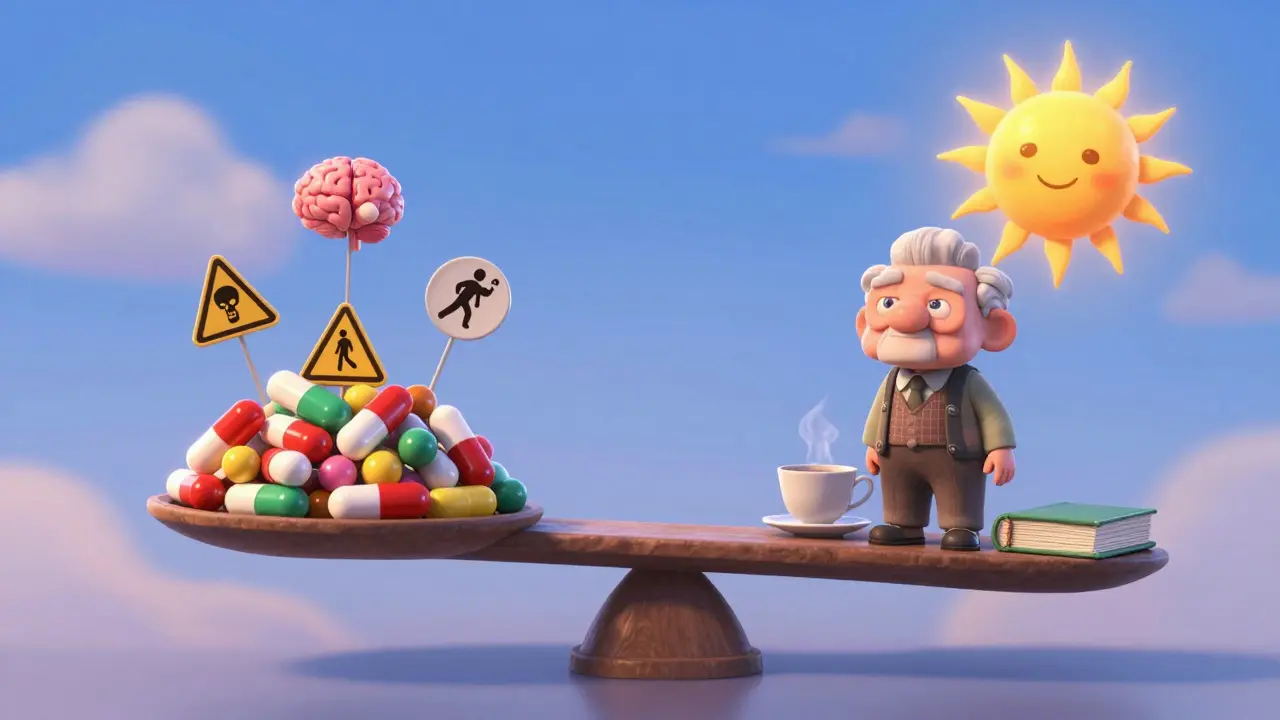
Deprescribing isn’t giving up. It’s choosing safety over routine. Studies show that when seniors stop unnecessary meds-like long-term benzodiazepines or proton pump inhibitors taken for years without clear need-they often feel better. Less dizziness. Better sleep. Fewer falls. One 2021 study followed 1,200 older adults who were gradually taken off four or more unnecessary drugs. Within six months, 40% reported improved energy. 30% had fewer falls. Hospital visits dropped by nearly half. It’s not about cutting meds just because they’re on the Beers list. It’s about matching the drug to the person. A 72-year-old with severe arthritis might still need an NSAID-just not at the highest dose. A 80-year-old with mild depression might do better with therapy and exercise than with an SSRI that makes them unsteady.The Bigger Picture
By 2030, one in five Americans will be over 65. That’s 95 million people. Right now, 10-23% of hospital admissions in this group are due to bad drug reactions-and half of those are preventable. The cost? Around $3.5 billion a year in the U.S. alone. Health systems are starting to respond. Medicare now tracks “potentially inappropriate prescribing” as part of its quality metrics. Hospitals are hiring geriatric pharmacists. Clinics are using electronic alerts when a doctor tries to prescribe a Beers-listed drug to someone over 70. But real change happens at the kitchen table. It happens when a daughter asks, “Why are you still taking that sleeping pill?” Or when a grandpa tells his doctor, “I’ve been falling more since I started that new blood pressure med.” Medications save lives. But they can also steal them-if we don’t pay attention to how aging changes the rules.What are the most dangerous medications for elderly patients?
According to the 2019 Beers Criteria, high-risk medications include propoxyphene, indomethacin, phenylbutazone, megestrol, glyburide, sliding-scale insulin, acetylcholinesterase inhibitors in patients with slow heart rates, glitazones for heart failure, and SSRIs in those with a history of falls. These drugs are flagged because they cause confusion, low blood pressure, bleeding, low sodium, or dangerous drops in heart rate more often in older adults.
Can elderly patients safely take over-the-counter drugs?
Many OTC drugs are risky for seniors. Antihistamines like diphenhydramine (Benadryl) are strong anticholinergics and can cause confusion and falls. NSAIDs like ibuprofen or naproxen increase bleeding and kidney risks. Sleep aids often contain antihistamines or sedatives that linger in older bodies. Even herbal supplements like St. John’s Wort can interfere with heart meds and antidepressants. Always check with a pharmacist before using OTC products.
How can I tell if a side effect is from a medication?
Look for timing. Did the symptom start within days or weeks of starting a new drug or changing a dose? Common signs include new dizziness, confusion, memory lapses, unexplained falls, sudden weight loss or gain, fatigue, or loss of appetite. These are often mistaken for aging-but they’re red flags for drug reactions. Keep a symptom diary and share it with your doctor.
Is deprescribing safe?
Yes, when done carefully. Deprescribing means slowly reducing or stopping medications that are no longer needed or are doing more harm than good. Studies show seniors who undergo structured deprescribing often feel better-more energy, fewer falls, improved sleep. It must be guided by a doctor or pharmacist. Never stop a drug suddenly, especially blood pressure, antidepressants, or seizure meds.
What should I bring to a medication review?
Bring a complete list: all prescription drugs, over-the-counter pills, vitamins, supplements, and herbal remedies. Include dosages and how often you take them. Also bring a list of symptoms you’ve noticed-like dizziness, memory issues, or trouble sleeping. If possible, bring the actual pill bottles. This helps the pharmacist or doctor spot duplicates, interactions, or outdated prescriptions.
vivek kumar
January 18, 2026 AT 03:08Let’s cut through the fluff: the Beers Criteria isn’t just a checklist-it’s a lifeline. I’ve seen my grandfather on five meds that should’ve been three. The moment his doctor cut the benzos and the NSAID, his balance improved, his mind cleared, and he started remembering our names again. This isn’t theoretical. It’s survival. And if your doctor doesn’t know the Beers list, find one who does.
waneta rozwan
January 19, 2026 AT 08:29Oh my GOD. My aunt took that Megace for ‘appetite’ and ended up in the ER with a pulmonary embolism. They told her it was ‘just old age.’ NO. IT WAS A DRUG. I screamed at the pharmacist. I screamed at the doctor. No one listened until she almost died. This needs to be broadcast on national TV. Not just Reddit. TV.
john Mccoskey
January 21, 2026 AT 00:04Let’s analyze this statistically. The 30-40% reduction in hepatic blood flow is well-documented in peer-reviewed gerontology literature since the 1980s. The pharmacokinetic shift in volume of distribution for lipophilic compounds is a direct function of increased adipose tissue mass and decreased total body water-both predictable with age. What’s being presented here as ‘new insight’ is simply clinical pharmacology 101. The real failure isn’t the drugs-it’s the systemic abandonment of pharmacokinetic education in medical training. We’re prescribing like it’s 1975 while the population’s physiology has moved into 2025. And no, ‘just reduce the dose’ isn’t a solution-it’s a bandaid on a hemorrhage.
Joie Cregin
January 21, 2026 AT 22:10I work with seniors every day, and this hit me right in the chest. One of my clients, Mrs. Rivera, was on eight meds. She’d sit in her chair, staring into space, saying, ‘I just feel… off.’ We got her on a med review, cut three things-especially that darn anticholinergic for ‘bladder issues’-and within two weeks, she was gardening again. She told me, ‘I didn’t know I could feel this alive.’ Sometimes the medicine isn’t the cure. Sometimes, the cure is stopping the medicine.
Melodie Lesesne
January 22, 2026 AT 12:24My grandma’s on a pill organizer, and I check it every Sunday. We’ve got the whole list printed out, color-coded. She says she hates ‘all the little pills’ but she’s so proud of how organized we are. I think she’s scared to ask if she can stop anything. We’re working on it. Slowly. One pill at a time.
brooke wright
January 24, 2026 AT 01:21Wait-so you’re telling me my mom’s ‘dementia’ is from her blood pressure pill? I’ve been blaming her memory lapses on aging for two years. I just called her doctor. We’re scheduling a med review tomorrow. Thank you for this. I didn’t know I could ask.
Kasey Summerer
January 25, 2026 AT 23:50So let me get this straight: the American healthcare system is so broken that we’re poisoning our grandparents with pills they don’t need… and calling it ‘standard care’? 🤡
kanchan tiwari
January 27, 2026 AT 20:02THIS IS A BIG PHARMA CONSPIRACY. They don’t want you to know that geriatric meds are designed to keep seniors dependent. The Beers Criteria? A cover-up. They’re selling ‘safety’ while quietly replacing every natural remedy with a patentable chemical. Look at the funding behind these ‘guidelines’-who’s paying for them? Big Pharma. Always Big Pharma.
Bobbi-Marie Nova
January 28, 2026 AT 23:29My mom’s on SSRIs and NSAIDs and I’ve been dying to say something. I just didn’t know how. This post gave me the courage. We’re going to the pharmacist next week. No more ‘it’s just aging.’ I’m not letting her live like that.
Allen Davidson
January 30, 2026 AT 01:02You don’t have to be a doctor to make a difference. Just ask: ‘Is this still helping?’ and ‘What happens if we stop it?’ That’s all it takes. I’ve helped three families do this. Two of them had their loved ones stop falling. One stopped having panic attacks. It’s not magic. It’s just listening. And then acting.
Ryan Hutchison
January 30, 2026 AT 20:55What’s next? Are we gonna ban all medicine for seniors? Maybe we should just let them die naturally instead of wasting money on ‘medication reviews.’ We’ve got real problems-illegal immigration, inflation, crime. Why are we wasting time on old people’s pills? They’re gonna die anyway. Let them take their meds and shut up.
Samyak Shertok
January 30, 2026 AT 21:34Oh, so now we’re blaming drugs for aging? That’s rich. I’ve been taking diazepam since I was 30. I’m 78 now. I’m not dizzy-I’m wise. You want to deprescribe? Deprescribe your fear of death. The body slows down. The mind adapts. Stop medicalizing the natural. Maybe the problem isn’t the pills-it’s your obsession with ‘fixing’ everything. Let the old be old. They’re not broken. You just don’t like how they look.