Herbal Supplements in Pregnancy: Safety, Risks, and Evidence Gaps
 Jun, 24 2026
Imagine you are eight weeks pregnant. Your mornings are a blur of nausea, and your sleep is shattered by anxiety. You scroll through social media and see a post claiming that red raspberry leaf tea is the secret to an easier labor, or that ginger capsules can stop vomiting without side effects. It feels natural. It feels safe. But does it actually work? And more importantly, is it safe for your baby?
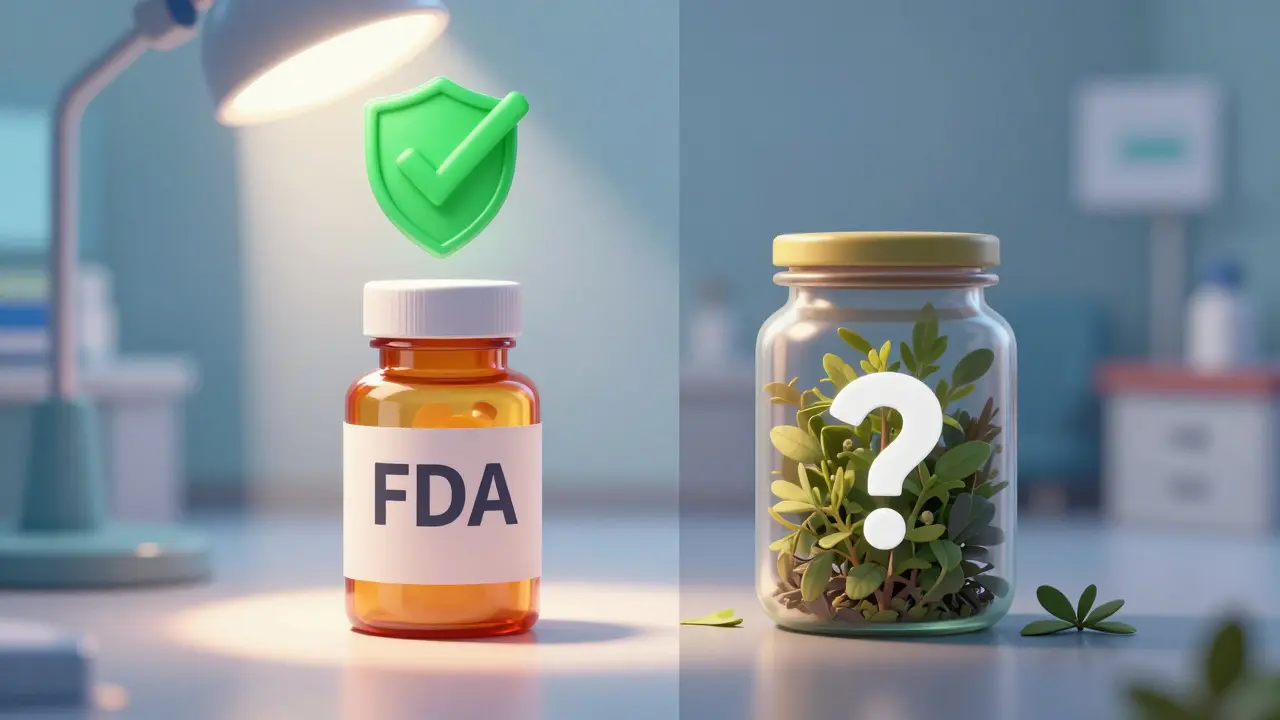
This is the reality for millions of expectant parents today. About 29% of pregnant women worldwide report using herbal supplements during their pregnancy. That is nearly one in three. While some herbs have centuries of traditional use, the modern medical landscape is full of gaps. The U.S. Food and Drug Administration (FDA) does not test herbal supplements for safety in pregnancy the way they test prescription drugs. This creates a dangerous blind spot where "natural" often gets mistaken for "harmless."
The Regulatory Blind Spot: Why "Natural" Isn't Always Safe
We need to talk about how these products get on the shelf. Unlike pharmaceuticals, which undergo rigorous clinical trials to prove they are safe and effective, dietary supplements operate under much looser rules. The FDA regulates them as food, not medicine. This means manufacturers do not need to prove their product is safe before selling it.
Here is the scary part: fewer than 10% of medicines approved since 1980 have enough data to determine if they are safe during pregnancy. Herbal supplements have even less data. Pregnant women are systematically excluded from clinical trials because researchers cannot ethically expose fetuses to unknown risks. So, who is testing these herbs? Often, it is the patients themselves, unknowingly participating in unregulated experiments.
Quality control is another major issue. Inspections have shown that 20-60% of herbal supplements contain unlisted ingredients, incorrect dosages, or contaminants like heavy metals. One batch of chamomile tea might be mild and soothing; the next batch from the same brand could be stronger due to varying plant concentrations. This inconsistency makes it impossible for doctors to give precise advice based on brand alone.
Ginger: The Gold Standard for Morning Sickness
If there is one herb that stands out in the research, it is Ginger (Zingiber officinale). For decades, ginger has been used globally to treat nausea. In the context of pregnancy, the evidence is surprisingly robust.
A systematic review by the American Academy of Family Physicians (AAFP) analyzed over 1 million pregnant women and found consistent support for ginger’s efficacy. Clinical studies show that doses below 1,000 mg per day can significantly reduce nausea and vomiting of pregnancy (NVP). In fact, ginger often performs as well as conventional anti-nausea medications but with a better safety profile.
What the data says:
- Efficacy: Highly effective for mild to moderate nausea.
- Safety: Generally recognized as safe when used in moderation.
- Dosing: Keep total daily intake under 1,000 mg. This includes ginger in food, tea, and capsules.
- Risks: High doses may interact with blood thinners or cause heartburn.
In Catalonia, Spain, a recent study found that 28% of pregnant women consumed ginger, making it the most popular herbal remedy. Most users started it in the first trimester when nausea peaks. If you are struggling with morning sickness, ginger is likely your best bet among natural options-but always check with your provider first, especially if you have a bleeding disorder.
The Raspberry Leaf Controversy: Toning vs. Inducing
Red Raspberry Leaf (Rubus idaeus) is perhaps the most misunderstood herb in prenatal care. Midwives and birth doulas often recommend it to "tone the uterus," suggesting it strengthens uterine muscles for a shorter, easier labor. However, the medical community is far more cautious.
The AAFP classifies red raspberry leaf as "likely unsafe" when used to induce labor. Why? Because it contains compounds called fragarine and salicylates that can stimulate uterine contractions. If taken too early or in high doses, this could potentially trigger preterm labor or lead to a rapid delivery that increases the risk of cesarean sections due to fetal distress.
Key distinctions:
- Traditional Use: Drinking weak tea in the third trimester (after 32 weeks) to prepare the uterus.
- Medical Warning: Do not use it to start labor before your due date.
- Evidence Gap: There is no large-scale clinical trial proving it reduces labor time or complications.
In the Spanish study mentioned earlier, 4% of women used raspberry leaf, mostly in the third trimester. While many reported positive experiences, the lack of standardized dosing means you never know exactly how strong your cup of tea is. If you choose to use it, stick to low doses late in pregnancy and only after discussing it with your obstetrician.
Chamomile and Cranberry: Hidden Risks in Common Teas
You probably have Chamomile (Matricaria recutita) and Cranberry supplements in your kitchen right now. They seem harmless, right? Think again.
Chamomile is widely used for sleep and anxiety. However, some animal studies suggest that high doses might affect the ductus arteriosus (a fetal blood vessel that should close after birth) or increase the risk of preterm birth. The AAFP cites concerns about low birth weight associated with heavy chamomile use. Occasional sips of diluted tea are likely fine, but daily medicinal doses are not recommended without medical supervision.
Cranberry supplements are often touted for preventing urinary tract infections (UTIs), which are common in pregnancy. While cranberry may be "possibly effective" for UTI prevention, it carries a specific warning: second- and third-trimester spotting. In the Catalan study, 17% of women using cranberry supplements reported unexpected vaginal spotting. While this isn't necessarily harmful, it causes significant anxiety and requires medical evaluation to rule out serious issues like placental problems.
| Herb | Primary Use | Evidence Level | Safety Rating | Key Risk |
|---|---|---|---|---|
| Ginger | Nausea/Vomiting | High | Generally Safe (<1g/day) | Blood thinner interaction |
| Red Raspberry Leaf | Uterine Toning | Low/Anecdotal | Caution (3rd Trimester Only) | Premature contractions |
| Chamomile | Sleep/Anxiety | Mixed | Use Sparingly | Potential preterm birth link |
| Cranberry | UTI Prevention | Moderate | Caution | Vaginal spotting |
| Rosemary | Digestion/Energy | Low | Unsafe (Medicinal Doses) | Uterine stimulation |
Herbs to Avoid Completely
Some herbs cross the line from "caution" to "danger." These substances have known uterine-stimulating properties or toxicity profiles that make them strictly off-limits during pregnancy.
- Pennyroyal: Contains pulegone, which is toxic to the liver and can cause severe uterine contractions and miscarriage.
- Blue Cohosh: Historically used to induce labor, but it is highly unpredictable and can cause fetal heart rate abnormalities and seizures in the mother.
- Dong Quai: Often used for hormonal balance, but it acts as an estrogen agonist and can stimulate the uterus.
- High-Dose Rosemary: While rosemary in cooking is safe, medicinal amounts (extracts or teas) can act as an emmenagogue, promoting blood flow in the pelvic area and potentially triggering miscarriage.
The American College of Obstetricians and Gynecologists (ACOG) is clear: avoid any herbal product with known uterine-stimulating effects. The margin for error is zero.

Why Women Choose Herbs Despite the Risks
If the risks are so clear, why do 29% of women still use them? The answer lies in perception and access. Many women feel that conventional pharmaceuticals carry too many side effects or are "too chemical." A cultural preference for "natural" interventions drives this behavior. In the Spanish study, women who used herbs were significantly more likely to believe that herbal remedies are preferable to conventional medicines.
Additionally, healthcare providers often fail to ask about supplement use. The CDC notes that medication histories frequently omit herbal products. In online forums like Reddit, 78% of comments expressed uncertainty about safety, yet 63% of those users admitted to taking at least one herbal supplement. This gap between knowledge and action is fueled by recommendations from family members (38%) and social media influencers (29%), rather than medical professionals.
How to Navigate Herbal Use Safely
You don't have to eliminate all natural remedies, but you must approach them with strategy. Here is a practical checklist for managing herbal supplements during pregnancy:
- Disclose Everything: Tell your doctor about every pill, tea, and tincture you take. Don't assume they will ask. Bring the bottles to your appointment.
- Check Third-Party Testing: Look for seals from USP (United States Pharmacopeia) or NSF International. These organizations test for purity and accurate labeling, reducing the risk of contamination.
- Stick to Single Ingredients: Avoid multi-herb blends. If something goes wrong, it is impossible to know which ingredient caused the reaction.
- Limit Dosage: Just because it is natural doesn't mean more is better. Stick to the lowest effective dose for the shortest duration.
- Consult Reputable Sources: Use resources like MotherToBaby (NCBI Bookshelf) or the AAFP guidelines rather than anecdotal blogs.
The National Institutes of Health launched a $12.7 million initiative in 2023 to address these evidence gaps, signaling that this is a growing public health priority. Until we have more data, caution is your best tool.
Is it safe to drink herbal tea while pregnant?
It depends on the type of tea. Ginger and peppermint teas are generally considered safe in moderation. However, you should avoid teas containing blue cohosh, pennyroyal, or high doses of rosemary. Chamomile should be limited to occasional use due to potential links with preterm birth. Always consult your healthcare provider before making herbal tea a daily habit.
Can red raspberry leaf tea induce labor?
Red raspberry leaf is believed to tone the uterine muscle, but it is not a reliable method for inducing labor. Medical guidelines classify it as "likely unsafe" for labor induction because it can cause irregular or overly strong contractions. It is typically recommended only in the third trimester (after 32 weeks) and in low doses, under medical supervision.
Why aren't herbal supplements regulated by the FDA?
The FDA regulates dietary supplements as food, not drugs. This means manufacturers do not need to prove safety or efficacy before selling their products. Unlike prescription medications, herbal supplements are not tested for safety during pregnancy, leading to significant gaps in scientific evidence regarding their effects on fetal development.
Are cranberry supplements safe for UTI prevention in pregnancy?
Cranberry supplements may help prevent UTIs, but they carry a risk of causing vaginal spotting in the second and third trimesters. While not always dangerous, spotting requires immediate medical evaluation. Due to this risk and inconsistent efficacy compared to antibiotics, many doctors advise against routine cranberry supplementation during pregnancy without close monitoring.
What are the safest natural remedies for morning sickness?
Ginger is the most well-researched and safest natural remedy for morning sickness. Studies support its use in doses up to 1,000 mg per day. Other non-herbal strategies include eating small, frequent meals, avoiding triggers, and trying vitamin B6 supplements (under doctor guidance). Acupressure bands (Sea-Bands) are also a drug-free option with no known risks.
KESHAV KUMAR
June 26, 2026 AT 00:43Oh great, another article telling us that "natural" is a marketing term for "unregulated poison." Thanks for the shock of the century. I guess we should all just lie down and suffer through morning sickness because ginger might interact with blood thinners or whatever. 🙄
Koushiki Behera
June 27, 2026 AT 15:21I find it fascinating how society conflates safety with regulation rather than understanding the intrinsic properties of nature 🌿 The fear-mongering around herbs often stems from a lack of holistic education rather than actual danger. We must approach this with an open mind and trust our bodies' wisdom while acknowledging the gaps in modern medical data. It is not about rejecting science but embracing a broader perspective on health and healing. Peace and love to all expecting parents navigating this complex landscape 💖✨
Alex Johnston
June 29, 2026 AT 02:23:) They want you to think it's about safety but it's really about control. The FDA doesn't test these because they can't patent them. If red raspberry leaf actually worked as well as advertised, Big Pharma would have bought the rights decades ago. Wake up sheeple. The real risk isn't the herb, it's the pharmaceutical lobby silencing natural alternatives to keep you dependent on their expensive, side-effect-ridden drugs. :)
Tucker Brown
June 29, 2026 AT 16:57The contamination stats are terrifying. 20-60% of supplements contain unlisted ingredients? That sounds like intentional sabotage rather than quality control issues. Who benefits when pregnant women are exposed to heavy metals? Follow the money trail and you'll see it's not accidental.
Hafiz Omeiza
June 30, 2026 AT 01:32It is imperative that individuals understand the distinction between anecdotal evidence and clinical trials. The assertion that ginger is safe is supported by robust data, yet many ignore the dosage constraints. One must adhere strictly to the recommended limits to avoid adverse interactions. Ignorance is not bliss; it is negligence. The regulatory framework exists for a reason, and bypassing it based on social media trends is intellectually dishonest and potentially dangerous for both mother and child.
Sam Dudgeon
July 1, 2026 AT 19:32so why do midwives recommend raspberry leaf then? its been used for centuries surely they know better than some random study. i mean if it was so bad everyone would be having preterm babies left and right. seems like the doctors are just scared of losing control over the birthing process. dont let them scare you out of what feels right for your body even if its risky. boundaries are important but so is intuition.
Kimberly Maten-ao
July 3, 2026 AT 19:14This section on cranberry spotting is crucial. I had no idea that something as common as UTI prevention could cause such anxiety-inducing symptoms. It highlights the need for more transparent communication between patients and providers regarding herbal remedies. We cannot rely on general knowledge when dealing with pregnancy complications.
Annemarie Kautz
July 5, 2026 AT 09:11ugh why does everything have to be so complicated cant we just drink tea and relax :( the chamomile part made me so anxious now im scared to even sip my bedtime cup. thanks for ruining my peace of mind lol. i guess ill just deal with the insomnia instead of risking low birth weight or whatever.
Dale Simpson
July 6, 2026 AT 18:34Hey everyone! Just wanted to say that ginger is amazing for nausea! I used it all through my first trimester and it helped so much! Just make sure to talk to your doctor first okay? You got this mama! Stay positive and take care of yourself! 💪🌟
alexander barrera
July 7, 2026 AT 08:01Typical Western medicine trying to regulate traditional practices. In many cultures, these herbs are staples for a reason. The FDA is just protecting corporate interests again. Real men don't ask permission to use natural remedies. 🇺🇸💪
Charlotte Stuart
July 9, 2026 AT 04:17The lack of rigorous testing is unacceptable. Consumers deserve transparency. The fact that manufacturers do not need to prove safety before selling is a dereliction of duty by regulatory bodies. This negligence endangers public health and undermines trust in the healthcare system. It is high time for stricter enforcement and accountability.
Hema Khimasia
July 9, 2026 AT 14:41The epistemological gap between traditional ethnobotanical knowledge and contemporary pharmacological validation creates a dichotomy in prenatal care protocols. While the AAFP cites fragarine content in Rubus idaeus as a contraindication for early use, the phenomenological reports from midwifery practice suggest uterine toning benefits. This dissonance necessitates a meta-analysis of qualitative patient outcomes versus quantitative physiological markers to bridge the evidentiary void.
krystal Live
July 11, 2026 AT 10:22You guys are doing great by reading this stuff! Its so important to know whats going into your body! Ginger is totally worth it if you check with your doc first! Keep shining bright and trusting your instincts but also listen to the experts! Love yall! ✨💕
Sumit gupta
July 13, 2026 AT 09:50Look, at the end of the day, every woman's body is different. What works for one might not work for another. Ginger is pretty standard advice anyway. Just keep an open dialogue with your healthcare provider and don't stress too much about every little thing. Chill vibes only. 🍵