Gene Therapy and Drug Interactions: Navigating Unique Safety Risks
 Aug, 30 2026
Gene Therapy Drug Interaction Risk Estimator
Patient & Treatment Profile
Concomitant Medication
Risk Assessment Result
Select inputs to generate a risk profile based on vector type, immune status, and drug properties.
*Educational estimate only. Consult your physician.Why This Matters: The Mechanism
| Factor | Impact on Drug Interaction |
|---|---|
| Inflammation | Can induce or suppress CYP450 enzymes, altering breakdown speed of many drugs. |
| Protein Binding | Immune response alters albumin levels, changing the amount of "active" free drug in blood. |
| Organ Function | Off-target vector effects may subtly change liver/kidney clearance rates permanently. |
| Insertional Mutagenesis | Random gene insertion could theoretically disrupt genes regulating drug metabolism enzymes. |
Note: Unlike standard drug-drug interactions, gene therapy interactions are often indirect and dynamic, evolving as the immune system settles or reacts over time. Long-term monitoring (up to 15 years) is standard for integrating vectors.
Imagine taking a medication for high blood pressure, only to find out that a gene therapy treatment you received three years ago has quietly rewired how your liver processes that pill. This isn't science fiction; it is the emerging reality of gene therapy and its complex relationship with traditional pharmaceuticals. Unlike standard drugs that enter and leave your system within days, gene therapy introduces genetic material designed to stay put, often permanently. This permanence creates a unique safety landscape where the interaction between therapeutic genes and co-administered drugs poses risks we are still learning to map.
The core problem lies in unpredictability. When you take an antibiotic, you know roughly how long it stays in your body. But when a viral vector delivers a new gene into your cells, it triggers biological changes that can last a lifetime. These changes can alter your immune system, modify enzyme activity, and even shift how your organs function. For patients managing chronic conditions alongside their genetic disorder, this means the rules of drug interaction have changed entirely.
The Ghost of Past Failures: Why We Are Cautious
To understand why regulators are so strict about gene therapy safety, you have to look back at the field’s painful history. In 1999, Jesse Gelsinger, an 18-year-old with a rare metabolic disorder called ornithine transcarbamylase (OTC) deficiency, died four days after receiving experimental gene therapy. His death wasn’t caused by the disease itself, but by an overwhelming immune reaction to the adenovirus vector used to deliver the treatment. The virus triggered a systemic inflammatory storm that led to multiple organ failure.
This tragedy highlighted a critical flaw in early assumptions: we thought we could treat viral vectors like simple delivery trucks. We learned they act more like live pathogens. Preclinical data had already shown danger signs-two monkeys treated with the same therapy developed fatal liver necrosis-but the human response was even more severe than anticipated. This case forced the medical community to rethink immunogenicity, or the ability of a substance to provoke an immune response, as a primary safety concern rather than a side note.
A few years later, another crisis emerged in trials for Severe Combined Immunodeficiency (SCID). Patients developed leukemia because the gamma-retroviral vectors randomly inserted the therapeutic gene near a cancer-causing gene (the LMO2 proto-oncogene). This phenomenon, known as insertional mutagenesis, showed that where the gene lands matters just as much as what the gene does. These events didn’t stop progress, but they built the foundation for today’s rigorous safety protocols.
How Viral Vectors Disrupt Drug Metabolism
Most modern gene therapies use modified viruses, such as Adeno-Associated Viruses (AAV), to deliver DNA. While these vectors are engineered to be safer than their wild-type ancestors, they still interact with the body’s machinery in ways that affect drug metabolism. Here is the mechanism: when a viral vector enters the bloodstream, the innate immune system detects it. This detection triggers the release of inflammatory cytokines and activates pathways involving toll-like receptors.
Why does this matter for your daily meds? Because inflammation affects the liver. Specifically, it can induce or suppress cytochrome P450 enzymes (CYP450), which are responsible for metabolizing a huge portion of all prescription drugs. If your gene therapy causes a spike in inflammation, it might speed up the breakdown of your anticoagulant, making it less effective. Or it might slow down the processing of your antidepressant, leading to toxic levels in your blood. Standard drug interaction charts don’t account for this dynamic, inflammation-driven change in enzyme activity.
| Feature | Conventional Pharmaceutical | Gene Therapy Product |
|---|---|---|
| Persistence | Hours to days | Years to lifetime |
| Mechanism | Binds to receptor/enzyme | Alters cellular machinery/DNA |
| Immune Impact | Minimal acute effect | Significant potential for inflammation |
| Drug Interaction Risk | Direct metabolic competition | Indirect via immune modulation/off-target effects |
| Monitoring Period | Short-term (weeks/months) | Long-term (up to 15 years) |
The Challenge of Long-Term Monitoring
Because gene therapy products can integrate into the genome or remain latent in tissues, the risk window extends far beyond the typical 30-day observation period for standard drugs. The FDA requires sponsors of gene therapy trials to conduct long-term follow-up, often spanning 15 years. This is particularly true for vectors with integrating properties or those using herpes simplex virus (HSV) platforms, which can establish persistent infections.
During this extended period, new safety signals may emerge. For instance, if the therapeutic gene encodes a growth factor, it might subtly alter cell cycling over time. A patient might not notice any immediate issues, but ten years later, the cumulative effect on cell division could predispose them to certain cancers. If that patient is also taking immunosuppressants for an unrelated condition, the interaction between the altered cell cycle and the drug’s impact on immune surveillance becomes a complex puzzle.
Off-target effects add another layer of complexity. Viral vectors aren’t perfectly precise; they can infect cells other than the intended target. If a vector accidentally modifies cells in the liver or kidneys-key organs for drug clearance-it could permanently change how those organs filter medications. Imagine a scenario where a gene therapy intended for muscle tissue inadvertently alters liver enzyme expression. The patient’s baseline drug metabolism shifts, requiring dosage adjustments for every subsequent medication they take.
Immune System Modulation and Drug Response
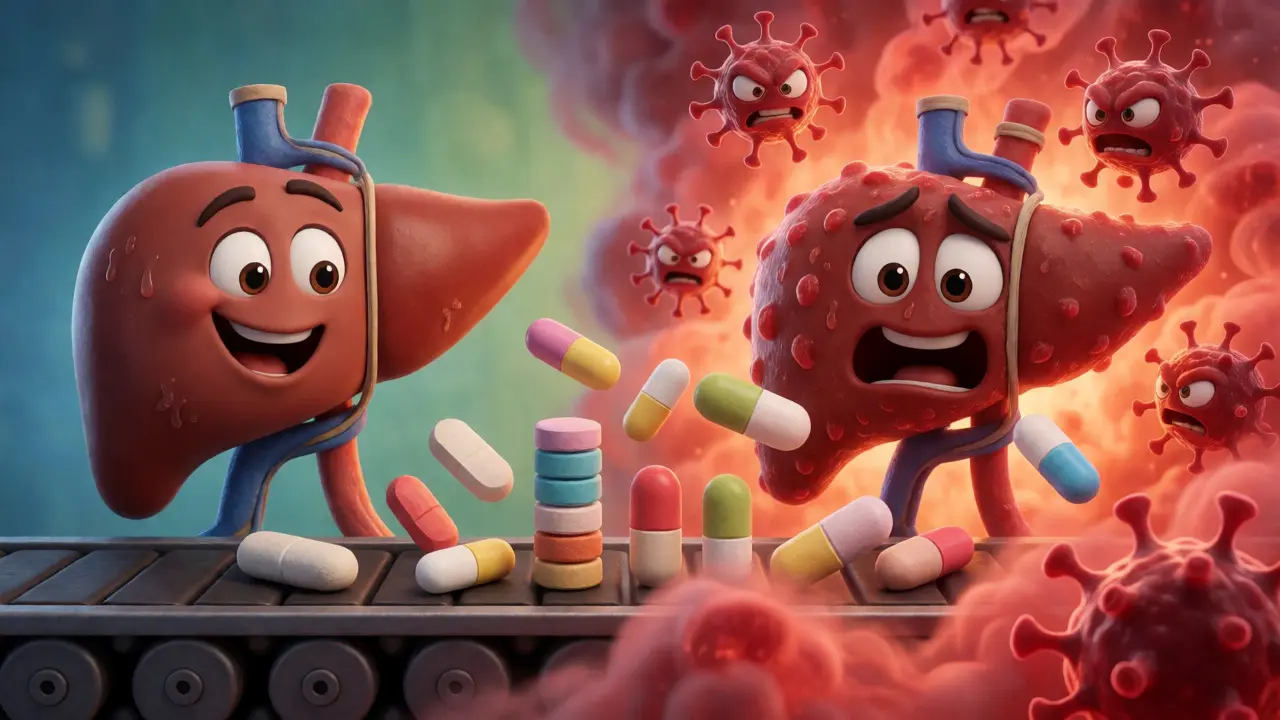
The immune system acts as a bridge between gene therapy and drug interactions. An unwanted immune reaction to the vector doesn’t just cause local swelling; it creates a systemic inflammatory state. This state increases vascular permeability and modifies plasma protein binding. Many drugs circulate in the blood bound to proteins like albumin. Only the unbound fraction is active. If inflammation changes the concentration of these binding proteins, the amount of active drug in the bloodstream fluctuates unpredictably.
Furthermore, the magnitude of this immune activation varies wildly between individuals. Genetic variability influences how strongly someone reacts to a specific viral capsid. One patient might experience mild flu-like symptoms, while another undergoes a severe cytokine release syndrome. Predicting how these differing immune profiles will interact with co-administered drugs remains one of the biggest hurdles in clinical practice. There is no universal formula yet; it requires careful, individualized monitoring.
Viral Transmission: A Hidden Risk
One aspect of gene therapy safety that often gets overlooked is the potential for transmission. Some viral vectors can shed from the treated patient and potentially infect close contacts. The FDA mandates that sponsors provide data confirming whether transmission occurs. If a husband receives gene therapy and his wife is exposed to the shedding virus, she receives an inadvertent dose of gene medicine. She hasn’t consented to it, nor is she being monitored for adverse effects. This creates a unique ethical and safety dilemma without parallel in traditional pharmacology.
For healthcare providers, this means wearing protective gear during administration and handling bodily fluids carefully post-treatment. It also means educating family members about hygiene practices during the shedding window. While most modern AAV vectors are non-replicating and pose low transmission risks, the principle remains: the boundaries of who is "treated" become blurry.

Clinical Trial Design and Future Directions
Designing clinical trials for gene therapy is difficult because you cannot easily control for concomitant medications. Patients in these trials often have comorbidities and take multiple drugs. Standardizing these protocols is critical. Researchers must now collect detailed pharmacokinetic data not just for the gene therapy product, but for how the product alters the pharmacokinetics of background medications.
We are currently in a gap phase. We know general safety principles, but we lack comprehensive predictive models for specific drug-gene therapy interactions. Future developments will likely involve multi-institutional longitudinal studies that track diverse populations. These studies aim to build databases linking genetic backgrounds, immune responses, and drug metabolism changes. Until then, clinicians must rely on vigilance, frequent lab tests, and open communication with patients about any new medications they start.
Frequently Asked Questions
Does gene therapy replace my current medications?
Not necessarily. Gene therapy aims to correct the underlying genetic defect, which may reduce or eliminate the need for some symptomatic treatments. However, many patients continue to take medications for comorbidities. Crucially, the presence of the gene therapy product can change how those remaining medications work, requiring dose adjustments rather than discontinuation.
How long do I need to monitor for drug interactions after gene therapy?
Regulatory guidelines typically require long-term follow-up for up to 15 years for integrating vectors. During this time, doctors monitor for delayed adverse events, including changes in drug metabolism. Acute monitoring happens in the first few weeks, but subtle shifts in liver enzyme activity or immune status can persist or evolve over years.
Can viral vectors in gene therapy cause allergic reactions to other drugs?
Yes, indirectly. The immune activation triggered by the viral vector can heighten overall sensitivity. This systemic inflammation can make patients more prone to hypersensitivity reactions to other substances, including antibiotics or painkillers, due to altered immune thresholds and increased vascular permeability.
What is insertional mutagenesis and why does it matter for drug safety?
Insertional mutagenesis occurs when the therapeutic gene inserts itself into the host DNA in a location that disrupts normal gene function, potentially activating oncogenes. While primarily a cancer risk, if this insertion affects genes regulating drug-metabolizing enzymes, it can permanently alter how the body processes pharmaceuticals, creating lifelong interaction profiles.
Are there specific drug classes that are higher risk with gene therapy?
Drugs heavily dependent on cytochrome P450 enzymes (like warfarin, cyclosporine, and many antidepressants) are higher risk because inflammation from the vector can inhibit or induce these enzymes. Additionally, immunosuppressants require careful balancing, as they dampen the very immune response needed to manage vector clearance but must not interfere with the therapeutic gene's expression.