FDA Orange Book: Where to Find Patent Expiration Dates for Generic Drugs
 Feb, 8 2026
If you're trying to figure out when a brand-name drug will lose its patent protection and allow generics to enter the market, the FDA Orange Book is your most reliable starting point. It's not a fancy website, and it doesn't look like a modern app, but it holds the official records that determine when cheaper versions of your favorite medications become available. For patients, pharmacists, and generic drug makers, knowing these dates isn't just helpful-it's essential for planning, budgeting, and access.
What is the FDA Orange Book?
The FDA Orange Book, officially called Approved Drug Products with Therapeutic Equivalence Evaluations, has been around since 1985. It was created under the Hatch-Waxman Act to balance two goals: protecting innovation by granting drug companies patent rights, and speeding up access to affordable generics. The book lists every approved small-molecule drug in the U.S. that’s not a biologic-so no insulin pens or monoclonal antibodies here. Only traditional pills, injections, and creams are included.
Each entry shows more than just the drug name. It lists the brand name, generic name, manufacturer, approval date, and-most importantly-the patents tied to that drug. These aren’t just any patents. They’re the ones that could block a generic version from being sold. If a patent covers the active ingredient, the dosage form, or a specific medical use, it’s listed here.
The Orange Book doesn’t invent these patents. It just records what drug companies submit to the FDA. Companies must file patent information within 30 days of a patent being issued after a drug is approved. If they don’t, the patent won’t show up, and generics could enter the market sooner than expected.
Where to Find Patent Expiration Dates
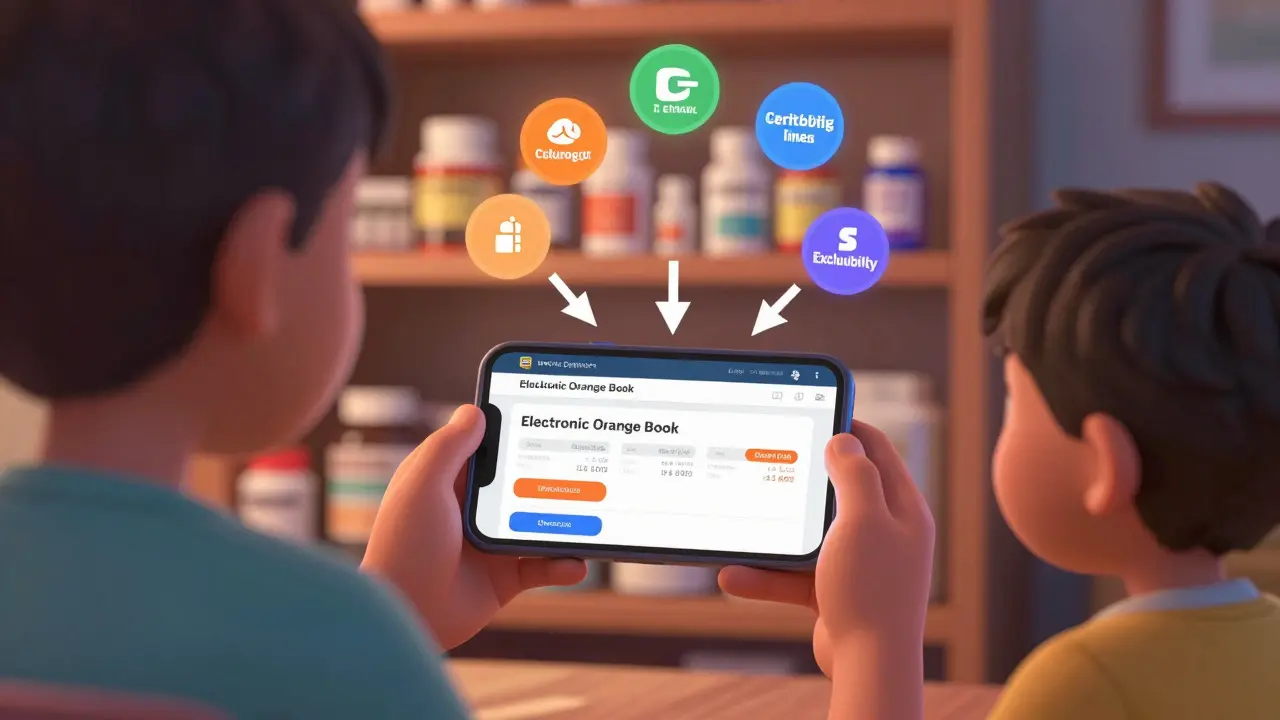
The easiest way to find patent expiration dates is through the Electronic Orange Book. Here’s how to do it step-by-step:
- Go to the FDA’s Electronic Orange Book.
- Search by the drug’s brand name (like "Brilinta") or generic name (like "ticagrelor").
- Click on the Application Number (e.g., "NDA022458") for the drug you’re looking up.
- At the bottom of the page, click "View" next to "Patents and Exclusivity."
- You’ll see a table listing each patent number, its expiration date, and a use code (like "U-789").
The expiration date is listed in the format MMM DD, YYYY-for example, "Jul 9, 2021." This date includes any Patent Term Extension (PTE) the company received. PTEs add time to the patent to make up for delays during FDA review. A drug might have been approved in 2010, but if the FDA took four years to review it, the patent could be extended to 2026 instead of 2022.
Some drugs have multiple patents. One might cover the active ingredient, another the pill coating, and a third the way it’s used to treat a specific condition. All of them show up here. The key is to look for the latest expiration date-that’s when the last legal barrier to generics falls.
What About Exclusivity?
Patents aren’t the only thing delaying generics. The FDA also grants exclusivity periods that aren’t tied to patents at all. These are legal monopolies given for things like new formulations, orphan drugs, or pediatric studies.
For example, if a company tests a drug on children and gets approval for pediatric use, they get six extra months of exclusivity. This doesn’t create a new patent. Instead, the Orange Book shows the same patent listed twice: once with the original expiration date and once with the six-month extension added. If you don’t know this, you might think there are two different patents when there’s really just one with an extension.
Exclusivity can sometimes last longer than a patent. In those cases, generics can’t enter even if the patent has expired. That’s why you always need to check both sections-patents and exclusivity-on the same page.
How Accurate Is the Orange Book?
It’s mostly accurate-but not perfect.
A 2023 study from the National Bureau of Economic Research found that 89% of patent expiration dates in the Orange Book matched those in the U.S. Patent and Trademark Office (USPTO) database. That sounds good, but the other 11% had errors. Some patents expired early because the company didn’t pay maintenance fees. The Orange Book doesn’t remove those listings retroactively. So you might see a patent listed as expiring in 2030, but it actually died in 2025 because the fee wasn’t paid.
That’s a big deal for generic manufacturers. One company reported that 46% of patents they tracked expired early due to missed fees. If you’re planning to launch a generic drug, you can’t rely on the Orange Book alone. You need to cross-check with the USPTO’s Patent Center to confirm whether maintenance fees were paid.
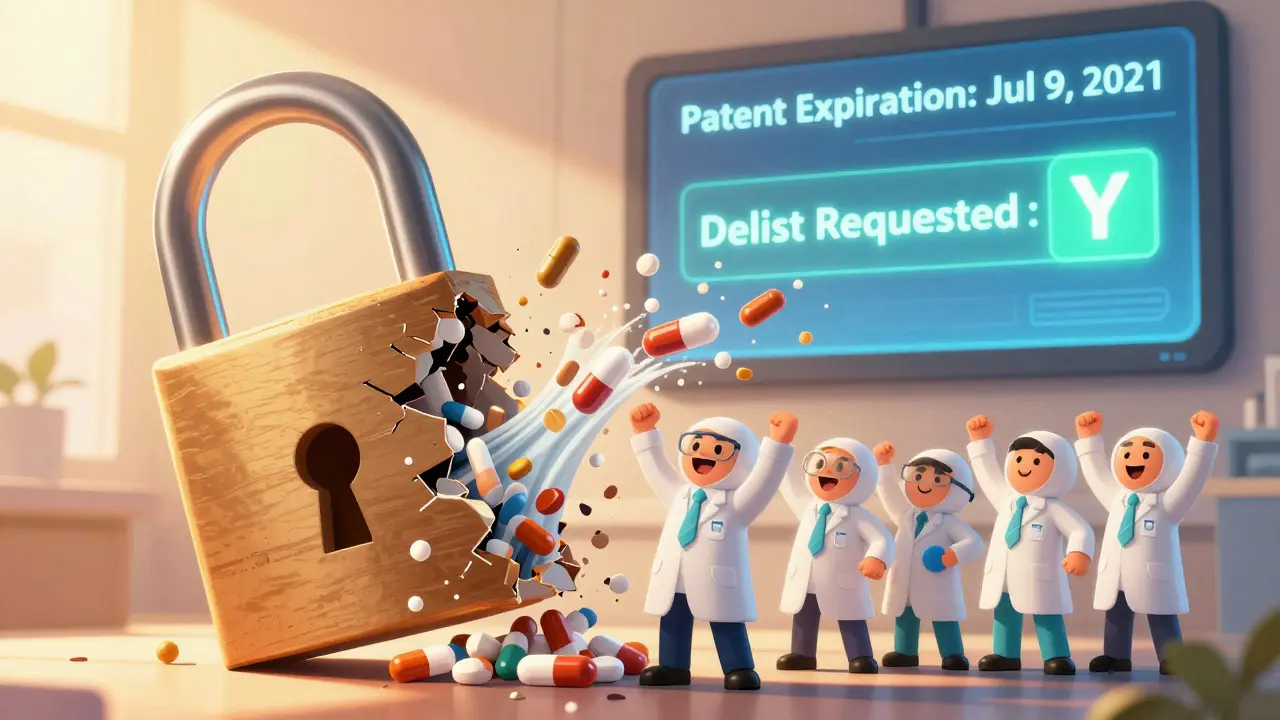
Also, the Orange Book doesn’t list patents that were invalidated in court. If a company sues a generic maker and loses, the patent is no longer enforceable-but it might still appear in the Orange Book until the company voluntarily removes it. That’s why industry experts say: "Always check for delisting requests." If you see a "Y" under the "Patent Delist Request Flag," it means the company asked the FDA to remove the patent. That’s often a sign they’re conceding the patent is weak or invalid.
How to Use the Data Files for Deeper Research
If you’re analyzing dozens of drugs or building a database, the web interface won’t cut it. The FDA offers downloadable data files updated daily at https://www.fda.gov/drugs/drug-approval-applications-das/orange-book-data-files.
These files are CSVs or Excel spreadsheets with columns like:
- Product No - The FDA’s internal product identifier
- Patent No - The actual U.S. patent number
- Patent Expiration - The date in MM/DD/YYYY format
- Drug Substance Flag - "Y" if the patent covers the active ingredient
- Drug Product Flag - "Y" if the patent covers the pill form or delivery system
- Patent Use Code - A code like "U-123" that tells you what medical use the patent covers
- Delist Requested Flag - "Y" if the patent owner requested removal
You can sort by expiration date to find the next wave of generic opportunities. For example, if you’re tracking heart drugs, you can filter for all entries with "U-789" (a common code for antiplatelet use) and sort by expiration to see which ones are expiring next year.
What You Shouldn’t Rely On
Don’t assume that if a patent expires, a generic will appear immediately. Companies often file new patents on delivery systems, dosing schedules, or packaging to extend protection. These are called "evergreening" tactics. The Orange Book lists them, but they’re harder to spot.
Also, don’t trust third-party websites that claim to track patent expirations. Many scrape the Orange Book data but don’t update it daily. Some even misinterpret use codes. The only source with real-time authority is the FDA’s own site.
Why This Matters
By 2025, about 78% of brand-name drug revenue will face generic competition. That’s billions of dollars in savings for patients and insurers. But if you’re off by even a few months on a patent expiration, you could miss a market window or get sued for infringement.
Pharmacists use the Orange Book to answer patient questions: "When will my $300 pill become a $20 generic?" Generic manufacturers use it to plan R&D and manufacturing. Investors use it to predict which companies will gain market share.
The FDA says over 1,000 calls a month come in from professionals asking about patent expirations. The Orange Book was built to stop those calls by putting the answers online. But if you don’t know how to read it, you’re still stuck.
Pro Tips for Reading the Orange Book
- Always check the "Exclusivity" section alongside patents. Sometimes exclusivity is the real barrier.
- Use the FDA’s Patent Use Code Search Tool to decode what "U-789" means. It tells you if the patent covers heart attacks, not just the chemical.
- Look for "Delist Requested: Y"-it’s a red flag that the patent might be dead.
- For critical decisions, cross-check with the USPTO Patent Center. Pay attention to maintenance fee payments.
- Set up alerts for drugs you care about. The data files are updated daily, so you can track changes in real time.
Is the FDA Orange Book free to use?
Yes. The entire Electronic Orange Book and all downloadable data files are completely free and publicly accessible. No login, subscription, or payment is required. The FDA maintains it as a public resource under the Hatch-Waxman Act.
Do biologics like Humira appear in the Orange Book?
No. The Orange Book only includes small-molecule drugs-pills and injections made of simple chemical structures. Biologics like Humira, Enbrel, or Humalog are listed in a separate database called the Purple Book. The rules for patents and exclusivity are different for biologics, and they’re governed by a different law (the Biologics Price Competition and Innovation Act).
Can a patent expire but still block generics?
Yes. Even if a patent expires, a drug may still be protected by regulatory exclusivity. For example, if a drug received five years of new chemical entity exclusivity, generics can’t enter until that five years are up-even if the patent expired after three. The Orange Book lists both, so always check both sections.
What does "Patent Delist Requested: Y" mean?
It means the drug company has asked the FDA to remove that patent from the Orange Book. This often happens when a patent is challenged in court and found invalid, or when the company no longer believes it can enforce it. It’s a strong signal that a generic could enter the market soon-but you should still confirm with USPTO records before acting.
Are patent expiration dates the same as when generics launch?
Not always. A generic company can file for approval before the patent expires, but it can’t launch until the patent or exclusivity ends. Also, if multiple companies file at the same time, the first one gets 180 days of exclusivity before others can enter. So the patent expiration date is just the earliest possible launch date, not the guaranteed one.
Next Steps
If you’re a patient, use the Orange Book to understand when your medication might get cheaper. If you’re a pharmacist, bookmark the site-it’ll save you time answering questions. If you’re in pharma, use the data files to track upcoming opportunities. And if you’re planning to launch a generic, never skip the USPTO check. The Orange Book is your map, but it’s not the whole territory.
Joseph Charles Colin
February 10, 2026 AT 07:14The Orange Book is the gospel for anyone in generic pharma, but let's be real-it's a starting point, not the whole playbook. The FDA's data is authoritative, sure, but the real game is in the USPTO Patent Center. I've seen patents listed as active in the OB that were abandoned in 2021 due to missed maintenance fees. Companies don't always update their filings promptly, and if you're betting your R&D budget on that data, you're already behind. Always cross-reference the patent number directly in the USPTO's PAIR system. If the status says 'Expired' or 'Abandoned,' don't wait for the FDA to catch up. The clock doesn't pause for bureaucracy.
Joshua Smith
February 10, 2026 AT 15:33Thanks for laying this out so clearly. I've been trying to explain this to a colleague who thought generics just pop up the day after a patent expires. The exclusivity layer is something even seasoned pharmacists overlook. That six-month pediatric extension? It’s sneaky. I once thought a drug was open for generic entry, only to find out the exclusivity hadn’t run out yet. The Orange Book’s clarity on that is invaluable. Also, the downloadable CSVs? Game-changer for tracking trends across drug classes. I’ve built a mini-dashboard from them now. Highly recommend.
Chima Ifeanyi
February 10, 2026 AT 19:40Let’s cut through the FDA propaganda. The Orange Book isn’t a public service-it’s a regulatory smokescreen. Companies game it daily. They file redundant patents on trivial modifications-coating thickness, pill shape, flavoring-just to extend monopolies. The FDA accepts them all. And don’t get me started on the ‘delist requested’ flag. That’s not transparency; it’s a backdoor for pharma to quietly kill competition without admitting defeat. The 89% accuracy rate? That’s just the tip of the iceberg. The real fraud is in the use codes. U-789 doesn’t mean ‘antiplatelet’-it means ‘we’re hiding a method patent under a therapeutic code.’ This system is rigged to protect profits, not patients.
Ritteka Goyal
February 12, 2026 AT 07:49OMG I just read this and I’m so happy!! I work in a small pharmacy in Delhi and we get so many patients asking why their meds are so expensive!! This Orange Book thing is like a secret weapon!! I didn’t even know the FDA had this!! I just searched for my favorite drug-Atorvastatin-and saw the patent expires next year!! I told my boss and we’re already pre-ordering generic stock!! But wait-what’s this exclusivity thing?? Is it like a bonus time?? And the CSV files?? Can I download them on my phone?? I tried but the link was too long and my browser crashed!! HELP!! Also, is this available in Hindi?? I wanna share this with my aunt who takes blood pressure meds!!
Monica Warnick
February 13, 2026 AT 10:08Okay, but have you considered the emotional toll on patients? I mean, imagine being on a $500/month drug for years, then suddenly-BAM-your insurance drops it because a generic is available. But you don’t know when that’s coming. You’re left in limbo. The Orange Book is cold, clinical data. It doesn’t tell you how many people cry when they can’t afford their meds. It doesn’t show the anxiety of waiting. It’s just numbers. And yet, somehow, we treat it like a divine oracle. I’m not saying it’s useless. I’m saying we’ve made a spiritual artifact out of a spreadsheet. And that’s… kind of tragic.
Jonah Mann
February 14, 2026 AT 16:21Biggest mistake people make? They think the patent expiration date = generic launch date. NOPE. That’s like thinking your flight leaves when the gate opens. The first generic filer gets 180 days exclusivity-so even if patent expires Jan 1, no one else can come in until June. And guess what? That first filer often delays launch for months to maximize profits. The Orange Book doesn’t tell you that. Also, typo: it says ‘MMM DD, YYYY’ but it’s actually ‘MM/DD/YYYY’ in the CSVs. I lost 3 hours once because I assumed the format. And ‘U-789’? It’s not ‘antiplatelet’-it’s ‘treatment of acute coronary syndrome.’ Don’t trust the shorthand. Cross-check. Always. And yeah, the USPTO check is non-negotiable. I’ve seen 12 patents expire early because fees weren’t paid. The OB? Still listed. Don’t get burned.
Frank Baumann
February 15, 2026 AT 11:14Let me tell you what really happens in the shadows of this system. I’ve worked in a generic lab for 14 years. We’ve seen companies file patents on *colors* of pills. Seriously. A blue pill vs. a white pill. The FDA puts it in the Orange Book. Then, when a competitor tries to launch, they get sued for patent infringement-on a color. Courts sometimes throw it out, but it takes 3 years. Meanwhile, the brand company keeps charging $400 a month. The Orange Book is not a tool for transparency. It’s a weapon. It’s a delay tactic. It’s a legal trap. And the FDA? They’re just the librarian who files the weapons. Don’t get me wrong-I’m glad it exists. But if you think this is fair? You’re not looking deep enough. The real battle isn’t in the database. It’s in the courtroom. And the patent office. And the lobbyists. The Orange Book? It’s just the tip of the iceberg… and the iceberg is sinking us all.
Ken Cooper
February 16, 2026 AT 18:01Hey, just wanted to add-when you’re using the CSVs, make sure you’re grabbing the latest daily update. The FDA pushes new files every night at 2 AM EST. I used to grab the weekly ones and was off by 3 weeks on a critical expiration. Also, the ‘Drug Substance Flag’ is your best friend. If it’s ‘Y’, that’s the core patent. That’s the one that blocks all generics. The product flag? That’s just packaging. You can work around that. And the delist flag? If it’s ‘Y’, check the USPTO within 48 hours. I’ve seen generics launch within 10 days after a delist request. One company even filed a petition to revoke the patent after the request. Wild stuff. Also, the use code search tool? Save that link. I have it pinned. U-123 = heart failure, U-789 = antiplatelet, U-456 = diabetes. Memorize the top 10. It’ll save you hours. And yeah, always check maintenance fees. I’ve caught 3 expired patents that way. You’re welcome.
MANI V
February 18, 2026 AT 17:51It’s sad how people treat this like a miracle. The FDA doesn’t care about patients. It cares about corporate compliance. The Orange Book is a bureaucratic performance, not a public good. Look at India-we’ve been making affordable generics for decades without this nonsense. We don’t need patent delays. We don’t need 180-day exclusivity. We don’t need USPTO checks. We just make the drug and sell it. But here? You need lawyers, databases, spreadsheets, and consultants just to know when a pill can be $20 instead of $200. This isn’t innovation. It’s extortion. And you people are celebrating the system that makes it possible. You’re not helping patients. You’re just learning how to play the game better. Shame.