Verifying Your Prescription at the Pharmacy: A Simple Patient Checklist to Avoid Medication Errors
 Nov, 22 2025
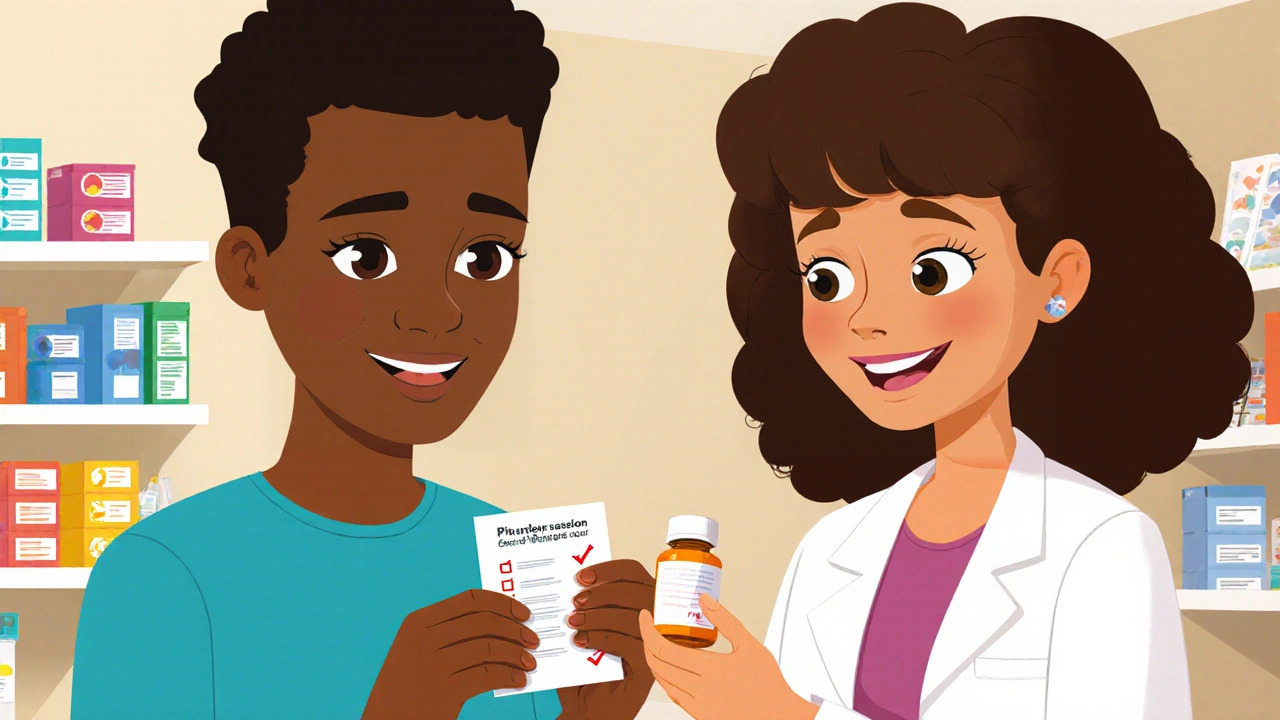
Every year, over a million people in the U.S. are harmed by medication errors - and many of these mistakes happen right at the pharmacy counter. You might think your doctor wrote the right prescription and the pharmacist filled it correctly. But the truth? Prescription verification is your last, best chance to catch a mistake before you take the wrong pill, dose, or drug. And it doesn’t take much - just three minutes and a little attention.
Why You Need to Check Your Prescription
Pharmacists are trained professionals, and most of them do their jobs well. But errors still happen. A 2022 CMS audit found that nearly 13% of pharmacy claims had errors that could have been caught if the patient had checked their medication. These aren’t rare accidents. They’re preventable. The most common mistakes? Wrong strength (like getting 50mg instead of 5mg), wrong quantity (you expected 30 pills but got 60), or the wrong drug entirely - especially when two medications look or sound alike. One patient on Reddit caught a blood pressure pill meant for someone else because she noticed the color and shape didn’t match her usual prescription. The pharmacist admitted they’d almost given it to her. The good news? When patients actively verify their prescriptions, medication errors drop by up to 37%. That’s not a small number. That’s life-saving.The 7-Point Prescription Verification Checklist
Before you leave the pharmacy, go through this checklist. Don’t rush. Take your time. If you’re unsure, ask.- Confirm your name and date of birth - The label must match your legal name and birth date exactly. This is the most basic check, but it catches the most errors. One in five errors happen because someone got another patient’s prescription.
- Check the medication name and strength - Look at the label. Is it exactly what your doctor told you? If your doctor prescribed Metformin 500mg, make sure the bottle says the same. Don’t assume “glucophage” is the same thing - that’s the brand name. Generic names can be confusing. If you’re unsure, ask the pharmacist to spell it out.
- Verify the National Drug Code (NDC) - This is the 11-digit number on the label. You can look it up on the FDA’s NDC directory online (just search “FDA NDC search”) or ask the pharmacist to show you the product on their screen. About 8% of errors involve the wrong medication being dispensed even when the label looks right.
- Count your pills or check the volume - If you’re getting pills, count them. If it’s liquid, check the milliliters. A 2022 study found that 23% of quantity errors are caught only if the patient counts immediately. Don’t wait until you get home. If you’re supposed to get 60 tablets and there are only 50, say something.
- Read the instructions - “Take one by mouth twice daily” sounds simple. But what does “twice daily” mean? Morning and night? Every 12 hours? Are you supposed to take it with food? If the instructions are unclear, ask. Illegible or missing directions cause nearly 19% of errors.
- Check the expiration date and packaging - Is the bottle sealed? Is the expiration date more than six months away? Expired medications can lose potency or even become unsafe. In 2023, over 4% of recalled drugs reached patients because they were past their expiry.
- For controlled substances, confirm your address - If you’re getting opioids, sleeping pills, or other controlled drugs, the pharmacist is legally required to verify your address. Make sure it’s correct. If it’s not, don’t take it.
What to Ask the Pharmacist
You don’t have to be an expert to ask the right questions. The FDA says every patient should ask these three:- What is this medication for?
- How and when should I take it?
- What side effects should I watch for?
- Is this the same as what I got last time? (Watch for changes in color, shape, or size - that’s often a generic switch.)
- What should I do if I miss a dose?
- Can this interact with anything else I’m taking?
Common Problems - And How to Fix Them
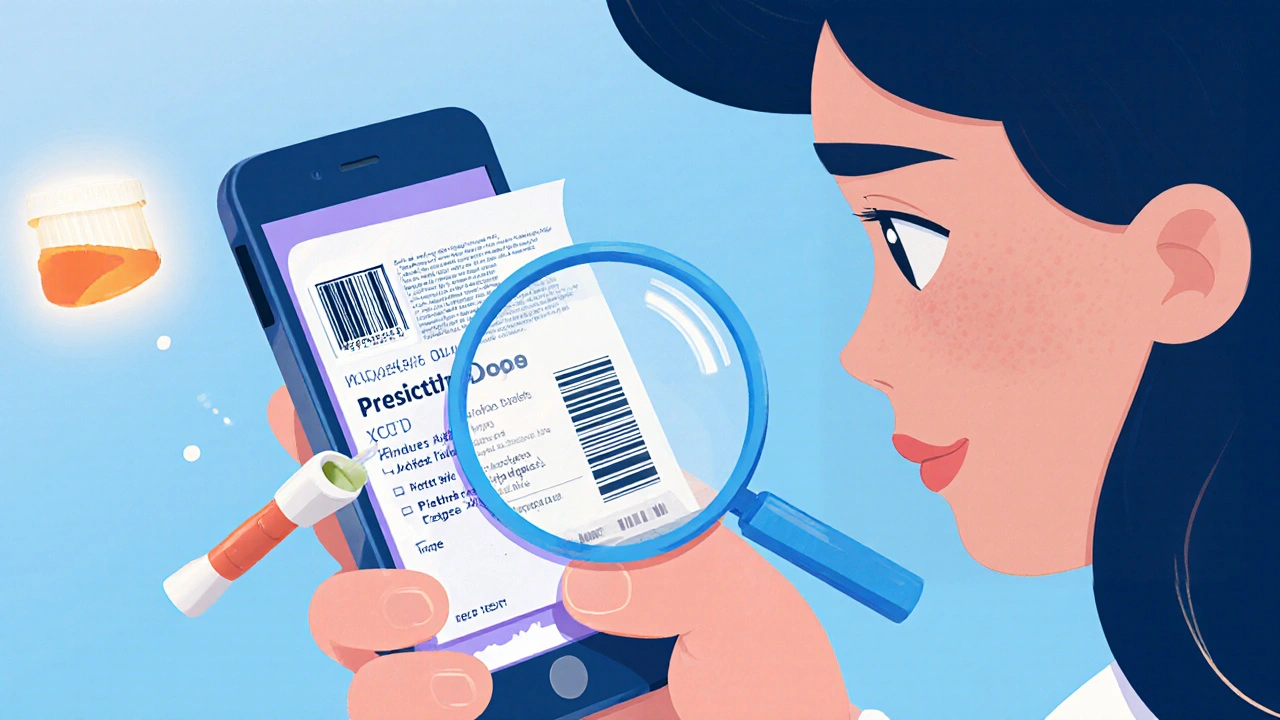
It’s not always easy to verify your prescription. Here are the biggest roadblocks - and how to get past them.Small print on labels - If you’re over 65, 64% of patients say they struggle to read the label. Solution? Ask for a magnifying glass - most pharmacies keep them behind the counter. Or use your phone’s camera to zoom in. You’d be surprised how clear it looks.
Generic vs. brand name confusion - You might be used to taking “Lipitor,” but now you’re getting “atorvastatin.” That’s the same drug. But if you’re not told that, you might think it’s wrong. Always ask: “Is this the same medicine I used to take?”
Pharmacists are rushed - You’ve waited 20 minutes. They’re busy. But 52% of patients who raised concerns said staff were dismissive. Don’t back down. Say: “I’m sorry, but I need to make sure this is right. Can you please double-check?” Most pharmacists will appreciate you. In fact, 78% say patient verification is essential to their job.
What’s Changing in Pharmacies Right Now
Technology is helping - but it’s not perfect. As of 2023, 87% of pharmacies use barcode scanners to match prescriptions with medications. That’s cut down errors by over 80%. But scanners can’t catch the wrong strength or the wrong patient name. Only you can. Some pharmacies now have “verification stations” - tablets where you can scan your prescription and see a picture of the pill before you pick it up. CVS and Walgreens are rolling these out, but they’re not everywhere yet. The law is catching up too. The Drug Supply Chain Security Act (DSCSA), fully active since November 2023, now requires every pill bottle to have a unique digital code. That helps track fake or stolen drugs. But again - it doesn’t replace your eyes.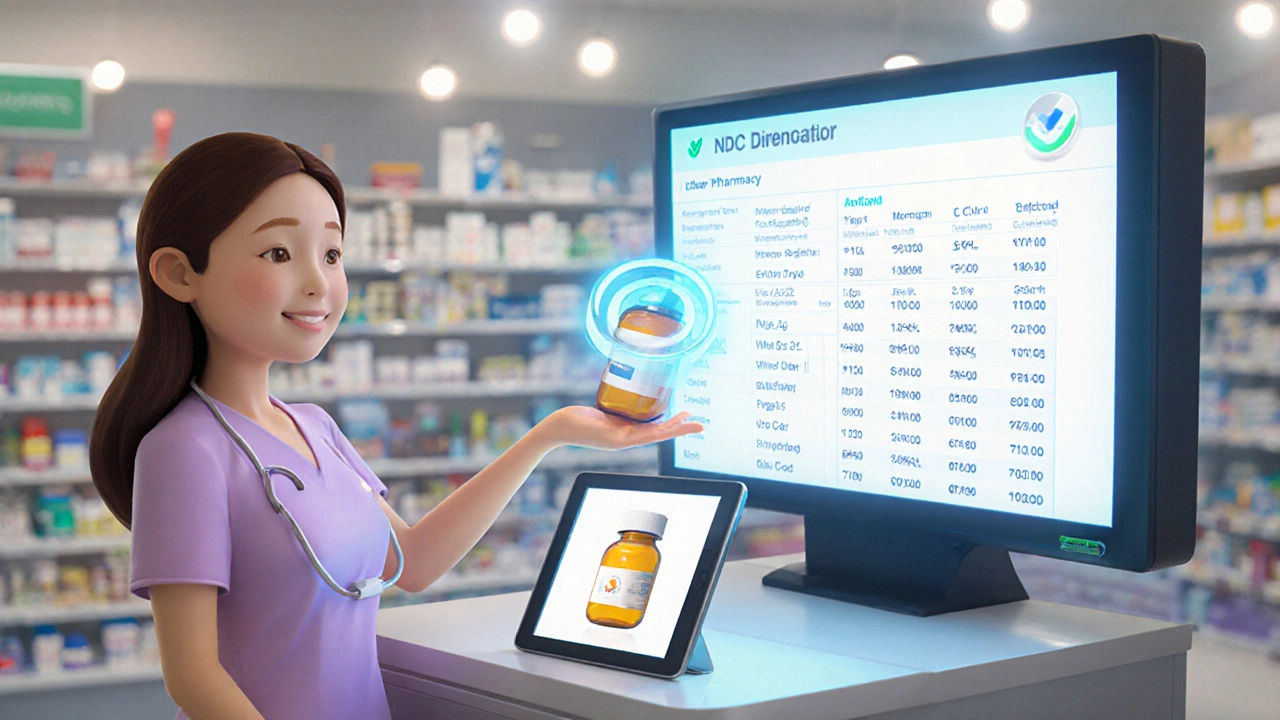
What to Do If Something’s Wrong
If you spot an error, speak up. Right then. Don’t wait. Say: “This doesn’t match what my doctor prescribed.” Most pharmacists will apologize and fix it. If they brush you off, ask to speak to the manager. If they still won’t help, report it. You can file a complaint with your state’s pharmacy board or with the FDA’s MedWatch program. You’re not being difficult - you’re protecting your health.Why This Matters More Than You Think
The cost of a single medication error can be huge - hospital stays, emergency visits, even death. But the good news? Every dollar spent on patient verification saves $8.73 in avoided costs. That’s why CMS now penalizes pharmacies with error rates above 0.85%. This isn’t about blaming pharmacists. It’s about teamwork. Pharmacists scan, verify, and counsel. But you’re the one who knows your body, your history, and your usual meds. You’re the final safety net.Final Tip: Make It a Habit
Don’t wait until you’re handed a bag of pills to think about verification. The next time you pick up a prescription, bring your checklist with you. Write down the name, strength, and instructions before you go. Compare them when you get there. You wouldn’t buy a car without checking the engine. Don’t take a pill without checking the label.What should I do if I realize I took the wrong medication after leaving the pharmacy?
Stop taking the medication immediately. Call your doctor or pharmacist right away. If you’re experiencing symptoms like dizziness, nausea, chest pain, or confusion, go to the nearest emergency room. Keep the medication and packaging - they’ll help professionals identify what happened. Don’t throw it away.
Can I verify my prescription over the phone or online?
No. You cannot safely verify a prescription without seeing the actual medication. Phone or digital confirmations don’t let you check the pill’s color, size, or packaging. Even if you get a digital photo from the pharmacy, it’s not a substitute for holding the bottle and counting the pills yourself.
Why do I sometimes get different-looking pills even when the name is the same?
That’s usually because your pharmacy switched to a different generic manufacturer. Generic drugs must contain the same active ingredient, but they can look different in shape, color, or markings. Always ask: “Is this the same medicine I got before?” If you’re unsure, check the NDC number on the label against your previous prescription.
Should I verify my prescription even if I’ve been taking the same medicine for years?
Yes. Even long-term prescriptions can be misfilled. A doctor might change the dose without telling you. The pharmacy might run out of your usual brand and substitute a different generic. Or someone else’s prescription might be accidentally pulled. Never assume - always check.
Are mail-order pharmacies safer or riskier than in-person pharmacies?
Mail-order pharmacies have a slightly higher error rate - about 1.7 errors per 100 prescriptions compared to 1.2 for in-person pharmacies. That’s because there’s no face-to-face check. You can’t hold the bottle, count the pills, or ask questions on the spot. Always open the package and verify everything before taking the first dose.
Kane Ren
November 23, 2025 AT 13:46This is the kind of post that should be plastered on every pharmacy wall. I used to just grab my scripts and leave-until my grandma almost got the wrong blood pressure med. Three minutes saved her a hospital trip. Do the check. Always.
Dalton Adams
November 25, 2025 AT 13:35Wow, another ‘patient empowerment’ piece that ignores systemic failures. Pharmacies are understaffed because insurance companies reimburse $2 per script. You want fewer errors? Pay pharmacists enough to not be working 12-hour shifts. Your checklist? Cute. Band-aid on a hemorrhage. 😒
Olanrewaju Jeph
November 25, 2025 AT 15:32Excellent breakdown. I work in healthcare in Nigeria, and I’ve seen how easily meds get mixed up even in well-run clinics. The NDC check is critical-most patients don’t know it exists. This should be translated into local languages and distributed in community centers.
Suzan Wanjiru
November 26, 2025 AT 17:01Always count the pills. I once got 100 instead of 30 for my thyroid med and didn’t notice until I ran out a week early. Never assume. Always check. Simple as that.
Charmaine Barcelon
November 28, 2025 AT 09:51Ugh. Why do people think they know more than pharmacists? You’re not a doctor. You’re not a pharmacist. You’re just a person who googled ‘medication errors’ and now thinks you’re an expert. You’re lucky they don’t charge you extra for your incompetence.
Javier Rain
November 29, 2025 AT 06:05Charmaine, chill. Not everyone’s trying to overstep-they’re trying to survive. I’ve seen people die because they didn’t ask. This checklist isn’t about being an expert. It’s about being alive. Let’s celebrate the people who care enough to check, not shame them.
Karla Morales
November 30, 2025 AT 02:44📊 Data point: According to the 2023 JAMA study, patient verification reduces dispensing errors by 37.2% (CI 34.1–40.3). The real issue? Only 18% of patients perform even one verification step. This isn’t about blame-it’s about behavioral economics. Nudges work. Education works. But only if you’re willing to engage. 📚💊
Jennifer Shannon
December 1, 2025 AT 21:25You know, I used to think this was overkill-until my mom took the wrong antibiotic and ended up in septic shock. Now, I carry a laminated copy of this checklist in my wallet. I don’t just check my own meds-I check my kids’, my dad’s, even my neighbor’s when she’s too dizzy to read the label. It’s not about distrust. It’s about love. We’re all just trying to make it through another day without getting poisoned by a typo. 🌿
Pramod Kumar
December 3, 2025 AT 19:00Back home in Kerala, we don’t have barcode scanners-but we have aunts who remember every pill color since 1998. My aunty always says, ‘If it looks different, ask twice.’ No tech beats human memory when it’s rooted in care. Maybe we don’t need fancy apps-just more people who care enough to notice.
Kezia Katherine Lewis
December 5, 2025 AT 17:54Per the DSCSA Phase 2 requirements, serialized product identifiers (SPIs) are now mandated for all prescription drugs at the package level. While this enhances traceability and counterfeit detection, it does not mitigate human dispensing errors related to dose, patient misidentification, or drug selection. Hence, patient verification remains a non-redundant, critical control point within the medication use process.
JD Mette
December 6, 2025 AT 03:50I’ve been on the same med for 12 years. Never checked until last month. Turned out the pharmacy switched generics-and the new one gave me terrible dizziness. I didn’t say anything because I didn’t want to seem difficult. I wish I had. Thanks for reminding me it’s okay to speak up.
shreyas yashas
December 6, 2025 AT 12:43My cousin got the wrong chemo drug once. Just one pill. Almost died. Now our whole family checks every script. You think it’s overkill? Wait till you’re the one holding the bottle wondering if that blue pill is supposed to be killing you.