Tiered Copays: Why Your Generic Drug Costs More Than Expected
 Jul, 29 2026
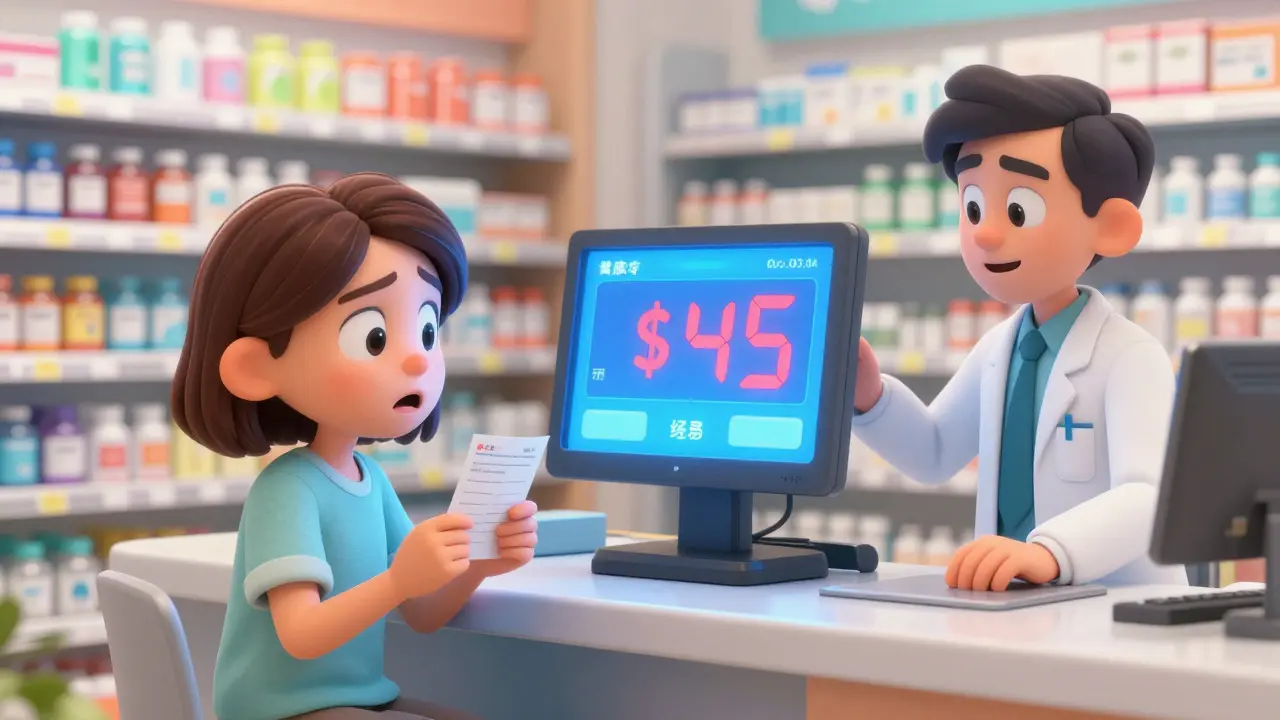
You walk into the pharmacy, hand over your prescription for a standard generic medication, and expect to pay a small, predictable fee. Instead, the cashier tells you it’s $45 instead of the usual $10. You look at the label-it says 'generic.' It’s not a brand-name drug. So why is it costing you more? This confusion is becoming the new normal for millions of Americans navigating tiered copay systems, which are structured prescription drug cost-sharing models that categorize medications into price tiers based on negotiated rebates rather than clinical necessity.
The short answer is that 'generic' no longer guarantees the lowest price tag. Insurance plans have moved away from flat rates to complex tiered structures where the cost depends on contracts between insurers and manufacturers, not just the chemical composition of the pill. Understanding this shift is crucial because it directly impacts your monthly budget and medication adherence.
How Tiered Formularies Actually Work
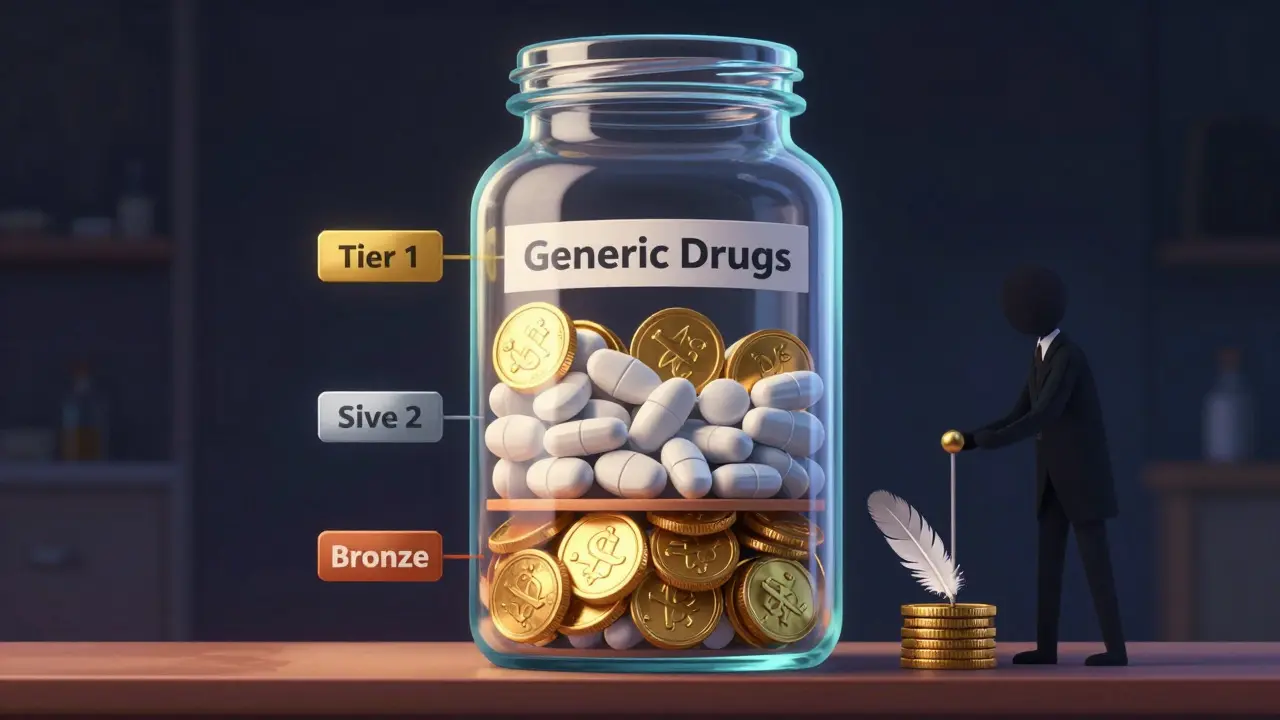
To understand why your bill changed, you first need to see how the system is built. In the past, many plans used a flat copay-say, $10 for any generic drug. Today, almost all major health plans, including 98% of employer-sponsored plans and nearly all Medicare Part D plans, use a tiered structure. Think of these tiers as shelves in a grocery store, but instead of organizing by product type, they organize by how much the insurance company paid to stock the shelf.
| Tier Level | Drug Type | Typical Cost (30-day supply) |
|---|---|---|
| Tier 1 | Preferred Generics | $0 - $15 |
| Tier 2 | Non-Preferred Generics / Preferred Brands | $25 - $50 |
| Tier 3 | Non-Preferred Brand Names | $60 - $100 |
| Tier 4 & 5 | Specialty Medications | 20% - 40% Coinsurance |
Pharmacy Benefit Managers (PBMs) like Express Scripts, CVS Caremark, and OptumRx design these formularies. Their goal is to steer patients toward drugs where they have negotiated the deepest discounts. If a manufacturer offers a bigger rebate, their drug lands on Tier 1. If they don’t, it might sit on Tier 2 or 3, even if it’s chemically identical to the cheaper option.
Why Identical Generics Have Different Prices
This is the most frustrating part for patients: two pills can contain the exact same active ingredient, meet the same FDA standards for safety and efficacy, yet cost you twice as much. How does this happen?
It comes down to business deals, not medical science. When multiple companies produce a generic version of a popular drug, the PBM negotiates with each one. The company that offers the best financial deal gets 'preferred' status. The others become 'non-preferred.'
- Rebate Contracts: As Dr. Dennis G. Smith, former Director of the Center for Medicaid and CHIP Services, noted, preferred status is about rebates, not clinical superiority. If a manufacturer’s contract expires or they lower their rebate offer, their generic drug may move from Tier 1 to Tier 2 overnight.
- Market Competition: Sometimes, a newer generic entrant undercuts older manufacturers on price to gain market share. Insurers reward the new low-price provider with Tier 1 status, leaving the older generic makers in higher tiers.
- Supply Chain Issues: During shortages, insurers might temporarily place certain generics in higher tiers to manage inventory or encourage switching to available alternatives.
A study by Kamal-Bahl and Briesacher highlighted this issue with hypertension medications, showing that patients often face higher costs for non-preferred generics despite there being zero difference in therapeutic outcome. Essentially, you are paying extra because your specific pharmacy or insurer has a better deal with a different manufacturer.
The Rise of Specialty Generics
Not all generics are cheap. A growing category involves 'specialty generics.' These are generic versions of complex drugs, often used for conditions like rheumatoid arthritis or multiple sclerosis. Even though they are generic, they can cost hundreds or thousands of dollars per month.
According to BOC Pharmacy Group, approximately 12-18% of generic medications are classified as specialty drugs. These usually fall into Tier 4 or 5. Instead of a flat copay, you pay coinsurance-a percentage of the drug’s total cost. If a generic biologic costs $5,000 a month and your plan requires 30% coinsurance, your bill is $1,500. This is a stark contrast to the $10 copay you might expect for a standard generic antibiotic.
Strategies to Lower Your Out-of-Pocket Costs
You aren’t powerless in this system. While you can’t negotiate the PBM contracts yourself, you can navigate the formulary to find savings. Here is how to take control of your prescription costs.
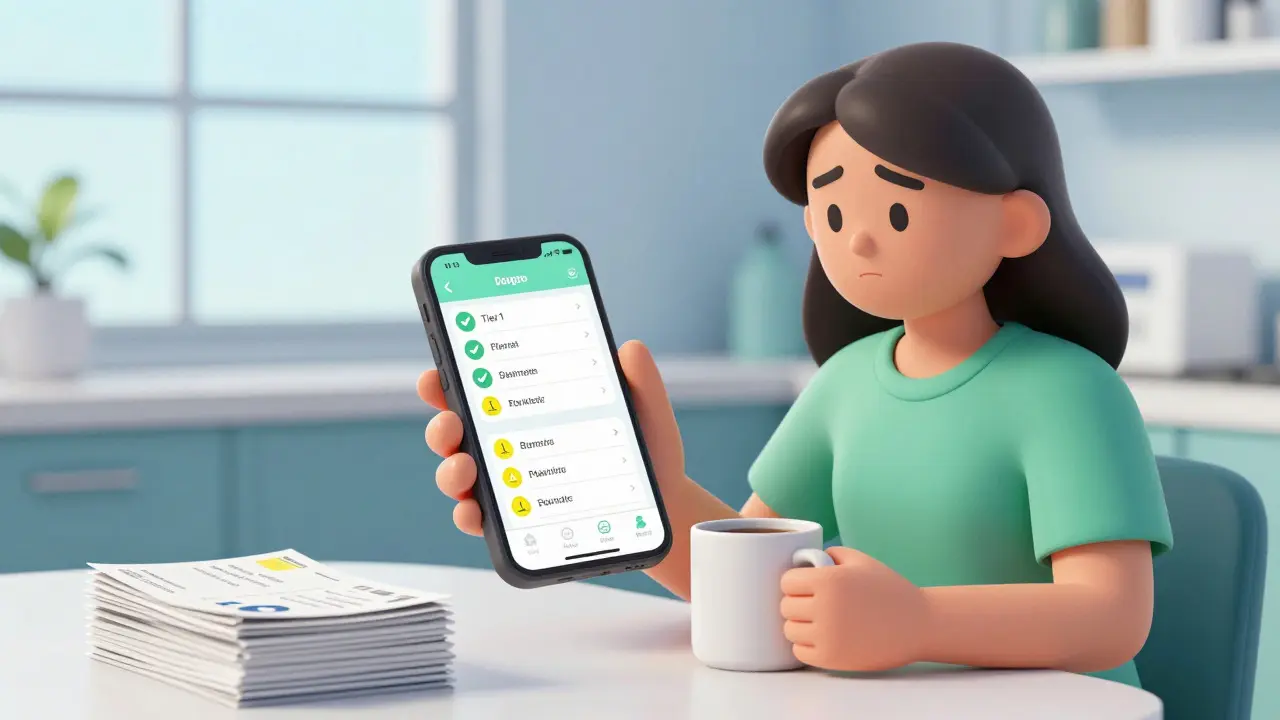
- Check the Formulary Before Filling: Don’t wait until the pharmacy counter. Use your insurer’s online tool (like Humana’s Drug Cost Lookup) or third-party apps like GoodRx to check the tier status of your medication before your doctor writes the script.
- Ask for Therapeutic Interchanges: If your current generic is Tier 2, ask your pharmacist or doctor if there is a Tier 1 alternative. Pharmacists can often substitute a preferred generic without needing a new prescription, saving you money instantly.
- Appeal Tier Changes: If a drug moves to a higher tier mid-year and causes you financial hardship, you can file an exception request. According to the Medicare Rights Center, therapeutic interchange requests are successful 63% of the time. For urgent cases, appeal deadlines are often just 72 hours, so act fast.
- Use Manufacturer Assistance Programs: For specialty generics, check if the manufacturer offers patient assistance programs. In 2023, these programs covered 22% of specialty drug costs for eligible patients.
What’s Changing in 2025 and Beyond
The landscape is shifting. The Inflation Reduction Act, effective in 2025, caps out-of-pocket costs for Medicare Part D beneficiaries at $2,000 annually. While this helps those on expensive specialty drugs, it doesn’t change the tiered structure itself. PBMs are still incentivized to push patients toward lower-cost tiers.
We are also seeing 'generic value tiers,' where high-volume drugs like atorvastatin or lisinopril are pushed to $0 copays to attract members, while less common generics are bumped up. UnitedHealthcare implemented such changes in 2024, affecting 12 million members. Industry analysts predict that by 2026, we may see a consolidation of tiers, but the fundamental model-where price is driven by negotiation, not just chemistry-will remain.
Understanding that 'generic' doesn't always mean 'cheapest' is the first step. By actively checking your formulary and communicating with your healthcare providers, you can avoid surprise bills and ensure you’re getting the best financial deal available within your plan.
Why is my generic drug suddenly in a higher tier?
Your generic drug likely moved to a higher tier because the rebate contract between the manufacturer and your Pharmacy Benefit Manager (PBM) expired or changed. It is not due to a change in the drug's quality or effectiveness. PBMs prioritize drugs that offer them the highest financial rebates, placing those in Tier 1. If a competitor offers a better deal, your previous generic may be demoted to Tier 2 or 3.
Are Tier 1 generics safer than Tier 2 generics?
No. All generic drugs approved by the FDA must meet the same strict standards for safety, purity, strength, and stability. The tier placement is purely a financial decision based on negotiated discounts, not clinical superiority. A Tier 2 generic is chemically identical to a Tier 1 generic of the same medication.
Can I force my insurer to cover my preferred generic at a lower copay?
You can request a formulary exception or a therapeutic interchange. If you have a documented medical reason why the preferred generic doesn't work for you, your doctor can submit an appeal. Additionally, you can ask your pharmacist to substitute your current prescription with a Tier 1 equivalent if one exists, which often requires no paperwork from your doctor.
What is the difference between a copay and coinsurance for specialty drugs?
A copay is a fixed dollar amount (e.g., $10), while coinsurance is a percentage of the drug's total cost. Specialty drugs, often found in Tiers 4 and 5, typically require coinsurance (e.g., 30%). If the drug costs $1,000, you pay $300. This makes specialty generics significantly more expensive out-of-pocket than standard generics with flat copays.
How often do insurance formularies change?
Formularies are updated annually, usually in October for Medicare plans, with changes taking effect January 1. However, commercial plans can make mid-year changes. Data shows that 17% of commercial plans modified their formularies between January and June 2023. Always check your plan documents regularly for updates.