Pharmacy Reimbursement: The Hidden Financial Costs of Generic Substitution
 Jul, 11 2026
Walk into any pharmacy in the United States today, and you will likely see a pharmacist handing you a pill bottle with a generic label. It is the standard practice. For decades, we have been told that switching from brand-name drugs to generics is the single most effective way to lower healthcare costs. And on the surface, it works. Generic substitution rates have skyrocketed from just 33% of prescriptions in 1993 to over 90% today. But here is the catch: while patients save money at the counter, the financial mechanics behind this switch are broken for many stakeholders, particularly independent pharmacies.
The promise of generic substitution was simple: cheaper drugs mean lower costs for everyone. However, the reality is a complex web of opaque pricing, hidden fees, and perverse incentives managed by Pharmacy Benefit Managers (PBMs). These middlemen control the flow of money between insurers and pharmacies, and their profit models often rely on keeping drug prices artificially high rather than passing savings along. If you are a pharmacist, a payer, or even a patient wondering why your copay hasn't dropped as much as expected, understanding these financial implications is crucial.
How Pharmacy Reimbursement Actually Works
To understand why generic substitution is financially tricky, you first need to know how pharmacies get paid. It isn't as simple as "cost plus a small markup." The system relies on two main components: the ingredient cost and the dispensing fee.
For brand-name drugs, the ingredient cost is usually calculated by taking the Average Wholesale Price (AWP)-a list price that rarely reflects what anyone actually pays-and deducting a percentage. For generics, however, the landscape is different. Most payers use Maximum Allowable Cost (MAC) lists. These lists set a ceiling on what a pharmacy can be reimbursed for a specific generic drug. Ideally, this cap should reflect the actual purchase cost of the drug. In practice, MAC lists are often set too low, sometimes below what the pharmacy paid to buy the medication.
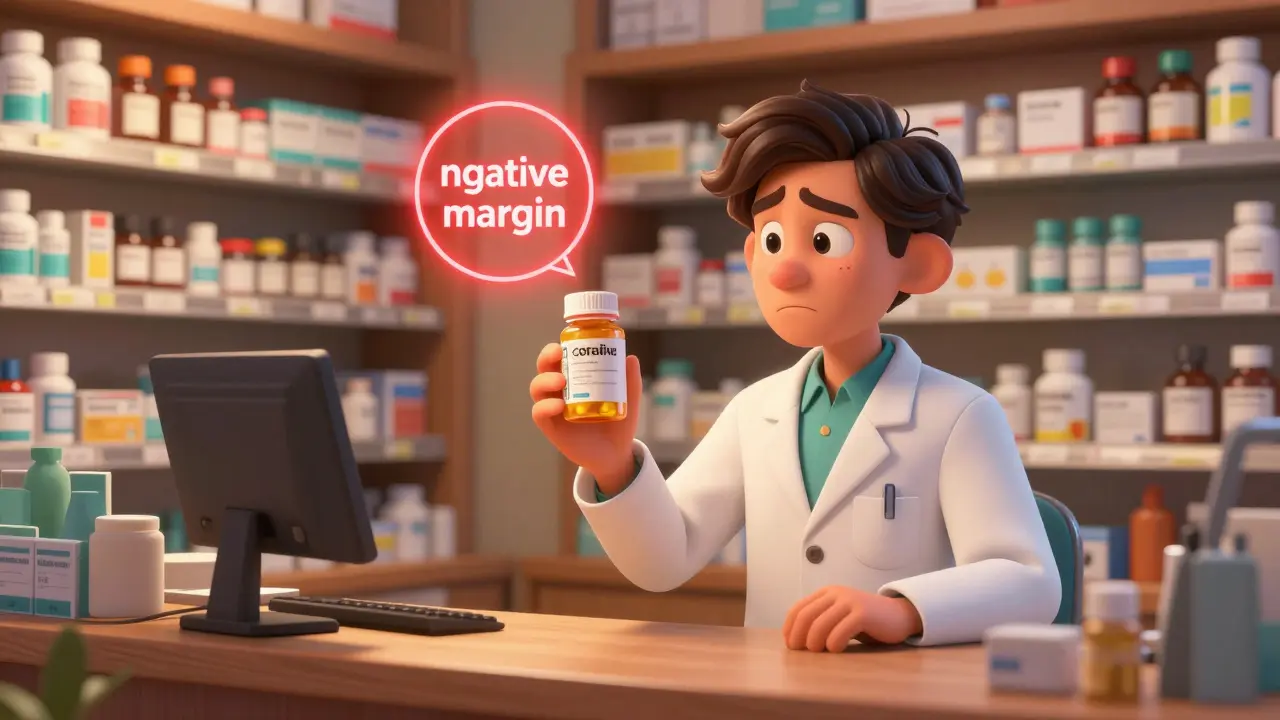
Here is where the trouble starts. When a pharmacy dispenses a generic drug, they expect to make a margin. Studies show that gross generic margins for pharmacies average around 42.7%, compared to a slim 3.5% for brand-name drugs. This difference is supposed to incentivize pharmacists to push generics. But if the MAC list price is lower than the acquisition cost, that margin disappears. Instead of making money, the pharmacy loses cash on every prescription filled. This phenomenon is known as negative reimbursements, and it has become a crisis for community pharmacies across the country.
The Role of PBMs and Spread Pricing
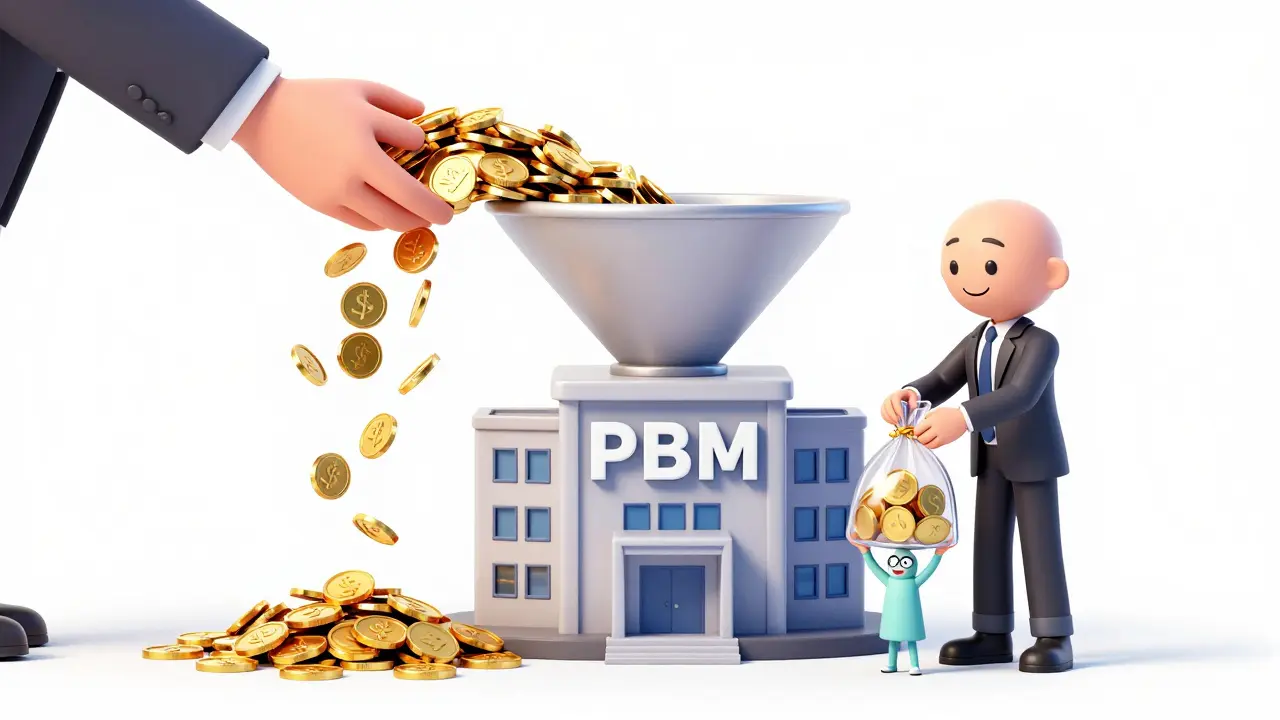
Pharmacy Benefit Managers (PBMs) sit between the insurance company (the payer) and the pharmacy. They negotiate drug prices and manage formularies-the lists of covered medications. Theoretically, they exist to control costs. In reality, many PBMs profit through a mechanism called spread pricing.
Spread pricing occurs when a PBM charges an insurer more for a drug than it reimburses the pharmacy. For example, a PBM might pay a pharmacy $10 for a generic antihypertensive but charge the insurer $15. The $5 difference is the "spread," which the PBM keeps as profit. This creates a dangerous incentive structure. Why would a PBM favor the cheapest possible generic if they can make more money by directing patients toward slightly more expensive alternatives? Research indicates that generics substituted by different drugs in the same therapeutic class can have prices up to 20.6 times higher than their true lowest-cost alternatives. That massive gap allows PBMs to maximize their spreads while claiming to prioritize cost-effective care.
This lack of transparency means that even though generic substitution rates are high, the savings aren't always reaching the bottom line of the healthcare system. Instead, they are being captured by intermediaries. As Dr. Stephen Schondelmeyer from the University of Minnesota has noted, this opacity enables PBMs to negotiate lower acquisition costs with pharmacies while charging plans higher reimbursement rates, effectively gaming the system against both providers and payers.
Cost-Plus vs. MAC-Based Models
There are two primary ways to fix-or break-this dynamic. The current dominant model is MAC-based reimbursement, which we’ve already discussed. The alternative is Cost-Plus Reimbursement. Under a cost-plus model, payers agree to reimburse pharmacies based on their actual acquisition cost plus a fixed percentage or fee. This sounds fairer, doesn’t it? It ensures pharmacies don’t lose money on prescriptions.
However, cost-plus models come with their own trade-offs. By capping the potential profit on generics, some argue that cost-plus reduces the incentive for pharmacies to aggressively promote generic substitution. If a pharmacy makes the same flat fee whether they dispense a cheap generic or a slightly pricier one, they may not go out of their way to find the absolute lowest-cost option. Additionally, implementing cost-plus requires immense administrative effort to verify actual purchase prices, leading to industry resistance.
Despite these hurdles, data suggests that cost-plus could stabilize the market. AQP PBM accounts, for instance, showed that achieving generic dispensing rates above 70% led to immediate bottom-line savings. Yet, without transparent pricing, the shift remains difficult. The tension between protecting pharmacy viability and controlling overall drug spending is at the heart of this debate.
| Feature | MAC-Based Reimbursement | Cost-Plus Reimbursement |
|---|---|---|
| Pricing Basis | Fixed maximum price per drug | Actual acquisition cost + fee |
| Pharmacy Margin Risk | High risk of negative reimbursements | Low risk; margins are protected |
| PBM Profit Mechanism | Spread pricing opportunities | Limited spread pricing potential |
| Administrative Burden | Lower (standardized lists) | Higher (requires cost verification) |
| Incentive for Generics | Mixed (depends on MAC accuracy) | Strong (guaranteed profitability) |
Therapeutic Substitution: The Untapped Savings
We often focus on swapping Brand X for Generic X. But there is a deeper level of savings available through Therapeutic Substitution. This involves switching a patient from a brand-name drug to a clinically equivalent generic in a different chemical class, or choosing a lower-cost generic within the same class.
The Congressional Budget Office analyzed this in 2007 and found staggering differences in potential savings. Switching single-source brand-name prescriptions to generic alternatives in seven key therapeutic classes could have reduced costs by $4 billion-7% of total spending. In contrast, simply substituting generic counterparts for multiple-source brands saved only $900 million, less than 2%. The issue? Therapeutic substitution requires more clinical oversight and regulatory approval. Many state laws restrict pharmacists from making these switches without explicit prescriber authorization, limiting the financial impact despite the clear health benefits.
The Impact on Independent Pharmacies
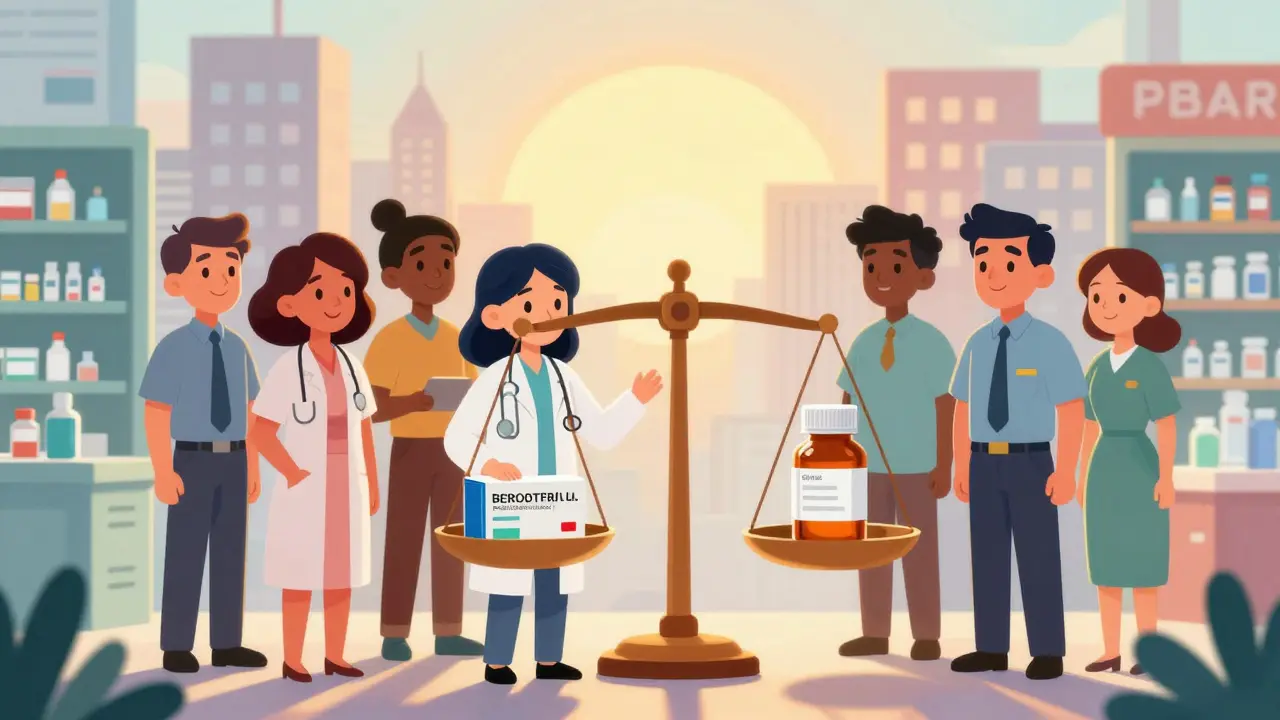
The financial pressure of current reimbursement structures is reshaping the American pharmacy landscape. Between 2018 and 2022, over 3,000 independent pharmacies closed their doors. Why? Because they cannot survive on razor-thin or negative margins. Large chain pharmacies can absorb losses better due to economies of scale, but independents operate on tighter budgets.
This consolidation hurts patients. Independent pharmacies often provide personalized care, manage complex medication regimens, and serve rural or underserved communities. When they close, access to care diminishes. Furthermore, as PBMs consolidate-with CVS Caremark, Express Scripts, and OptumRx controlling roughly 80% of claims-they gain significant power to dictate terms. This monopoly-like control allows them to implement restrictive policies like Generic Effectiveness Rates (GERs), which cap total generic spending but may inadvertently limit stock of necessary specialty drugs if pharmacies fear non-reimbursement.
Regulatory Scrutiny and Future Outlook
The tide is beginning to turn. The Federal Trade Commission (FTC) has intensified its investigation into PBM practices, specifically targeting spread pricing and opaque MAC lists. The Inflation Reduction Act of 2022 introduced new transparency requirements for Medicare Part D, setting a precedent that could spill over into commercial markets. Additionally, Prescription Drug Affordability Boards (PDABs) in 15 states are establishing Upper Payment Limits (UPLs) to curb excessive drug prices.
Experts project that these changes could reduce average drug prices by 5-15% by 2031. However, implementation will be challenging. Balancing the need for pharmacy profitability with the demand for lower consumer costs requires careful policy design. The goal must be a system where generic substitution truly lowers costs for everyone, not just shifts profits to middlemen.
What is spread pricing in pharmacy reimbursement?
Spread pricing occurs when a Pharmacy Benefit Manager (PBM) charges an insurance plan more for a medication than it reimburses the pharmacy. The difference between the amount charged to the insurer and the amount paid to the pharmacy is kept by the PBM as profit. This practice is common with generic drugs and contributes to higher overall healthcare costs without providing additional value to patients.
Why do pharmacies lose money on generic drugs?
Pharmacies often lose money on generics because of Maximum Allowable Cost (MAC) lists. These lists set a maximum reimbursement rate for off-patent drugs. If the MAC price is set lower than the pharmacy's actual acquisition cost, the pharmacy incurs a loss on every prescription filled. This is exacerbated by opaque pricing negotiations between PBMs and manufacturers.
How does generic substitution save money?
Generic substitution saves money by replacing expensive brand-name drugs with bioequivalent lower-cost alternatives. While the savings are significant for patients and insurers, the full benefit is often diluted by PBM spread pricing and inefficient reimbursement structures. True savings are maximized when combined with therapeutic substitution and transparent pricing models.
What is the difference between MAC lists and Cost-Plus reimbursement?
MAC lists set a fixed maximum price for reimbursing generic drugs, which can lead to negative margins if the cap is too low. Cost-Plus reimbursement pays pharmacies based on their actual acquisition cost plus a agreed-upon fee or percentage. Cost-Plus protects pharmacy profitability but requires more administrative oversight to verify costs.
Are independent pharmacies closing due to reimbursement issues?
Yes, reimbursement pressures are a major factor in the closure of independent pharmacies. With narrow or negative margins on generic drugs, many independents cannot sustain operations against larger chains that benefit from economies of scale. Over 3,000 independent pharmacies closed between 2018 and 2022, largely driven by these financial constraints.