Motion Sickness Medications: Scopolamine and Sedative Interactions
 Dec, 30 2025
Scopolamine Medication Interaction Checker
Check Your Medication Interactions
This tool helps identify dangerous combinations with scopolamine patches. Based on medical evidence from the article.
How to Use Safely
Never combine with: Alcohol, benzodiazepines (Xanax, Valium), opioids, antihistamines (Benadryl), or CBD products.
Key safety tips: - Avoid alcohol entirely - Wait 24 hours after patch removal before driving - Apply to clean skin behind ear at least 4 hours before travel - Remove immediately if drowsy
Source: Medical guidelines from FDA and American Society of Anesthesiologists
Scopolamine is the most effective single medication for preventing motion sickness, but its power comes with a serious trade-off: it doesn’t just stop nausea-it slows your brain down. If you’re planning a cruise, a long flight, or a rough boat ride, you might hear about the scopolamine patch (Transderm Scōp) as a miracle solution. And for many, it is. But if you’re also taking sleep aids, anxiety meds, or just having a drink, you could be walking into a dangerous mix.
How Scopolamine Actually Works
Scopolamine, also known as hyoscine, blocks a key brain chemical called acetylcholine. That’s what stops your inner ear from sending false motion signals to your brain, which is what causes nausea and vomiting. Unlike oral meds like Dramamine or Bonine that wear off in a few hours, the patch delivers a steady dose for up to 72 hours. That’s why it’s the go-to for Navy pilots, commercial fishermen, and long-haul cruisers.It’s not just convenient-it’s effective. A 2019 study with 150 people in a motion simulator found scopolamine reduced symptoms by 78.3%. Compare that to Dramamine at 64.2% and Bonine at 59.7%. But here’s the catch: the same study showed 45% of users felt drowsy, 67% had dry mouth, and 32% reported blurred vision. These aren’t rare side effects-they’re the norm.
Why Sedatives Are a Problem
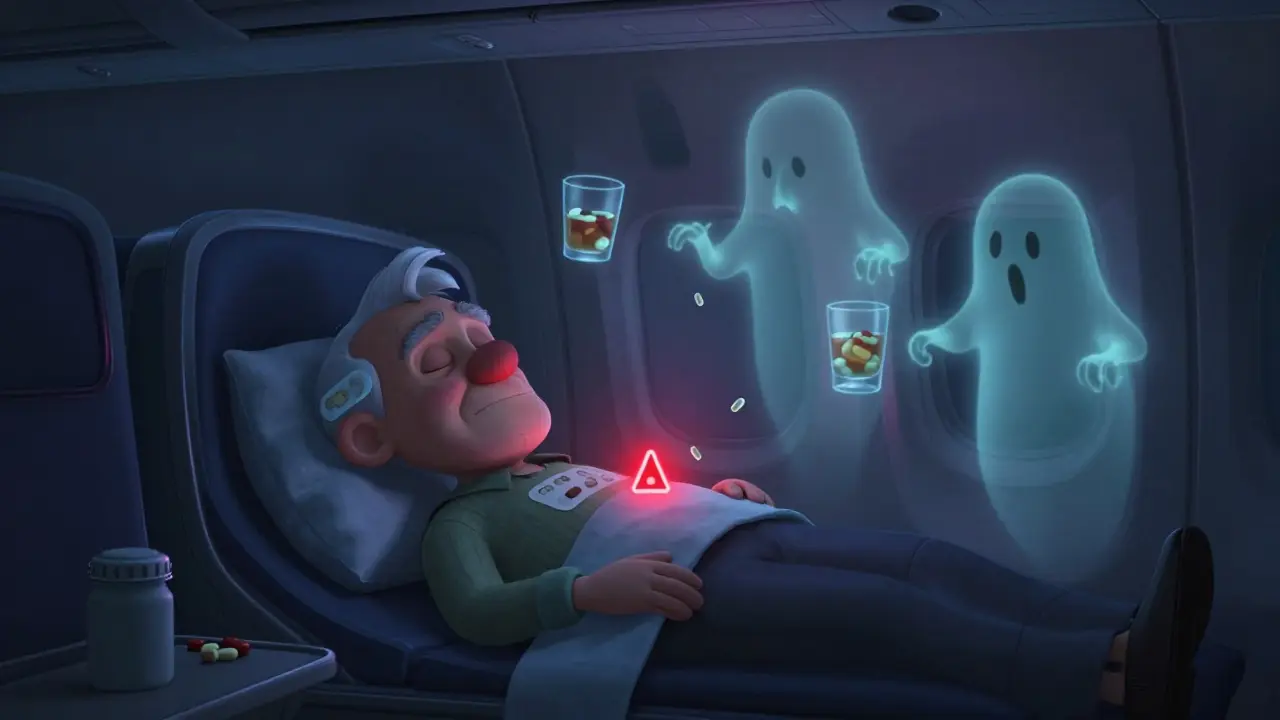
Scopolamine doesn’t just make you sleepy-it depresses your central nervous system. When you add other CNS depressants, the effect multiplies. Alcohol, benzodiazepines like Xanax or Valium, opioids like oxycodone, and even some sleep pills can turn mild drowsiness into dangerous sedation.Research from the American Society of Anesthesiologists shows elderly patients over 65 who take scopolamine with benzodiazepines are 40% more likely to develop delirium. In rodent studies, combining scopolamine with sedatives increased the risk of respiratory depression by 3.2 times. That’s not theoretical-it’s life-threatening.
Real-world stories back this up. On Reddit, users on r/travel describe waking up disoriented, forgetting where they are, or passing out after one beer. One cruise crew member with 12 years of patch use said he’s seen colleagues become severely confused after drinking just a single glass of wine. On Drugs.com, 73% of negative reviews mention sedation as the main reason people stopped using it.
What You Should Never Mix With Scopolamine
Here’s a short list of common substances that can turn scopolamine into a risk:- Alcohol - Even one drink can double drowsiness and impair coordination. The EU requires explicit warnings on labels because of this.
- Benzodiazepines - Xanax, Ativan, Klonopin, and similar drugs amplify sedation and memory loss.
- Opioids - Painkillers like hydrocodone or codeine can suppress breathing when combined with scopolamine.
- Antihistamines - Over-the-counter sleep aids like diphenhydramine (Benadryl) add to the anticholinergic burden.
- CBD products - New data from 2024 shows CBD may inhibit liver enzymes that break down scopolamine, increasing its concentration by 22-35%.
- Some antidepressants - SSRIs and tricyclics can have additive anticholinergic effects, especially in older adults.
It’s not just about what you take on purpose. Many people don’t realize their daily supplements or over-the-counter meds contain hidden depressants. Cold medicines, allergy pills, and even some herbal teas can contain diphenhydramine or doxylamine.
Who Should Avoid Scopolamine Altogether
Scopolamine isn’t safe for everyone. It’s contraindicated if you have:- Glaucoma (it raises eye pressure)
- Myasthenia gravis (it worsens muscle weakness)
- Blockages in your digestive tract
- Severe liver disease (it’s metabolized there)
- Cognitive impairment or dementia
And while it’s not officially banned during pregnancy (FDA Category C), there’s not enough safety data to recommend it. If you’re pregnant or breastfeeding, talk to your doctor about alternatives like ginger or acupressure bands.
How to Use It Safely
If you decide to use the patch, here’s how to minimize risk:- Apply it to clean, dry skin behind your ear at least 4 hours before travel. Effects peak at 24 hours.
- Don’t touch the patch. Wash your hands immediately after handling it to avoid accidentally getting the drug in your eyes.
- Remove it as soon as you no longer need it. The drug keeps working for hours after removal, but symptoms usually fade within 12-24 hours.
- Avoid driving, operating machinery, or making important decisions for the first 24 hours.
- Never combine it with alcohol or other sedatives-even one drink can be risky.
- Consider applying it the night before travel. That way, the worst drowsiness happens while you’re sleeping.
Some users cut the patch in half to reduce the dose, but that’s off-label use. Manufacturers don’t recommend it, and there’s no guarantee the dose will be even. If you need less sedation, ask your doctor about the new FDA-approved 0.5 mg patch, released in April 2024. It’s designed to keep anti-nausea effects while cutting sedation by about 30%.

Alternatives When Sedation Is Too Much
If scopolamine knocks you out too hard, here are other options:- Dimenhydrinate (Dramamine) - Works fast, but lasts only 4-6 hours. Causes drowsiness but less dry mouth than scopolamine.
- Meclizine (Bonine) - Less sedating than Dramamine, good for shorter trips. Takes 1 hour to work.
- Ginger - Studies show 1 gram of ginger powder can reduce nausea as well as some medications. Safe, natural, and no drug interactions.
- Acupressure bands - Worn on the wrist, they stimulate the P6 point. No side effects, though evidence is mixed.
- Prophylactic caffeine - Some users report that a cup of coffee before or during travel helps fight drowsiness. But be careful-caffeine can increase heart rate and anxiety, especially with scopolamine.
For most people, the best approach is to try the lowest effective dose first. If you’re a frequent traveler, keep a journal: note what you took, how you felt, and what worked. That’s the best way to personalize your treatment.
The Future of Motion Sickness Treatment
Scientists are working on better options. A new compound called penehyclidine hydrochloride, still in trials, shows promise with 37% less sedation than scopolamine. The NIH is also testing a patch that slowly releases caffeine alongside scopolamine-results are expected in late 2025.But for now, scopolamine remains the gold standard. It’s on the WHO’s List of Essential Medicines for a reason. It works when nothing else does. But that doesn’t mean it’s risk-free. The real challenge isn’t finding a solution-it’s knowing when to say no.
Can I drink alcohol with a scopolamine patch?
No. Even one drink can dangerously increase sedation, dizziness, and confusion. The European Medicines Agency requires explicit warnings on scopolamine labels because of this risk. Many users report severe disorientation after just one beer while wearing the patch. Avoid alcohol entirely while using scopolamine.
How long does scopolamine stay in your system?
The patch releases scopolamine slowly over 72 hours, but the drug’s half-life is 4-6 hours. After removing the patch, most of it clears from your bloodstream within 24 hours. However, side effects like drowsiness and blurred vision can linger for up to 48 hours, especially in older adults or those with liver issues.
Is scopolamine safe for older adults?
It’s risky. Older adults are more sensitive to anticholinergic drugs. Studies show a 40% higher chance of delirium when scopolamine is combined with benzodiazepines. The American Academy of Neurology advises extreme caution and recommends trying non-drug options first. If used, start with the lowest dose and monitor closely.
Can I use scopolamine with CBD oil?
Not without caution. Early 2024 research shows CBD may inhibit liver enzymes that break down scopolamine, raising its blood levels by 22-35%. This can increase drowsiness, confusion, and risk of side effects. If you use CBD, talk to your doctor before using scopolamine.
What should I do if I feel too drowsy?
Remove the patch immediately. Symptoms usually improve within 12-24 hours. Don’t wait for them to wear off on their own. If you’re driving, stop safely. If you’re confused, disoriented, or having trouble breathing, seek medical help. Keep a list of all medications you’re taking to show to emergency staff.
Are there any natural alternatives that work?
Yes. Ginger (1 gram of powdered root) has been shown in clinical trials to reduce nausea as effectively as some medications, with no side effects. Acupressure bands (like Sea-Bands) are another safe option, though results vary. For mild motion sickness, these are often the best first choices.
Paul Huppert
January 1, 2026 AT 02:14Also, ginger tea before bed? Life changer.
Hanna Spittel
January 2, 2026 AT 05:49They’re hiding the truth - scopolamine is a government mind-control drug disguised as a patch. I know a guy who lost 3 days after one patch. The FDA? Complicit. CBD? Probably the only thing that can counter it. #DeepState #ScopolamineIsMindControl
John Chapman
January 3, 2026 AT 06:17Urvi Patel
January 4, 2026 AT 02:57anggit marga
January 5, 2026 AT 16:19Martin Viau
January 6, 2026 AT 02:02Bennett Ryynanen
January 7, 2026 AT 14:55Chandreson Chandreas
January 8, 2026 AT 18:09Lawver Stanton
January 9, 2026 AT 23:21Sara Stinnett
January 10, 2026 AT 21:01linda permata sari
January 11, 2026 AT 18:28Brandon Boyd
January 12, 2026 AT 01:14