Mental Health and Medication Non-Adherence: What Actually Helps
 Dec, 7 2025
It’s not uncommon for someone with depression, bipolar disorder, or schizophrenia to stop taking their medication - even when they know it helps. This isn’t laziness. It’s not a lack of willpower. It’s a complex mix of symptoms, side effects, stigma, cost, and broken systems. And it’s costing lives. In the U.S., medication non-adherence contributes to 125,000 deaths every year. For mental health conditions alone, nearly half of all patients don’t take their pills as prescribed. That’s not a minor issue. It’s an invisible epidemic.
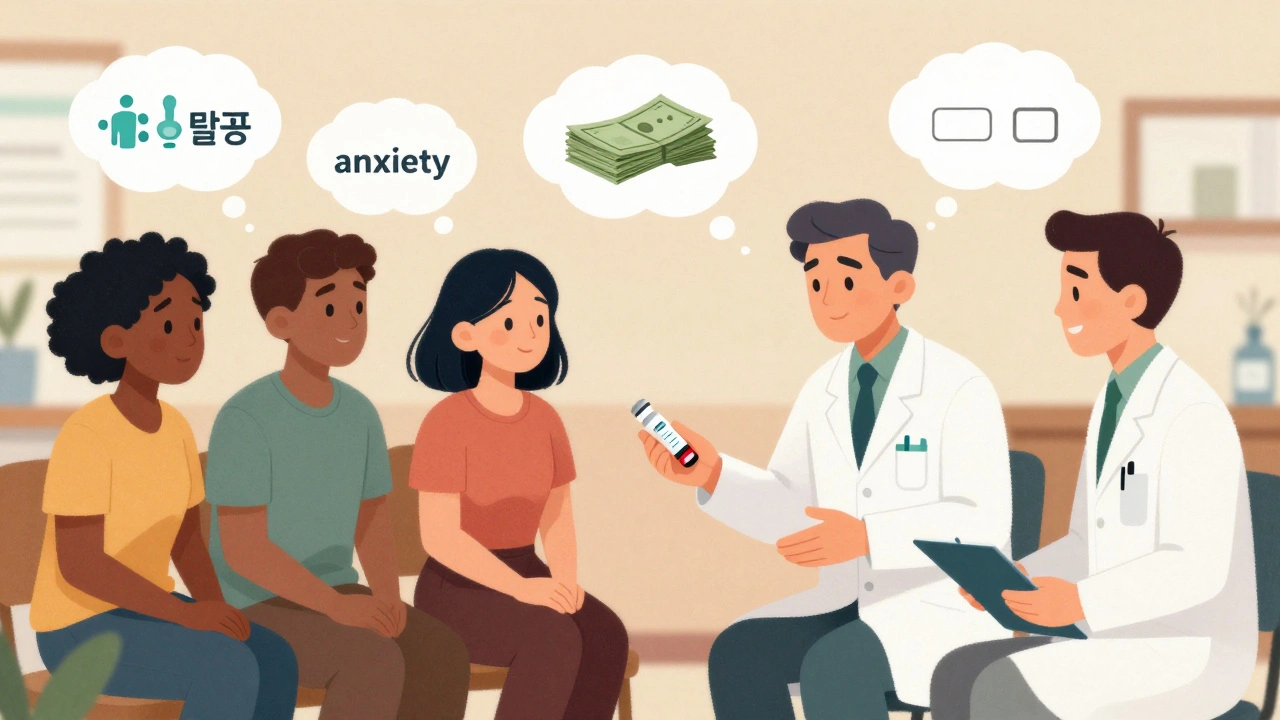
Why People Stop Taking Their Mental Health Medication
People don’t stop because they don’t care. They stop because the medicine makes them feel worse - or because they don’t believe they need it.Side effects are a major driver. Weight gain from antipsychotics. Brain fog from mood stabilizers. Sexual dysfunction from SSRIs. These aren’t rare. They’re common. And when you’re already struggling to get out of bed, adding a pill that makes you feel like a zombie isn’t appealing.
Then there’s insight. If you’re in the grip of psychosis, you don’t believe you’re ill. If you’re in a manic phase, you feel unstoppable - why take something that’ll dull that energy? Depression makes you feel worthless, so you think, “What’s the point?”
Cost is another huge barrier. A monthly antipsychotic can run $300-$800 without insurance. Even with coverage, copays can be unaffordable. One Reddit user wrote: “I skipped my meds for three months because my insurance denied the generic. I ended up in the ER.”
And let’s not forget complexity. Taking four pills a day is hard. Taking them at the same time, every day, with or without food, while juggling work, childcare, or homelessness? That’s not just inconvenient - it’s nearly impossible.
What Works: The Real Solutions
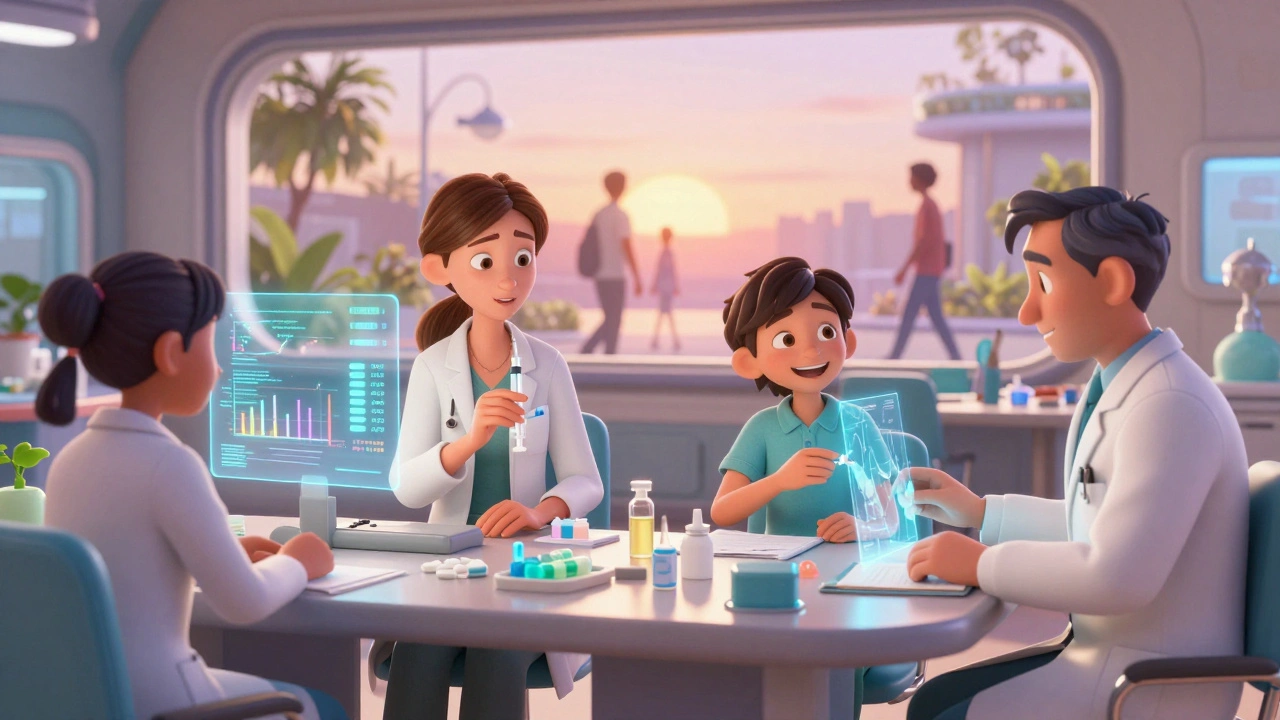
Not all interventions are created equal. Some feel nice but don’t move the needle. Others - backed by data - actually change outcomes.The strongest evidence points to pharmacist-led care. Not just handing out pill organizers. Not just reminding people to take their meds. Real collaboration: pharmacists working side-by-side with psychiatrists, reviewing every prescription, adjusting doses, managing side effects, and meeting patients where they are.
A 2025 study in Frontiers in Psychiatry showed that patients in a pharmacist-psychiatrist team had a 142% greater improvement in adherence than those getting standard care. That’s not a small win. That’s life-changing. These teams don’t just prescribe. They listen. They simplify. They find cheaper alternatives. They show up.
One hospital system in Northern California saw a 32.7% increase in adherence after launching a pharmacist-led program. Hospitalizations dropped by 18.3%. Star ratings went up. This isn’t theory. It’s happening.
Another proven strategy? Simplifying the regimen. One daily dose instead of three. A long-acting injectable every two weeks instead of swallowing pills every morning. A 2023 JAMA Psychiatry study found injectables had an 87% adherence rate - nearly double that of oral versions. And patients reported feeling more in control.
And here’s something most providers never mention: addressing the specific thoughts that lead to non-adherence. If a patient says, “I don’t need this because I’m fine now,” don’t just say, “You’re not.” Ask: “What does ‘fine’ look like to you? What happens if you stop?” That’s not confrontation. That’s connection.
Technology Isn’t the Answer - But It Can Help
Apps, text reminders, smart pill bottles - they sound great. But the data is underwhelming. Digital tools boost adherence by 1.8% to 2% on average. That’s barely a blip.Why? Because technology doesn’t fix shame. It doesn’t pay for your meds. It doesn’t help you find a therapist who understands you. It doesn’t give you a ride to the pharmacy when you’re too depressed to leave the house.
But when used right - as a tool for clinicians, not a replacement - it shines. Predictive analytics can flag patients at risk: someone who missed three appointments, hasn’t filled a script in 45 days, lives in a high-poverty zip code. Then, a human reaches out. That’s powerful.
And emerging tools like smartphone-based digital phenotyping are showing promise. A 2025 Nature Mental Health study used passive data - typing speed, location patterns, voice tone - to predict when someone was about to miss a dose. Accuracy? 82.4%. That’s not sci-fi. That’s a warning system that could save lives.
The System Is Broken - But It’s Fixable
Here’s the hard truth: no amount of patient education will fix a system that makes treatment expensive, complicated, and disconnected.Medicare and private insurers now tie payments to adherence metrics. UnitedHealthcare’s 2025 contracts make adherence a factor in 12% of provider pay. CMS is increasing the weight of adherence in Star Ratings from 10% to 15% by 2027. That’s a start. But money alone won’t help if pharmacists aren’t part of the care team.
Right now, 63% of community mental health centers that try to add pharmacists to their teams fail within a year. Why? Workflow chaos. No training. No reimbursement. No support.
The fix? Three things:
- Integrate pharmacists into every mental health team. Not as an afterthought. As a core member.
- Make adherence metrics part of clinician evaluations. If you’re paid based on how many patients you see, you won’t spend 45 minutes explaining why their meds matter. But if your bonus depends on adherence? You will.
- Remove financial barriers. Generic antipsychotics cost under $10 a month. Why are patients paying $100? Insurance policies need to change. So do pricing structures.
And yes - patients need education. But not the kind that says, “Take your meds.” The kind that says, “Here’s what this pill does to your brain. Here’s why you feel worse before you feel better. Here’s what to do if the side effects hit. And here’s how to talk to your doctor without feeling judged.”
What You Can Do Right Now
If you’re a patient: Talk to your pharmacist. They’re not just the person who hands you the bottle. They’re trained in psychiatric meds. Ask: “Is there a once-daily version? A cheaper option? A shot I can get every few weeks?”If you’re a caregiver: Don’t nag. Listen. Ask, “What’s the hardest part about taking this?” Then help them solve it - whether that’s setting alarms, calling the pharmacy, or calling the doctor to switch meds.
If you’re a provider: Stop assuming non-adherence is defiance. It’s usually despair. Start asking about cost. Ask about side effects. Ask about their goals. And if you’re not working with a pharmacist - find one. The data is clear: you’re not helping as much as you think.
And if you’re part of a health system: Invest in collaborative care. Train your staff. Pay your pharmacists to do more than count pills. Because when adherence goes up, hospitalizations go down. Lives go up.
This isn’t about compliance. It’s about dignity. It’s about giving people the chance to feel like themselves again - without having to choose between their health and their rent.
What’s Next
The future of mental health care isn’t in better apps or fancier pills. It’s in better teams. In systems that recognize that mental illness isn’t just a brain problem - it’s a social, economic, and human one.By 2026, Epic’s electronic health records will include real-time adherence alerts. CMS will tie even more funding to adherence. And long-acting injectables will become standard for many conditions.
But none of that matters unless we stop treating non-adherence as a patient failure - and start treating it as a system failure. And then fix it.
Anna Roh
December 8, 2025 AT 07:45This is so true. I stopped my meds for 6 months because the weight gain made me feel like a monster. No one talked about how it ruined my self-image. I didn't need another lecture. I needed someone to say, 'I get it.'
Katherine Chan
December 9, 2025 AT 21:10Thank you for writing this. I’ve been on the other side - watching my sister struggle. We stopped nagging and started asking, 'What’s the hardest part?' Turns out it was the cost. We found a patient assistance program. She’s been stable for 11 months now. Small wins matter.
Tim Tinh
December 10, 2025 AT 20:59my cousin’s on a long-acting shot now and it’s been a game changer. no more daily panic about forgetting. no more pharmacy runs when he’s too tired to move. he says he feels like himself again, not some zombie on a schedule. why isn’t this standard??
Simran Chettiar
December 12, 2025 AT 18:00It is a profound paradox of the human condition that the very substances designed to restore equilibrium often induce a state of alienation so profound that the individual, in their quest for authenticity, rejects the cure itself. The pill, intended as a bridge to wellness, becomes a symbol of institutional coercion - a silent enforcer of societal norms that pathologize natural fluctuations of mood. We speak of adherence as if it were a moral duty, yet we neglect the existential weight carried by those who must choose between bodily autonomy and social acceptability. Is it not the system that fails, not the soul that falters?
om guru
December 13, 2025 AT 13:41Pharmacists must be integrated into every mental health team. This is not optional. This is medical necessity. Without them, care is incomplete. Training. Reimbursement. Support. These are the pillars. Build them or continue watching people die needlessly.
Richard Eite
December 14, 2025 AT 06:09USA has the best healthcare system in the world and you’re still complaining about pills? Get a job. Get insurance. Stop being weak. Other countries don’t have this luxury. You think your depression is special? Try living in a war zone.
Philippa Barraclough
December 16, 2025 AT 05:55The data on pharmacist-led interventions is compelling, but I wonder about scalability. In rural areas, there may be no pharmacist with psychiatric training within 50 miles. How do we replicate this model where resources are scarce? The study mentions Northern California - what about rural Mississippi or West Virginia? Are there pilot programs there? I’d like to see the same metrics applied to underserved regions.
Olivia Portier
December 17, 2025 AT 15:46i’ve been in therapy for 8 years and no one ever asked me if i could afford my meds until my friend who works at the pharmacy mentioned it. she found me a generic. saved me $70 a month. that’s rent. that’s groceries. that’s not a side effect - that’s survival. why do we make people beg for basic care?
Tiffany Sowby
December 18, 2025 AT 19:11Oh great, another guilt-trip article blaming the system. What about personal responsibility? I’m bipolar and I take my meds. Why can’t everyone just be as strong as me? Stop making excuses. This isn’t a victimhood contest.
Asset Finance Komrade
December 19, 2025 AT 10:15Interesting. But isn’t this just another form of medical colonialism? We pathologize natural states of being, then monetize the cure. Long-acting injectables? Sounds like surveillance disguised as care. Who controls the data from digital phenotyping? Big Pharma? The state? We’re trading autonomy for algorithmic comfort. 🤖
Jennifer Blandford
December 21, 2025 AT 08:26My brother started the injectable last year. He cried the first time he took it. Said it felt like someone finally saw him. Not as broken. Not as lazy. Just… human. We’re not fixing pills. We’re fixing dignity. And it’s working.
Brianna Black
December 22, 2025 AT 05:28This article is a masterpiece. Every word matters. The data, the stories, the quiet rage beneath the clinical tone - it’s all there. I work in hospital admin. We’re rolling out pharmacist integration next quarter. I’m crying typing this. This is the change we’ve been screaming for.
Shubham Mathur
December 23, 2025 AT 17:40Why are we still talking about pills when the real issue is housing? No stable home no consistent routine no access to pharmacy no chance. You can give someone the best med in the world but if they’re sleeping in a car what good is it? We need housing first. Then meds. Not the other way around
Ronald Ezamaru
December 25, 2025 AT 09:04One thing the article doesn’t mention: peer support. People who’ve been through it themselves - not clinicians, not pharmacists, but actual humans who’ve sat where you are - can make a bigger difference than any pill or program. I’ve seen it. I’ve been it. You don’t need a degree to say, 'I’ve been there too.' That’s the real glue.
Stacy Tolbert
December 26, 2025 AT 11:33I stopped taking my meds because I didn’t want to feel numb. But when I went off, I lost my job, my apartment, my dog. Now I’m back on. But I hate how I feel. No one ever told me it was okay to grieve the version of me that existed before the pills. I miss being wild. I miss being me. But I miss being alive more.