Medication Safety Statistics: What Patients Need to Know About Risks and How to Protect Themselves
 Dec, 10 2025
Every year, medication safety issues affect millions of people-not because of bad luck, but because of preventable mistakes. You might think hospitals and pharmacies have it under control, but the numbers tell a different story. In the U.S. alone, more than 1.5 million people are harmed by medications each year. That’s like a small city full of people getting hurt because of something meant to help them. And it’s not just about getting the wrong pill. It’s about taking the right pill at the wrong time, mixing drugs that shouldn’t be mixed, or not knowing what side effects to watch for. The truth is, you have more power to protect yourself than you realize.
How Common Are Medication Errors?
One in every 20 patients worldwide experiences harm from a medication error. That’s 5%. It sounds low, until you realize that means over 100 million people a year are affected globally. In hospitals, the risk is even higher. IV medications-drugs given straight into the bloodstream-have error rates between 48% and 53%. Why? Because one wrong decimal point can turn a safe dose into a deadly one. Antibiotics, antipsychotics, and heart medications are the most common culprits. In fact, nearly 20% of all medication-related harm comes from antibiotics alone.
In the U.S., medication errors lead to about 7,000 hospital deaths each year. That’s more than car accidents in some years. And it’s not just hospitals. At home, between 2% and 33% of patients make mistakes with their prescriptions. Common errors? Taking too much, skipping doses, mixing alcohol with pills, or not realizing a new drug interacts with something they’re already taking. A recent analysis of Reddit’s r/meds community found that 68% of posts were about confusion over dosage instructions. That’s not user error-it’s a system failure.
Who’s Most at Risk?
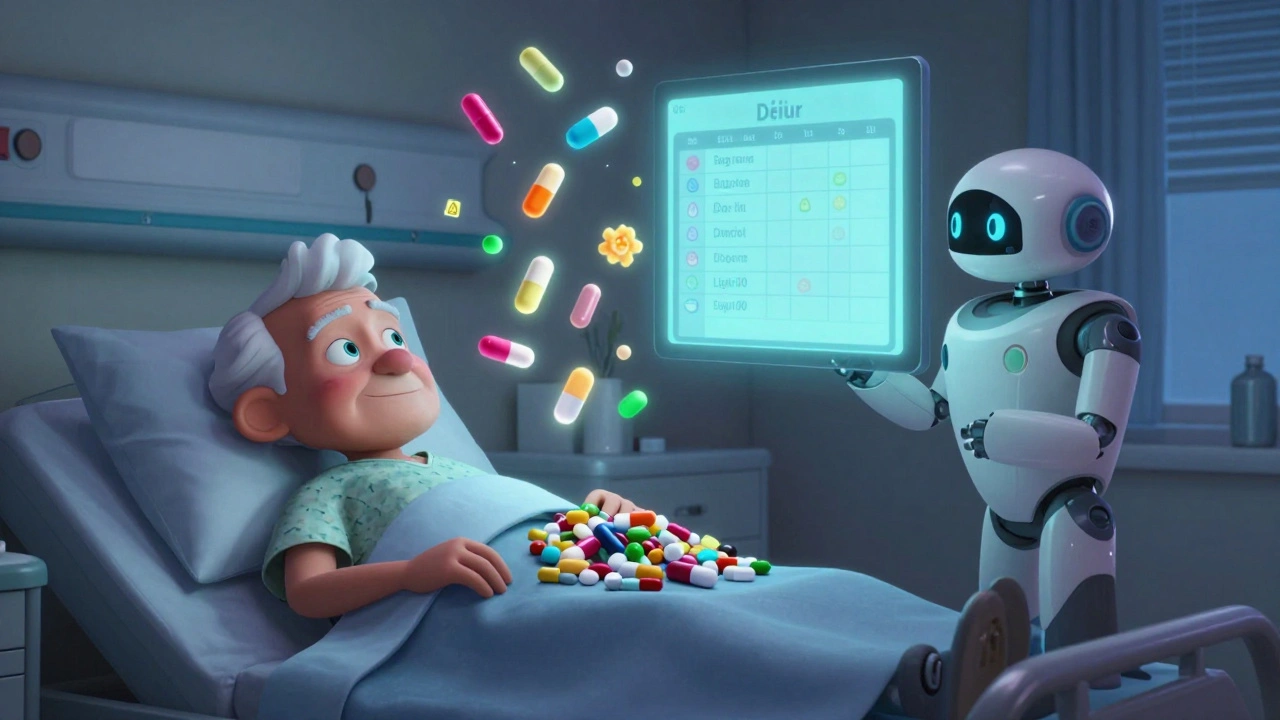
Older adults are the most vulnerable. People over 65 take an average of four to five prescription drugs daily. The more pills you take, the higher the chance of a bad interaction. In Australia, doctors cut antipsychotic prescriptions for seniors by 11% between 2016 and 2021-and deaths from those drugs dropped as a result. But in the U.S., antipsychotics are still overused in dementia patients, even though they increase the risk of stroke and sudden death.
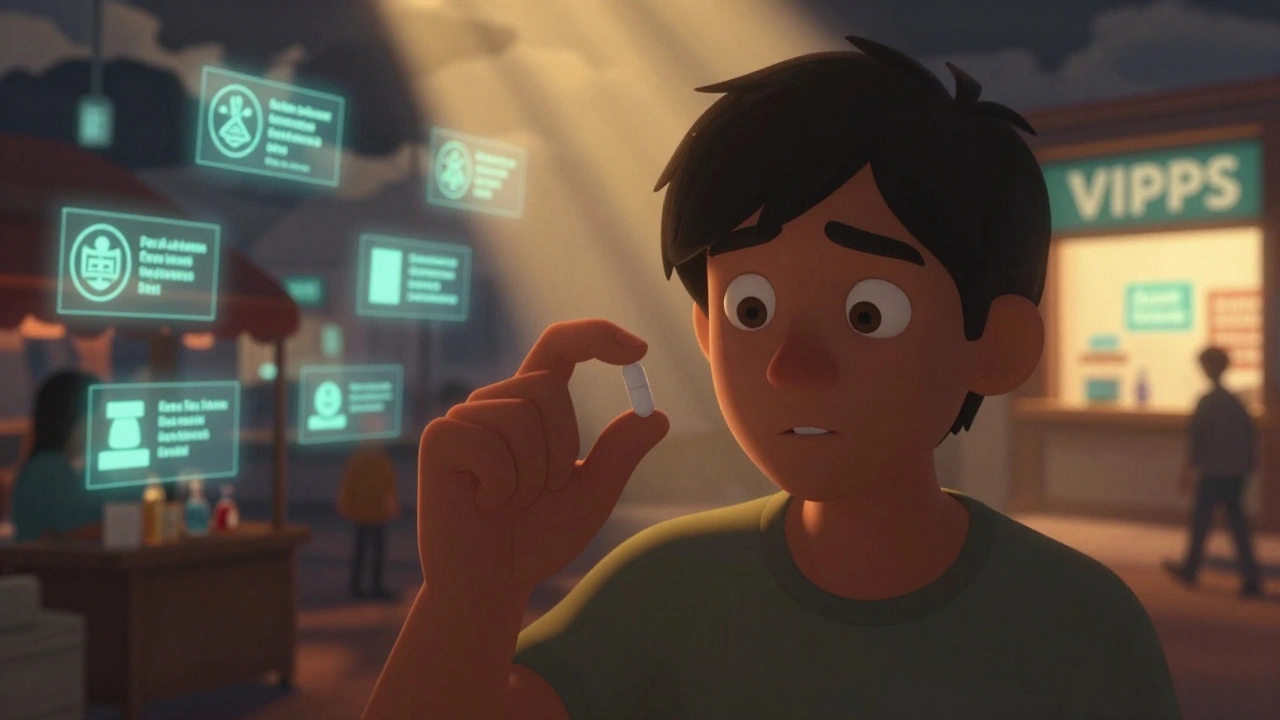
Younger people aren’t safe either. Nearly 9 million Americans misused prescription painkillers in 2021. And now, the biggest threat isn’t stolen pills-it’s counterfeit ones. The DEA seized over 10 million fake oxycodone pills in just nine months in 2021. Most of them were laced with fentanyl, a synthetic opioid 50 to 100 times stronger than morphine. Fentanyl is now the leading cause of death for Americans between 18 and 45. These pills look exactly like the real thing. You can’t tell the difference by sight, smell, or taste.
Why Do These Errors Keep Happening?
It’s not because doctors or pharmacists are careless. It’s because the system is broken. Dr. Donald Berwick, a leading patient safety expert, put it simply: “Most medication errors are system failures, not individual failures.”
Here’s how it breaks down:
- Doctors write prescriptions by hand or in rushed electronic systems that don’t flag dangerous combinations.
- Pharmacists fill dozens of scripts an hour, often under time pressure.
- Patients get multiple prescriptions from different doctors and pharmacies, with no one checking for interactions.
- Medication labels are confusing, using medical jargon like “QHS” (at bedtime) or “TID” (three times a day).
- Online pharmacies sell fake or contaminated drugs without oversight.
Even infusion pumps-devices that deliver IV drugs-have caused over 200 deaths in the U.S. since early 2023. These machines are supposed to be precise. But software glitches, incorrect programming, and poor training make them dangerous.
What’s Being Done to Fix It?
Some places are making real progress. Australia’s national plan has cut opioid-related deaths by 37% since 2018 by using real-time prescription monitoring. When a doctor prescribes an opioid, the system flags if the patient is already getting similar drugs from another provider. That’s stopped many overdoses before they happened.
The European Union now requires all prescription medicines to have a safety feature-a unique code and a tamper-proof seal. If the seal is broken, you know it’s not safe. The U.S. has a similar system called REMS for high-risk drugs like opioids and chemotherapy agents, but it’s patchy and hard to enforce.
Technology is helping too. Artificial intelligence tools that check for drug interactions and reconcile medication lists are being tested. One study predicts they could reduce errors by up to 30% by 2027. But they’re not widespread yet.
What You Can Do to Protect Yourself
You can’t control the system. But you can control what happens in your hands. Here’s how:
- Keep a live medication list. Write down every pill, patch, injection, and supplement you take-including doses and times. Update it every time something changes. Bring it to every appointment.
- Use one pharmacy. All your prescriptions should go to the same place. Pharmacists can spot dangerous combinations across all your meds. If you switch pharmacies, they lose that history.
- Ask the “Five Ws” for every new drug. What is this for? Why am I taking it? How do I take it? What side effects should I watch for? What happens if I miss a dose? Don’t be shy. If the answer sounds vague, ask again.
- Check the pills. If your new prescription looks different from last time-color, shape, markings-ask the pharmacist. Counterfeit drugs are getting better at copying the real thing, but small differences still exist.
- Never take someone else’s meds. Even if it’s your spouse’s leftover painkiller. What works for them could kill you.
- Watch for online pharmacies. If a deal seems too good to be true, it is. The DEA says over 95% of websites selling prescription drugs are illegal. Buy only from licensed U.S. pharmacies with a physical address and a licensed pharmacist you can call.
The Bottom Line
Medication safety isn’t just a hospital problem. It’s a daily risk you face every time you open a pill bottle. The good news? Most harm is preventable. The bad news? No one else is watching out for you like you should be.
Think of your medications like a car. You don’t just fill the tank and drive. You check the oil, the tires, the brakes. Your body is the same. Track what you take. Ask questions. Speak up. If you don’t understand something, say so. You’re not being difficult-you’re being smart.
The system is flawed. But you’re not powerless. Your awareness, your questions, your records-those are your armor. And in a world where fake pills look real and one wrong dose can end a life, that’s more than enough.
How many people are harmed by medication errors each year in the U.S.?
More than 1.5 million Americans are harmed by medication errors each year, according to the Academy of Managed Care Pharmacy and the World Health Organization. About 7,000 of those cases result in death in hospitals alone, and over 1.5 million lead to emergency room visits.
What are the most dangerous types of medications?
Antibiotics cause the highest number of medication-related harms, accounting for about 20% of incidents. Antipsychotics, central nervous system drugs, and cardiovascular medications follow closely. Intravenous (IV) medications have the highest error rates in hospitals-between 48% and 53%. Fentanyl-laced counterfeit pills are now the deadliest threat, especially among younger adults.
Why are older adults more at risk for medication errors?
Older adults often take multiple medications-sometimes four or five daily-to manage chronic conditions. This increases the chance of harmful drug interactions. Many are also prescribed drugs like antipsychotics for dementia, even though guidelines warn against it due to higher risks of stroke and death. Cognitive changes and vision problems can also make it harder to read labels or remember schedules.
Can I trust online pharmacies?
Almost no. Over 95% of online pharmacies selling prescription drugs are illegal. Many sell counterfeit, expired, or contaminated medications-often laced with fentanyl. Only buy from pharmacies that require a prescription, have a licensed pharmacist available, and display a physical U.S. address and phone number. Look for the VIPPS seal (Verified Internet Pharmacy Practice Sites) as a sign of legitimacy.
What should I do if I notice my pill looks different?
Don’t take it. Call your pharmacy immediately. Ask them to confirm the medication, dosage, and manufacturer. Counterfeit pills are designed to look identical to the real thing, but small differences in color, shape, or imprint can be clues. If the pharmacy can’t explain the change, contact your doctor. Never guess-taking the wrong pill could be fatal.
Are medication errors always the doctor’s fault?
No. While mistakes can happen during prescribing or dispensing, most errors result from system failures-not individual negligence. Poor communication between providers, confusing labels, rushed workflows, and lack of medication reconciliation are common root causes. Experts like Dr. Donald Berwick say blaming individuals doesn’t fix the problem. Fixing the system-through better tech, training, and patient involvement-is what reduces harm.
How can I reduce my risk of a medication error at home?
Use a pill organizer with labeled compartments. Keep a written or digital list of all your medications and update it weekly. Take your list to every appointment. Ask your pharmacist to review all your meds at least once a year. Never mix alcohol with prescription drugs unless your doctor says it’s safe. And if you’re unsure about a new medication, wait until you fully understand it before taking it.
Paul Dixon
December 10, 2025 AT 20:18Man, I never realized how many people get messed up by meds until I saw my grandma nearly die from a mix-up. She was on like 7 pills and the pharmacist didn't catch that one interacted with her blood pressure med. Scary stuff.
Now I make her write everything down and bring it to every doc visit. Simple, but it works.
Jim Irish
December 11, 2025 AT 05:01Medication errors are a systemic failure. Blaming individuals is counterproductive. The solution lies in standardized protocols, interoperable EHRs, and patient education.
Simple tools like pill organizers and pharmacy consolidation reduce risk significantly.
Mia Kingsley
December 12, 2025 AT 13:28OMG I just read this and like… did u know that fentanyl pills are now being sold as Xanax?? Like I bought some off a guy at the gas station last week and my friend died??
Also I think doctors are just lazy and pharmacies are run by robots. Like why do labels say QHS?? Who even says that??
Aidan Stacey
December 13, 2025 AT 17:58This hit me right in the soul. My cousin took a fake oxy pill thinking it was his pain med. He was 23. Gone in 20 minutes.
It’s not just about pills. It’s about trust. We’re told to believe in the system, but the system is leaking blood and no one’s patching it.
If you’re reading this - write down your meds. Talk to your pharmacist. Don’t be polite. Be loud. Your life isn’t a footnote.
matthew dendle
December 15, 2025 AT 04:37lol people still die from meds?? like what are u 5??
if u cant read a label u prob shouldnt be allowed to own a phone
also stop blaming doctors u dumbass
my uncle took 3 xanax and a beer and died. guess what he wasnt a victim he was just dumb
Monica Evan
December 16, 2025 AT 23:43My mom’s a nurse and she told me about this one time a patient got 10x the dose because the script said 10mg but looked like 1.0mg - and the pharmacist didn’t double-check.
Now she insists on saying every dose out loud before handing it over. And she makes patients repeat it back.
It’s not magic. It’s just slowing down. The system doesn’t want you to slow down. But you should.
And yeah - use one pharmacy. Even if it’s farther. It’s worth it.
Courtney Blake
December 17, 2025 AT 12:21Why are we even talking about this like it’s a surprise? America’s healthcare is a dumpster fire.
Every time I go to the pharmacy, they hand me a pill bottle with a label written in Comic Sans. No one’s even trying.
And don’t get me started on those ‘free’ online pharmacies. You think you’re saving money? You’re buying a coffin with a discount code.
Lisa Stringfellow
December 18, 2025 AT 09:17Wow. Another article telling me to be more responsible.
What about the people who can’t afford to go to one pharmacy? Or can’t read? Or have dementia? Or work two jobs and can’t take time off to ask questions?
This is just victim-blaming dressed up as ‘empowerment’.
Kristi Pope
December 19, 2025 AT 17:20I love how this post doesn’t just list problems - it gives you tools. Like the Five Ws? Genius.
I started doing that with my dad’s meds last year. He used to just swallow whatever they gave him. Now he asks, ‘Why am I taking this again?’ and we look it up together.
It’s not just safer - it’s brought us closer.
You don’t need to fix the system. Just start with your own medicine cabinet.
Aman deep
December 20, 2025 AT 12:23From India - we don’t have the same systems but the problem is the same. My uncle took fake antibiotics for a fever and got sepsis.
Here, people buy meds from roadside stalls because they’re cheap. No one checks. No one cares.
This article? It’s not just for Americans. It’s for everyone who’s ever swallowed a pill without asking.
Eddie Bennett
December 21, 2025 AT 01:26My brother works at a hospital pharmacy. He says they’re understaffed, overworked, and the software keeps glitching.
He told me about a case where someone got the wrong chemo drug because the barcode scanner didn’t catch it.
They’re not monsters. They’re just tired.
But yeah - still check your pills. Don’t trust the machine.
Sylvia Frenzel
December 21, 2025 AT 15:04Why are we letting corporations profit off this? Drug companies know the labels are confusing. They know the systems are broken. They lobby against change.
This isn’t about ‘you’ being responsible. It’s about holding the system accountable.
Stop telling patients to do more. Start making the industry do less.
Vivian Amadi
December 22, 2025 AT 00:09Ugh. Another ‘you’re responsible’ lecture. You know what’s worse than a medication error? A doctor who prescribes 12 pills for a headache.
My cousin got addicted after a back surgery. They gave her 60 oxycodone pills. SIXTY.
Don’t blame the patient. Blame the prescriber who thinks a bottle of pills is a cure-all.
Jimmy Kärnfeldt
December 23, 2025 AT 16:46There’s something beautiful about taking ownership of your own health - not because the system cares, but because you do.
It’s not about being perfect. It’s about being present.
I keep a little notebook in my wallet now. Every pill. Every dose. Every note from the pharmacist.
It’s not a burden. It’s a quiet act of rebellion.
And honestly? It’s the only thing keeping me alive these days.
Ariel Nichole
December 25, 2025 AT 15:38Love this. I started using a free app that tracks my meds and sends me reminders. It’s saved me twice already.
Also - one pharmacy. No excuses.
Small changes. Big difference.