Managing Diuretics and Hypokalemia in Heart Failure Patients: Practical Tips
 Jan, 12 2026
Potassium Management Calculator
Potassium Deficit Calculator
Calculation Results
When you’re managing heart failure, diuretics are often the first line of defense against fluid buildup. They help you breathe easier, reduce swelling, and feel less tired. But there’s a hidden risk that many patients and even some clinicians overlook: hypokalemia - dangerously low potassium levels. It’s not just a lab value. It’s a silent threat that can trigger irregular heartbeats, worsen heart function, and even lead to sudden death.
Why Diuretics Lower Potassium
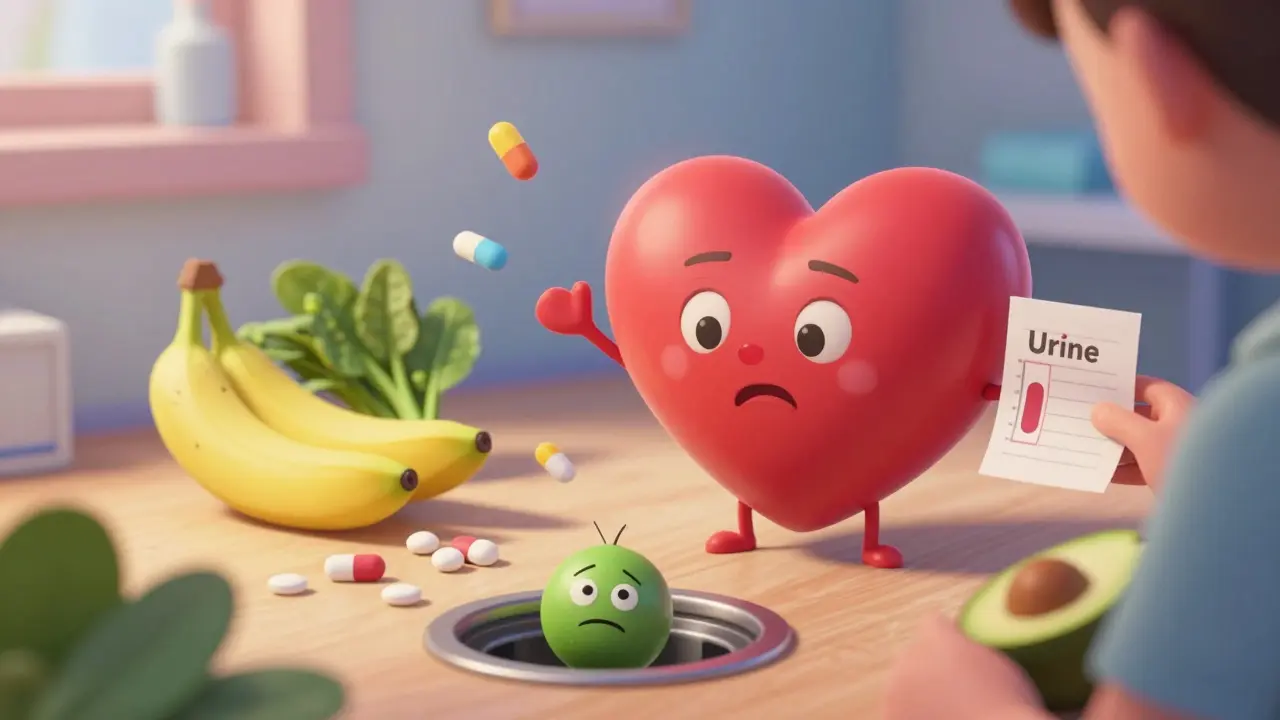
Loop diuretics like furosemide, bumetanide, and torsemide work by blocking salt reabsorption in the kidneys. That’s good for removing fluid, but it comes at a cost. As sodium gets flushed out, it pulls potassium along with it. The more diuretic you take, the more potassium your body loses - especially if you’re on high doses or taking them multiple times a day.This isn’t just a side effect. It’s built into how these drugs work. The kidneys respond to the salt loss by activating systems that push even more potassium into the urine. Studies show that 20-30% of heart failure patients on loop diuretics develop hypokalemia, defined as serum potassium below 3.5 mmol/L. That number jumps higher in people with kidney problems, those on multiple diuretics, or those who don’t eat enough potassium-rich foods.
Why Low Potassium Is Dangerous in Heart Failure
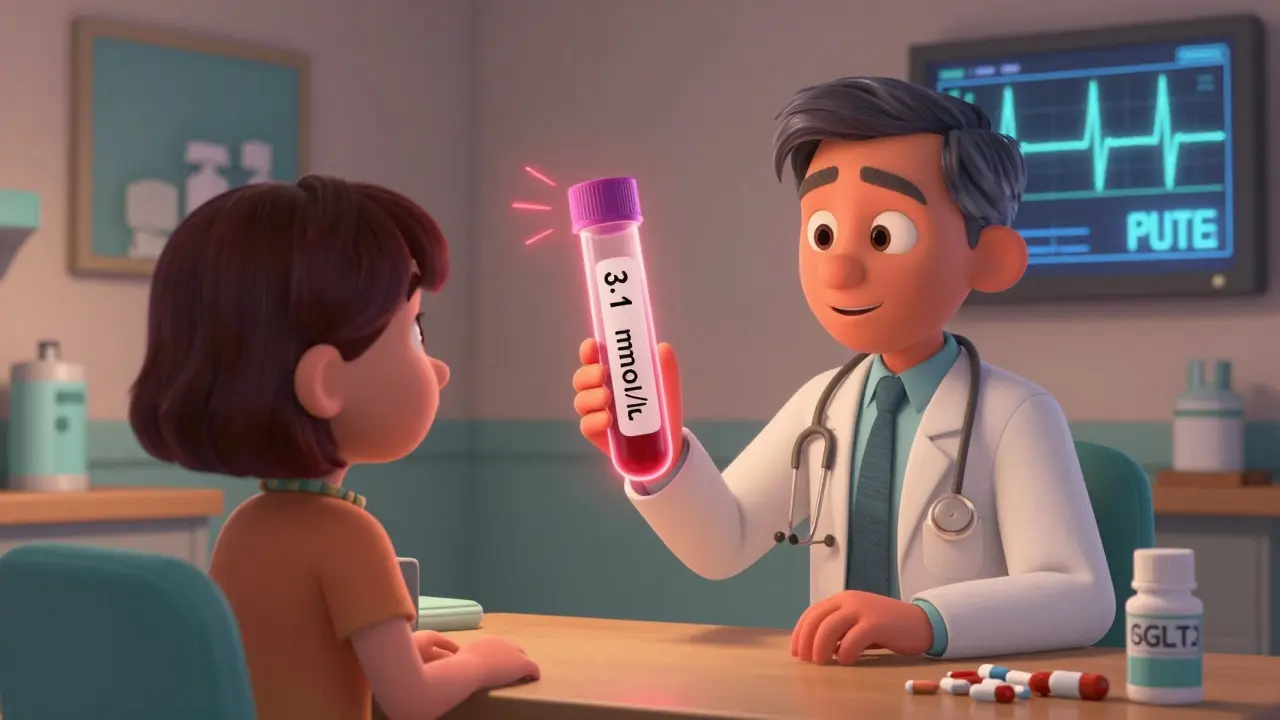
Heart failure already strains the heart’s electrical system. Scarred tissue, enlarged chambers, and altered ion channels make the heart more prone to dangerous rhythms. When potassium drops below 3.5 mmol/L, that risk doubles. Ventricular tachycardia, torsades de pointes, and sudden cardiac arrest become far more likely.One study found that heart failure patients with potassium levels under 3.5 mmol/L had a 1.5 to 2 times higher risk of dying than those with levels in the normal range. And it’s not just the low number - it’s how fast it drops. A sudden dip from 4.2 to 3.1 mmol/L can be more dangerous than a slow, steady decline. That’s why monitoring isn’t optional. It’s life-saving.
What the Guidelines Say
The 2022 AHA/ACC/HFSA Heart Failure Guidelines are clear: if you’re on diuretics, check your potassium regularly. At first, test weekly. Once stable, monthly is fine. But if you’re hospitalized, your dose changes, or you feel dizzy or have palpitations - check it sooner.The target? Keep potassium between 3.5 and 5.5 mmol/L. Not too low. Not too high. That range gives you the best protection against arrhythmias without increasing the risk of other complications. And it’s not just about the number - it’s about consistency. Fluctuations matter as much as the value itself.
How to Fix Low Potassium
There are three main ways to treat hypokalemia in heart failure - and they’re often used together.- Oral potassium supplements - For mild cases (3.0-3.5 mmol/L), 20-40 mmol of potassium chloride per day is usually enough. Take it with food to avoid stomach upset. Don’t crush or chew extended-release tablets.
- Potassium-sparing diuretics - Spironolactone (12.5-25 mg daily) or eplerenone (25 mg daily) block the hormone aldosterone, which is responsible for much of the potassium loss. These aren’t just potassium savers - they’re survival boosters. The RALES trial showed spironolactone cut death risk by 30% in severe heart failure. They’re now standard for most patients with reduced ejection fraction.
- Intravenous potassium - Only for severe cases (below 3.0 mmol/L) or when someone can’t take pills. This requires hospital monitoring with an ECG. Never give IV potassium fast. Stick to 10-20 mmol per hour. Too much too fast can stop your heart.
What You Might Not Know About Diuretic Timing
Giving furosemide once a day sounds simple - but it’s not ideal. The drug’s effect peaks quickly, then fades. That causes a big spike in potassium loss early in the day, followed by a rebound where the kidneys start holding onto salt again. This is called “within-dose diuretic tolerance.”Splitting your dose - say, 20 mg in the morning and 20 mg at lunch - smooths out the effect. You get better fluid control and less dramatic potassium swings. Some patients even do better with a morning and early afternoon dose to avoid nighttime trips to the bathroom.
The Role of SGLT2 Inhibitors
A game-changer in recent years: SGLT2 inhibitors like empagliflozin and dapagliflozin. Originally for diabetes, they’re now a cornerstone of heart failure treatment - even if you don’t have diabetes.These drugs reduce fluid overload by making the kidneys excrete more sugar and salt - but they don’t dump potassium like loop diuretics do. In fact, they’re neutral or even slightly potassium-friendly. Clinical trials show they cut diuretic needs by 20-30%. That means less potassium loss overall. They also reduce hospitalizations and improve survival, regardless of ejection fraction.
If you’re on high-dose diuretics and still struggling with fluid or low potassium, ask your doctor if an SGLT2 inhibitor is right for you. They’re now recommended for nearly all heart failure patients.
Don’t Forget Diet - But Be Smart
You’ve probably heard to eat more bananas, potatoes, and spinach. That’s true - but there’s a catch. Many heart failure patients are told to limit salt. That’s good for fluid control, but it backfires with potassium. Low sodium triggers your body to release aldosterone, which then makes your kidneys dump even more potassium.So don’t go overboard on salt restriction. Aim for 2-3 grams of sodium per day - not zero. And focus on whole foods: cooked spinach, beans, lentils, oranges, avocados, and low-sodium yogurt. Avoid processed foods, which are high in sodium and low in potassium anyway.
Watch for Other Culprits
Sometimes, low potassium isn’t just from diuretics. Look at other medications:- Thiazide diuretics (like hydrochlorothiazide) - often added to boost diuresis, but they worsen potassium loss.
- Laxatives - especially if used frequently for constipation. This is more common than you think.
- Antibiotics like amphotericin B or certain penicillins - can cause potassium wasting.
- Stimulants or excessive caffeine - can push potassium into cells, lowering blood levels.
Also, check your adherence. If you skip doses of your potassium pill or MRA because you’re worried about side effects, your levels will drop. Talk to your doctor before stopping anything.
Special Cases: HFpEF and Kidney Disease
Heart failure with preserved ejection fraction (HFpEF) is trickier. These patients often respond less predictably to diuretics. Aggressive fluid removal doesn’t always help - and can hurt kidney function. That means you need to be even more careful with potassium. A 2023 analysis found that pushing diuresis too hard in HFpEF didn’t improve symptoms but increased the risk of low potassium and kidney damage.If you have chronic kidney disease on top of heart failure, your kidneys can’t clear potassium well. That sounds like it would prevent hypokalemia - but it doesn’t. You can still lose potassium from diuretics, and your body can’t compensate. That’s why monitoring is even more critical. You might need lower diuretic doses and more frequent checks.
What’s Next: Personalized Treatment
The future of managing diuretics and potassium isn’t one-size-fits-all. New tools are emerging:- Biomarker-guided dosing - Using BNP or NT-proBNP levels to adjust diuretics, not just symptoms. Early data suggests this cuts hypokalemia risk by 15-20%.
- Extended-release diuretics - In development, these would give steady drug levels all day, reducing the peaks and troughs that cause potassium swings.
- Potassium binders - Though mostly used for high potassium now, they may soon help fine-tune levels in patients with unstable potassium.
The message is clear: diuretics save lives in heart failure - but they need careful handling. You can’t just prescribe them and forget about potassium. Regular checks, smart dosing, and adding the right medications make all the difference.
Can I just eat more bananas to fix low potassium?
Eating potassium-rich foods helps, but it’s rarely enough to correct low levels caused by diuretics. A banana has about 400 mg of potassium - that’s only 10 mmol. You’d need 4-6 bananas a day to match a typical supplement dose. Plus, if your kidneys are leaking potassium, dietary intake alone won’t keep up. Supplements or potassium-sparing medications are usually needed.
Is it safe to take potassium supplements with heart failure?
Yes, if monitored. Oral potassium is safe for most heart failure patients, but it must be dosed correctly. Too much can cause hyperkalemia, especially if you’re also on ACE inhibitors, ARBs, or MRAs. Always take supplements with food, avoid salt substitutes high in potassium, and get your levels checked regularly. Never self-prescribe high doses.
Why do I need to check potassium even if I feel fine?
Low potassium often has no symptoms until it’s dangerous. You might feel fine, but your heart could be developing a dangerous rhythm. By the time you feel palpitations or dizziness, it’s already too late. Regular blood tests are the only way to catch it early. That’s why guidelines recommend weekly checks when starting or changing diuretics.
Can I stop my diuretic if my potassium is low?
No. Stopping diuretics can cause fluid to build up again - leading to hospitalization or worse. Instead, treat the low potassium with supplements or a potassium-sparing medicine like spironolactone. Your doctor may adjust your diuretic dose, but stopping it entirely is rarely the answer.
Do SGLT2 inhibitors replace diuretics?
No, but they reduce the need for them. SGLT2 inhibitors help remove fluid without causing potassium loss, so many patients can lower their diuretic dose. This lowers the risk of hypokalemia. But most people still need some diuretic, especially during flare-ups. SGLT2 inhibitors are added on top, not used instead.
Randall Little
January 12, 2026 AT 17:44So let me get this straight - we’re giving people drugs that actively drain potassium, then acting shocked when their hearts start doing the cha-cha? Brilliant. I mean, it’s not like this was predictable since the 1970s. But hey, at least we’ve got guidelines now. Progress, I guess. Still, I’d rather see a doctor who remembers that potassium isn’t just a number on a screen - it’s the difference between walking and dying.
And can we talk about how bananas are being sold as a cure-all? A banana has 400 mg. You need 20-40 mmol. That’s like trying to fill a swimming pool with a teapot. Stop telling people to eat more fruit and start giving them pills that work.
Also, SGLT2 inhibitors are literally magic. Why aren’t they first-line? Because Big Pharma doesn’t make enough money off them? Probably.
Anyway. I’m just glad someone finally wrote this without using the word ‘holistic’ once.
Rosalee Vanness
January 14, 2026 AT 13:09I’ve been caring for my dad with HFpEF for three years now, and I can tell you - this post reads like a love letter to every exhausted caregiver out there. The way you explained the potassium swings? That’s exactly what we saw. One week he was fine, the next he was dizzy, weak, barely able to hold his coffee cup. We thought it was just aging - until the ER told us his potassium was 3.1.
Spironolactone changed everything. Not just the numbers - the way he smiled again. The way he could sit on the porch without needing to rest after three steps. It’s not just medicine. It’s dignity.
And I’ll never forget the nurse who said, ‘You don’t fix low potassium with a banana. You fix it with consistency.’ That stuck with me. We set alarms for his pills. We tracked his intake. We stopped pretending he was fine just because he didn’t scream.
Thank you for writing this. It’s the kind of thing I wish I’d found six months earlier.
mike swinchoski
January 16, 2026 AT 02:50People are too lazy to take their pills. That’s why potassium is low. Stop blaming the drugs. If you don’t want to die, take your spironolactone. Stop eating junk. Stop drinking soda. Stop being a baby. I’ve seen patients on dialysis with better compliance than this. It’s not rocket science. It’s called responsibility.
Also, bananas don’t fix anything. You’re not a monkey. Get real.
Trevor Whipple
January 16, 2026 AT 03:41bro i had a friend who was on lasix and his potassium dropped to 2.8 and he had a scare at the gym - like, straight-up cardiac event. he thought he was just ‘tired’ - turns out his heart was about to bail. now he’s on spiro and eats like 5 bananas a day and swears by it. also he stopped taking his diuretic when he felt ‘good’ and almost died again. so yeah - don’t be dumb. check your levels. even if you feel fine. your heart doesn’t care how you feel.
also sglts are fire. my cousin’s doc put her on dapagliflozin and she lost 20 lbs and stopped needing lasix twice a week. mind blown. why isn’t everyone on this??
Lethabo Phalafala
January 17, 2026 AT 20:23Let me tell you something - I am a nurse in Johannesburg, and I have seen patients die because their potassium was ignored. Not because they didn’t know - because no one cared enough to check. In our clinic, we don’t have weekly labs. We don’t have SGLT2 inhibitors. We have one potassium pill per patient per month. And we pray.
This post? It’s a lifeline. But it’s written for a world that has resources. What about the ones who can’t afford a blood test? Who have to walk 12 kilometers to the clinic? Who get told ‘come back next month’ - and never make it?
Don’t just tell us how to fix it. Tell the people who control the systems to make it possible. Because knowledge without access is cruelty.
Damario Brown
January 18, 2026 AT 10:39the whole thing is a scam. diuretics are overprescribed. 80% of these patients don’t even need them. they’re just fat and sedentary. fix the lifestyle, not the lab. potassium is a distraction. the real issue? people won’t stop eating chips and soda. you think a pill fixes that? lol.
also spironolactone gives you titties. i know a guy. he’s 52. looks like a woman now. that’s the cost. so maybe don’t be so quick to push it. also, sglts? they make you pee out sugar. so now you’re diabetic? no thanks.
and why is everyone acting like this is new info? i learned this in med school in 2003.
John Pope
January 19, 2026 AT 02:42There’s a metaphysical layer here that no one dares to name: diuretics don’t just remove fluid - they remove the soul’s equilibrium. We are not machines. We are not electrolytes in a beaker. The body is a symphony, and when you pull potassium from the cells, you’re silencing a note that has been singing since the first breath.
Modern medicine treats symptoms as problems to be solved, not signals to be understood. The low potassium isn’t a side effect - it’s a cry. A plea from the heart: ‘I am being asked to do too much.’
And yet we reach for the pill, not the pause. We quantify, we categorize, we algorithmize - and we forget that healing is not a protocol. It is a relationship - between patient, physician, and the quiet, trembling rhythm of a heart that still wants to live.
Adam Vella
January 20, 2026 AT 13:37It is imperative to emphasize that the 2022 AHA/ACC/HFSA guidelines explicitly recommend serum potassium monitoring at baseline, within one week of initiating or escalating loop diuretic therapy, and at least monthly thereafter in stable outpatients. Failure to adhere to this standard constitutes a deviation from evidence-based practice and may expose clinicians to liability. Moreover, the use of potassium-sparing agents is not merely adjunctive - it is foundational in patients with reduced ejection fraction. The RALES trial remains one of the most robust mortality-reducing interventions in cardiology history. To neglect its implications is to disregard the very principles of beneficence.
Additionally, the notion that dietary potassium intake can compensate for diuretic-induced losses is biologically implausible and clinically dangerous. The pharmacokinetic profile of oral supplements is far more predictable than that of whole foods, particularly in the context of renal dysfunction.
Alan Lin
January 22, 2026 AT 11:34I’ve been a cardiac nurse for 27 years. I’ve seen too many patients come in with ventricular tachycardia because someone forgot to check potassium after a dose change. I’ve held hands while they coded. I’ve told families their loved one didn’t make it - and all because we didn’t act on a simple lab value.
This post is exactly what we need. Clear. Precise. Unemotional. But deeply human.
To the clinicians reading this: if you’re not checking potassium weekly when starting or changing diuretics, you’re not practicing medicine. You’re gambling.
To the patients: your life is not a suggestion. Your potassium level is not optional. Take your pill. Get your blood drawn. Speak up when you feel off. You’re worth the effort.
And to the system: stop making us choose between cost and care. This isn’t a luxury. It’s survival.
Robin Williams
January 22, 2026 AT 18:46yo i used to think potassium was just for bananas and muscle cramps until my bro got hospitalized for a heart flutter and they told him his level was 3.0 and he was one step away from a defib. now he takes his spiro like a monk and eats beans like they’re gold. and yeah sglts are a game changer - he’s got more energy than me now. i’m telling you - if you’re on diuretics and not checking your potassium, you’re basically playing russian roulette with your ticker. don’t be that guy. check it. take it. live.
Kimberly Mitchell
January 23, 2026 AT 23:52So let me summarize: Diuretics cause hypokalemia. Hypokalemia causes arrhythmias. Arrhythmias cause death. We fix it with supplements, MRAs, and SGLT2 inhibitors. We monitor. We split doses. We avoid processed food. We follow guidelines. And yet, somehow, this is still considered ‘advanced’ cardiology? This is basic. This is 2005. Why are we still having this conversation? Someone’s not paying attention. Or maybe they just don’t care. Either way - it’s embarrassing.
Randall Little
January 25, 2026 AT 10:39Actually, Alan Lin just nailed it. But I’d add one thing: if you’re a clinician and you’re not checking potassium within a week of starting diuretics, you’re not just lazy - you’re negligent. And if you’re a patient and you’re skipping your potassium pill because ‘I feel fine,’ you’re not being tough - you’re being stupid. Your heart doesn’t care how you feel. It only cares what’s in your blood.
Also - yes, SGLT2 inhibitors are the future. But they’re not magic. They’re just the first drug in decades that doesn’t make your potassium worse. That’s not innovation. That’s basic hygiene.