Kidney Disease and Medication Accumulation: Toxicity Risks Explained
 Jun, 7 2026
Kidney Function & Medication Risk Checker
CKD Stages Overview
Why This Matters
Your kidneys filter approximately 30% of all prescribed medications directly from your bloodstream. When kidney function declines, measured by eGFR, medications can accumulate to toxic levels. Stage 3 CKD marks the point where dose adjustments become necessary for about 40% of commonly prescribed medications.
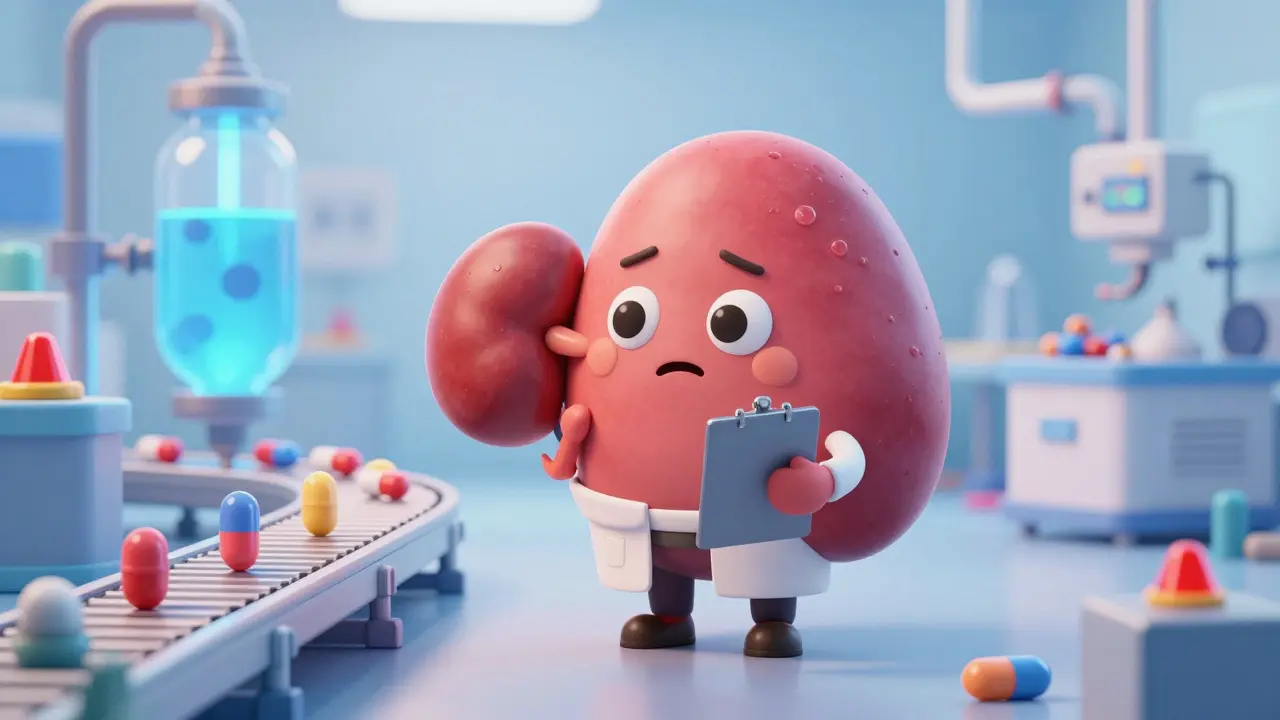
Your kidneys are the body's filtration plant. They work silently, filtering blood, removing waste, and balancing fluids. But when kidney function declines, this system slows down. Medications that usually clear out of your body in hours can start to pile up. This accumulation isn't just an inconvenience; it is a major health risk. For millions of people living with chronic kidney disease (CKD), taking standard doses of common drugs can lead to severe toxicity, hospitalization, or even permanent organ damage.
Understanding how medications interact with impaired kidney function is not optional-it is essential for survival. Whether you have been diagnosed with early-stage CKD or are caring for someone who has, knowing which drugs are dangerous and how to manage them can save lives. This guide breaks down the science of drug accumulation, identifies the most risky medications, and provides practical steps to protect your health.
Why Kidneys Matter for Medication Safety
To understand the risk, you first need to understand the mechanism. The kidneys are responsible for filtering approximately 30% of all prescribed medications directly from the bloodstream. They also play a crucial role in metabolizing other drugs through enzymatic processes. When kidney function drops, measured by the estimated glomerular filtration rate (eGFR), the body loses its ability to clear these substances efficiently.
Chronic kidney disease is staged based on eGFR. Stage 3 CKD, where eGFR falls between 30-59 mL/min/1.73m², marks the point where dose adjustments become necessary for about 40% of commonly prescribed medications. As we move into Stage 4 and 5 (eGFR <30 mL/min/1.73m²), the risk skyrockets. In end-stage kidney disease (ESKD), the kidneys filter less than 15 mL/min/1.73m², often requiring dialysis. At this stage, almost every renally cleared drug requires significant modification or avoidance.
The danger lies in the fact that many patients do not feel their kidneys failing until it is too late. Symptoms like fatigue, swelling, or confusion are often mistaken for aging or other conditions. Meanwhile, medications continue to accumulate, reaching toxic levels that cause further harm. According to the National Kidney Foundation, approximately 37 million American adults have CKD, yet many remain undiagnosed until a medication-related crisis occurs.
The Most Dangerous Medications for Kidney Patients
Not all drugs are created equal when it comes to kidney safety. Some classes of medications pose a significantly higher risk of toxicity and acute kidney injury (AKI). Here are the primary offenders that require extreme caution:
- NSAIDs (Non-Steroidal Anti-Inflammatory Drugs): Drugs like ibuprofen, naproxen, diclofenac, and meloxicam are widely used for pain and inflammation. However, they inhibit prostaglandin synthesis, which impairs renal blood flow. In patients with an eGFR below 60 mL/min/1.73m², NSAIDs increase the risk of AKI by three-fold. In Stages 4 and 5, they should be avoided entirely due to high nephrotoxicity risks.
- Certain Antibiotics: Trimethoprim-sulfamethoxazole (Bactrim) can cause hyperkalemia (high potassium levels) when combined with ACE inhibitors or ARBs, raising serum potassium by 1.2-1.8 mmol/L within 48 hours. Aciclovir can cause crystal nephropathy in 5-15% of patients with reduced kidney function if not properly hydrated and dosed.
- Diabetes Medications: Metformin requires dose reduction when eGFR falls below 45 mL/min/1.73m² and must be discontinued below 30 mL/min/1.73m² due to the risk of lactic acidosis. Sulfonylureas like chlorpropamide and glyburide have active metabolites that accumulate, leading to prolonged and severe hypoglycemia.
- Blood Thinners: Direct oral anticoagulants (DOACs) such as apixaban and rivaroxaban rely partly on renal clearance. In Stage 4 CKD, the bleeding risk increases by 40% compared to earlier stages. Warfarin, which does not rely on renal clearance, may be safer but requires careful monitoring.
How Drug Accumulation Leads to Toxicity
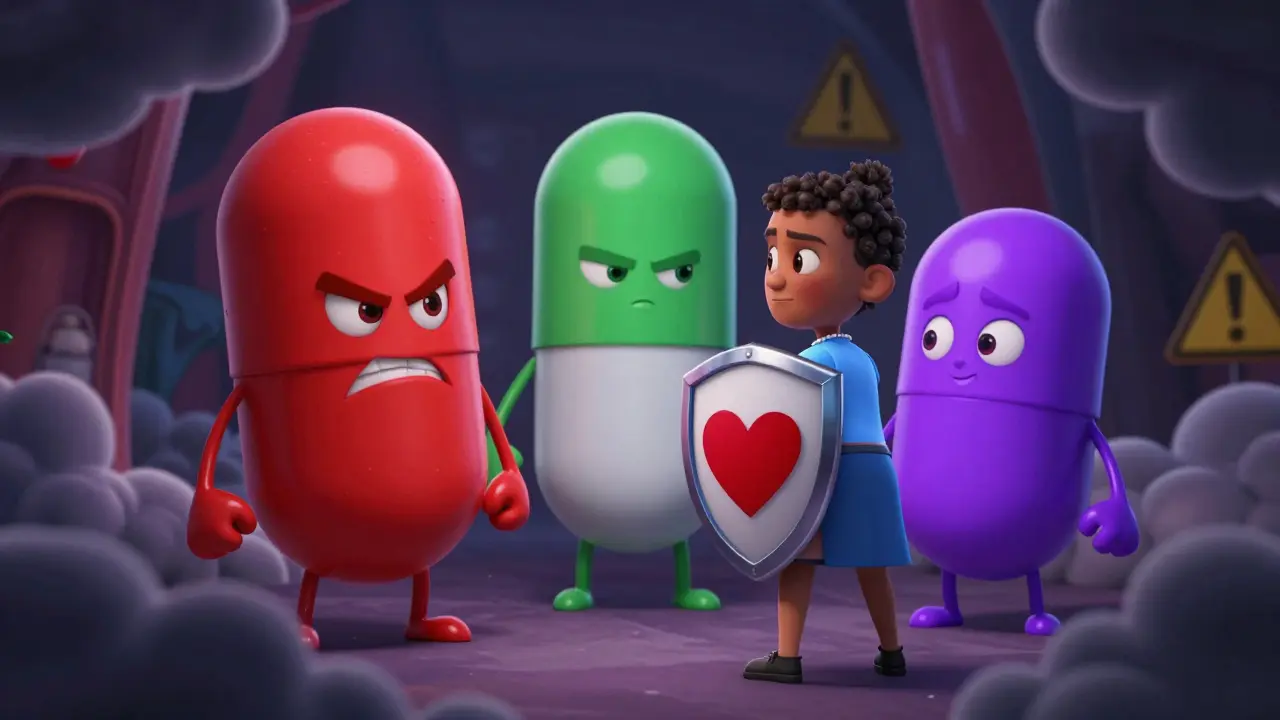
When kidneys cannot filter drugs effectively, two main problems occur: reduced glomerular filtration and impaired tubular secretion. Glomerular filtration is the process where blood passes through tiny filters in the kidneys. If these filters are damaged, drugs stay in the blood longer. Tubular secretion is another pathway where specific transporters push drugs into the urine. Impairment here means drugs linger in the body.
This accumulation leads to several types of toxicity:
- Nephrotoxicity: The drug itself damages the kidneys further, creating a vicious cycle. Calcineurin inhibitors like tacrolimus and cyclosporine, used in transplant patients, have narrow therapeutic windows. Levels just 20-30% above the target range can cause vasoconstriction and fibrosis, progressing to CKD in 25-30% of recipients.
- Systemic Toxicity: Drugs build up in other organs. For example, accumulated aciclovir can cross the blood-brain barrier, causing mental confusion and seizures in 20% of affected patients with low eGFR.
- Electrolyte Imbalances: Some drugs affect potassium and sodium levels. Hyperkalemia from trimethoprim can lead to cardiac arrhythmias, a life-threatening condition.
Drug-induced nephrotoxicity accounts for 14-26% of acute kidney injury cases in hospitalized patients. Mortality rates in severe cases can reach 50%. This makes proper medication management one of the most critical aspects of CKD care.
| Medication Class | Risk Mechanism | eGFR Threshold for Caution | Potential Consequence |
|---|---|---|---|
| NSAIDs (Ibuprofen) | Reduced renal blood flow | <60 mL/min/1.73m² | Acute Kidney Injury (AKI) |
| Metformin | Lactic acidosis risk | <45 mL/min/1.73m² | Metabolic Acidosis |
| Trimethoprim | Potassium retention | All stages (with ACEi/ARB) | Hyperkalemia |
| Apixaban/Rivaroxaban | Accumulation & Bleeding | <30 mL/min/1.73m² | Severe Hemorrhage |
| Glyburide | Active metabolite buildup | <60 mL/min/1.73m² | Prolonged Hypoglycemia |
Real-World Impact: Stories and Statistics
The statistics are alarming, but the human stories make the risk real. A survey by the American Association of Kidney Patients found that 78% of CKD patients received at least one medication without appropriate dose adjustment. Of those, 43% experienced adverse events requiring medical intervention.
Consider the case of "KidneyWarrior2022," a patient on Reddit’s r/kidneydisease forum. He had Stage 3 CKD and was prescribed standard-dose ibuprofen for back pain. Within 48 hours, his creatinine level jumped from 1.8 to 3.2 mg/dL, indicating a sharp decline in kidney function. He was hospitalized for five days. This is not an isolated incident. Sixty-eight percent of Stage 3-4 CKD patients report confusion or dizziness from inappropriate NSAID use, with 22% needing emergency care.
Another common issue involves diabetes medications. Forty-five percent of surveyed patients experienced severe hypoglycemia from sulfonylureas despite normal dosing for their weight and age. The problem? Their kidneys could not clear the drug’s active metabolites, leading to dangerously low blood sugar levels lasting over 72 hours.
These experiences highlight a systemic failure in communication between patients and providers. Many doctors do not routinely check eGFR before prescribing common over-the-counter drugs. Patients, unaware of their kidney status, assume "standard" doses are safe for everyone.

Practical Steps to Prevent Medication Toxicity
Preventing drug accumulation starts with awareness and proactive management. Here is what you can do to protect yourself:
- Know Your eGFR: Ask your doctor for your latest estimated glomerular filtration rate. This number is more important than serum creatinine alone because it adjusts for age, sex, and body size. If your eGFR is below 60, flag this to every healthcare provider you see.
- Review All Medications: Bring a complete list of prescription drugs, over-the-counter medications, and supplements to every appointment. Include herbal remedies, as some can interact with kidney function.
- Avoid NSAIDs: Switch to acetaminophen (Tylenol) for pain relief, unless contraindicated for liver issues. Never take ibuprofen, naproxen, or aspirin regularly without explicit approval from a nephrologist.
- Use Technology: Apps like Meds & CKD (developed by Healthmap Solutions) allow patients to track medication risks. Studies show that 82% of users reported improved communication with providers after using such tools.
- Monitor Potassium Levels: If you are on ACE inhibitors, ARBs, or certain antibiotics, get regular blood tests to check potassium levels. High potassium can stop your heart.
- Ask About Dosing Adjustments: Specifically ask, "Does this medication need to be adjusted for my kidney function?" Pharmacists are excellent resources for this question.
For healthcare providers, the KDIGO 2023 guidelines emphasize reviewing all medications when eGFR falls below 60 mL/min/1.73m². Using the Cockcroft-Gault formula or CKD-EPI equation ensures accurate dosing calculations. Ignoring these steps contributes to the 38% of drug-induced AKI cases that are preventable.
The Future of Kidney-Safe Prescribing
Technology is beginning to bridge the gap between complex pharmacology and clinical practice. The FDA approved KidneyIntelX in 2023, a machine learning platform that predicts individualized medication toxicity risks in CKD patients with 89% accuracy. Validated in a study of 10,000 patients, this tool helps clinicians choose safer alternatives.
Additionally, the American Society of Nephrology is testing pharmacogenomic-guided dosing. Early results show a 63% reduction in adverse events when dosing is tailored to genetic markers affecting drug metabolism. Dr. Richard A. Lafayette of Stanford University predicts that within five years, electronic health records will automatically flag inappropriate medications for CKD patients at the point of prescribing, potentially reducing errors by 75%.
Despite these advances, vigilance remains key. The Global Burden of Disease Study estimates that medication-related kidney injury will affect 8.2 million people annually through 2030. With 65% of these cases being preventable, the responsibility falls on both patients and providers to prioritize kidney-safe prescribing practices.
What is the most dangerous over-the-counter medication for kidney disease?
Non-steroidal anti-inflammatory drugs (NSAIDs) like ibuprofen and naproxen are the most dangerous. They reduce blood flow to the kidneys, increasing the risk of acute kidney injury by three-fold in patients with an eGFR below 60 mL/min/1.73m². Acetaminophen is generally considered safer for pain relief in CKD patients.
At what eGFR level should I start adjusting my medications?
Dose adjustments typically become necessary when eGFR falls below 60 mL/min/1.73m² (Stage 3 CKD). At this threshold, approximately 40% of commonly prescribed medications require modification. Always consult your doctor or pharmacist before making any changes.
Can metformin cause kidney damage?
Metformin itself does not directly damage the kidneys, but it can accumulate if kidney function is severely impaired (eGFR <30 mL/min/1.73m²), leading to a rare but serious condition called lactic acidosis. It should be discontinued at this stage and dose-reduced when eGFR is between 30-45 mL/min/1.73m².
How do I know if a medication is accumulating in my body?
Symptoms of drug accumulation vary by medication but may include confusion, dizziness, nausea, vomiting, unusual bleeding, or changes in heart rhythm. Regular blood tests to monitor kidney function (eGFR, creatinine) and drug levels (if applicable) are essential for detecting accumulation early.
Are there apps that help manage medications for kidney disease?
Yes, apps like Meds & CKD developed by Healthmap Solutions help patients track medication risks and interactions specific to kidney disease. These tools have been shown to improve communication between patients and healthcare providers regarding drug safety.