Interpreter Rights in Medication Counseling: A Safety Plan for LEP Patients
 Jun, 21 2026
Medication Safety & Rights Scenario Simulator
The Family Helper
A patient with Limited English Proficiency brings their young child to translate complex dosage instructions. The pharmacist accepts this to save time.
The Professional Request
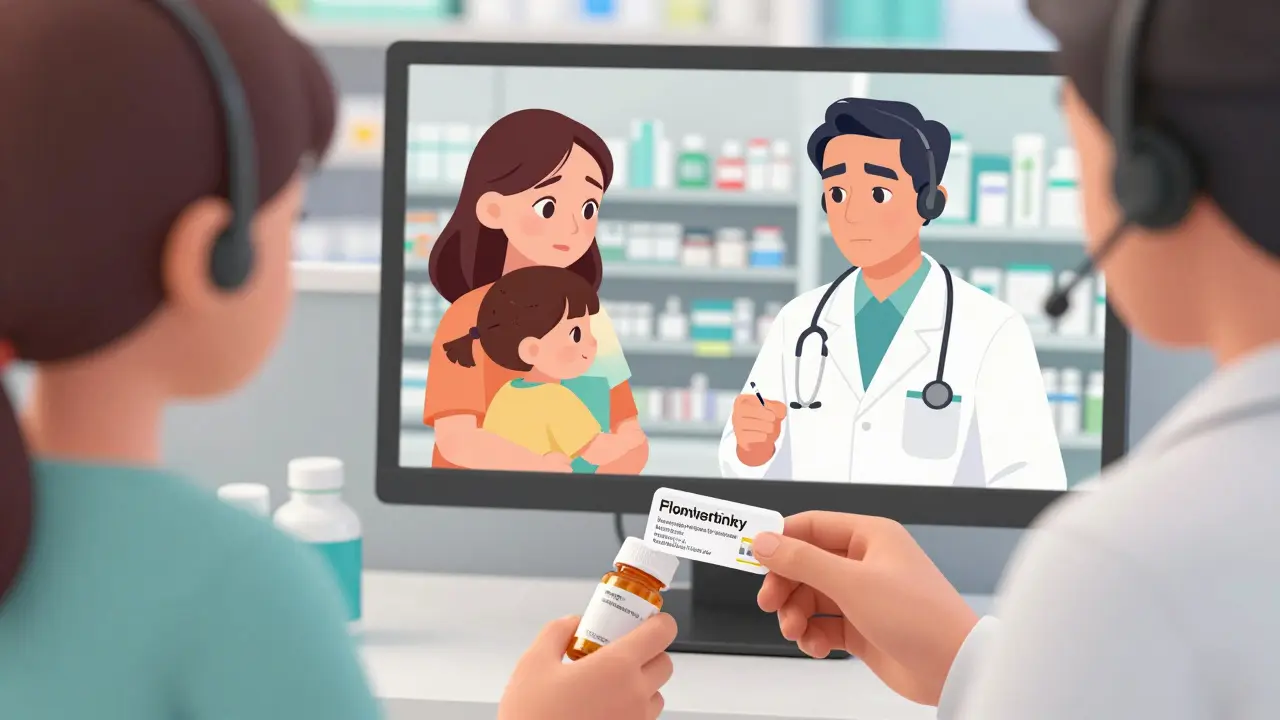
An LEP patient requests a qualified interpreter. The pharmacy offers one via video link at no cost to the patient.
The Missing Label
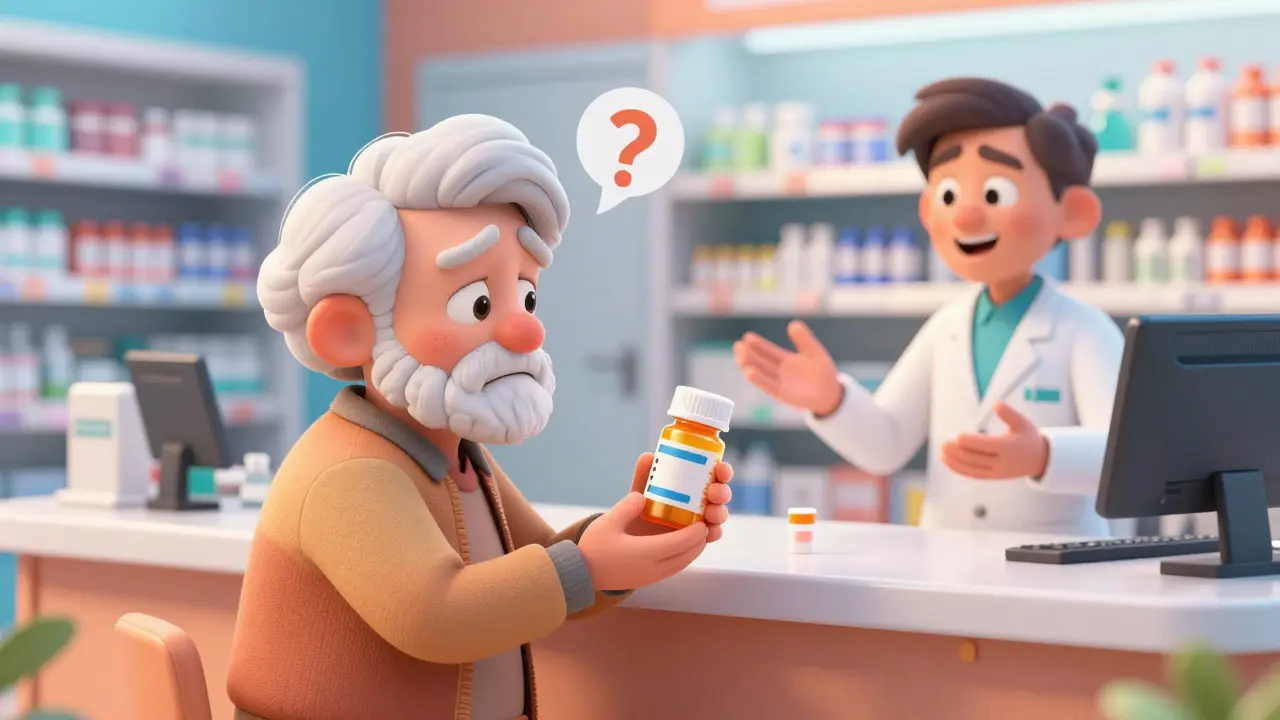
A patient receives a prescription but the label has no translation stickers or pictograms, despite living in an area where their language is primary.
The Waiver Pressure
Staff pressure an LEP patient to sign a waiver refusing interpretation services because they are busy and want to move the line along.
Scenario Analysis
Analysis & Legal Basis:
...
Safety Impact:
...
Verdict
Based on ACA Sec 1557 & SafeRx
Imagine picking up a prescription that could save your life, only to realize you don't understand the instructions on the bottle. For millions of people in the United States, this isn't a hypothetical nightmare-it's a daily reality. Misunderstanding dosage, timing, or warnings can lead to dangerous drug interactions, accidental overdoses, or skipping essential treatments altogether. This is why interpreter rights have become a critical component of modern healthcare safety plans.
If you are a patient with Limited English Proficiency (LEP), a family member helping someone navigate the healthcare system, or a pharmacy professional, understanding these rights is not just about legal compliance. It is about survival and dignity. The landscape of language access has shifted dramatically, moving from optional courtesy to a federally mandated requirement designed to close the gap in health disparities.
The Legal Backbone: Why You Have a Right to an Interpreter
The foundation of interpreter rights rests on federal civil protections. Specifically, Section 1557 of the Affordable Care Act (ACA) serves as the primary shield for LEP individuals. Originally enacted in 2010, this section was significantly strengthened with new enforcement provisions that went into effect on July 5, 2024. These updates explicitly require all healthcare providers receiving federal funding-including most hospitals, clinics, and many pharmacies-to provide "meaningful access" to patients who do not speak English fluently.
What does "meaningful access" actually look like? It means more than just pointing at a diagram. It requires providing qualified interpreters who demonstrate proficiency in both English and the patient’s preferred language. Crucially, these regulations prohibit healthcare providers from forcing LEP patients to rely on family members, friends, or untrained staff for interpretation, except when the patient specifically requests it. This rule exists because family members often lack medical terminology knowledge, may filter information due to emotional stress, or might violate patient privacy.
Beyond federal law, states like New York have implemented even stricter standards. New York State’s SafeRx regulations (EDN 6829) mandate free oral interpretation services for medication counseling immediately upon request. They also require the translation of prescription labels and auxiliary warning stickers. If you live in a region with high linguistic diversity, local laws may offer additional layers of protection beyond the federal baseline.
Why Language Access Is a Patient Safety Issue
You might wonder if a simple mistranslation really matters. The data says yes, and the stakes are high. According to research by Dr. Lisa M. Weiss published in PMC (2018), inadequate comprehension of prescription instructions poses a severe risk to LEP individuals. The study found that misunderstood medication directions are a leading cause of adverse drug events among non-English speakers.
Consider the mechanics of a medication error. A patient might confuse "take twice daily" with "take two pills at once," or fail to understand a warning about taking a drug on an empty stomach. Dr. Glenn Flores, a leading researcher in health disparities, published findings in JAMA Internal Medicine (2021) showing that inadequate language services contributed to 32% of adverse drug events among LEP patients. That is nearly one in three serious errors linked directly to communication breakdowns.
The financial and human cost is staggering. A 2024 Congressional Budget Office analysis projects that robust language access regulations prevent approximately 14,000 adverse drug events annually among LEP patients. This saves an estimated $187 million in avoidable healthcare costs each year. More importantly, it prevents emergency room visits, hospitalizations, and loss of life. Proper language assistance improves medication adherence and eliminates preventable health disparities.
What Services Are You Entitled To?
Knowing your rights is the first step; knowing what those rights include is the second. Under current regulations, particularly in jurisdictions with comprehensive laws like New York and California, you are entitled to specific, tangible services.
- Qualified Interpreters: You have the right to a professional interpreter, not a bilingual neighbor. These professionals must know specialized medical and pharmaceutical terminology. Services can be provided via phone, video, or in-person, depending on availability and urgency.
- Translated Written Materials: Pharmacies must translate prescription medication labels, warning labels (such as "May cause drowsiness" or "Take with food"), and other written instructions into your preferred language if it is a "primary language" in your region.
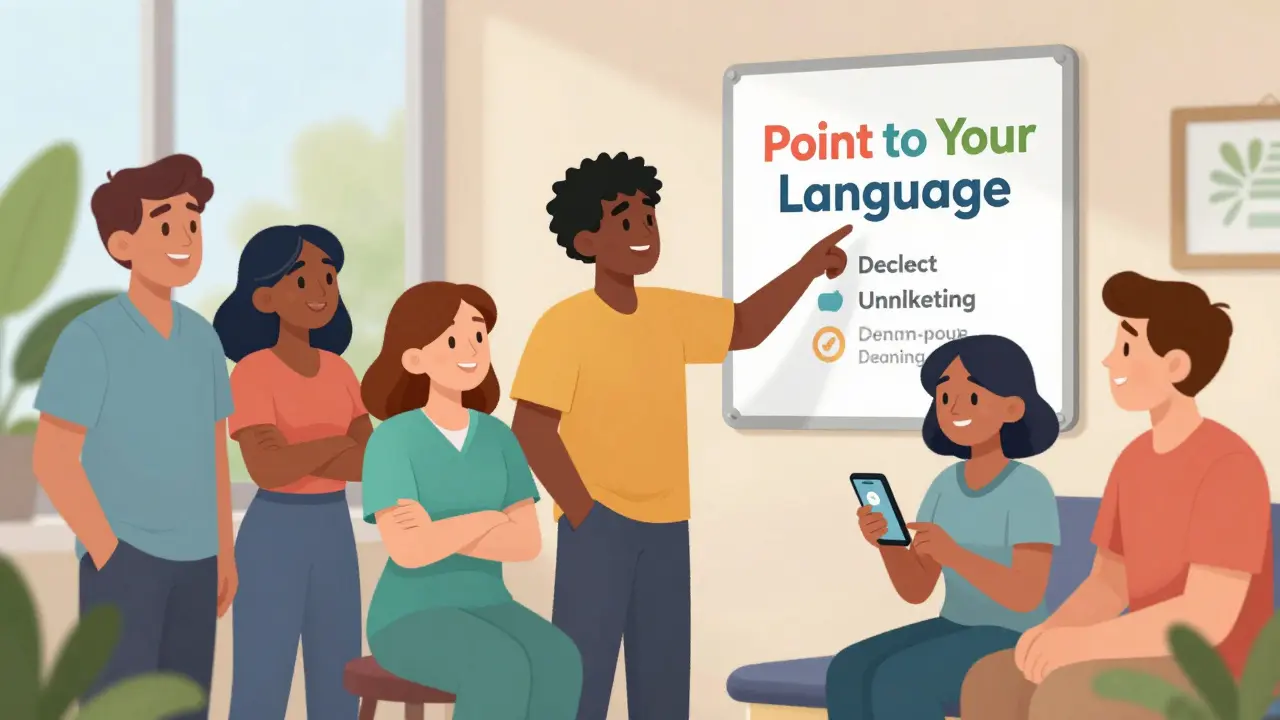
- Multilingual Signage: Look for signs near the pharmacy counter that say "Point to your language." These conspicuous notices are required in many areas to help you easily identify and request assistance without having to struggle to explain your needs verbally.
- Immediate Access: Interpretation services should be provided immediately. While an interpreter might not always be physically present in the store, the pharmacy must have a protocol to connect you with one without delay.
If you refuse these services, the pharmacy must document that refusal. However, they cannot deny you care or pressure you into waiving your right to an interpreter. The burden of proof lies with the provider to ensure you understood the waiver.
How to Navigate the System: A Practical Guide
Even with strong laws, implementation can be inconsistent. Here is how to advocate for yourself or your loved ones effectively.
- Identify Your Needs Early: When checking in, state clearly that you need an interpreter. If you see the "Point to your language" sign, use it. It is designed to bypass the initial communication barrier.
- Verify the Interpreter: Ensure the person interpreting is a trained professional. If a pharmacist asks a family member to translate complex dosage instructions, politely decline and request a qualified interpreter. Say, "I need a professional interpreter for my safety."
- Check the Label: Before leaving the pharmacy, verify that the label on your medication bottle includes warnings in your language. If it doesn’t, ask the pharmacist to contact their language service provider to get a translated sticker applied.
- Document Issues: If a pharmacy fails to provide services, note the date, time, and location. In New York, for example, the Department of Education tracks violations. Reporting issues helps enforce compliance for everyone.
For pharmacy staff, the learning curve involves training. Major chains like CVS and Walgreens have implemented mandatory 10-hour language access training modules. Staff must learn to identify LEP patients through intake questionnaires and activate contracted services like LanguageLine Solutions during peak hours. If you work in healthcare, ensure your documentation includes the patient’s language preference and records of interpretation services provided.
| Feature | Federal (ACA Sec 1557) | New York State (SafeRx) | General Industry Practice |
|---|---|---|---|
| Interpreter Type | Qualified Interpreter | Qualified Interpreter | Varies (often ad-hoc) |
| Family Members | Prohibited unless requested | Prohibited unless requested | Frequently used incorrectly |
| Label Translation | Meaningful access required | Mandatory for primary languages | Inconsistent |
| Signage | Not specified | "Point to your language" required | Rare |
| Enforcement Date | July 5, 2024 | Ongoing since 2008 | N/A |
Challenges and Real-World Experiences
While the framework is solid, the execution faces hurdles. Small independent pharmacies often struggle with the administrative burden and costs. A 2023 analysis by Rxtran.com found that 23% of surveyed pharmacies in New York reported difficulties maintaining compliance due to expenses. This can sometimes lead to slower service or frustration for patients waiting for remote interpreters.
User experiences highlight both successes and gaps. On Reddit’s r/Pharmacy community, a verified pharmacist shared that after implementing strict ACA requirements, their Bronx location saw zero medication errors related to language barriers. Conversely, a Chinese-speaking patient in Queens reported on Google Reviews that while the signs were present, staff didn’t know how to access the interpretation service quickly. This inconsistency is a key area where advocacy matters.
To bridge this gap, resources exist. The New York State Office of Language Access Services provides free compliance assistance, and the federally-funded Language Access Help Desk offers 24/7 guidance. For patients, community health workers in immigrant neighborhoods often serve as vital allies, helping to navigate these systems and ensuring that the "Point to your language" signs translate into actual help.
Looking Ahead: The Future of Language Access
The market for medical interpretation is growing, projected to reach $3.8 billion by 2027. This growth drives better technology and more available services. We are seeing increased integration of AI-powered translation tools, though regulations still require human verification for critical medication instructions to ensure accuracy.
Regulatory bodies continue to tighten standards. The FDA has issued draft guidance encouraging standardized pictograms on medication labels to supplement language services. Meanwhile, the Long-Term Care Phases of the Affordable Care Act require all Medicare and Medicaid providers to achieve full language access compliance by 2026. As demographics shift, we can expect more states to adopt pharmacy-specific requirements similar to New York and California, ensuring that interpreter rights remain a cornerstone of patient safety plans nationwide.
Can I bring my own interpreter to the pharmacy?
Yes, you can bring your own interpreter, but the pharmacy cannot force you to use a family member or friend if you prefer a professional. Under ACA Section 1557, providers must offer qualified interpreters at no cost. If you choose to bring someone else, ensure they are competent in medical terminology to avoid safety risks.
Are interpreter services free for patients?
Yes. Federal and state regulations generally prohibit healthcare providers from charging patients for interpretation services. The cost is considered part of the provider's obligation to ensure meaningful access and patient safety.
What if the pharmacy doesn't have an interpreter for my language?
Most pharmacies contract with national language service providers like LanguageLine Solutions that offer hundreds of languages via phone or video. If your language is not covered by local signage, ask the pharmacist to access their telephonic interpretation service. They are required to make reasonable efforts to provide access.
Does the law apply to small independent pharmacies?
Yes, if they receive federal funding or participate in programs like Medicare/Medicaid, they must comply with ACA Section 1557. State laws like New York's SafeRx also apply to all licensed pharmacies regardless of size, though waivers may exist for extreme hardship cases.
How do I report a pharmacy for violating interpreter rights?
You can file a complaint with the U.S. Department of Health and Human Services (HHS) Office for Civil Rights for federal violations. For state-specific issues, such as in New York, you can contact the State Department of Education or the Attorney General's office. Documenting the incident details strengthens your case.
Amy Bogdahn
June 22, 2026 AT 22:00Most people just don't bother reading the label anyway so this is pointless.
Ashley Jacelyn
June 24, 2026 AT 05:24I really appreciate posts like this because they highlight such a critical gap in our healthcare system. It’s easy to forget that for millions of people, picking up a prescription is a terrifying experience rather than a routine task. We need to keep pushing for these rights to be respected everywhere, not just on paper.
It gives me hope that regulations are finally catching up with reality. Thank you for sharing this important information!
Sonam Norbu
June 26, 2026 AT 00:20This is another example of bureaucratic overreach designed to slow down efficient services. Pharmacies should focus on dispensing medication quickly, not navigating complex language requirements that cost taxpayers money. If you can’t speak English, maybe you shouldn’t be using the American healthcare system. It’s simple as that. We have enough problems without adding more red tape.
Koushiki Behera
June 27, 2026 AT 20:17The concept of dignity in healthcare is universal 🌍. When we fail to communicate effectively, we fail humanity itself. I believe that empathy must drive policy, not just legal mandates. It is beautiful to see systems evolving to include everyone ❤️. Let us all strive to be bridges, not barriers, in our communities ✨.
KESHAV KUMAR
June 28, 2026 AT 01:48Sure, let's pretend every pharmacy has a trained interpreter on standby for every single language under the sun. Good luck with that. In reality, it’s just more delays and annoyed customers waiting around while some kid tries to translate 'take with food' into Swahili. Typical government solution: make it harder for everyone else to get their stuff done.
Hafiz Omeiza
June 29, 2026 AT 04:01It is imperative that we understand the nuance of Section 1557. Many individuals mistakenly believe that any bilingual person can serve as an interpreter, which is factually incorrect and legally perilous. The distinction between casual bilingualism and professional medical interpretation cannot be overstated. Furthermore, the documentation of refusal is a critical safeguard for providers. One must read the actual text of the law to grasp its full implications.
Alex Johnston
June 30, 2026 AT 12:19They want you to think this is about safety, but it’s really about control :). The real agenda is to track who is taking what medications by forcing interactions with state-approved interpreters. Wake up sheeple. They don’t care about your health; they care about data collection. The ‘meaningful access’ is just a Trojan horse for deeper surveillance :).
Sam Dudgeon
July 1, 2026 AT 17:07i mean sure but why do we need laws for basic human decency? cant people just talk to each other properly? it feels like we are creating a whole industry out of misunderstanding. my cousin works at a pharmacy and he says they just use google translate now anyway so all this talk about qualified interpreters is probably just noise
Kimberly Maten-ao
July 1, 2026 AT 22:40I noticed the post mentions New York specifically but what about states with less strict enforcement? How do patients actually verify if their local pharmacy is compliant if there isn't a visible sign or immediate service? Is there a national database or hotline that works across all jurisdictions?
Jake Kitzmiller
July 2, 2026 AT 06:59Hey everyone, just wanted to add some practical context here since I work in community pharmacy. The 'Point to your language' signs are huge because they remove the anxiety of asking for help. A lot of LEP patients feel embarrassed to ask, so having that visual cue makes a massive difference in compliance and safety.
Also, regarding the family member issue: we see this constantly. Parents trying to interpret for adult children or spouses interpreting for each other often leads to missed details about side effects. It’s not just about legality; it’s about ensuring the patient actually understands the risks. If you’re a patient, always insist on the pro if you’re unsure. It’s free and it keeps you safe.