How to Read Pregnancy Category and Lactation Labeling on Drugs
 Jul, 18 2026
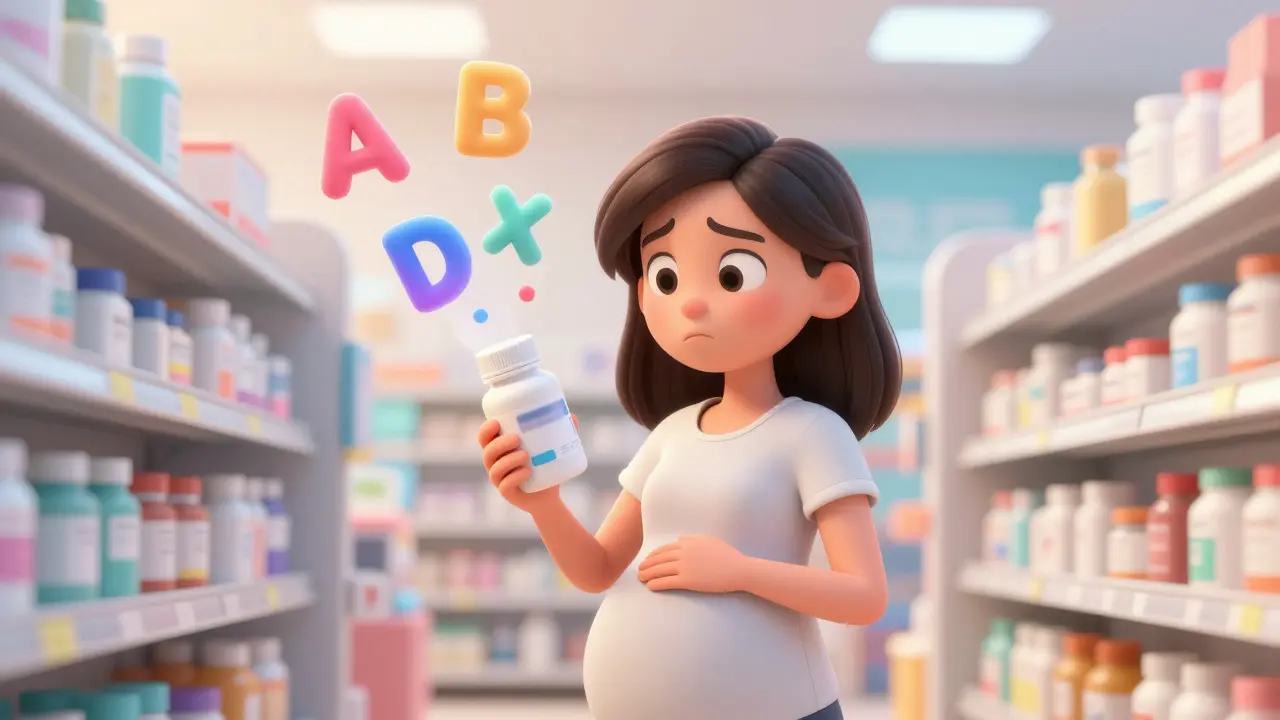
Remember when you could look at a medication bottle and see a simple letter-A, B, C, D, or X-to tell you if it was safe for your baby? That system is gone. If you are looking at a prescription label today, especially one approved after 2015, you won't find those letters. Instead, you will see paragraphs of text under sections labeled "Pregnancy" and "Lactation."
This change can feel overwhelming. The old letter system was easy to scan, even if it was scientifically flawed. The new system, known as the Pregnancy and Lactation Labeling Rule (PLLR), which is a regulatory framework implemented by the FDA in 2015 that replaced the A-X letter categories with detailed narrative descriptions of risks during pregnancy and breastfeeding, provides much more accurate information. However, it requires a bit more effort to understand.
You don't need to be a doctor to read these labels. You just need to know where to look and what specific phrases mean. This guide breaks down exactly how to interpret the new drug labeling so you can have informed conversations with your healthcare provider.
Why the Old Letter System Was Replaced
To understand the new labels, it helps to know why the old ones were scrapped. For decades, the U.S. Food and Drug Administration (FDA) used five categories: A, B, C, D, and X. Most people assumed this was a grade, like in school, where A was perfect and X was failing. In reality, it wasn't.
The letter "C" was assigned to about 70% of all drugs. It didn't mean the drug was dangerous; it usually meant there simply wasn't enough data from human studies. Because pregnant women were historically excluded from clinical trials, manufacturers couldn't prove safety, so they defaulted to C. This caused unnecessary panic. Many patients stopped taking essential medications for conditions like epilepsy or depression because they saw a "C" and assumed it meant "caution" or "danger," when it often just meant "unknown."
Conversely, a drug could be rated "B" (animal studies showed no risk) but still have unknown effects in humans. The system was too simplistic. The FDA realized that misinterpretation of these letters led to worse health outcomes than the drugs themselves. So, they introduced the PLLR to provide context, not just a grade.
Navigating Section 8: Use in Specific Populations
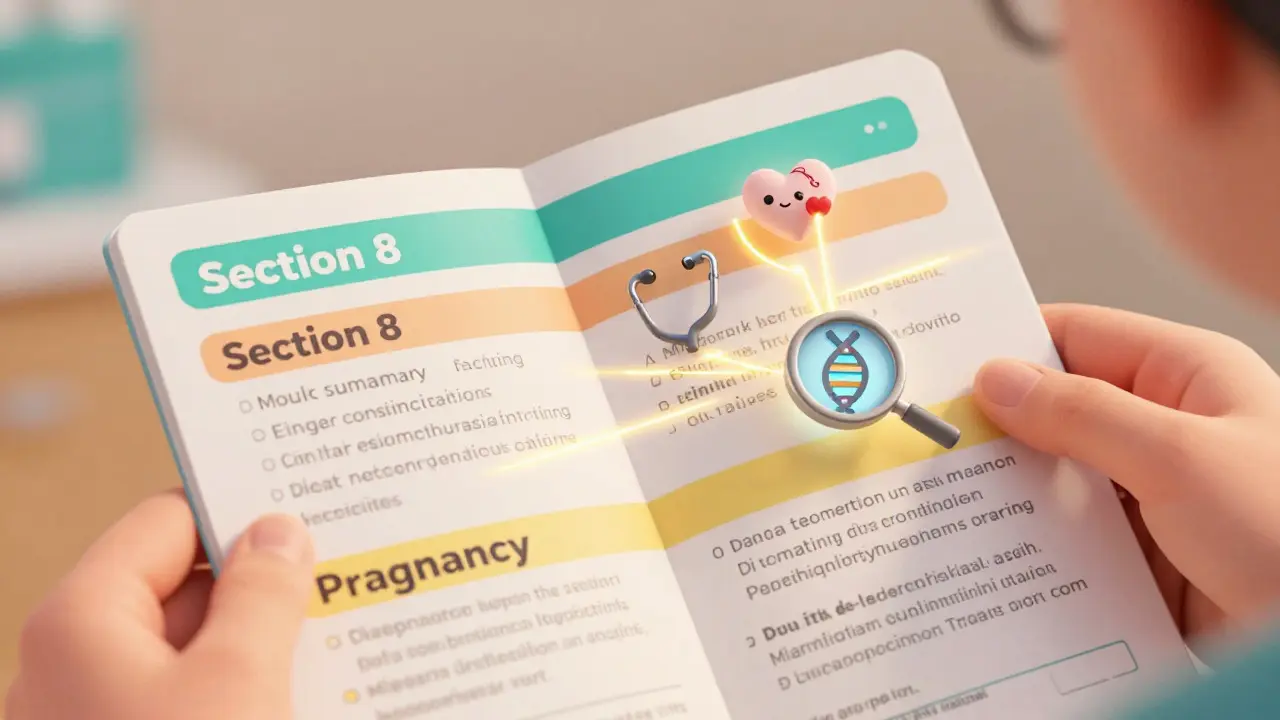
When you open the patient information leaflet or view the digital prescribing information, scroll down to Section 8: Use in Specific Populations. This is the heart of the new labeling rule. It is divided into three mandatory subsections:
- 8.1 Pregnancy: Details risks to the fetus.
- 8.2 Lactation: Details transfer of the drug into breast milk.
- 8.3 Females and Males of Reproductive Potential: Discusses contraception and fertility impacts.
Each of these subsections follows a strict structure with three headings: Risk Summary, Clinical Considerations, and Data. Knowing what goes under each heading is the key to decoding the label quickly.
Decoding the Pregnancy Subsection (8.1)
The goal here is to balance the risk of the medication against the background risk of pregnancy itself. Here is how to read the three parts:
Risk Summary
This section gives you the bottom line. Look for numbers. The label should state the background risk of major birth defects. In any pregnancy, regardless of medication use, there is a 2-4% chance of major birth defects and a 15-20% chance of miscarriage. If a drug increases this risk significantly, it will say so. For example, it might state: "The estimated background risk of major birth defects in the indicated population is 8-10%." If the drug adds to this, it will quantify it, such as "a 1.5-fold increased risk."
Clinical Considerations
This is the actionable advice. It tells you what to do. Does the drug require monitoring? Should you stop taking it at a certain week of gestation? For instance, some blood pressure medications are safe in early pregnancy but must be switched before the second trimester to avoid kidney issues in the fetus. This section highlights those timing nuances.
Data
This part explains the evidence. It describes the studies conducted. You might see terms like "prospective cohort study" or "case-control study." If there is limited human data, the label will describe animal studies instead. Pay attention to sample sizes. A study with 1,200 pregnancies provides stronger reassurance than one with 50. If the label says "human data are lacking," it means we rely on animal models or theoretical mechanisms, which is less reassuring but not necessarily proof of harm.
Understanding Lactation Labeling (8.2)
If you are breastfeeding, Section 8.2 is your focus. The old labels often just said "not recommended" without explanation. The new PLLR labels provide specific pharmacokinetic data.
Look for the phrase "infant exposure relative to maternal dose". This is a percentage. If the label says "less than 10% of the weight-adjusted maternal dose," it generally indicates low exposure. High percentages suggest more drug is passing into the milk.
The Clinical Considerations section here will advise on timing. Some drugs peak in breast milk shortly after ingestion. The label might suggest taking the medication right after a feeding or before a long sleep period to minimize infant exposure. It will also list potential adverse reactions in the breastfed infant, such as drowsiness or decreased weight gain.
| Feature | Old Letter System (Pre-2015) | New PLLR Narrative (Current) |
|---|---|---|
| Format | Single letter (A, B, C, D, X) | Detailed text in Section 8 |
| Clarity | Misleading; looked like a grade | Contextual; shows actual risk data |
| Lactation Info | Often missing or vague | Specific % transfer and infant effects |
| Decision Making | Quick but inaccurate | Slower but nuanced and safer |
The Role of Pregnancy Exposure Registries
A critical component of the new labeling is the mention of Pregnancy Exposure Registries. These are databases that track outcomes for women who take specific drugs while pregnant. Because pregnant women are rarely included in initial drug trials, these registries fill the gap.
If the label mentions a registry, it means the manufacturer or a medical group is actively collecting data. You can often enroll yourself. This helps future mothers by providing real-world safety data. As of recent years, there are dozens of active registries for common classes of drugs like antidepressants, antiepileptics, and biologics. Seeing a registry listed is a sign that the medical community is paying close attention to the drug's safety profile.

Practical Tips for Patients and Providers
Reading these labels can still be dense. Here are some practical steps to make the process easier:
- Don't Panic at "Risk": Every pregnancy has inherent risks. Compare the drug's stated risk to the background risk mentioned in the summary. If the increase is small, the benefit of treating your condition may outweigh the risk.
- Check for Timing: Risks often vary by trimester. First-trimester exposure affects organ formation. Third-trimester exposure might affect fetal behavior or withdrawal symptoms. Note the specific weeks mentioned.
- Use Trusted Resources: If the label is confusing, consult specialized teratology information services. Organizations like MotherToBaby or TERIS (Teratogen Information System) provide free, expert-reviewed summaries that translate complex label data into plain language.
- Talk to Your Pharmacist: Pharmacists are trained to interpret these labels. Ask them specifically about the "infant exposure percentage" if you are breastfeeding.
Common Misconceptions to Avoid
One major pitfall is confusing association with causation. The label might say, "Studies show an association between Drug X and cleft palate." This does not automatically mean Drug X causes cleft palates. It means that in the studied group, the occurrence was higher. The Data section will explain if confounding factors (like other medications or genetic history) were controlled for.
Another misconception is that "no data" means "safe." It actually means "unknown." If the label states "human data are lacking," assume caution until more evidence emerges, but don't assume immediate danger. Discuss alternative treatments with your doctor if the uncertainty feels too high.
Conclusion
The shift from letter categories to narrative labeling was designed to protect you by providing truth over simplicity. While it takes longer to read, it prevents the mistake of stopping life-saving medication due to a misleading "C" rating. By focusing on the Risk Summary, Clinical Considerations, and Data sections, you can understand the true safety profile of your medications. Always bring your questions to your healthcare team-they are there to help you navigate these details.
What happened to the pregnancy category letters A, B, C, D, and X?
The FDA replaced the letter categories with the Pregnancy and Lactation Labeling Rule (PLLR) in 2015. The letters were removed because they were often misinterpreted as a grading system (like school grades) rather than a complex risk assessment. The new system uses detailed narrative text to provide more accurate and contextual information about risks during pregnancy and breastfeeding.
Where can I find pregnancy safety information on a drug label?
Look for Section 8, titled "Use in Specific Populations." Within this section, subsection 8.1 covers Pregnancy, and subsection 8.2 covers Lactation. Each of these contains a Risk Summary, Clinical Considerations, and Data subsections that detail the specific risks and recommendations.
What does "background risk" mean in drug labeling?
Background risk refers to the natural rate of birth defects or miscarriage in the general population, regardless of medication use. Typically, 2-4% of all pregnancies result in major birth defects, and 15-20% end in miscarriage. Drug labels now include this statistic to help patients put medication-specific risks into perspective.
How do I know if a drug passes into breast milk?
Check the Lactation subsection (8.2) of the drug label. It will provide data on the amount of drug transferred to breast milk, often expressed as a percentage of the maternal dose. It will also list potential side effects in the breastfed infant and offer clinical advice on timing doses to minimize exposure.
Are there resources to help interpret these new labels?
Yes. Specialized teratology information services like MotherToBaby and TERIS (Teratogen Information System) offer free counseling and plain-language summaries. Additionally, many electronic health records now integrate this data, and pharmacists are trained to explain the narrative labels to patients.