How to Choose OTC Eye Drops for Allergies, Dryness, and Redness: A Practical Guide
 Aug, 26 2026
It’s 3 PM on a Tuesday. You’re staring at your laptop screen, the air conditioning is blasting, and suddenly your eyes feel like they’ve been rubbed with sandpaper. Or maybe it’s springtime, and every time you step outside, your eyelids itch until they burn. You head to the pharmacy aisle, grab a bottle of Visine or Systane, and hope for the best. But here’s the catch: using the wrong drop can make things worse. In fact, many people use redness-relief drops for dry eyes, only to find their symptoms intensify within two weeks.
The over-the-counter (OTC) eye drop market is crowded. There are over 100 different products available, ranging from $9 to $25 per bottle. With so many options, how do you know which one actually works for your specific problem? The answer lies in understanding three distinct categories: artificial tears for dryness, antihistamines for allergies, and vasoconstrictors for redness. Each serves a different biological purpose, and mixing them up is the most common mistake consumers make.
Identifying Your Specific Eye Condition
Before you spend money, you need to diagnose the issue. Most people assume "dry" means "needs water," but eye care specialists distinguish between two main types of dry eye: aqueous deficient and evaporative. If your eyes feel gritty, scratchy, or worse when you blink, you likely have aqueous deficient dry eye. This means your tear glands aren’t producing enough liquid. If your burning sensation worsens later in the day, especially after long screen sessions, you might have evaporative dry eye. This happens when the oily layer of your tears evaporates too quickly, leaving your cornea exposed.
Allergies present differently. You’ll notice itching as the primary symptom, often accompanied by watery discharge and swollen eyelids. Redness, on the other hand, is usually a cosmetic concern or a sign of irritation, not necessarily a lack of moisture. Misidentifying these conditions leads to ineffective treatment. For example, using a simple lubricant for severe allergic itching won’t stop the histamine response, while using a decongestant for dry eye will strip away the little blood flow your eyes need to heal.
Artificial Tears: The Foundation of Relief
Artificial tears are the most versatile OTC option, accounting for 58% of all eye drop sales. They mimic natural tears to hydrate the ocular surface. However, not all artificial tears are created equal. Standard formulations often contain preservatives like polyquaternium-1 to keep the bottle sterile. While effective for occasional use, these preservatives can irritate sensitive eyes if used more than four times a day.
If you use drops frequently, look for preservative-free single-use vials. Brands like Refresh Optive Preservative-Free offer these in boxes of 30 vials. They cost slightly more upfront but prevent the cumulative irritation that preserved multi-dose bottles can cause. For those with evaporative dry eye, lipid-based formulas are superior. Products like Systane Complete PF contain mineral oil and castor oil to reinforce the tear film’s lipid layer, reducing evaporation by up to 52% compared to standard water-based drops.
- Aqueous Deficient Dry Eye: Look for hypotonic formulas like TheraTears, which help draw moisture into the eye.
- Evaporative Dry Eye: Choose lipid-enriched drops like Systane Complete PF.
- Screen Time Fatigue: Gel-based drops like Systane Gel Drops provide longer-lasting relief (4-6 hours) but cause temporary blurriness for 2-3 minutes.
Allergy Relief: Blocking the Itch
When pollen or dust triggers an immune response, you need more than hydration; you need to block histamine. Antihistamine eye drops work fast. Ketotifen (found in Zaditor) and olopatadine (found in Pataday) are the gold standards. Pataday is particularly popular because it offers 24-hour relief with just one drop per day. This makes it ideal for morning routines during peak allergy season.
Generic ketotifen drops are cheaper but typically require twice-daily application. If you’re dealing with seasonal allergies, starting treatment before symptoms hit is key. Don’t wait until your eyes are streaming; apply the drops preemptively. Note that some combination drops include both an antihistamine and a decongestant. While these provide rapid relief, the decongestant component carries risks discussed below. For pure allergy management, stick to antihistamine-only formulations to avoid unnecessary side effects.

Redness Relief: Use with Caution
This is where most people go wrong. Redness-relief drops contain vasoconstrictors like tetrahydrozoline (in Visine) or brimonidine (in Lumify). These ingredients constrict the blood vessels in the sclera (the white part of your eye), making it appear whiter almost instantly. It feels great, and you look better immediately. But there’s a trade-off.
Traditional decongestants like Visine can cause "rebound hyperemia." This means that once the medication wears off, the blood vessels dilate even wider than before, making your eyes redder than they were originally. Studies show that 68% of frequent users experience this rebound effect within two weeks. Newer formulations like Bausch + Lomb Lumify use brimonidine tartrate, which has a lower risk of rebound (around 5%) and lasts for 8 hours. However, even with safer options, redness drops should be reserved for special occasions-like a job interview or a wedding photo-rather than daily maintenance. Using them for chronic dry eye is a mistake; they mask the symptom without treating the underlying lack of moisture.
| Category | Key Ingredient | Best For | Duration of Relief | Risk Factor |
|---|---|---|---|---|
| Artificial Tears | Polyethylene glycol / Lipids | Dryness, Grittiness, Screen Fatigue | 1-6 hours (depending on formula) | Preservative irritation if used >4x/day |
| Allergy Relief | Olopatadine / Ketotifen | Itching, Swelling, Pollen Response | 12-24 hours | Mild stinging upon application |
| Redness Relief | Tetrahydrozoline / Brimonidine | Cosmetic Whiteness, Temporary Irritation | 4-8 hours | Rebound redness (high for old formulas) |
Choosing the Right Formulation: Preserved vs. Preservative-Free
The packaging matters as much as the ingredients. Multi-dose bottles are convenient and cheaper, but they rely on preservatives to stay sterile after opening. If you have sensitive eyes or use drops more than four times a day, switch to single-use vials. They look like tiny test tubes and are discarded after one use. Yes, they generate more waste, but they eliminate the risk of preservative toxicity. According to Haas Vision Center, 29% of frequent users report sensitivity to preservatives, leading to punctate keratitis (tiny abrasions on the cornea) in chronic cases.
Storage is another often-overlooked factor. Most OTC drops should be stored at room temperature, away from direct sunlight. However, premium formulas like Thealoz Duo require refrigeration after opening. Check the label carefully. Also, pay attention to osmolarity. Contact lens wearers need drops with an osmolarity between 280-320 mOsm/L to prevent lens dehydration. Hypotonic drops (lower than 290 mOsm/L) are generally better for dry eyes as they help retain moisture, while isotonic drops match natural tear balance.
Proper Application Techniques
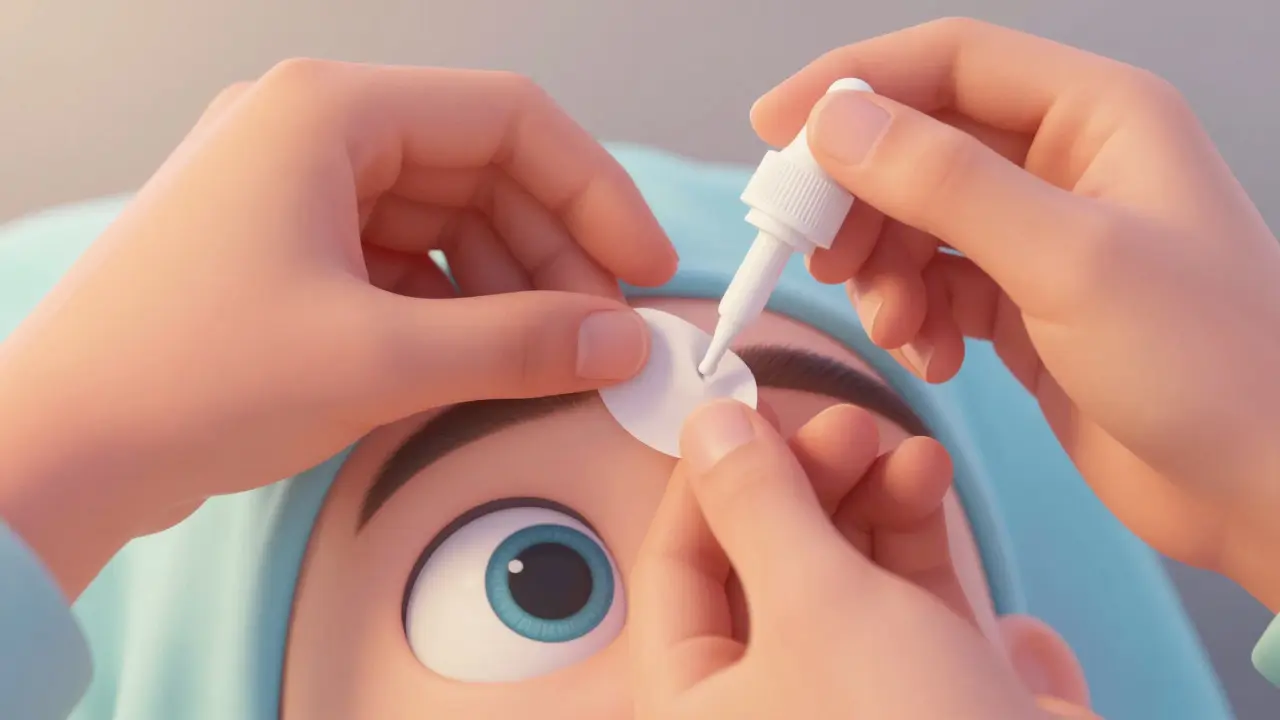
You can buy the best drop in the world, but if you apply it incorrectly, half of it will spill out. Research shows that 68% of first-time users apply drops wrongly. Here is the correct technique to maximize absorption:
- Tilt your head back about 45 degrees.
- Pull your lower eyelid down gently to create a small pocket.
- Squeeze the bottle to release one drop into the pocket. Do not touch the dropper tip to your eye or lashes to avoid contamination.
- Close your eyes gently and hold them closed for 30 seconds. Try not to blink during this time.
- Press lightly on the inner corner of your eye (near the nose) for a minute. This blocks the tear duct and keeps the medication on the eye surface longer instead of draining into your nasal cavity.
Common Mistakes to Avoid
The biggest error is using redness drops for dry eye. As mentioned, vasoconstrictors reduce blood flow, which can hinder the healing process in dry eye patients. Another mistake is ignoring environmental factors. If you sit near a heating vent or AC unit, no amount of eye drops will fix the root cause. Consider using a humidifier in your office or home. Additionally, don’t mix brands randomly. Stick to one trusted formulation for a few weeks to see if it works before switching. Frequent switching prevents your eyes from adjusting and makes it hard to track what actually helps.
Finally, watch out for expiration dates. Once opened, most multi-dose bottles should be discarded after 30 days, even if they look full. Preservatives lose effectiveness over time, increasing the risk of bacterial contamination. Single-use vials should be used immediately after opening and thrown away, regardless of how much is left.
Can I use redness-relief drops every day?
Ideally, no. Traditional decongestant drops like Visine can cause rebound redness if used daily for more than a week. Newer options like Lumify are safer for short-term regular use, but they are still best reserved for occasional cosmetic needs rather than chronic symptom management.
Which eye drops are best for computer vision syndrome?
For screen-related dryness, preservative-free artificial tears are the standard recommendation. If your dryness is severe or persists throughout the day, gel-based drops like Systane Gel Drops provide longer retention, though they may blur your vision temporarily. Always follow the 20-20-20 rule (look 20 feet away for 20 seconds every 20 minutes) to reduce strain.
Are preservative-free eye drops worth the extra cost?
If you use drops more than four times a day or have sensitive eyes, yes. Preservatives can accumulate and cause irritation or damage to the corneal surface over time. Single-use vials eliminate this risk, making them a worthwhile investment for frequent users.
How long does it take for allergy eye drops to work?
Most antihistamine drops start working within 5 to 15 minutes. Pataday (olopatadine) provides sustained relief for up to 24 hours, while generic ketotifen drops typically last 8 to 12 hours, requiring twice-daily dosing.
Should I wear contacts with eye drops?
Only if the drops are specifically labeled as contact-lens compatible. For most therapeutic drops (allergy or redness relief), remove your lenses first. Wait 15 minutes after application before putting them back in to ensure proper absorption and to avoid trapping preservatives against your cornea.