Gastroparesis Diet Guide: Foods to Eat, Avoid, and How to Manage Symptoms
 Aug, 9 2026
Imagine taking a bite of your favorite meal, only to feel like it’s sitting in your stomach for hours-or even days. You’re not imagining things. If you have Gastroparesis, formally known as delayed gastric emptying without mechanical obstruction, your stomach muscles aren’t doing their job. Instead of churning food into a slurry and passing it to the small intestine, your stomach stalls. This isn’t just indigestion; it’s a chronic condition that affects about 4% of the population, with women being four times more likely to develop it than men.
The frustration is real. Nausea hits 90% of patients. Vomiting affects up to 80%. Feeling full after just two bites? That’s early satiety, experienced by 85% of people with this condition. But here is the good news: while there is no cure yet, you can manage these symptoms effectively. The cornerstone of treatment isn’t always medication-it’s how you eat. In fact, 65% of patients see significant improvement through dietary changes alone.
Understanding Why Your Stomach Slows Down
To fix the problem, you first need to understand what’s breaking. Normally, your stomach has two main jobs: relaxing to hold food and churning it down. In gastroparesis, both functions fail. The American College of Gastroenterology identifies this as a disorder of gut-brain interaction. Often, the culprit is damage to the vagus nerve, which controls stomach muscles. This happens in 70% of cases.
Who gets this? It’s heavily linked to diabetes. Up to 50% of people with type 1 diabetes and 30% of those with long-term type 2 diabetes may develop gastroparesis. Other causes include post-surgical complications (13%), connective tissue disorders like scleroderma (7%), or idiopathic origins where no cause is found (30%). Understanding your specific trigger helps tailor your approach, but regardless of the cause, the dietary rules remain largely the same.
| Cause Category | Percentage of Cases | Key Mechanism |
|---|---|---|
| Diabetes-Related | 35% | Nerve damage from high blood sugar |
| Idiopathic | 30% | No identifiable cause |
| Post-Surgical | 13% | Nerve injury during abdominal surgery |
| Connective Tissue Disorders | 7% | Muscle weakness (e.g., Scleroderma) |
| Other | 15% | Viral infections, medications, neurological issues |
The Golden Rules of Eating with Gastroparesis
You don’t need a complicated medical degree to start feeling better. You need a strategy. Yale Medicine recommends a stepwise approach: start with liquids, move to soft foods, and eventually incorporate small, frequent meals. Here are the non-negotiable rules that make the biggest difference.
- Small Portions: Limit yourself to 1-1.5 cups per meal. Aim for 5-6 mini-meals a day instead of three large ones.
- Low Fat: Fat slows down gastric emptying by 30-50%. Keep fat under 3 grams per meal.
- Low Fiber: Fiber is great for most people, but for you, it’s a trap. Keep it under 15 grams per meal. Raw fruits and vegetables are particularly hard to digest.
- Blend It: If solids sit heavy, blend them. Processing food to a smooth consistency (particle size less than 2mm) helps 70% of patients report symptom improvement.
- Separate Liquids and Solids: Don’t drink with your meals. Wait 30 minutes before or after eating. Drinking with food increases gastric volume by 40%, making bloating worse.
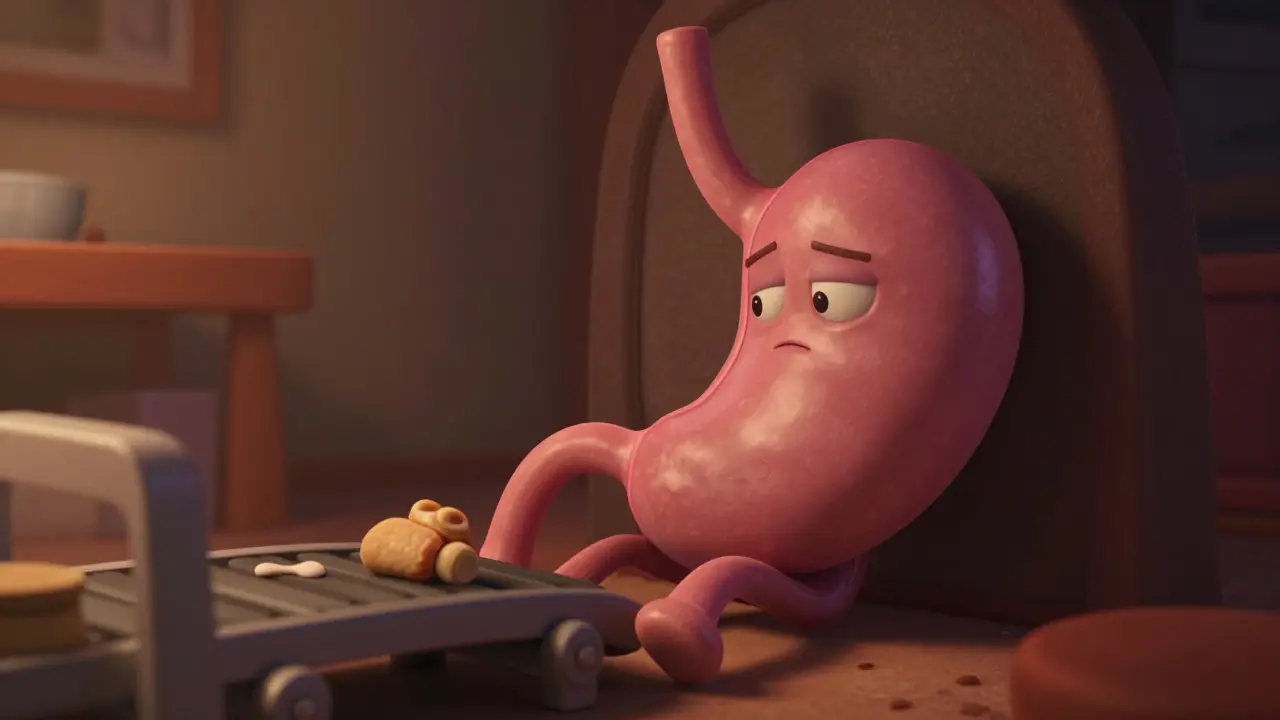
Think of your stomach as a slow-moving conveyor belt. If you pile too much on it, or if you put heavy, tough items on it, the belt jams. By keeping portions small and textures soft, you keep the belt moving.
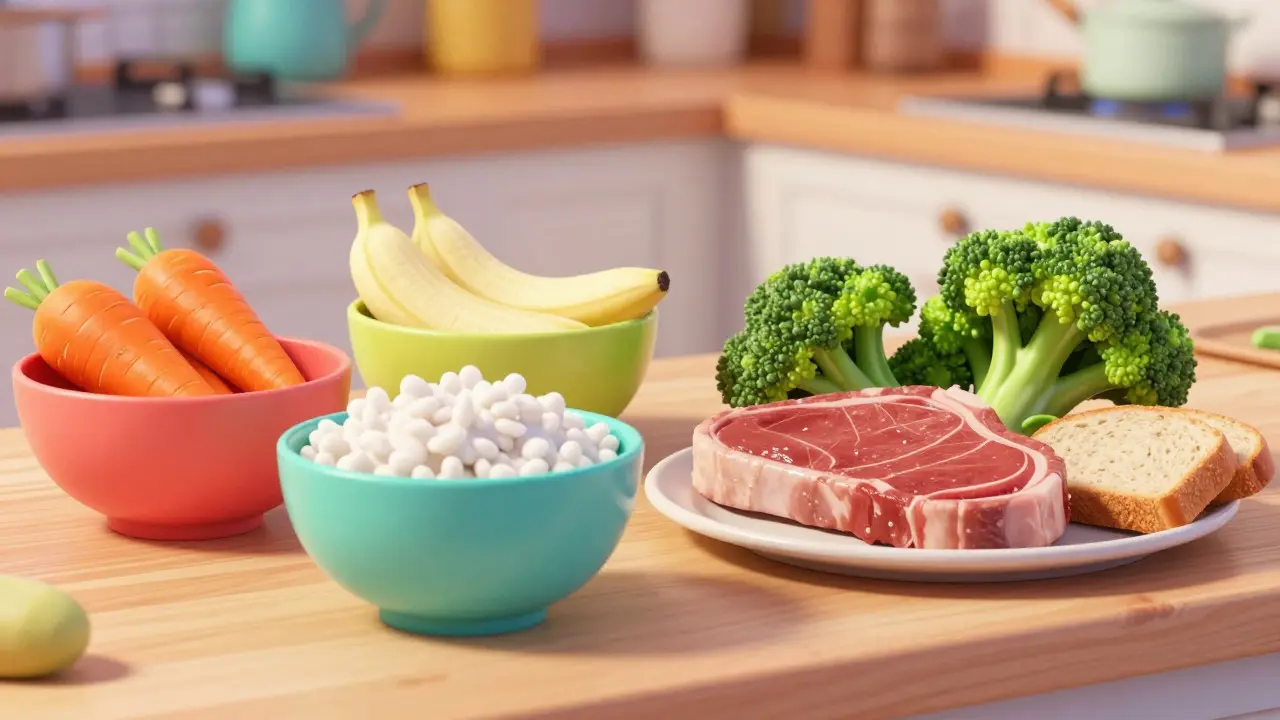
Foods to Embrace vs. Foods to Banish
Knowing what to avoid is just as important as knowing what to eat. The American College of Gastroenterology specifically flags high-fat foods and carbonated beverages as major triggers. Carbonation increases gastric distension by 25%, leading to immediate discomfort.
Here is a practical breakdown of what fits into your new lifestyle.
| Food Group | Safe Choices (Eat These) | Avoid These |
|---|---|---|
| Proteins | Egg whites, fish, skinless poultry, tofu, yogurt | Tough meats (steak), fried chicken, fatty cuts |
| Vegetables | Cooked carrots, spinach, squash, potatoes (peeled) | Broccoli, corn, beans, raw salads, skins |
| Fruits | Bananas, melons, applesauce, canned peaches | Berries (seeds), citrus skins, raw apples, pears |
| Grains | White rice, pasta, refined bread, crackers | Whole wheat, brown rice, bran cereals |
| Dairy | Lactose-free milk, skim cheese, ice cream | Full-fat milk, creamy sauces, butter |
If you crave something crunchy, try baked potato chips (low fat) or pretzels, but chew them thoroughly until they are almost liquid before swallowing. Chewing reduces particle size significantly, easing the burden on your stomach.
Hydration Strategies That Work
Dehydration is a serious risk, affecting 25% of moderate-to-severe cases due to persistent vomiting. However, gulping water can backfire. Large fluid volumes increase gastric distension by 35%. Instead, sip slowly. Yale Medicine suggests taking 4-6 small sips (1-2 ounces) every 15 minutes throughout the day. Electrolyte drinks are helpful, but choose low-sugar options to avoid osmotic issues. Clear broths and herbal teas are also excellent choices that settle the stomach.

When Diet Isn't Enough: Medical Interventions
For some, diet changes provide complete relief. For others, especially those with moderate to severe gastroparesis, medication is necessary. Prokinetic agents like metoclopramide help stimulate stomach contractions. They improve gastric emptying by 20-25% in over half of patients. However, they come with risks, including tardive dyskinesia with long-term use, so they require careful monitoring.
If medications fail, advanced options exist. Gastric electrical stimulation (GES) therapy involves implanting a device that sends mild electrical signals to the stomach muscle. It provides symptom relief in 70% of medication-refractory cases. Newer procedures like per-oral pyloromyotomy (POP) cut the muscle at the stomach’s exit, reducing resistance and showing 60-70% success rates in trials. Always discuss these options with a gastroenterologist who specializes in motility disorders.
Living Well with Gastroparesis
Managing gastroparesis is a marathon, not a sprint. It requires patience and tracking. Cleveland Clinic recommends keeping a detailed food and symptom diary. Eighty percent of patients identify specific problematic foods through this method. Did you notice bloating after eating tomatoes? Skip them. Feel fine after oatmeal? Keep it in your rotation.
Don’t underestimate the mental toll. Anxiety around eating affects 65% of patients, and social isolation is common. Consider working with a registered dietitian specializing in gastroparesis. Studies show this improves outcomes by 40% compared to self-management. Support groups can also help you realize you’re not alone in this struggle.
Remember, the goal isn’t perfection. It’s progress. Some days will be harder than others. Listen to your body, adjust your plan, and stay consistent. With the right strategies, you can regain control over your meals and your life.
What is the #1 rule for eating with gastroparesis?
The most critical rule is to eat small, frequent meals (5-6 per day) with portion sizes limited to 1-1.5 cups. This prevents overwhelming your stomach's ability to empty, reducing nausea and bloating.
Can I ever eat fiber again with gastroparesis?
Yes, but in very limited amounts. Keep fiber under 15 grams per meal. Cooked, peeled vegetables are easier to digest than raw ones. Avoid high-fiber foods like corn, broccoli, and whole grains initially, as they can form bezoars (undigested food masses).
Why should I separate liquids and solids?
Drinking fluids with meals increases gastric volume by 40%, which exacerbates symptoms like bloating and fullness. Waiting 30 minutes before or after eating allows your stomach to focus on processing solid food without extra pressure.
Are there any new treatments for gastroparesis in 2026?
Recent advancements include relamorelin, a ghrelin agonist approved in 2022, which showed 35% improvement in gastric emptying in phase 3 trials. Additionally, AI-assisted diagnostic tools and targeted probiotic formulations are emerging as promising therapies.
How does diabetes affect gastroparesis?
High blood sugar damages the vagus nerve, which controls stomach muscles. Up to 50% of type 1 diabetics and 30% of type 2 diabetics develop gastroparesis. Managing blood glucose levels is crucial to preventing further nerve damage and worsening symptoms.
What is a bezoar and how do I prevent it?
A bezoar is a mass of undigested food that accumulates in the stomach, occurring in 6% of gastroparesis cases. Prevent it by chewing food thoroughly, avoiding high-fiber foods like skins and seeds, and blending meals if necessary to ensure particles are smaller than 2mm.
Should I see a specialist for gastroparesis?
Yes. A gastroenterologist specializing in motility disorders can provide accurate diagnosis via gastric emptying studies and offer advanced treatments like prokinetic medications or gastric electrical stimulation if dietary changes aren't enough.