Fasted vs Fed State Testing: Why Both Conditions Matter for Health and Medications
 Feb, 28 2026
When you take a pill on an empty stomach versus after eating, your body doesn’t just digest it differently-it absorbs it differently. The same goes for how your muscles perform during a workout before breakfast compared to after a banana and toast. These aren’t just minor details. They’re critical factors that determine whether a drug works, whether your training actually improves your body, and whether your health goals are met. This is the real-world impact of fasted vs fed state testing.
What Exactly Are Fasted and Fed States?
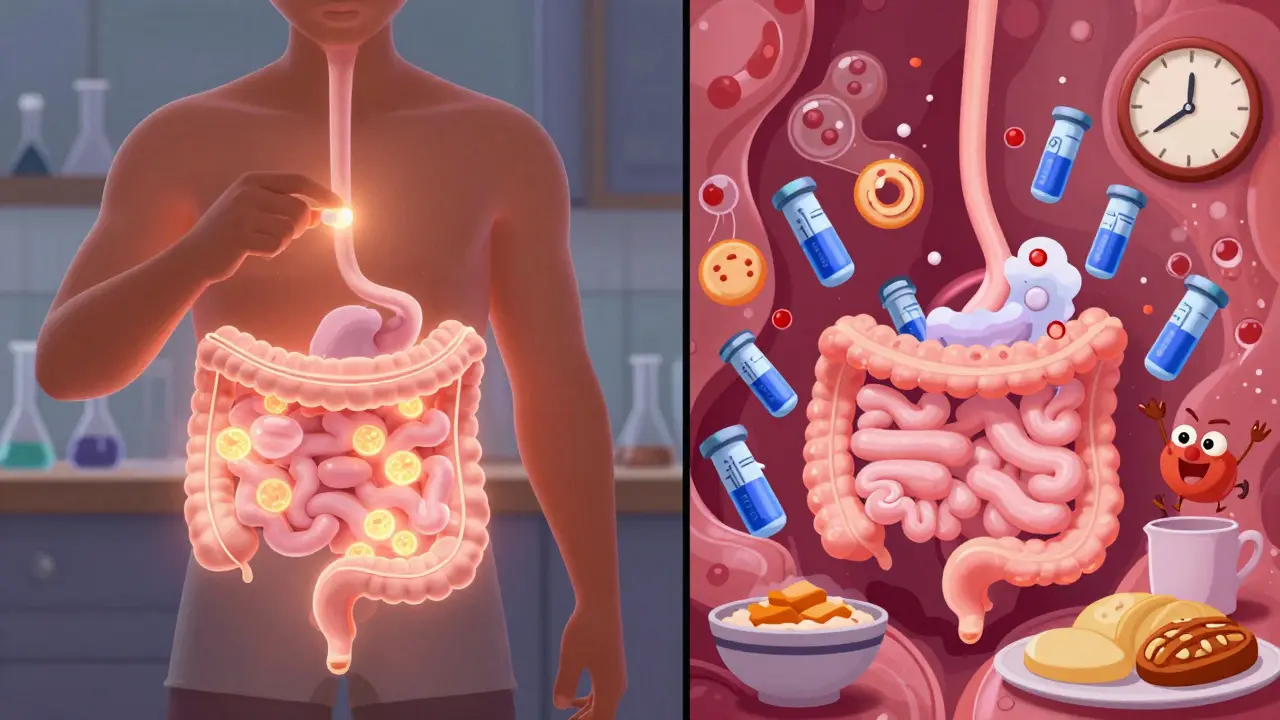
The fasted state means your body hasn’t processed any food for at least 8 to 12 hours. You’ve slept, maybe had water or black coffee, but no calories. Your insulin levels are low, your liver is tapping into stored fat for energy, and your digestive system is quiet. This is the default metabolic state your body returns to between meals.
The fed state is the opposite: you’ve eaten within the last 2 to 4 hours. Food is still being broken down. Digestive enzymes are active. Blood sugar is rising. Insulin is working. Your stomach is full, your gut is moving slower, and your bloodstream is flooded with nutrients.
These aren’t just labels. They’re measurable physiological conditions with real numbers behind them. In the fed state, gastric emptying takes about 78 minutes on average. In the fasted state? Just 14 minutes. The pH in your stomach drops to 1.5 after eating-much more acidic-compared to 2.5 when you’re empty. These aren’t small differences. They change how everything in your body behaves.
Why Drug Companies Test Both States
Back in the 1990s, the FDA realized something alarming: a drug could be perfectly safe and effective in a lab, but fail in real life because people took it with food. Some drugs became 300% more absorbable after a meal. Others were barely absorbed at all.
Take fenofibrate, a cholesterol-lowering drug. When taken with a high-fat meal, its absorption jumps by 200-300%. That means a patient could get a much stronger effect than intended-risking side effects-or worse, get almost nothing if they take it on an empty stomach. On the flip side, griseofulvin, an antifungal, absorbs 50-70% less when eaten. A dose that works on an empty stomach might be useless after a burger.
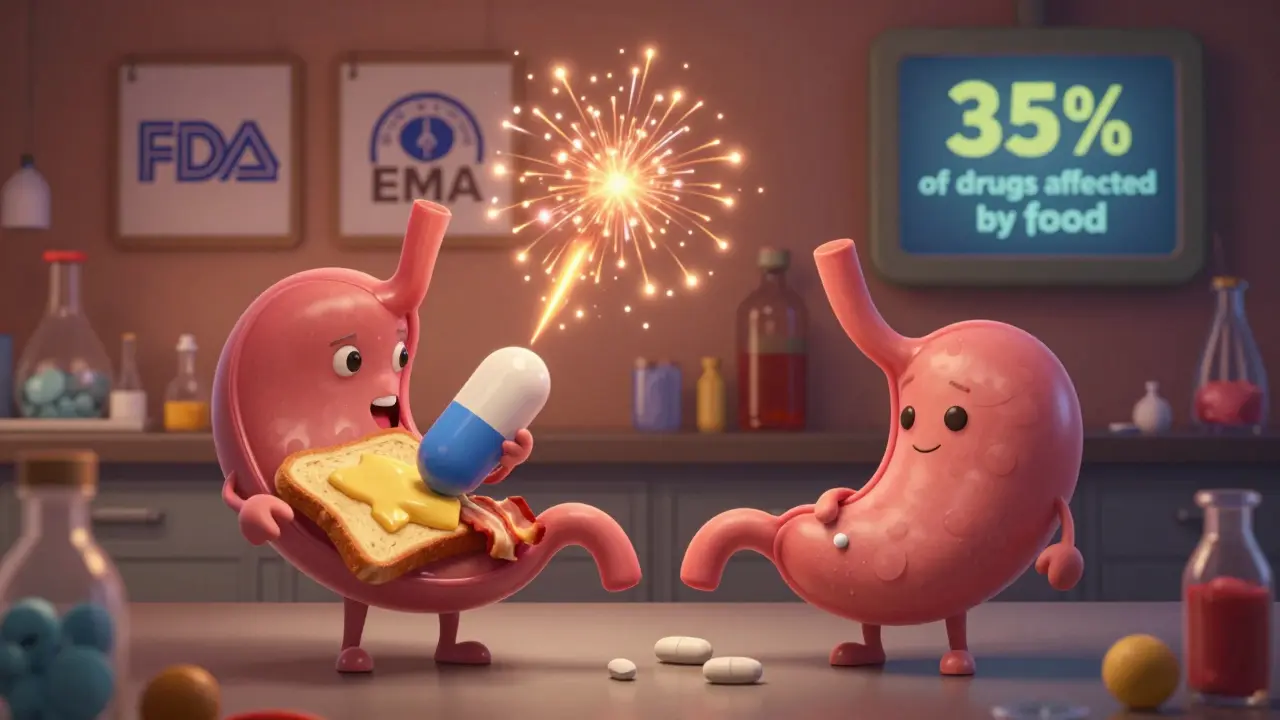
That’s why the FDA now requires dual-state testing for nearly all oral drugs. A standard fed-state meal in these trials contains 800-1,000 calories, with 500-600 of them coming from fat. It’s not just ‘eating something.’ It’s a precise, repeatable condition designed to mimic real-world eating patterns.
And it’s not just American regulators. The European Medicines Agency (EMA) now requires fed-state testing for any oral drug where food effects are unknown. In 2019, analysis of 1,200 new drug applications showed 35% had clinically meaningful food interactions. That’s one in three drugs where the difference between taking it with or without food could mean the difference between treatment and failure.
How This Affects Your Workout
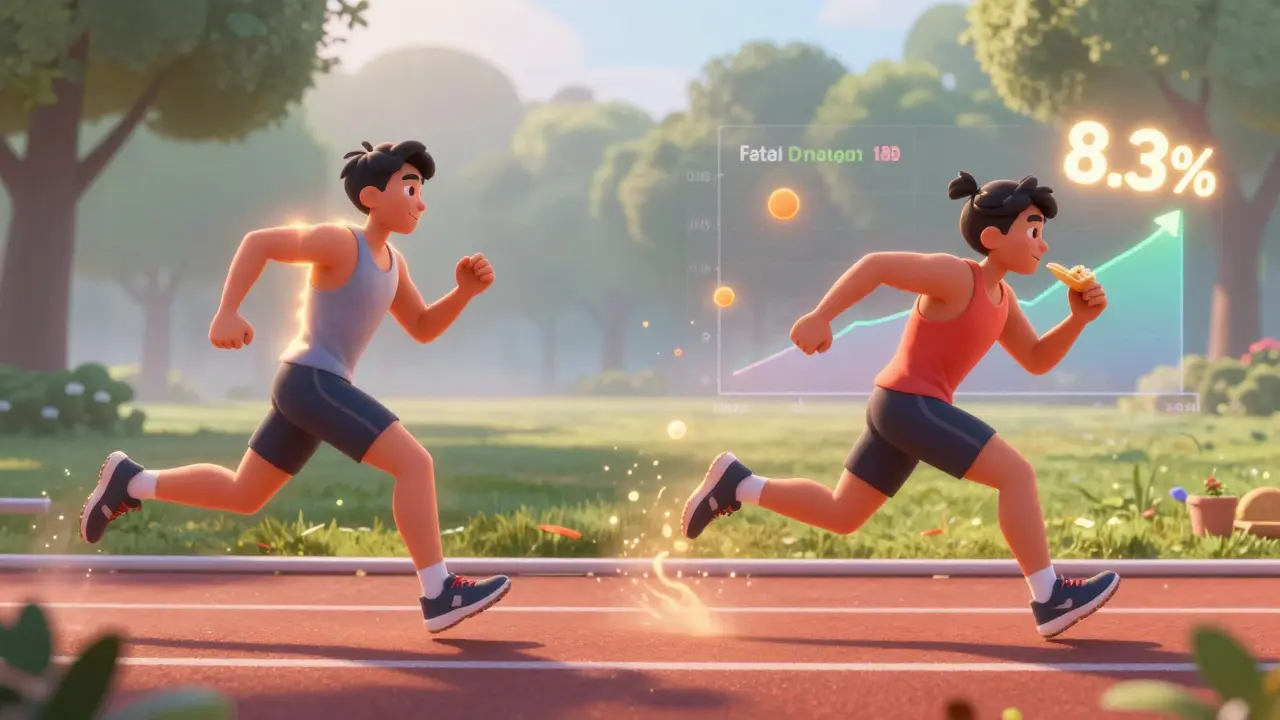
Exercise science has its own version of this debate. For decades, people trained fasted because they believed it burned more fat. And yes-it does. In fasted conditions, free fatty acid levels in the blood are 30-50% higher during moderate exercise. Your body literally pulls more fat from your stores.
But here’s the catch: that doesn’t mean you lose more body fat over time. A 2021 study in the Journal of the International Society of Sports Nutrition tracked people over six weeks. One group trained fasted. The other trained after eating. Both lost the same amount of fat. The difference was only in the short term.
Where fed-state training shines is in performance. A 2018 meta-analysis of 46 studies found that fed-state exercise improved prolonged aerobic performance by 8.3%. That’s not trivial. For endurance athletes, that’s a 30-second advantage over 10 kilometers. But for shorter workouts under 60 minutes? No difference.
Meanwhile, fasted training has a hidden benefit: it turns on your mitochondria. Studies show it upregulates PGC-1α expression by 40-50%. That’s the gene that tells your body to build more energy-producing cells in your muscles. That’s why endurance athletes and metabolic health advocates swear by it.
But it comes at a cost. Fasted training reduces high-intensity capacity by 12-15%. If you’re doing sprints, heavy lifts, or HIIT, you’ll feel weaker. Your power drops. Your recovery slows. And for some people? It causes dizziness or nausea. A 2022 Reddit survey of 1,247 fitness enthusiasts found 68% performed better when fed. But 42% of those in ketogenic communities preferred fasted training for fat loss.
Who Should Train Fasted? Who Should Train Fed?
There’s no universal answer. It depends on your goal.
- If you’re trying to improve insulin sensitivity, burn fat, or build metabolic resilience-especially if you’re sedentary or overweight-fasted training can be powerful. Fourteen randomized trials show 5-7% greater improvements in insulin sensitivity with fasted exercise.
- If you’re an athlete training for performance-running a race, lifting heavy, competing-fed-state training gives you the energy to go harder and longer. The American College of Sports Medicine recommends it for competitive athletes.
- If you’re doing both? Periodize it. Do fasted sessions for endurance and fat adaptation on low-intensity days. Do fed sessions for strength, speed, and high-intensity work.
And don’t forget individuality. A 2022 study found that genetic variants in the PPARGC1A gene explain 33% of why some people respond better to fasted training and others don’t. Your DNA plays a role. Your gut health matters. Your sleep, hydration, and even your circadian rhythm affect how your body handles food and exercise.
The Bigger Picture: Precision is the Future
The future of both medicine and fitness isn’t about one-size-fits-all. It’s about context.
In pharmaceuticals, the FDA is now expanding fed-state testing to include diverse ethnic populations. Research shows Asian subjects have 18-22% slower gastric emptying than Caucasian subjects when fed. A drug that works for one group might be ineffective-or dangerous-for another.
In exercise science, we’re seeing the same shift. Wearable tech now lets you track your glucose response to meals before a workout. Some companies are building algorithms that recommend fasted or fed training based on your blood sugar, sleep score, and activity history.
This isn’t just science. It’s personalization. The same drug that helps one person could harm another. The same workout that transforms one person’s body could leave another exhausted and burned out.
Practical Takeaways
- For medications: Always follow the label. If it says ‘take on empty stomach,’ do it. If it says ‘take with food,’ don’t skip the meal. Don’t assume ‘it’s just a pill’-your gut is doing complex work.
- For exercise: If you’re training for endurance or fat loss, try fasted sessions 2-3 times a week. If you’re lifting heavy or racing, make sure you’ve eaten within the last 2-4 hours.
- For health: Don’t fixate on one state. Your body needs both. Fasted states reset your metabolism. Fed states fuel performance and recovery. Balance matters.
The science is clear: what you eat, when you eat it, and how your body responds to it isn’t just personal preference. It’s physiology. And ignoring it means you’re leaving results on the table.
Is it better to take medication with food or without?
It depends entirely on the drug. Some medications, like fenofibrate, absorb much better with food-sometimes up to 300% more. Others, like griseofulvin, absorb poorly when taken with meals. Always check the label or ask your pharmacist. The FDA requires drug manufacturers to test both conditions, so the instructions you see are based on real data-not guesswork.
Can I train fasted every day?
Not recommended for most people. While fasted training boosts fat burning and mitochondrial growth, it reduces your ability to perform high-intensity work by 12-15%. If you’re doing strength training, sprints, or long endurance sessions, you’ll hit a wall faster. Use fasted training for low-intensity cardio 2-3 times a week, and switch to fed-state for harder workouts.
Does fasted training help you lose more fat?
In the short term, yes-your body uses more fat during the workout. But over weeks or months, studies show no difference in total fat loss between fasted and fed training. What matters more is your total calorie intake and consistency. Fasted training might help with metabolic health, but it won’t magically melt fat.
Why do some drugs need a high-fat meal for testing?
Fat slows down digestion and increases bile production, which helps absorb fat-soluble drugs. A high-fat meal (800-1,000 calories, mostly from fat) creates the most extreme condition for absorption. If a drug works under those conditions, it’s likely to work with most meals. This ensures the dose is safe and effective for everyone, no matter what they eat.
Are there risks to fasted exercise?
Yes. Some people experience dizziness, low energy, nausea, or even fainting during fasted workouts, especially if they’re not hydrated or haven’t slept well. It can also increase muscle breakdown if done too often or too intensely. If you feel weak or lightheaded, eat something before training. Your body isn’t a lab rat-it needs fuel to function safely.
How do I know if I’m truly in a fasted state?
You’re in a fasted state if you haven’t consumed any calories for at least 8-12 hours. Water, black coffee, and plain tea don’t break it. But anything with sugar, milk, or calories-even a small snack-will shift you into fed state. For accurate testing, sleep duration, hydration, and activity level the day before also matter. A study requires you to sleep at least 7 hours and avoid exercise 24 hours before testing.
Aisling Maguire
March 2, 2026 AT 09:21Okay but have you ever tried doing a 5am workout after only drinking black coffee? I used to think it was just for aesthetics, but after 3 months of fasted HIIT, my body just... changed. Not in the way you’d expect. My energy didn’t drop, my focus spiked, and my cravings? Vanished. I didn’t lose weight, but I stopped feeling like a zombie after lunch. Weird, right? I’m not even keto. Just… biology, I guess.
Ben Estella
March 3, 2026 AT 11:48Of course the FDA cares about food-drug interactions. They’re not stupid. But let’s be real-most people don’t read labels. I’ve seen my cousin take his blood pressure med with a greasy breakfast and wonder why he passed out. It’s not science. It’s negligence. And now we’re supposed to believe this ‘personalized’ nonsense? Wake up. Medicine works because it’s standardized. Not because you tracked your glucose on some app.
Jimmy Quilty
March 4, 2026 AT 22:02you know what they dont tell u? the food industry pays the FDA. thats why they use 800-1000 cal meals with 600 from fat. its not realistic. no one eats like that. its a trap. they want u to think u need a big meal to absorb meds so u buy more food. its all controlled. and dont even get me started on how they manipulate workout science to sell protein powder. i read the original 1990s papers. the data was cherry-picked. the truth? they dont want u to know how simple it is. just dont eat. fast. let ur body heal. they profit off u being confused.
Miranda Anderson
March 6, 2026 AT 04:51I’ve been experimenting with this for over a year now, and honestly, it’s been eye-opening. I used to train fasted because everyone said it was ‘better for fat loss,’ but I’d feel awful-like I was running on fumes. Then I started eating a banana and peanut butter 45 minutes before workouts, and suddenly I could do 3x the volume on leg day. But here’s the thing: I still do one fasted session a week, just for mental clarity. It’s not about which is ‘right.’ It’s about listening. Your body gives you signals if you stop screaming at it with dogma. The science is clear, but the application? That’s where humanity comes in. I’m not a robot. I don’t need an algorithm to tell me when to eat. I just need to be quiet long enough to hear what my body’s saying.
Gigi Valdez
March 6, 2026 AT 20:09The distinction between fasted and fed states is well-established in pharmacokinetics and exercise physiology. The physiological mechanisms underlying gastric emptying, insulin response, and nutrient absorption are robustly documented in peer-reviewed literature. While anecdotal experiences vary, the clinical imperative remains: consistency in pre-administration conditions is critical for therapeutic efficacy and safety. Deviation from labeled instructions may introduce unnecessary variability in outcomes, particularly in populations with comorbidities or polypharmacy.
Sneha Mahapatra
March 6, 2026 AT 20:28There’s something deeply spiritual about fasting-not just for the body, but for the mind. When I train without food, I feel like I’m returning to a rhythm older than modern diets, older than medicine. It’s not about burning fat. It’s about remembering that I’m part of a system that evolved to survive scarcity, not constant consumption. I don’t need an app to tell me when to eat. I need silence. I need stillness. And sometimes, that silence only comes when my stomach is empty. I’ve noticed my sleep improves. My anxiety lessens. I’m not saying it’s for everyone. But maybe… we’ve forgotten how to listen. And that’s the real loss.
bill cook
March 8, 2026 AT 20:05Why are people so obsessed with whether you eat before a workout? It’s literally just a pill. If your drug doesn’t work without a full stomach, maybe it’s not the right drug. I’ve been taking metformin for 10 years and never cared. Just take it. Stop overthinking. Your body isn’t a lab. It’s just trying to survive. And you’re wasting energy worrying about whether coffee breaks your fast. Get a life.
Byron Duvall
March 9, 2026 AT 14:57They’re lying. All of them. The FDA, the ACSM, the ‘scientists’ on TikTok. They want you to believe there’s a ‘right way’ to eat before training or taking meds so you’ll keep buying their supplements, their meal plans, their ‘biohacking’ gear. Real talk? The body doesn’t care. It’s all about total calories and sleep. The rest is marketing. I’ve trained fasted and fed. Same results. Same weight. Same energy. They just invented complexity to sell you more stuff. Wake up. You’re being played.
Katherine Farmer
March 11, 2026 AT 12:13Let’s be brutally honest-most of the ‘personalized’ fitness advice out there is just regurgitated science dressed up with buzzwords. The fact that 68% of Reddit users feel better fed? That’s not science. That’s confirmation bias. And the genetic variants? PPARGC1A? You think your 23andMe result tells you anything meaningful? Please. You’re not a metabolic unicorn. You’re just another person who read one study and decided it’s your truth. Real science doesn’t need influencers. It needs replication. And most of this? It’s not replicated. It’s viral.
Full Scale Webmaster
March 12, 2026 AT 15:46Look, I get it. You want to believe this is all about precision. About bio-individuality. About your unique gut biome and circadian rhythm and DNA. But here’s the cold truth: 95% of people who care about this stuff are just trying to feel special. They’re not athletes. They’re not pharmacists. They’re not even doctors. They’re just people who Googled ‘fasted vs fed’ after watching a 12-minute YouTube video. And now they’re preaching like prophets. The FDA doesn’t care about your sleep score. The drug manufacturer doesn’t care if you had kale or bacon. They care about consistency. Reproducibility. Standardization. That’s why the trials are done the way they are. Not because it’s ‘ideal’-but because it’s measurable. You want to optimize? Start by following the damn label. Then maybe, just maybe, you’ll stop pretending you’re a biohacker when you’re really just a guy who overthinks oatmeal.
Brandie Bradshaw
March 13, 2026 AT 22:48One sentence: The body isn’t a machine to be optimized-it’s a living system to be respected. And if you’re spending more time researching whether to eat before your workout than actually doing the workout, you’ve already lost.
Noah Cline
March 14, 2026 AT 08:57It’s fascinating how the fed-state pharmacokinetic model mirrors the metabolic dynamics of exercise adaptation. The insulin-mediated translocation of GLUT4 transporters in skeletal muscle postprandially parallels the enhanced bioavailability of lipophilic compounds in the presence of bile acids. This convergence of gastrointestinal physiology and myocellular energetics suggests a unified mechanistic framework underpinning both pharmacological and athletic performance outcomes. The clinical implication? Contextual modulation of substrate availability fundamentally alters cellular signaling cascades-particularly AMPK/mTOR axis dynamics. We’re not just talking about absorption curves. We’re talking about epigenetic regulation of mitochondrial biogenesis. The data is unequivocal: fed-state training induces greater PGC-1α transcriptional activity via insulin/IGF-1 signaling, whereas fasted-state exposure upregulates SIRT1 and FOXO3a pathways. This isn’t anecdotal-it’s systems biology.