Common Medications That Cause Allergies and Hypersensitivity: A Practical Guide
 Jul, 15 2026
You take a pill for a sore throat or an infection, expecting relief. Instead, you get a rash, swelling, or worse. It feels like your body is betraying you. But here is the truth that many people miss: most of us who think we have a drug allergy do not actually have one. In fact, research shows that over 95% of people labeled as allergic to penicillin can safely take it again after proper testing.
This misunderstanding isn't just a minor inconvenience. It drives up healthcare costs, forces doctors to prescribe less effective antibiotics, and contributes to the rise of superbugs. Understanding the difference between a true immune-mediated drug allergy and a side effect is crucial for your health. Let's break down which medications are the usual suspects, how they trigger reactions, and what you can do about it.
The Big Misconception: Side Effects vs. True Allergies
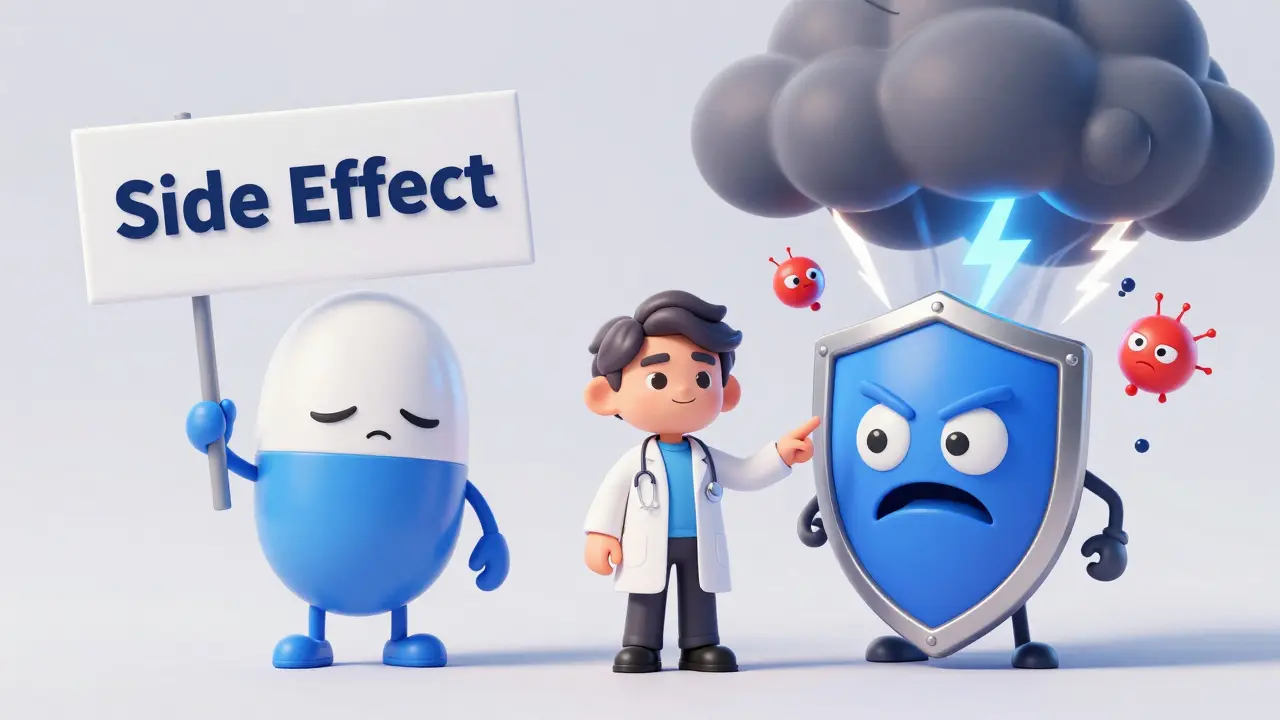
Before listing the drugs, we need to clear up a massive confusion. Nausea, dizziness, or a mild headache after taking a new medication are side effects. They are predictable pharmacological responses. A true drug allergy involves your immune system mistakenly identifying the drug as a threat. This triggers a cascade of immune responses, releasing histamines and other chemicals that cause symptoms like hives, swelling, difficulty breathing, or severe skin rashes.
Why does this distinction matter? Because if you avoid a drug due to a side effect, you might still be able to take it with food or at a lower dose. If you have a true allergy, even a tiny amount could be dangerous. Currently, about 10% of the U.S. population reports a penicillin allergy. However, verified IgE-mediated penicillin allergy affects only about 1% of people. The rest? They likely had a viral rash at the same time they took the antibiotic, or a mild side effect, and got stuck with a label that limits their treatment options forever.
Antibiotics: The Most Common Triggers
Antibiotics account for the majority of reported drug allergies. Within this group, beta-lactam antibiotics are the biggest offenders.
- Penicillins: Penicillin is the most frequently reported drug allergy. It causes reactions ranging from mild rashes to life-threatening anaphylaxis. Amoxicillin, a common derivative, is often the specific culprit. The good news? Cross-reactivity between penicillins and cephalosporins (another class of beta-lactams) is much lower than previously thought-only about 1-3%, not the 10% many doctors used to believe. This means if you are allergic to penicillin, you can often safely take certain cephalosporins.
- Sulfonamides (Sulfa Drugs): These antibiotics, such as trimethoprim-sulfamethoxazole (Bactrim), cause reactions in about 3% of the general population. However, the risk skyrockets to up to 60% in patients with HIV. Reactions to sulfa drugs are often delayed, appearing days after starting the medication, which makes them tricky to diagnose.
The clinical impact of these labels is huge. Patients with a documented penicillin allergy stay in the hospital half a day longer on average and incur over $1,000 more in costs per admission because they receive broader-spectrum, more expensive alternatives.
Pain Relievers: NSAIDs and Aspirin
If antibiotics are number one, nonsteroidal anti-inflammatory drugs (NSAIDs) are a close second. This group includes ibuprofen (Advil, Motrin), naproxen (Aleve), and aspirin.
Reactions to NSAIDs are unique. They are rarely true IgE-mediated allergies. Instead, they often involve a different mechanism where the drug inhibits certain enzymes, leading to an overproduction of inflammatory compounds. This can cause:
- Hives and angioedema (swelling)
- Asthma attacks or wheezing
- Nasal congestion
A condition known as Aspirin-Exacerbated Respiratory Disease (AERD) affects about 7% of adults with asthma and 14% of those with nasal polyps. For these individuals, aspirin and many NSAIDs trigger severe respiratory distress. The "number needed to harm" for an allergic reaction to NSAIDs is roughly 100, meaning one person out of every 100 exposed will have a reaction. If you react to one NSAID, you are likely to react to others in the same class, but acetaminophen (Tylenol) is usually safe because it works differently.
Severe Skin Reactions: Anticonvulsants and Chemotherapy
Some drugs carry a risk of severe cutaneous adverse reactions (SCARs), which are medical emergencies. These include Stevens-Johnson Syndrome (SJS) and Toxic Epidermal Necrolysis (TEN). These conditions cause the top layer of skin to blister and peel off, requiring intensive care.
Anticonvulsants: Drugs like carbamazepine (Tegretol) and lamotrigine (Lamictal) are linked to these severe rashes. Carbamazepine poses the highest risk, particularly for people with a specific genetic marker called HLA-B*1502. This gene variant is common in Southeast Asian populations (10-15%) but rare in Europeans. The FDA now recommends screening for this allele before prescribing carbamazepine to high-risk groups. In Taiwan, implementing this screening reduced SJS/TEN cases by 90%. Lamotrigine causes rashes in 5-10% of patients, though serious reactions are rarer (about 0.8 per 1,000 patient-years).
Chemotherapy Agents: Hypersensitivity to chemo drugs is common, affecting 5-30% of patients depending on the agent. Taxanes like paclitaxel (Taxol) have high incidence rates of infusion reactions. Monoclonal antibodies, such as cetuximab (Erbitux), also trigger significant infusion reactions, with a small percentage resulting in severe anaphylaxis. To manage this, oncologists often use desensitization protocols, which involve giving the drug in gradually increasing doses to trick the immune system into tolerance. These protocols have an 80-90% success rate.

Diagnostic Tools: How We Know What You're Allergic To
So, how do you find out if your allergy is real? The process typically involves three steps:
- Detailed History: An allergist will ask exactly what happened, when, and how soon after taking the drug. This alone has an 85-90% sensitivity for identifying true risks.
- Skin Testing: For penicillin, skin tests are highly accurate. A negative test combined with an oral challenge has a negative predictive value of 97-99%. This means if the test is negative, you are almost certainly not allergic. The FDA-approved Pre-Pen test reagent detects 95% of penicillin-allergic patients with 99% specificity.
- Oral Challenge: Under medical supervision, you take a small dose of the drug, then larger doses, to see if a reaction occurs. This is the gold standard for confirming tolerance.
Genetic testing is also becoming more common. For example, screening for the HLA-B*57:01 allele before prescribing abacavir (an HIV medication) reduced hypersensitivity reactions from 8% to just 0.4%. Experts predict that within five years, point-of-care genetic testing will be standard before prescribing high-risk drugs like carbamazepine and allopurinol.
| Drug Class | Common Examples | Reaction Type | Risk Factors |
|---|---|---|---|
| Penicillins | Amoxicillin, Ampicillin | IgE-mediated (Anaphylaxis, Hives) | Previous exposure, Atopy |
| Sulfonamides | Bactrim, Septra | Delayed Rash, SCARs | HIV status, Genetic factors |
| NSAIDs | Ibuprofen, Naproxen, Aspirin | Non-IgE (Asthma, Hives) | Asthma, Nasal Polyps |
| Anticonvulsants | Carbamazepine, Lamotrigine | T-cell mediated (SJS/TEN) | HLA-B*1502 allele (Asian ancestry) |
What Should You Do?
If you have a drug allergy label in your medical record, don't just accept it. Ask your doctor for a referral to an allergist. Studies show that 68% of people with reported drug allergies never received formal testing. Getting tested can remove unnecessary restrictions from your medical history, allowing you to take safer, more effective, and cheaper medications.
Be aware of the signs. Immediate reactions (within an hour) often involve hives, itching, swelling, or trouble breathing. Delayed reactions (days later) might look like a viral rash, fever, or joint pain. Keep a log of any reactions, noting the drug name, dose, and timing. This information is invaluable for your allergist.
Remember, mislabeling drives inappropriate antibiotic use and increases healthcare costs by $4,000 per patient annually. By seeking clarification, you aren't just helping yourself; you are contributing to better public health outcomes by reducing the pressure to use broad-spectrum antibiotics unnecessarily.
How long does a drug allergy last?
For many people, especially those with penicillin allergies developed in childhood, the allergy may disappear over time. Research indicates that about 80% of patients with a penicillin allergy label can tolerate the drug after evaluation, and many outgrow the allergy after 10 years without exposure. However, immediate IgE-mediated allergies can persist for life, so regular reassessment by an allergist is recommended.
Can I be allergic to multiple drugs?
Yes, some individuals experience multiple drug intolerances or allergies. This is sometimes referred to as multiple drug intolerance syndrome. However, true multi-drug allergies are rare. Often, what appears to be multiple allergies is actually a series of unrelated side effects or viral rashes coinciding with medication use. Proper diagnostic testing can help distinguish between true allergies and other reactions.
Is there a home test for drug allergies?
No, there are no reliable home tests for drug allergies. Diagnosis requires professional evaluation, including detailed history, skin testing, and possibly supervised oral challenges. Blood tests for specific IgE antibodies exist but are less sensitive than skin testing for many drugs. Always consult an allergist for accurate diagnosis.
What is the difference between a drug allergy and a side effect?
A side effect is a predictable, non-immune response to a drug, such as nausea or drowsiness. It happens because of how the drug works in the body. A drug allergy is an unpredictable immune system response where the body attacks the drug as if it were a harmful invader, causing symptoms like hives, swelling, or breathing difficulties. Side effects can often be managed; allergies require avoiding the drug entirely or undergoing desensitization.
How much does drug allergy testing cost?
Costs vary widely depending on location and insurance coverage. In the U.S., a comprehensive penicillin allergy evaluation might cost several hundred dollars out-of-pocket, but it is often covered by insurance given the long-term savings in healthcare costs. Remember, untreated mislabeled allergies cost the healthcare system $1.2 billion annually. Many hospitals now offer dedicated drug allergy services to reduce these burdens.