Beers Criteria: Potentially Inappropriate Drugs in Older Adults
 Dec, 3 2025
Every year, thousands of older adults end up in the hospital not because of a fall, infection, or heart problem-but because of a medication they were prescribed. It’s not always the dose. Sometimes, it’s the drug itself. That’s where the Beers Criteria come in. They’re not a law. They’re not a blacklist. But they are one of the most trusted tools doctors and pharmacists use to keep older patients safe from medicines that do more harm than good.
What Exactly Are the Beers Criteria?
The Beers Criteria are a list of medications that experts agree should be avoided-or used with extreme caution-in adults aged 65 and older. First created in 1991 by Dr. Mark Beers, a geriatrician, they’ve been updated every few years by the American Geriatrics Society (AGS). The latest version came out in 2023, after reviewing over 1,500 studies from the previous four years.It’s not just about old drugs. It’s about how aging changes your body. As you get older, your kidneys and liver don’t process medicines the same way. Your brain becomes more sensitive to certain chemicals. Muscle mass drops, fat increases, and what once was a safe dose can now cause confusion, dizziness, or even a fall.
The 2023 update includes 131 specific medication warnings. About 89 of them apply to nearly all older adults. Another 22 are tied to specific conditions-like dementia, kidney disease, or heart failure. And 20 focus on how drugs behave when kidneys aren’t working well. There’s also a section on dangerous drug combinations, like mixing a benzodiazepine with an opioid. That combo can slow your breathing to a dangerous level.
What Medications Are on the List?
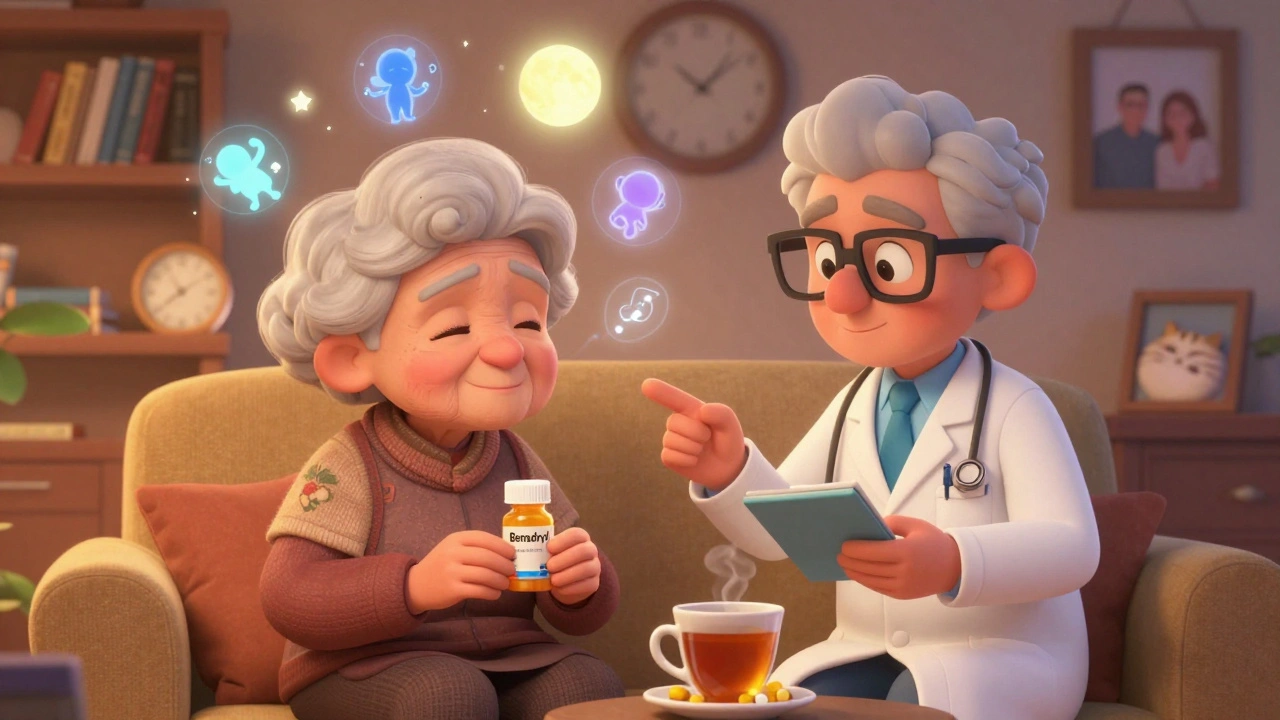
Some of the most common offenders aren’t obscure drugs-they’re ones you’ve probably heard of.- Anticholinergics like diphenhydramine (Benadryl) and oxybutynin. These are often used for allergies, overactive bladder, or sleep. But in older adults, they can cause memory problems, constipation, urinary retention, and confusion. One study found that long-term use increased dementia risk by 54%.
- Benzodiazepines like lorazepam (Ativan) and diazepam (Valium). These are prescribed for anxiety or insomnia, but they increase fall risk by up to 40%. They also make people drowsy, disoriented, and more likely to be admitted to the hospital.
- Nonsteroidal anti-inflammatories (NSAIDs) like ibuprofen and naproxen. These hurt the stomach, kidneys, and heart in older people. Even short-term use can lead to kidney failure or internal bleeding, especially if someone is already on blood pressure meds or diuretics.
- Antipsychotics like haloperidol and risperidone. These are sometimes used off-label for agitation in dementia. But they raise the risk of stroke and death in dementia patients. The 2023 update made this warning even stronger.
- Proton pump inhibitors (PPIs) like omeprazole. Long-term use can lead to bone fractures, low magnesium, and gut infections like C. diff. They’re often prescribed for years without a clear reason.
It’s not that these drugs are always bad. Sometimes, they’re the only option. But the Beers Criteria ask: Is there a safer alternative? Can we try a non-drug approach first? Could we lower the dose or stop it altogether?
Why Do These Drugs Still Get Prescribed?
You’d think doctors would know better. But here’s the reality: older adults often see multiple specialists. One prescribes a sleep aid. Another adds a painkiller. A third gives an anticholinergic for bladder issues. No one sees the full picture. And time is short.Many older patients don’t know to ask about side effects. They take what’s handed to them. Sometimes, the prescribing doctor doesn’t even realize the patient is on a Beers Criteria drug. Electronic health records don’t always flag them clearly. And if a patient says, “I can’t sleep,” the easiest fix is a pill-not a sleep hygiene plan, a warm bath, or cutting back on caffeine.
Pharmacists are often the first to spot the problem. In one study of older adults in long-term care, 46% were taking at least one Beers Criteria medication. That’s nearly half. And in many cases, the drug was unnecessary-or could have been replaced.
It’s Not Just About Stopping Drugs-It’s About Better Choices
The Beers Criteria aren’t meant to be a checklist for removing meds. They’re a guide to safer prescribing. That means thinking about alternatives.- Instead of diphenhydramine for sleep, try melatonin or cognitive behavioral therapy for insomnia (CBT-I).
- For overactive bladder, pelvic floor exercises or timed voiding can work better than oxybutynin.
- For chronic pain, physical therapy, heat, or acetaminophen (in safe doses) are often safer than NSAIDs.
- For agitation in dementia, environmental changes-like reducing noise, increasing sunlight, or consistent routines-can be more effective than antipsychotics.
The AGS even has a 5-step framework for reviewing medications in people with multiple conditions. Step one: What’s the goal of care? Step two: What meds are really helping? Step three: What’s causing harm? Step four: Can anything be stopped? Step five: What’s the plan moving forward?
How Is This Used in Real-World Care?
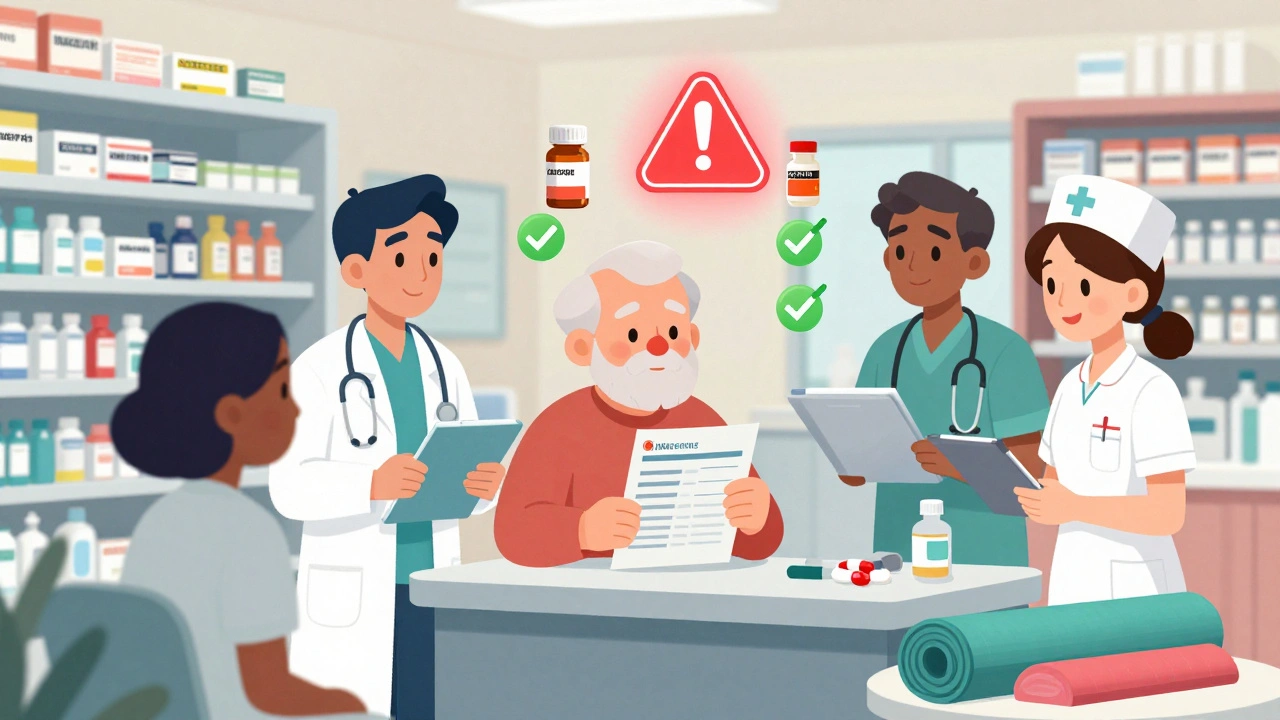
The Beers Criteria are built into Medicare’s quality reporting. Nursing homes are scored on how many residents are on inappropriate drugs. Pharmacies use them in medication reviews for Medicare Part D. Some hospitals have clinical decision support tools that pop up a warning when a doctor tries to prescribe a Beers Criteria drug to someone over 65.But here’s the catch: the AGS says these criteria should never be used to deny care. They’re not a rulebook. They’re a warning light.
For example, a patient with severe arthritis and no other options might need a short course of an NSAID. Or someone with advanced dementia might need a low-dose antipsychotic to prevent self-harm-when no other options work. That’s not a violation. That’s good clinical judgment.
The real goal is shared decision-making. The patient, family, and care team should talk about risks, benefits, and goals. If a grandparent says, “I don’t want to be confused,” and the doctor says, “This sleep pill might make you foggy,” that’s a conversation worth having.
What About Other Tools Like STOPP-START?
The Beers Criteria focus only on inappropriate prescriptions. But sometimes, the problem isn’t too many drugs-it’s too few.That’s where STOPP-START comes in. STOPP looks for inappropriate medications (like Beers). START looks for missing but needed drugs-like statins for heart disease or bisphosphonates for osteoporosis. Together, they give a fuller picture.
Many U.S. hospitals use Beers. Many European hospitals use STOPP-START. Both are evidence-based. Neither is perfect. But using both gives a better chance of getting it right.
What’s Changed in the 2023 Update?
The latest version added new warnings and tightened existing ones:- Stronger warnings against using antipsychotics for dementia-related agitation-even at low doses.
- Expanded guidance on benzodiazepines and similar drugs like zolpidem (Ambien), especially in people with a history of falls.
- New criteria for drugs that increase fall risk, like certain antidepressants and blood pressure meds.
- More detail on kidney function and how it affects drug clearance.
- Clearer advice on PPIs, recommending they be used only when clearly needed and for the shortest time possible.
The changes reflect real-world data. More studies now show that even “mild” sedatives can lead to long-term cognitive decline. More evidence shows that stopping certain drugs doesn’t cause withdrawal-it actually improves alertness and mobility.

What Should You Do If You or a Loved One Is on One of These Drugs?
Don’t stop anything on your own. But do ask these questions:- Why was this drug prescribed?
- Is there a safer alternative?
- What happens if we stop it?
- How will we know if it’s helping or hurting?
- Can we try reducing the dose first?
Bring a list of every medication-including vitamins, supplements, and over-the-counter drugs-to your next appointment. Ask the pharmacist to review it. Many pharmacies offer free medication reviews.
If you’re a caregiver, keep track of changes: Is Mom more confused? Is Dad falling more? Is he sleeping all day? These aren’t just signs of aging-they might be signs of a medication problem.
Where Can You Find the Full List?
The American Geriatrics Society offers the full Beers Criteria for free:- Online at GeriatricsCareOnline.org
- A mobile app (search for “AGS Beers Criteria”)
- A printable pocket card for clinicians
- A simplified version for patients and families at healthinaging.org
You don’t need to memorize the list. But knowing it exists-and that it’s meant to protect, not punish-can change the conversation.
Final Thought: Safety Over Simplicity
The Beers Criteria aren’t perfect. They can’t account for every individual’s story. But they’re the best tool we have to start the conversation about safer prescribing. They remind us that older adults aren’t just small young adults. Their bodies work differently. Their risks are higher. And their goals-like staying independent, avoiding hospital stays, or being clear-headed-matter just as much as living longer.Medication safety isn’t about cutting pills. It’s about choosing better ones. And sometimes, the safest choice is no pill at all.
Are Beers Criteria mandatory for doctors to follow?
No, the Beers Criteria are not mandatory. They’re a clinical guide, not a law. The American Geriatrics Society explicitly says they should never be used to restrict care, deny coverage, or punish prescribers. Doctors are expected to use them as part of thoughtful, individualized decision-making-not as a checklist to rigidly enforce.
Can I stop a Beers Criteria medication on my own?
Never stop a medication without talking to your doctor or pharmacist first. Some drugs, like benzodiazepines or certain antidepressants, can cause dangerous withdrawal symptoms if stopped suddenly. The goal is to taper safely under supervision-not to quit cold turkey.
Are over-the-counter drugs included in the Beers Criteria?
Yes. Many OTC drugs like diphenhydramine (Benadryl), loratadine (Claritin-D), and even some sleep aids and cold medicines are on the list because of their strong anticholinergic effects. Just because something’s available without a prescription doesn’t mean it’s safe for older adults.
Why are NSAIDs so risky for older adults?
NSAIDs like ibuprofen and naproxen can cause stomach bleeding, kidney damage, and worsen heart failure-all more common in older people. They also interact dangerously with blood thinners and blood pressure medications. For chronic pain, acetaminophen (in safe doses) or non-drug therapies are usually safer first choices.
Do the Beers Criteria apply to everyone over 65?
Not always. The criteria are meant for most older adults, but exceptions exist. For example, someone with severe, treatment-resistant depression might need an antidepressant that’s usually avoided. Or a person with advanced Parkinson’s might need an anticholinergic to control tremors. The key is whether the benefit clearly outweighs the risk-and whether there’s no better alternative.
How often are the Beers Criteria updated?
The American Geriatrics Society updates the Beers Criteria every 3 to 5 years. The last update was in 2023, and the next is expected around 2027. Updates are based on new research, real-world outcomes, and input from a panel of geriatric experts in pharmacy, medicine, and nursing.
Next Steps for Patients and Families
If you’re caring for an older adult, here’s what to do next:- Make a full list of all medications-prescription, OTC, supplements, and herbal products.
- Ask the pharmacist to review the list using the Beers Criteria.
- Schedule a medication review with the primary care doctor.
- Ask: “Is this still needed? Is there a safer option? What happens if we stop it?”
- Track changes in mood, balance, sleep, or memory after any medication change.
Medication safety isn’t a one-time event. It’s an ongoing conversation. And the Beers Criteria are just the beginning of it.
AARON HERNANDEZ ZAVALA
December 3, 2025 AT 19:02Everyone thinks old people just need more pills. It's not that simple.
Victor T. Johnson
December 5, 2025 AT 17:37Nicholas Swiontek
December 6, 2025 AT 19:14Robert Asel
December 8, 2025 AT 12:29Shannon Wright
December 8, 2025 AT 17:13vanessa parapar
December 9, 2025 AT 14:16Ben Wood
December 10, 2025 AT 10:28Sakthi s
December 12, 2025 AT 00:59Rachel Nimmons
December 13, 2025 AT 05:47Abhi Yadav
December 14, 2025 AT 21:09