Why Prescription Drug Prices Are So High in the United States
 Dec, 2 2025
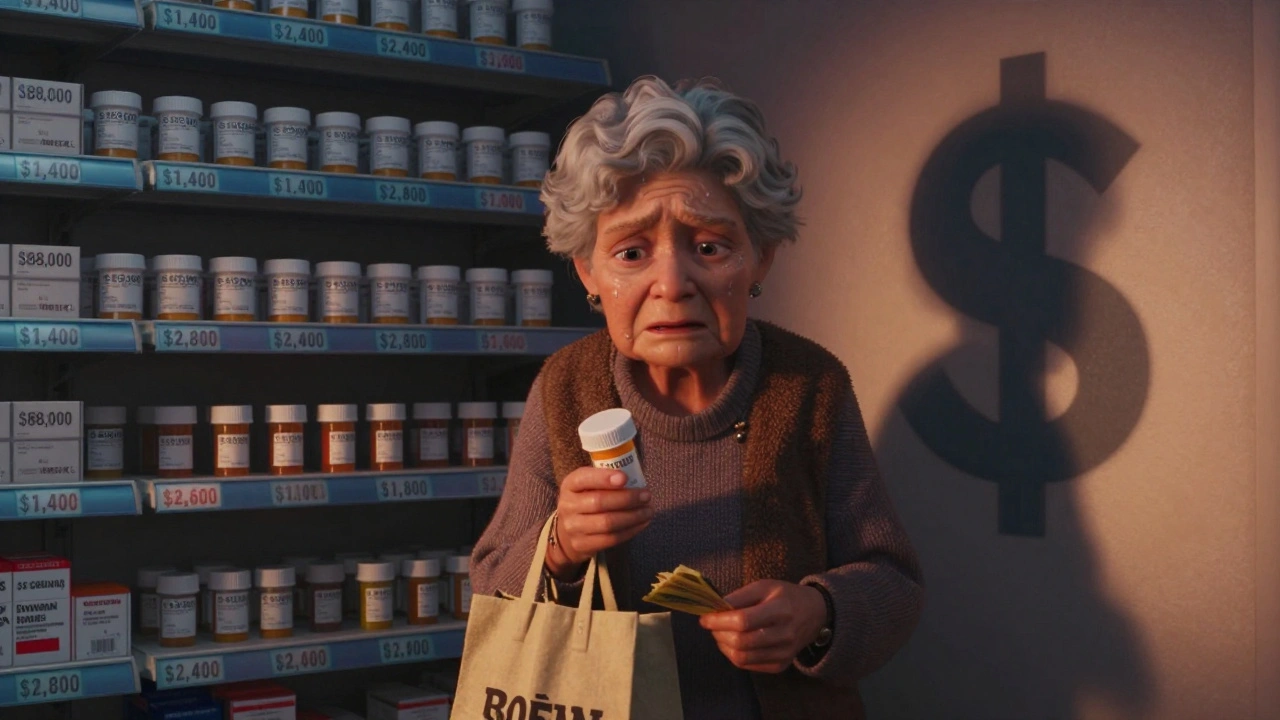
Every year, millions of Americans are forced to choose between buying their medication and paying rent, buying groceries, or putting gas in their car. It’s not a hypothetical scenario-it’s daily reality for people with diabetes, cancer, heart disease, and rare conditions. In the United States, the same pill that costs $1,400 in the UK can cost over $88,000. And it’s not just one drug. It’s hundreds. Prescription drug prices in the U.S. are the highest in the world, and the reasons aren’t complicated-they’re systemic.
The System Was Built This Way
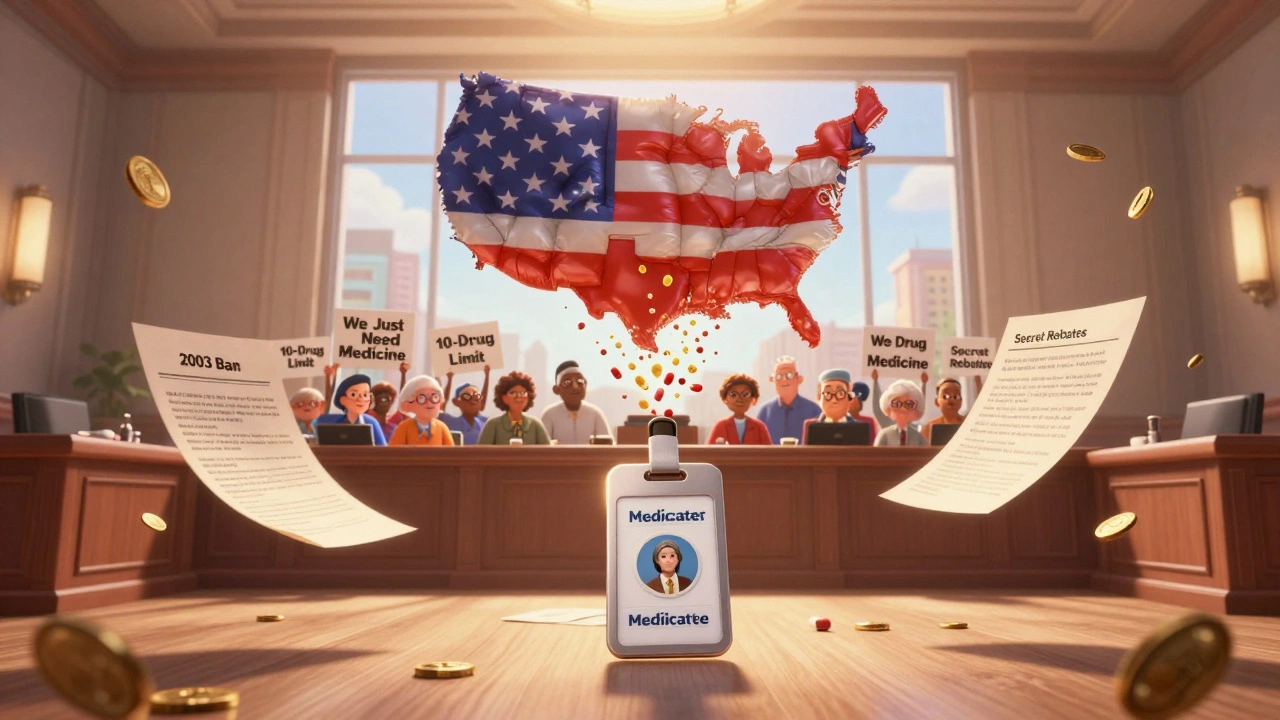
The U.S. doesn’t have high drug prices because of bad luck or corporate greed alone. It’s because the system was designed this way. In 2003, Congress passed the Medicare Modernization Act, which created Medicare Part D-the program meant to help seniors afford prescriptions. But here’s the catch: the law banned Medicare from negotiating drug prices directly with manufacturers. That meant the government, which covers over 60 million people through Medicare, had no power to ask for a better deal. Other countries do this every day. Canada, Germany, France-they all negotiate. The U.S. chose not to.That decision created a vacuum. Pharmaceutical companies could set any price they wanted, and with no one pushing back, prices climbed. Today, the U.S. accounts for less than 5% of the world’s population but makes up 75% of global pharmaceutical profits. That’s not a coincidence. It’s the result of a policy that lets drugmakers charge what they want, when they want.
Who’s Really in Charge? The Middlemen
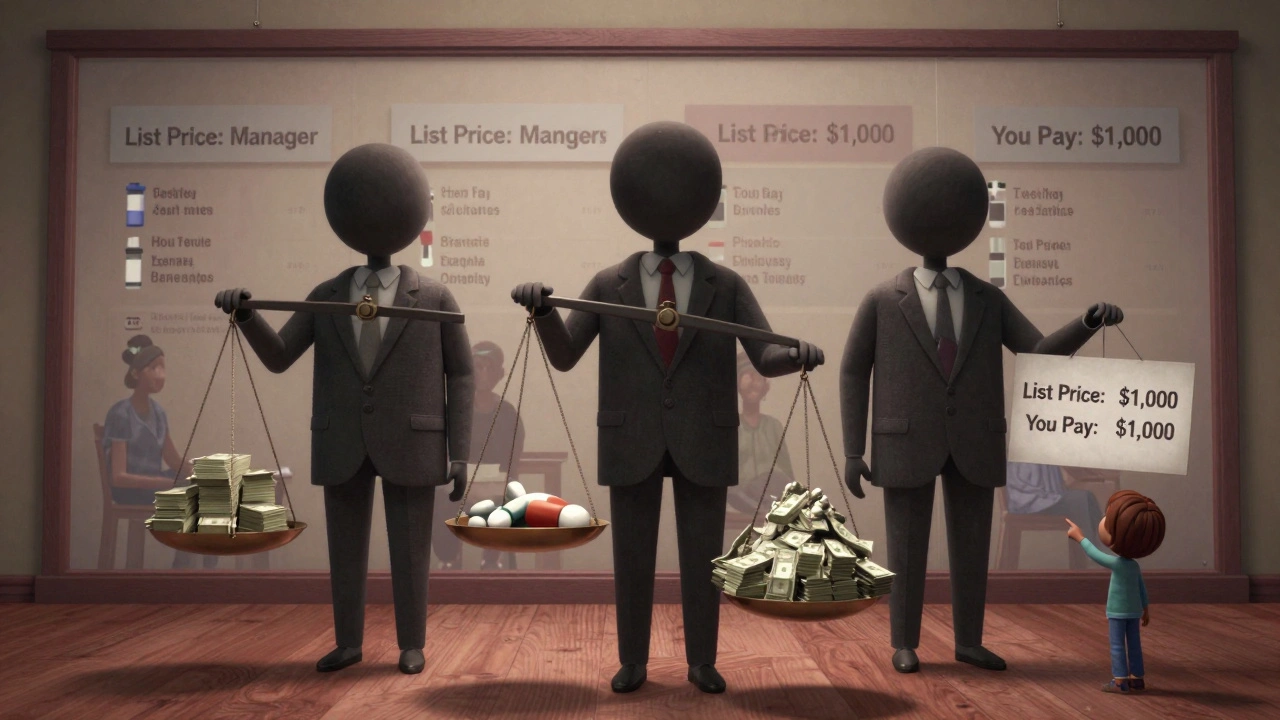
You might think the price you pay at the pharmacy is set by the drug company. It’s not. Behind the scenes, a web of middlemen-Pharmacy Benefit Managers, or PBMs-controls most of the pricing. PBMs were originally created to help insurers get discounts. Now, they’re owned by big insurance companies and operate like monopolies. Their business model? Push for higher list prices. Why? Because their fees are based on a percentage of that list price. The higher the sticker price, the more they make.Here’s how it works: A drug company lists a drug at $1,000. The PBM negotiates a $300 rebate. The pharmacy gets paid $700. But you, the patient, often pay based on the original $1,000 price. That’s right-you’re paying more because the middleman benefits from the high price. And since these deals are secret, no one knows what’s really going on. The Department of Health and Human Services admitted this in September 2025, announcing new rules to force drug price transparency. But for decades, the system hid the truth.
Specialty Drugs Are Breaking the Bank
Not all drugs are created equal. The biggest price spikes come from specialty medications-drugs for cancer, rare diseases, diabetes, and obesity. These are expensive to develop, yes, but they’re also extremely profitable. Take semaglutide, the active ingredient in Ozempic and Wegovy. In 2025, after public pressure and new White House deals, the price dropped from $1,350 a month to $350. That’s still $4,200 a year. In Germany, the same drug costs under $600. In the UK, it’s $250.IQVIA reported in 2025 that novel obesity and diabetes drugs drove an 11.4% increase in U.S. drug spending-up from just 4.9% the year before. These aren’t old pills with generic versions. These are new, patented drugs with no competition. And without price controls, manufacturers know they can charge whatever the market will bear. The result? One in five Medicare beneficiaries spends more than $2,000 a year just on prescriptions. For many, that’s half their Social Security check.
The Inflation Reduction Act: A Start, But Not Enough
In 2022, Congress passed the Inflation Reduction Act. It included a provision allowing Medicare to negotiate prices for 10 high-cost drugs starting in 2026. That sounds promising. But here’s the reality: 10 drugs out of thousands. And even those negotiations are limited. The law only lets Medicare negotiate with drugs that are at least 13 years old and have no generic competitors. That means brand-new miracle drugs-like the ones for Alzheimer’s or rare genetic disorders-are completely off the table.Plus, the 2025 budget reconciliation bill weakened the program. According to the Kaiser Family Foundation, Medicare spending on these drugs will still rise by at least $5 billion because of loopholes. The White House claims the law has already saved money on 64 drugs through inflation rebates. That’s true. But those rebates only kick in when a drug’s price rises faster than inflation. They don’t stop a company from raising a drug’s price by 50% in one year, then lowering it by 10% the next to avoid the penalty. It’s a game of whack-a-mole, not real reform.
International Comparisons: The U.S. Is an Outlier
Look at any other developed country, and the difference is shocking. The same medication for Wilson’s disease, called Galzin, costs $88,800 in the U.S. In the UK, it’s $1,400. In Germany, $2,800. That’s a 1,555% markup. Americans pay more than three times what people in other OECD countries pay for the exact same drug, even after accounting for manufacturer discounts.Why? Because other countries use reference pricing. They look at what other nations pay and set their own prices accordingly. If the UK pays $200 for a drug, Canada pays $210, and Australia pays $190, the German government doesn’t let a company charge $1,000. They say no. The U.S. has no such rule. Drugmakers can charge $1,000, $2,000, $10,000-it’s up to them. And with no federal price cap, they do.
What’s Next? The Political Battle
Senator Bernie Sanders has spent years pushing the Prescription Drug Price Relief Act, which would cap U.S. drug prices at the average of what they cost in five major countries: Canada, the UK, Germany, France, and Japan. His 2025 report showed that 688 drugs increased in price since 2017-even though President Trump had publicly promised to lower them. In fact, after Trump sent letters to drug companies asking them to cut prices, 87 drugs still went up by a median of 8%.The White House says it’s making progress. They point to five new deals with drugmakers, including Ozempic and Wegovy, that brought prices down. But those are voluntary agreements. They’re not laws. They can be undone next year. Meanwhile, Project 2025-a conservative policy plan-proposes cutting Medicare drug benefits and shifting more costs to seniors. The Center for American Progress warns that could raise out-of-pocket costs for 18.5 million Medicare beneficiaries.
Real People, Real Costs
Behind every number is a person. A diabetic who skips insulin doses to make her payment. A cancer patient who takes half her dose because the full dose is unaffordable. A retiree who sells her jewelry to pay for her heart medication. CMS Administrator Chiquita Brooks-LaSure said the $2,000 annual cap on out-of-pocket drug costs under Medicare Part D will be life-changing. But that cap doesn’t start until 2025-and even then, it doesn’t cover people who don’t have Medicare.And what about the 60 million Americans who rely on private insurance? They get none of the protections. No negotiation. No price caps. No transparency. They’re at the mercy of the same system that charges $88,000 for a $1,400 drug.
The Bottom Line
Prescription drug prices in the U.S. are high because the system allows them to be. There’s no law saying they can’t. No agency with the power to stop them. No international benchmark to hold companies accountable. The only thing keeping prices from rising even higher is public outrage-and even that only works when the headlines are loud enough.Until the U.S. stops treating medicine like a luxury item and starts treating it like a right, people will keep choosing between their health and their rent. And until Congress gives Medicare the power to negotiate prices for all drugs-not just 10-nothing will change.
Mindy Bilotta
December 3, 2025 AT 15:39My cousin in Toronto pays $20 for the same insulin my sister buys in Ohio for $400. I don’t get how we’re neighbors and the system is this broken. It’s not even close to fair.
Michael Bene
December 4, 2025 AT 12:24Oh wow, another ‘pharma bad’ rant. Let me guess-next you’ll say Big Pharma invented cancer? 🙄 The truth? R&D is insane. That $88k drug? Took 12 years and $2.3 billion to make. You want cheap pills? Fine. But then we get zero breakthroughs. You wanna cure Alzheimer’s? Stop whining and fund science. Or better yet-move to Canada. They got the drugs, we got the innovation. Deal?
Brian Perry
December 6, 2025 AT 02:24OMG I JUST REALIZED-PBMs are the REAL villains?? Like… the middlemen who make money off HIGHER prices?? That’s like a car dealer charging you more so they can get a bigger cut. I’m gonna scream. My aunt’s on Ozempic and she’s crying every time she opens the receipt. This is a horror movie and we’re all stuck in it.
Ethan McIvor
December 6, 2025 AT 11:13It’s not just about cost-it’s about dignity. When your medicine is priced like a luxury yacht, you start to feel like your life is disposable. I used to think capitalism meant freedom. Now I see it means freedom… for corporations to decide who lives and who doesn’t. We’re not just paying for pills. We’re paying for a moral collapse.
Gene Linetsky
December 7, 2025 AT 00:27Wake up sheeple. This is all a Deep State plot. The WHO and WHO’s puppet, the UN, are pushing global drug pricing so they can control the population. They want you dependent. The real reason the U.S. pays more? Because we’re the last free country left. The rest are socialist dystopias. You think Germany’s prices are low? They’re rationing insulin. You just don’t hear about it. #CabalControl
parth pandya
December 7, 2025 AT 02:06in india we pay $5 for same drug but its not branded one. generics work fine. why dont u make generic? its not hard. patent laws are the real problem. usa lets pharma lock down drugs for 20 years. even if no one can afford it. dumb.
Charles Moore
December 7, 2025 AT 06:42It’s heartbreaking to see how far we’ve drifted from the idea that health is a human right. I’ve seen friends in Ireland cut pills in half too. It’s not just an American problem-it’s a global failure of empathy. Maybe we need to start treating medicine like water: a basic need, not a commodity.
Rashi Taliyan
December 7, 2025 AT 20:05My dad died because he skipped his meds to pay for heating. I don’t care about ‘innovation’ or ‘patents’-I care that my father’s last year was spent choosing between a warm apartment and his heart pills. This isn’t policy. This is cruelty wrapped in a PowerPoint.
Kara Bysterbusch
December 9, 2025 AT 07:23The structural inequities embedded in pharmaceutical pricing are not merely economic-they are epistemological. The very framework of market-based healthcare assumes rational actors and perfect information, both of which are demonstrably false in this context. The PBM model, in particular, represents a pathological distortion of fiduciary responsibility. One must ask: when profit motives supersede biological necessity, what moral ontology underpins our social contract?
Rashmin Patel
December 9, 2025 AT 23:24Y’all are so focused on the US but have you seen how India handles generics? 😊 We’ve got 80% of the world’s generic drugs coming from here. And guess what? No one dies because they can’t afford metformin. 🙌 The problem isn’t the drug-it’s the middlemen, the patents, the greed. We need to copy India’s model. Seriously. Why are we letting corporations play god? 🤦♀️ I’m not mad-I’m just disappointed. Let’s fix this. #MedicineForAll
sagar bhute
December 10, 2025 AT 14:51You people are pathetic. Everyone whines about drug prices but no one wants to pay taxes for universal healthcare. You want cheap meds? Fine. Then give up your tax cuts. Stop being hypocrites. You want the drug? Pay for it. Or shut up. The system works fine for those who work. You’re just lazy and entitled.
Cindy Lopez
December 11, 2025 AT 09:09Incorrect use of the term ‘systemic.’ The issue is regulatory failure, not systemic design. Congress didn’t ‘design’ the high prices-it failed to regulate. Also, Medicare Part D’s non-negotiation clause was a political compromise, not a structural inevitability. Precision matters.
James Kerr
December 13, 2025 AT 00:30Man… I just saw a guy at the pharmacy cry because his co-pay was $1200 for his diabetes med. He had a sign that said ‘I just need to live.’ I didn’t say anything. Just handed him $50. We’re all just trying to survive. 😔
shalini vaishnav
December 14, 2025 AT 16:00Why are Americans always so weak? In India, we don’t complain about medicine prices-we just make do. You have the best hospitals, the best scientists, the best technology. If you can’t afford it, work harder. Stop blaming others. This is what happens when you lose your work ethic. The West is falling apart because of entitlement.