When Pharmacists Must Flag Problematic Generic Medications
 Dec, 9 2025
Every day, pharmacists dispense millions of generic medications. They’re cheaper, widely available, and approved by the FDA. But not all generics are created equal. While most work just like their brand-name counterparts, some can cause real harm - especially when patients don’t realize they’ve been switched between manufacturers. Pharmacists are often the last line of defense. Knowing when to stop, ask questions, and flag an issue isn’t optional. It’s part of the job.
Not All Generics Are Equal - Here’s Why
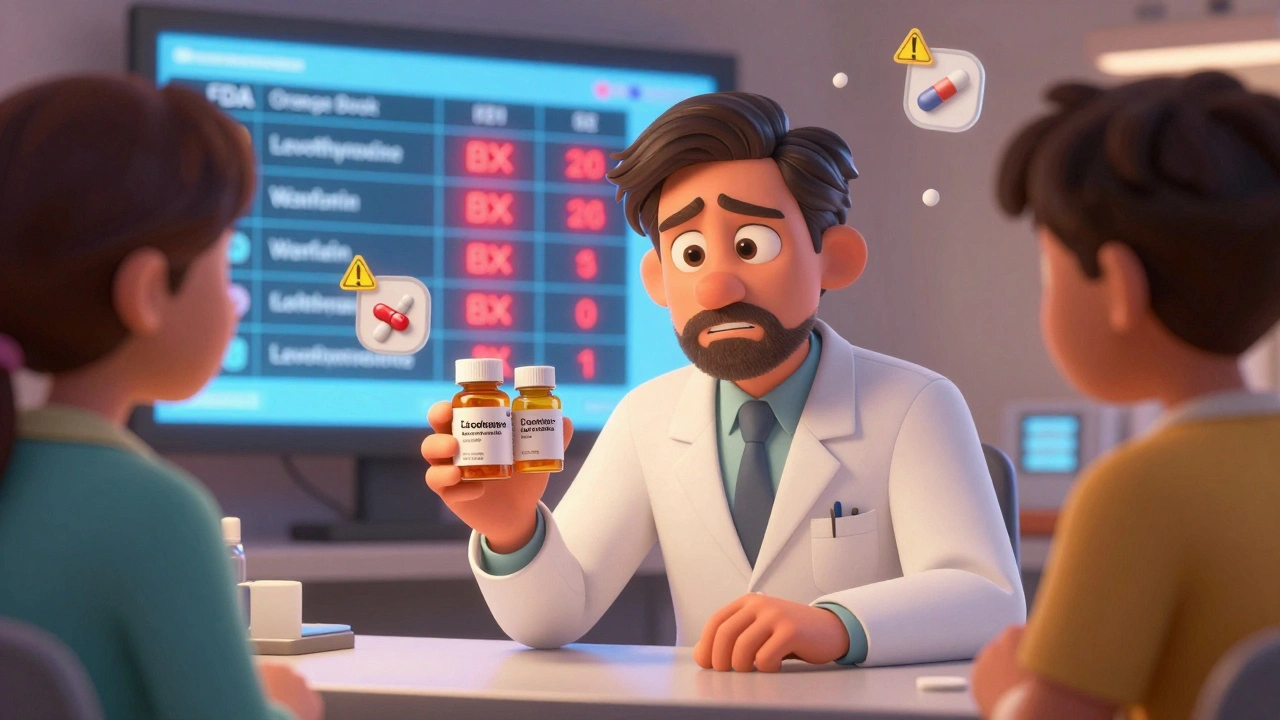
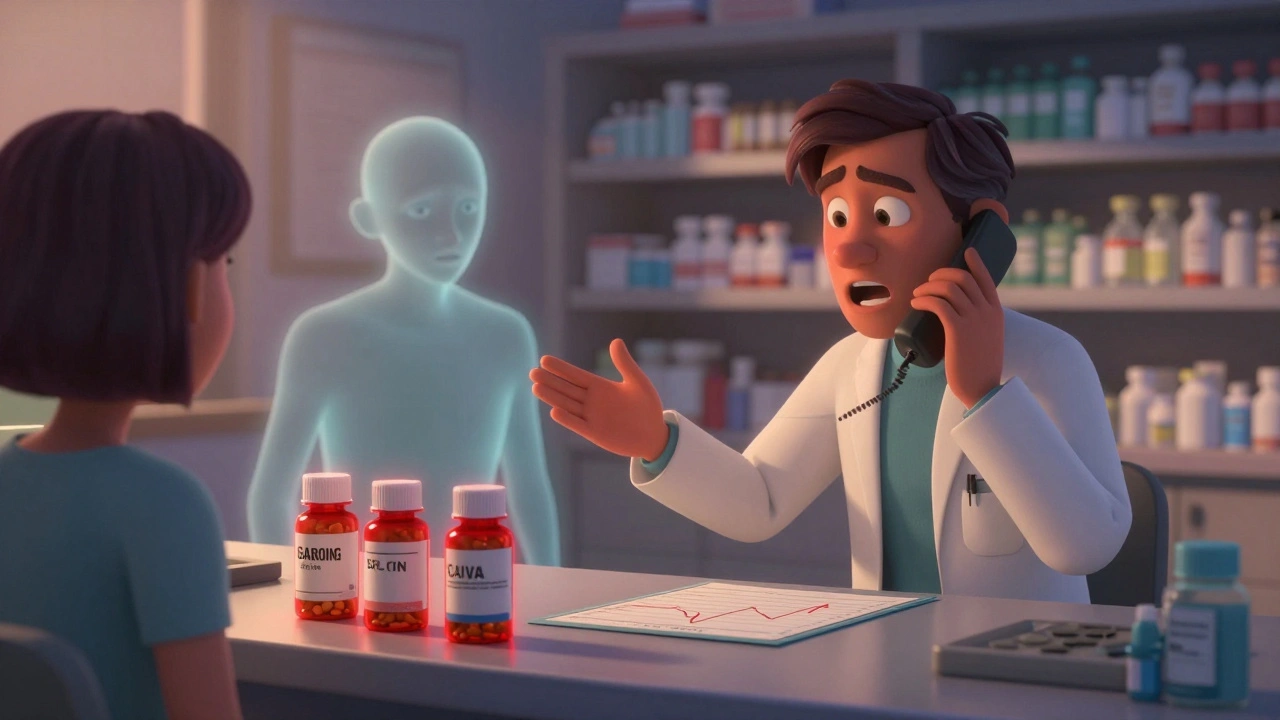
Generic drugs must contain the same active ingredient, strength, and dosage form as the brand-name drug. The FDA requires them to be bioequivalent, meaning they deliver the same amount of medicine into the bloodstream within a specific range: 80% to 125% of the brand’s levels. That sounds precise. But a 20% variation in exposure? For some drugs, that’s the difference between healing and hospitalization. Take levothyroxine, used to treat hypothyroidism. A patient stable on one generic brand might switch to another - maybe because the pharmacy changed suppliers or insurance pushed a cheaper option - and suddenly their TSH levels spike. One case documented by a pharmacist on Reddit showed TSH rising from 2.1 to 8.7 in just six weeks after a switch. That’s not a fluke. Studies show generic switches for levothyroxine lead to therapeutic failure 2.3 times more often than with other drugs. The problem isn’t that generics are bad. It’s that some formulations - especially extended-release, delayed-release, or complex injectables - are harder to copy exactly. In 2020, FDA testing found 7.2% of generic extended-release opioids failed dissolution tests. That means the pill didn’t release the drug the way it should. For a patient relying on steady pain control, that’s dangerous.Which Generics Are Most Likely to Cause Problems?
The FDA has flagged 18 drugs as having a narrow therapeutic index (NTI). These are medications where even tiny changes in blood levels can cause serious harm. They include:- Levothyroxine
- Warfarin
- Phenytoin
- Digoxin
- Tacrolimus
- Cyclosporine
What Pharmacists Should Watch For
You don’t need to be a scientist to spot trouble. Here’s what to look for:- Unexplained therapeutic failure - A patient on a stable dose of a generic drug suddenly reports symptoms returning. For example, a diabetic’s HbA1c rises after switching generics, or a seizure patient has breakthrough seizures.
- New or worsening side effects - Nausea, dizziness, or rashes that didn’t exist before the switch. In one survey, 22.4% of patients reported different side effects after switching generic manufacturers.
- Therapeutic drug monitoring changes - If you’re monitoring blood levels (like for tacrolimus or phenytoin), a significant shift after a generic switch is a red flag.
- Look-alike, sound-alike confusion - Oxycodone/acetaminophen vs. hydrocodone/acetaminophen. These are frequently mixed up. One pharmacist reported a patient getting the wrong one and nearly overdosing.
- Patient complaints - If multiple patients say, “This one doesn’t work like the last one,” listen. A 2022 survey found 41.5% of community pharmacists received such complaints, mostly around GI meds like delayed-release omeprazole.
How to Flag a Problematic Generic - Step by Step
When you suspect a generic is causing issues, don’t wait. Act fast.- Check the Orange Book - The FDA’s database shows which generics are rated “AB” (therapeutically equivalent) and which are “BX” (not equivalent). If a drug is BX-rated, don’t substitute without consulting the prescriber.
- Verify the manufacturer - Write down the manufacturer name on the prescription label. If the patient reports a problem, you’ll need to trace it. Studies show 68.4% of therapeutic failure investigations require manufacturer-specific data.
- Ask the patient - “When did you last get this medication?” “Did anything change with how you feel?” Don’t assume they know the difference between brands. Many don’t.
- Contact the prescriber - If there’s a clear pattern, call. Say: “I’ve seen three patients on this generic version of levothyroxine with rising TSH levels. Can we consider switching back to the original brand or a different generic?”
- Report it - Use the FDA’s MedWatch system. It takes under five minutes. Or report to the Institute for Safe Medication Practices (ISMP). Your report could prevent harm to someone else.
Why This Matters More Than You Think
Generics make up 90.7% of all prescriptions filled in the U.S. That’s incredible for cost savings - they’re 80-85% cheaper than brand names. But that also means even a small failure rate affects millions. The FDA inspected over 2,100 manufacturing facilities in 2022 and found 187 data integrity issues and 243 quality control failures. Most of these were overseas - in India and China. And 47 of the 123 drug shortages in 2023 were due to quality problems at generic plants. This isn’t about distrust. It’s about vigilance. The FDA says generics are safe. But safety isn’t just about approval - it’s about what happens after the pill leaves the pharmacy.
What’s Changing? What’s Next?
The FDA is stepping up. Under GDUFA III, $1.14 billion is being invested over five years to improve post-market surveillance. They’re increasing random sampling of generics by 40% over the next three years. A pilot program using AI to scan adverse event reports for patterns will launch in early 2024. Meanwhile, 29 states have laws that require pharmacists to substitute generics unless the doctor says no. But 4 states - Massachusetts, New York, Texas, and Virginia - have special rules for NTI drugs. In those places, pharmacists can’t switch without prescriber approval. The message is clear: Pharmacists aren’t just dispensers. We’re monitors. We’re reporters. We’re advocates.FAQ
Can a generic drug really be less effective than the brand-name version?
Yes - but only in specific cases. Most generics work just as well. However, for drugs with a narrow therapeutic index - like levothyroxine, warfarin, or digoxin - even small differences in how the body absorbs the drug can lead to treatment failure or toxicity. Studies show these drugs have higher rates of adverse events after switching manufacturers. It’s not about quality control failure across the board - it’s about the sensitivity of the drug.
How do I know if a generic is rated "AB" or "BX"?
Use the FDA’s Orange Book, which is free and online. Search by the brand name or active ingredient. "AB" means the generic is therapeutically equivalent. "BX" means it’s not - either because bioequivalence hasn’t been proven or there are formulation issues. If you see "BX," don’t substitute without consulting the prescriber. Many pharmacy systems flag these automatically, but always double-check.
Why do some patients say a generic "doesn’t work" even if it’s FDA-approved?
Patients often notice subtle differences - like a pill looking different, or feeling different side effects. Sometimes it’s the inactive ingredients (fillers, dyes, coatings) causing stomach upset or allergic reactions. Other times, it’s real bioavailability differences, especially with extended-release or complex formulations. Don’t dismiss these reports. Document them. Investigate. It’s your job to find out if it’s a coincidence or a pattern.
Should I always call the doctor before switching a generic?
No - not for every drug. For most medications like statins, antibiotics, or blood pressure pills, switching generics is safe and routine. But for NTI drugs, or if a patient has had a bad reaction before, yes. Always check the Orange Book. If the drug is rated BX, or if the patient has a history of instability, call the prescriber. Better safe than sorry.
What should I do if a patient reports a problem with a generic?
First, document everything: the drug name, manufacturer, lot number, when the switch happened, and what symptoms the patient is having. Then, contact the prescriber. If multiple patients report the same issue with the same manufacturer, report it to the FDA’s MedWatch or ISMP. Your report helps identify dangerous batches before more people are harmed.
David Palmer
December 10, 2025 AT 16:35Yeah sure, generics are fine until your thyroid starts acting up and you’re crying in the pharmacy because your pill looks different now. I switched brands and suddenly I felt like a zombie. No one cares until it’s your body breaking down.
Michaux Hyatt
December 11, 2025 AT 03:11This is such an important post-seriously, thank you for laying it out so clearly. I’m a pharmacist in rural Ohio, and I’ve seen this exact thing happen with levothyroxine and warfarin. Patients don’t know the difference between manufacturers, and insurance doesn’t care. I always check the Orange Book and call prescribers when I see a pattern. You’re not just dispensing-you’re saving lives.
Aileen Ferris
December 11, 2025 AT 08:24generic drugs r not even real drugs lmao. they r just chemist tryna make a quick buck. my cousin took some generic zoloft and started seeing angels. no joke. i think the filler is magic.
Regan Mears
December 12, 2025 AT 18:36Every single time someone says, 'It's just a generic,' I want to scream. Not all generics are created equal-and you don’t need a PhD to know that when a patient says, 'This doesn't feel right,' you listen. I’ve had patients cry because their seizures came back after a switch. We’re not just pharmacists-we’re their last line of defense. Don’t let the system make you numb.
Ben Greening
December 13, 2025 AT 09:17While the general premise of this article is valid, one must acknowledge that the FDA's bioequivalence standards are statistically robust and based on extensive clinical trials. The occasional outlier case does not invalidate the broader safety profile of generic pharmaceuticals. Systemic overreaction risks undermining public confidence in cost-effective therapeutics.
Neelam Kumari
December 15, 2025 AT 00:54Oh wow. So pharmacists are now supposed to be detectives, therapists, AND data-entry clerks? And we wonder why they’re burned out. Meanwhile, the CEOs of these Indian and Chinese factories are sipping champagne while people’s kidneys fail. Classic capitalism. Also, your 'step-by-step' guide is just a fancy way of saying 'do more work for the same pay.' Thanks for the guilt trip.
Queenie Chan
December 16, 2025 AT 23:54I’ve watched my grandma go from ‘I feel like myself again’ to ‘I’m just tired all the time’ after her levothyroxine switched from Teva to Mylan. She didn’t know the difference-just thought the new pills were ‘weird-shaped.’ Turns out, the fillers changed. She got dizzy. Her heart fluttered. We caught it because I’m a nosy grad student who reads labels. But what about the people who don’t? Who’s watching them? This isn’t just about science-it’s about who gets to be heard.
Stephanie Maillet
December 18, 2025 AT 18:08It’s funny, isn’t it? We’ve built a system that values cost above all else-and then acts shocked when people suffer because of it. We treat medicine like a commodity, not a lifeline. And yet, the people who notice the cracks-the pharmacists, the nurses, the patients-are the ones expected to fix them… alone. Maybe the real problem isn’t the generic pill. It’s the machine that lets it get made in the first place.
Doris Lee
December 19, 2025 AT 17:15Thank you for this. I’ve been saying this for years. I’m a diabetic and switched generics once-my A1C jumped. I spoke up. They switched me back. You’re not being dramatic-you’re being smart. Keep doing the work. We see you.
Nikki Smellie
December 20, 2025 AT 13:57Have you considered that this is all a government-Pharma collusion to control the population? The FDA approves these generics because they’re funded by the same corporations that own the brand-name drugs. The ‘bioequivalence’ range? A lie. The 20% variation? A trap. They want you dependent on constant monitoring. Look at the lot numbers-they’re coded. I’ve tracked mine. It’s not coincidence. The pills are laced with tracking microchips. I know. I saw it in the light. 😳
Jack Appleby
December 20, 2025 AT 14:54While your article is commendably detailed, it lacks a critical nuance: the distinction between pharmacokinetic equivalence and pharmacodynamic outcomes. Bioequivalence is measured via AUC and Cmax, but inter-individual variability in metabolism-particularly CYP450 polymorphisms-often explains perceived ‘failure’ more than formulation differences. You’re conflating correlation with causation. Also, your citation of 2022 meta-analysis on statins? That was a pooled analysis of 17 RCTs with a pooled sample size of 23,000-far more robust than your anecdotal case reports.
Frank Nouwens
December 22, 2025 AT 01:26As a pharmacist with over 25 years in community practice, I can confirm the patterns you describe. I’ve documented over 80 cases of therapeutic instability linked to generic switches in NTI drugs. I’ve written letters to manufacturers, contacted state boards, and submitted MedWatch reports. The system doesn’t reward vigilance-it punishes it with extra time and paperwork. But I do it anyway. Because someone’s life depends on it.
Kaitlynn nail
December 22, 2025 AT 07:00So… we’re supposed to be superheroes now? Cool. But who’s paying us for the emotional labor? 🤷♀️