Upper GI Bleeding: Ulcers, Varices, and Stabilization Explained
 Jan, 26 2026
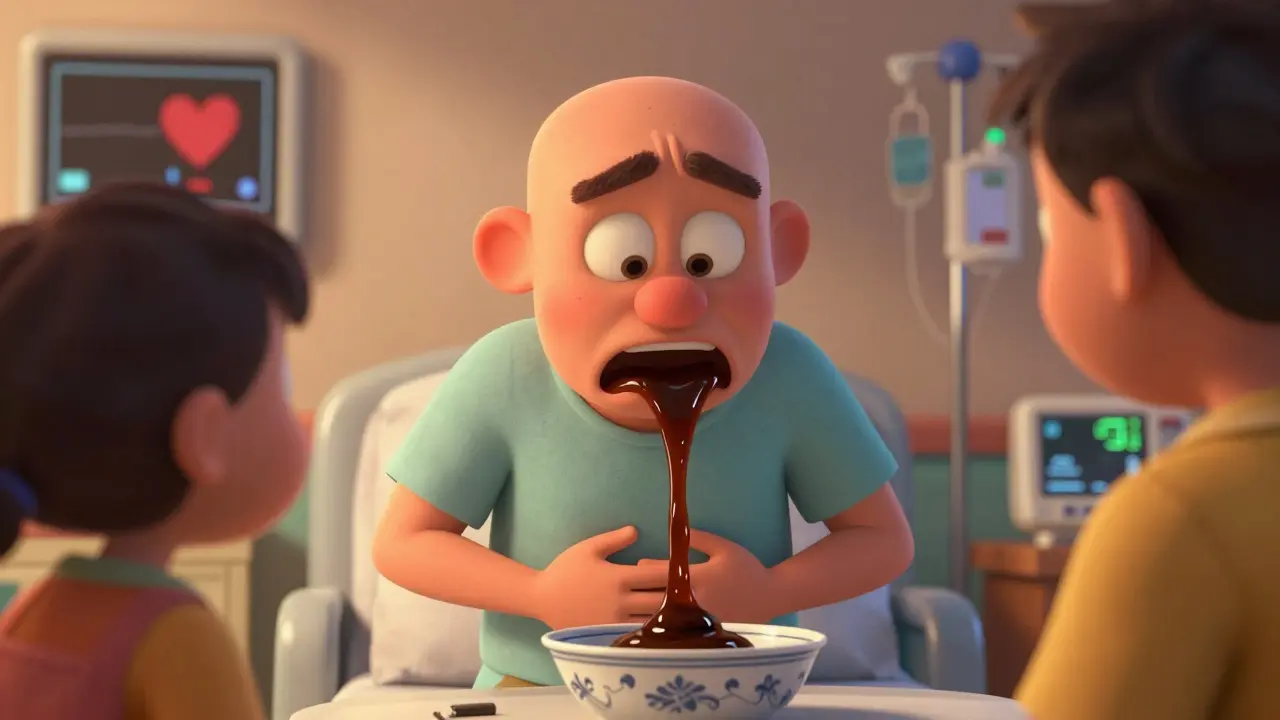
When you vomit something that looks like coffee grounds, or pass black, tarry stools, it’s not just a bad stomach bug. It’s a medical emergency called upper GI bleeding. This isn’t rare - about 100 people out of every 100,000 experience it every year in the U.S. And for many, it’s life-threatening if not handled fast. The bleeding comes from the upper digestive tract: the esophagus, stomach, or the first part of the small intestine. The most common culprits? Peptic ulcers and esophageal varices. But knowing what’s causing it is only half the battle. The other half? Stabilizing the patient before the bleeding gets worse.
What Causes Upper GI Bleeding?
Peptic ulcers are the biggest offender, responsible for 40 to 50% of all cases. These are open sores in the lining of the stomach or duodenum. They don’t just happen from spicy food or stress. Most are caused by Helicobacter pylori infection or long-term use of NSAIDs like ibuprofen or aspirin. Gastric ulcers make up about 20-30% of ulcer cases, while duodenal ulcers are more common - around 70-80%. When these sores eat through a blood vessel, bleeding starts. It can be slow or sudden, and sometimes, it’s massive. Then there are esophageal varices. These aren’t ulcers. They’re swollen, twisted veins in the esophagus, usually caused by liver disease and high pressure in the portal vein (portal hypertension). About 10-20% of upper GI bleeds come from varices. And they’re dangerous. Once they rupture, 20% of patients die within six weeks. These veins don’t bleed because of diet or lifestyle - they bleed because the liver is failing. Patients with cirrhosis are at the highest risk. Other causes include erosive gastritis (15-20% of cases), where the stomach lining gets worn down, often by alcohol, NSAIDs, or severe illness. Esophagitis from acid reflux or infection can also bleed. Mallory-Weiss tears - tears at the junction of the esophagus and stomach - happen after violent vomiting or retching. And yes, cancer plays a role too, though it’s rare, making up just 2-5% of cases. There’s one surprising cause: antidepressants. A 2022 JAMA study tracking half a million people found that those taking SSRIs had double the risk of upper GI bleeding. It’s not fully understood why, but the link is real. If you’re on an SSRI and notice black stools or vomiting blood, don’t wait.Recognizing the Signs
The symptoms are hard to ignore - if you know what to look for. Hematemesis means vomiting blood. Fresh blood looks bright red. If it’s been sitting in the stomach a bit, it turns dark and clumpy - that’s the “coffee-ground” vomit people describe. Melena is the black, sticky, foul-smelling stool. It’s not just dark poop - it’s tarry, like asphalt. That’s digested blood. If bleeding is massive and fast, you might see maroon or bright red blood in your stool instead - that’s hematochezia, and it’s a red flag for severe bleeding. Other signs are less obvious but just as critical. Dizziness, lightheadedness, fainting - these mean your body is losing blood and can’t keep up. Your heart races (over 100 beats per minute). Your blood pressure drops below 90 mmHg. You feel cold, clammy, weak. These aren’t just “feeling off.” These are signs your body is going into shock. A 2023 clinical update from a heart institute in Thailand noted that patients with liver disease often have subtle signs - fatigue, confusion, swelling in the legs - before the bleeding starts. That’s because their bodies are already struggling. If you have cirrhosis and feel suddenly worse, don’t brush it off.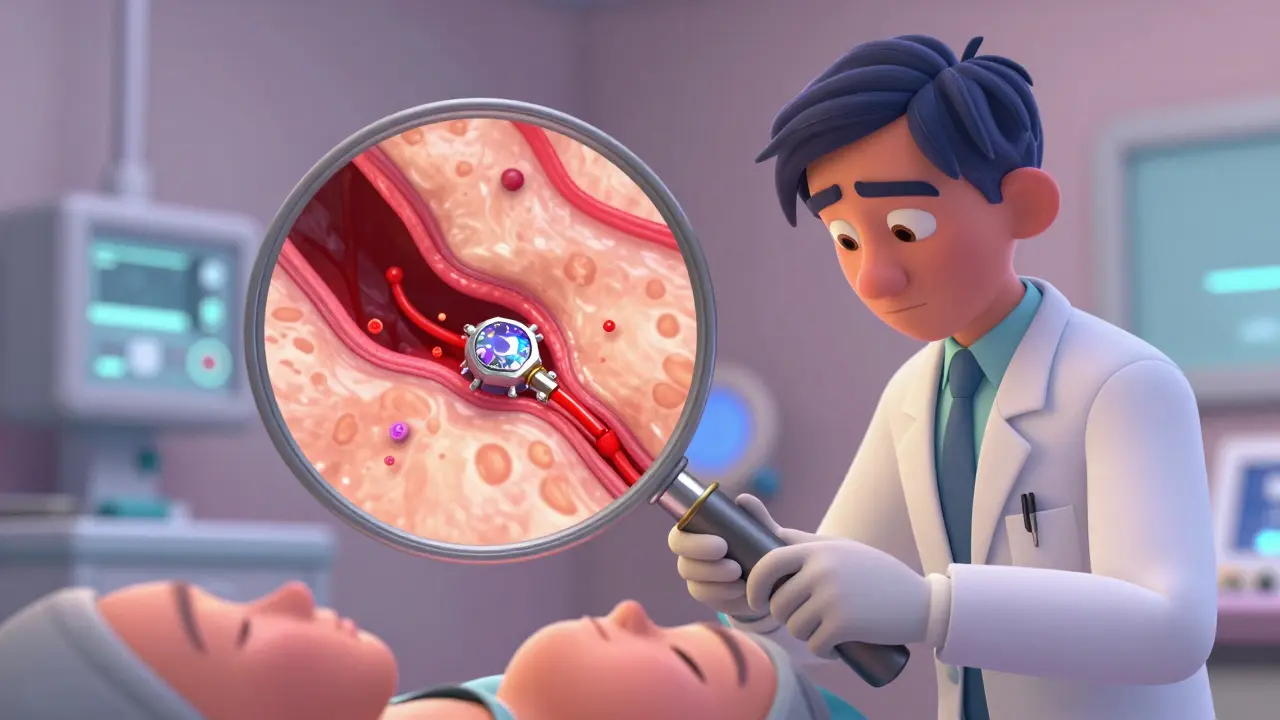
How Doctors Diagnose It
The first thing any ER team does? Stabilize. Oxygen, IV fluids, heart monitoring. Then they check your blood. A complete blood count (CBC) tells them how low your hemoglobin is. A low hemoglobin means you’ve lost blood. But here’s the catch: if you just started bleeding, your hemoglobin might still look normal. It takes hours for your body to adjust. That’s why they also check your BUN (blood urea nitrogen) and creatinine. A BUN-to-creatinine ratio above 30:1 is a strong clue the bleeding is in the upper GI tract. It’s 68.8% accurate - not perfect, but very useful. The Glasgow-Blatchford score is the gold standard for deciding who needs hospital care. It’s not a guess. It’s numbers: hemoglobin level (below 12.9 for men, 11.9 for women), systolic blood pressure (under 100), heart rate (over 100), melena, fainting, liver disease, heart failure. If your score is 2 or higher, you’re going to the hospital. A 2019 study of over 3,000 patients confirmed this score correctly identifies who needs urgent care - and who doesn’t. That’s huge. About 15% of patients with upper GI bleeding can be safely sent home after a quick check. But the real diagnostic tool? Endoscopy. Not a scan. Not an X-ray. An actual scope - an EGD (esophagogastroduodenoscopy) - passed down the throat. It’s done within 24 hours, and ideally within 12 hours for high-risk patients. Studies show getting it done early cuts death rates by 25%. During the procedure, doctors use the Forrest classification to judge how bad the bleeding is. Class Ia? Blood spurting out - 90% chance of rebleeding without treatment. Class Ib? Blood oozing - 50% risk. Class IIa? You see a visible blood vessel - also 50% risk. This tells them exactly what to do next.How It’s Treated
Treatment depends on the cause. For ulcers and erosions, the first step is high-dose proton pump inhibitors (PPIs). An 80mg IV bolus, then a continuous 8mg/hour drip. The 2022 COBALT trial showed this cuts rebleeding from 22.6% to 11.6%. That’s more than half the risk gone. But PPIs alone aren’t enough. You still need endoscopy. During endoscopy, doctors use several tricks to stop the bleeding. Epinephrine injections shrink blood vessels. Then they apply heat (thermal coagulation) or tiny metal clips (hemoclips) to seal the vessel. Together, these methods stop bleeding in 90-95% of cases. It’s not magic - it’s precision. For varices, it’s different. You don’t just treat the bleeding - you treat the liver disease behind it. Vasoactive drugs like terlipressin or octreotide are given immediately. They shrink the veins. Antibiotics like ceftriaxone are added to prevent deadly infections. Then, band ligation is used. Tiny rubber bands are placed around the varices, cutting off blood flow. It’s better than older methods like sclerotherapy - it cuts rebleeding from 60% down to 25%. If you’ve lost a lot of blood, you’ll need a transfusion. But you don’t need to be brought back to normal. The goal is 7-9 g/dL of hemoglobin. Each unit of packed red blood cells raises your level by about 1 g/dL. Too much transfusion can actually hurt you. It’s a balance.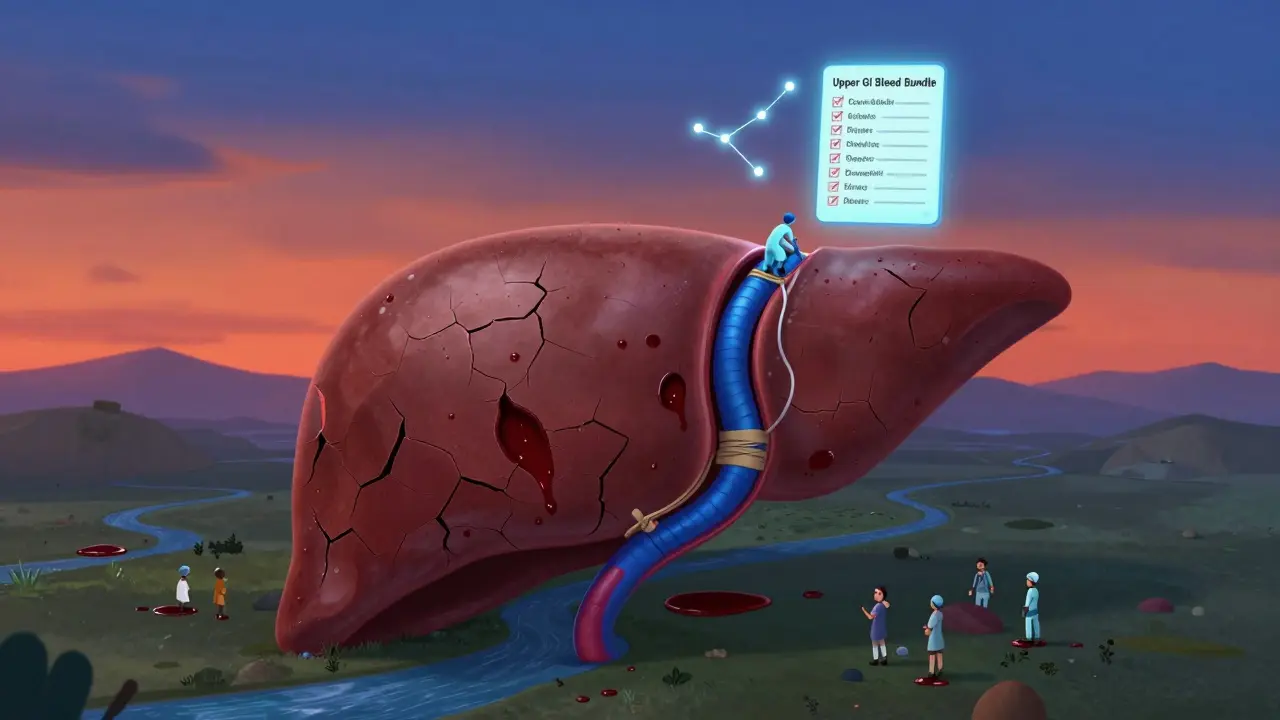
What Happens After
Recovery isn’t just about stopping the bleed. It’s about preventing the next one. A 2022 study from the University of Michigan found that 68% of patients were anxious about bleeding again within a month. Many changed their diet - cutting out coffee, alcohol, spicy food. Nearly a third stopped taking NSAIDs without asking their doctor. That’s dangerous. You need a plan. Doctors now use something called the “Upper GI Bleed Bundle” - a checklist of five steps done in every case: rapid assessment, risk scoring, PPI within an hour, endoscopy within 12 hours, and follow-up within 72 hours. Hospitals using this bundle cut their death rate from 8.7% to 5.3%. That’s hundreds of lives saved every year. New tools are coming. Hemospray, a powder sprayed during endoscopy, stops bleeding in 92% of tough cases. And AI is stepping in. A 2023 trial showed AI-assisted endoscopy spots bleeding signs 94.7% of the time - far better than human eyes. But there’s a problem: AI trained mostly on white patients is less accurate in Black and Hispanic populations. That’s a gap that needs fixing.What You Should Do
If you’re at risk - if you have liver disease, take NSAIDs regularly, or are on SSRIs - know the signs. Don’t wait for a crisis. If you see black stools, vomit anything that looks like coffee grounds, or feel dizzy and weak after vomiting, go to the ER. Don’t call your GP. Don’t wait for morning. This is not something you can treat at home. If you’ve had an upper GI bleed before, follow up. Get tested for H. pylori. Stop NSAIDs unless your doctor says otherwise. Take your PPIs as prescribed. And talk to your doctor about your alcohol use, your medications, your mental health. Stress and depression can make bleeding worse. This isn’t just about one episode. It’s about your long-term health. Upper GI bleeding is a warning. Listen to it.What are the most common causes of upper GI bleeding?
The two most common causes are peptic ulcers (40-50% of cases) and esophageal varices (10-20%). Ulcers are usually caused by H. pylori infection or NSAID use. Varices result from liver disease and high pressure in the portal vein. Other causes include erosive gastritis, Mallory-Weiss tears, and esophagitis.
How do I know if I’m having an upper GI bleed?
Look for vomiting blood - bright red or dark, coffee-ground-like material. Black, tarry stools (melena) are a classic sign. You may also feel dizzy, lightheaded, have a rapid heartbeat, or low blood pressure. These are signs your body is losing blood and needs immediate care.
Is upper GI bleeding dangerous?
Yes, it can be life-threatening. Mortality rates vary by cause: peptic ulcers have a 5-10% death rate, but esophageal varices carry a 20% death rate within six weeks. Delayed treatment increases risk. Early endoscopy and proper stabilization can cut death rates by up to 25%.
Do I need an endoscopy if I have upper GI bleeding?
Yes. Endoscopy (EGD) is the gold standard for diagnosis and treatment. Guidelines recommend it within 24 hours, and ideally within 12 hours for high-risk patients. It’s the only way to see the source of bleeding and stop it with clips, heat, or bands.
Can I prevent upper GI bleeding?
Yes, if you know your risks. Avoid long-term NSAID use unless necessary. Get tested and treated for H. pylori. Limit alcohol. If you have liver disease, follow your doctor’s advice on managing portal hypertension. Don’t ignore symptoms like black stools or vomiting blood - even if you think it’s something else.
suhail ahmed
January 27, 2026 AT 03:28Been treating H. pylori in rural India for 15 years and let me tell you - most cases never make it to an endoscopy. People drink turmeric tea, skip meals, and pray. The real crisis isn’t just the bleed - it’s the 300km walk to the nearest hospital. PPIs? Half the time they’re sold as fake generics from street vendors. We need mobile clinics, not just AI scans. The tech is cool but it won’t fix a system that leaves people behind.
Paul Taylor
January 28, 2026 AT 08:13Let me just say this - the whole medical system is built on reactive care not preventative. You want to reduce upper GI bleeds? Stop pushing NSAIDs like candy. Stop letting pharma companies fund ‘awareness’ campaigns that never mention the real culprits. And for god’s sake stop pretending SSRIs are safe when the data’s been clear since 2018. We’re treating symptoms like they’re the disease. The real problem is how we’ve turned medicine into a product line.
My uncle bled out in 2019 because his doctor told him ‘it’s probably just acid reflux’ - three weeks later he was dead. No one asked if he was on ibuprofen daily. No one asked if he was depressed. No one asked if he could even afford his meds. We’re missing the forest for the trees.
And don’t get me started on how hospitals prioritize endoscopy slots like they’re concert tickets. If you’re over 65 and on Medicare? You wait. If you’re young and insured? You get it within hours. That’s not medicine. That’s capitalism with a stethoscope.
The Upper GI Bleed Bundle works because it’s standardized. But standardization doesn’t fix inequality. It just makes it prettier. We need to fix access before we fix algorithms.
And yes - AI is great. But if it’s trained on data from white, urban, middle-class patients, it’ll miss the signs in Black, Indigenous, and low-income communities. We’ve done this before with heart disease. We’re repeating it.
Stop celebrating tech fixes. Start fixing the system that lets people bleed out in waiting rooms.
Candice Hartley
January 29, 2026 AT 15:00Black stools = go to ER. No excuses. 😷
Murphy Game
January 31, 2026 AT 04:57Did you know the FDA approved PPIs without long-term safety trials? And now they’re in every OTC aisle. Big Pharma knew SSRIs increased bleeding risk years ago - but they buried the data. The same people who sold you Vicodin are now selling you omeprazole. They don’t care if you bleed. They care if you keep buying.
And the ‘Glasgow-Blatchford score’? It’s a marketing tool. They invented it so hospitals could say ‘we’re evidence-based’ while still turning away uninsured patients. The score doesn’t care if you can’t afford a taxi to the ER.
AI spotting bleeds? Cute. But it won’t stop the insurance company from denying your admission. The real danger isn’t the varices - it’s the corporate healthcare machine that profits from your suffering.
They’ll give you a clip. Then bill you $42,000. Then tell you to ‘follow up’ - but you don’t have insurance. So you wait. Until you bleed again.
Wake up. This isn’t medicine. It’s a pyramid scheme with scalpels.
April Williams
January 31, 2026 AT 18:14People think they’re ‘too busy’ to get tested for H. pylori? Sorry, but your ‘busy’ is killing you. And if you’re on SSRIs and ignore black poop? You’re not just careless - you’re selfish. You think your ‘mental health’ matters more than your life? Newsflash: you won’t be depressed if you’re dead.
And don’t even get me started on the ‘I don’t believe in endoscopy’ crowd. You’d rather die than let a tube go down your throat? That’s not bravery. That’s ignorance with a side of ego.
If you’re drinking daily and not getting your liver checked? You’re not a ‘social drinker’ - you’re a walking time bomb. And when you bleed out, don’t expect sympathy. You had every warning.
Stop making excuses. Your body is not a suggestion box.
Desaundrea Morton-Pusey
February 2, 2026 AT 17:30US healthcare is a joke. I had a friend bleed out in Texas - ambulance took 45 minutes, ER waited 3 hours, then they said ‘we don’t have a gastro guy on shift.’ He died. Meanwhile, the hospital CEO got a $12M bonus. This isn’t medicine. It’s a blood sport.
And don’t tell me ‘get insurance.’ My friend had insurance. It didn’t cover ‘urgent GI bleed after 6pm.’
Why are we even talking about AI and PPIs when people are dying because the system is broken? We’re rearranging deck chairs on the Titanic while the water rises.
Marian Gilan
February 2, 2026 AT 23:50Ever notice how every medical article says ‘consult your doctor’ but never says ‘what if you can’t afford one?’ Or ‘what if your doctor doesn’t believe you?’ I’ve had three ER visits where they told me ‘it’s stress’ - then I bled again. Third time, I recorded the conversation. They changed their tune after that.
And the ‘coffee ground’ vomit? That’s not ‘just acid.’ That’s your stomach lining being eaten alive. But hey, maybe you just ate too much spicy food right? 😏
They say SSRIs increase bleeding risk - but they never say why. Coincidence? Or are they hiding something? I mean… why would a drug company sell something that makes people bleed? Unless… they’re also selling the antidote?
Ask yourself: who profits when you bleed? And why does no one ask that question?
Kathy McDaniel
February 4, 2026 AT 07:09Just had my first GI bleed last year - turned out to be an ulcer from too much ibuprofen for my back pain. I thought it was just ‘bad digestion.’ Ended up in the ER at 3am. PPIs saved me. Endoscopy was weird but not scary. Now I take omeprazole daily and avoid NSAIDs like the plague. Honestly? Best health decision I ever made. 😊
Conor Flannelly
February 5, 2026 AT 21:16There’s a deeper truth here - bleeding isn’t just physical. It’s emotional. People who bleed from ulcers often carry years of unspoken stress. The body doesn’t lie. If your stomach is eating itself, maybe your soul is too.
I’ve seen patients with cirrhosis who haven’t spoken to their family in a decade. The varices aren’t just from alcohol - they’re from loneliness. The body bleeds when the heart is broken.
Medicine treats the vessel. But who treats the silence?
Maybe the real ‘bundle’ isn’t just PPIs and endoscopy. Maybe it’s listening. Maybe it’s asking ‘are you okay?’ before you ask ‘what’s your hemoglobin?’
We fix the bleed. But do we fix the life?
Conor Murphy
February 6, 2026 AT 04:02My dad had a variceal bleed after 30 years of drinking. He survived because he had Medicare and a good GI doc. But half the guys at the VA clinic didn’t make it. Same disease. Different luck.
We need to stop treating this like it’s an individual failure. It’s a public health failure. We let people drink to numb trauma. We let them take NSAIDs because they can’t afford physical therapy. We let them skip care because they’re scared of the bill.
Fix the system. Not just the stomach.
Harry Henderson
February 7, 2026 AT 19:45STOP WAITING. If you see black stool or coffee grounds - GO. NOW. Don’t text your friend. Don’t Google it. Don’t wait until morning. Call 911. Your life is not a ‘maybe.’
I’ve seen guys die because they thought ‘it’ll pass.’ It doesn’t. It kills. I’m not being dramatic. I’m being real. You think you’re tough? Tough guys die in ERs with empty wallets and empty veins.
Get tested. Stop the NSAIDs. Talk to your doctor. Or don’t. But don’t act surprised when your body gives up.
Be smart. Be alive.