Store Brands vs. Name Brand OTC Medications: What You Need to Know
 May, 20 2026
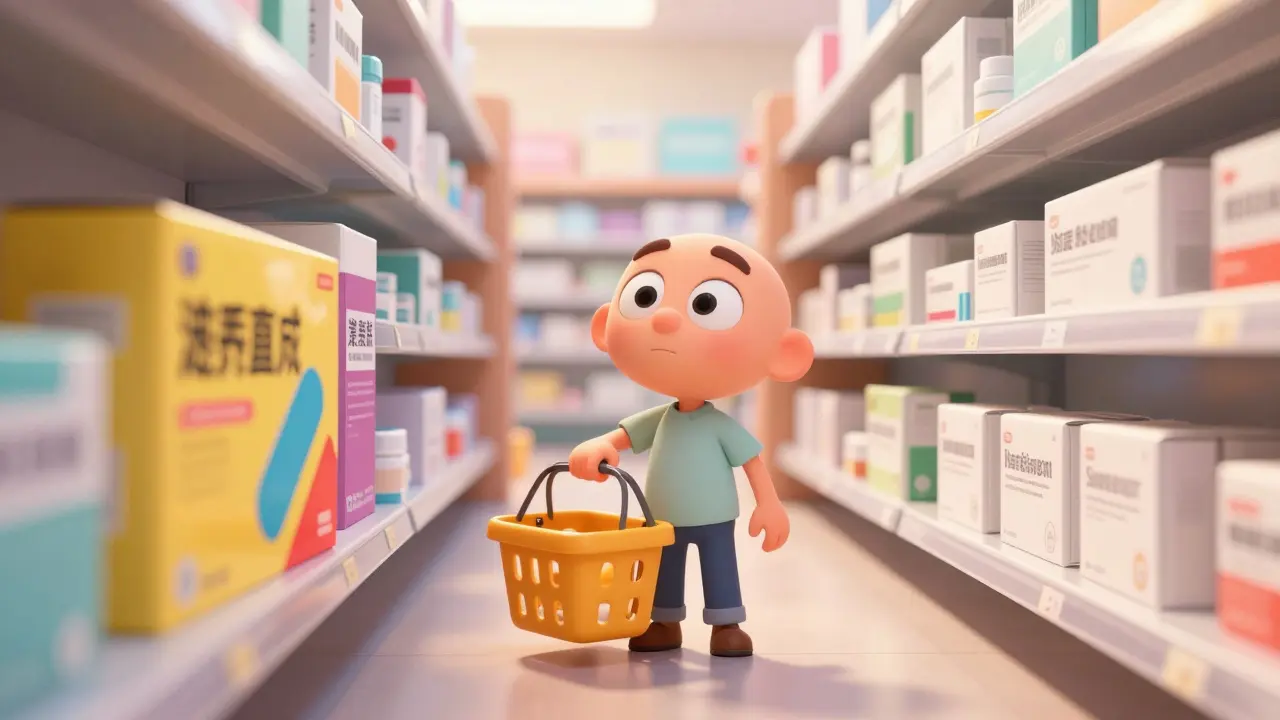
Walk down the aisle at your local pharmacy, and you’ll see them side by side: the brightly colored box of Tylenol or Advil, and right next to it, a plainer package with a similar price tag that’s often a fraction of the cost. It’s tempting to grab the cheaper option, but have you ever wondered if those store brand medications are actually safe? Or worse, do they work as well as the big-name brands you trust?
The short answer is yes, they are safe, and yes, they work just as well. In fact, sticking to store brands for your over-the-counter (OTC) needs can save you hundreds of pounds a year without sacrificing health outcomes. But before you toss all your branded bottles in the bin, there are a few nuances about ingredients, regulations, and rare exceptions that you should know.
Why Store Brands Are Cheaper (And Still Effective)
You might assume that lower prices mean lower quality. In the world of pharmaceuticals, that assumption is dangerously wrong. The primary reason store brands-also known as generics-are so much cheaper isn’t because they cut corners on the medicine itself. It’s because they skip the massive marketing budgets and the initial research costs that name-brand companies incur.
When a company like Johnson & Johnson develops a new drug, they spend billions on clinical trials and advertising to build brand loyalty. Once the patent expires, other manufacturers can step in. Thanks to legislation like the Hatch-Waxman Act, these follow-up manufacturers don’t need to repeat those expensive clinical trials. They simply have to prove their product is identical to the original.
This means the active ingredient-the part of the pill that actually treats your headache or allergy-is exactly the same. According to data from the FDA, store brands typically cost between 80% and 85% less than their name-brand counterparts. That’s not a small discount; it’s a massive saving for everyday essentials like pain relievers, antacids, and cold medicines.
The Science Behind the Savings: Bioequivalence
So, how do we know the cheap stuff works? The Food and Drug Administration (FDA) has strict rules. For a store brand to be approved, it must demonstrate "bioequivalence" to the name-brand drug. This sounds technical, but it’s straightforward: the store brand must deliver the same amount of active ingredient into your bloodstream at the same speed as the name-brand version.
The FDA requires this equivalence to fall within a specific statistical range (usually 80-125%). Studies, including one published in the National Center for Biotechnology Information, show that the average difference in absorption is often just 3.5%. For most people, this tiny variance is imperceptible. If you take ibuprofen for a sore back, whether it’s Equate or Advil, your body processes it almost identically.
However, there is a catch. While the active ingredient is the same, the inactive ingredients can differ. These include fillers, binders, colors, and flavors. They hold the pill together or make it taste better, but they don’t treat your illness. For the vast majority of users, these differences don’t matter. But if you have specific allergies to dyes or gluten, you need to read the label carefully.
| Feature | Name Brand (e.g., Tylenol) | Store Brand (Generic) |
|---|---|---|
| Active Ingredient | Identical (Acetaminophen) | Identical (Acetaminophen) |
| Dosage Strength | Same (e.g., 500mg) | Same (e.g., 500mg) |
| FDA Approval | Rigorous Testing Required | Rigorous Testing Required |
| Inactive Ingredients | Proprietary Formula | May Vary (Fillers/Dyes) |
| Price | Higher (Marketing Costs) | Lower (80-85% Less) |
| Packaging | Distinctive Brand Colors | Plain/Generic Design |

What Doctors and Pharmacists Actually Think
If you’re still unsure, look to the experts. You’d think pharmacists would push the more expensive brands, but the reality is quite different. A University of Chicago study found that 89% of pharmacists and 82% of physicians use store-brand medications for themselves and their families. Why? Because they know the science.
Dr. Eric D’Agostino, a pharmacist at Brown University Health, notes that generic medications are just as safe and effective, usually costing significantly less out-of-pocket. The skepticism many consumers feel is largely driven by marketing, not medical evidence. When presented with clear information about efficacy, 78% of consumers in various studies preferred store brands.
That said, professionals do acknowledge rare exceptions. Dr. Burgess from University Hospitals points out that if you experience side effects or find that your health doesn’t improve on a generic, switching back to the name brand might help. This is usually due to sensitivity to an inactive ingredient, not a failure of the drug itself. It’s a valid concern, but it affects a very small percentage of users.
When to Stick with the Name Brand
While store brands are the smart choice for 99% of OTC purchases, there are scenarios where paying extra for the name brand makes sense. First, consider liquid formulations. If you’re buying cough syrup or children’s medicine, the taste matters. Name brands often invest heavily in flavoring to make the medicine palatable. If your child refuses to drink the generic because it tastes bitter, the name brand is worth the premium.
Second, look for "Narrow Therapeutic Index" (NTI) drugs. These are medications where even a tiny change in blood concentration can cause problems. However, NTI drugs are primarily prescription-only (like certain heart or seizure medications). For common OTC items like antihistamines, painkillers, and digestive aids, this risk is negligible.
Finally, some people have psychological comfort in the brand. If buying the familiar blue bottle of Advil gives you peace of mind during a stressful migraine, and you can afford it, go for it. Healthcare is personal, and confidence in your treatment plan is valuable. But don’t let fear of the unknown keep you from saving money unnecessarily.
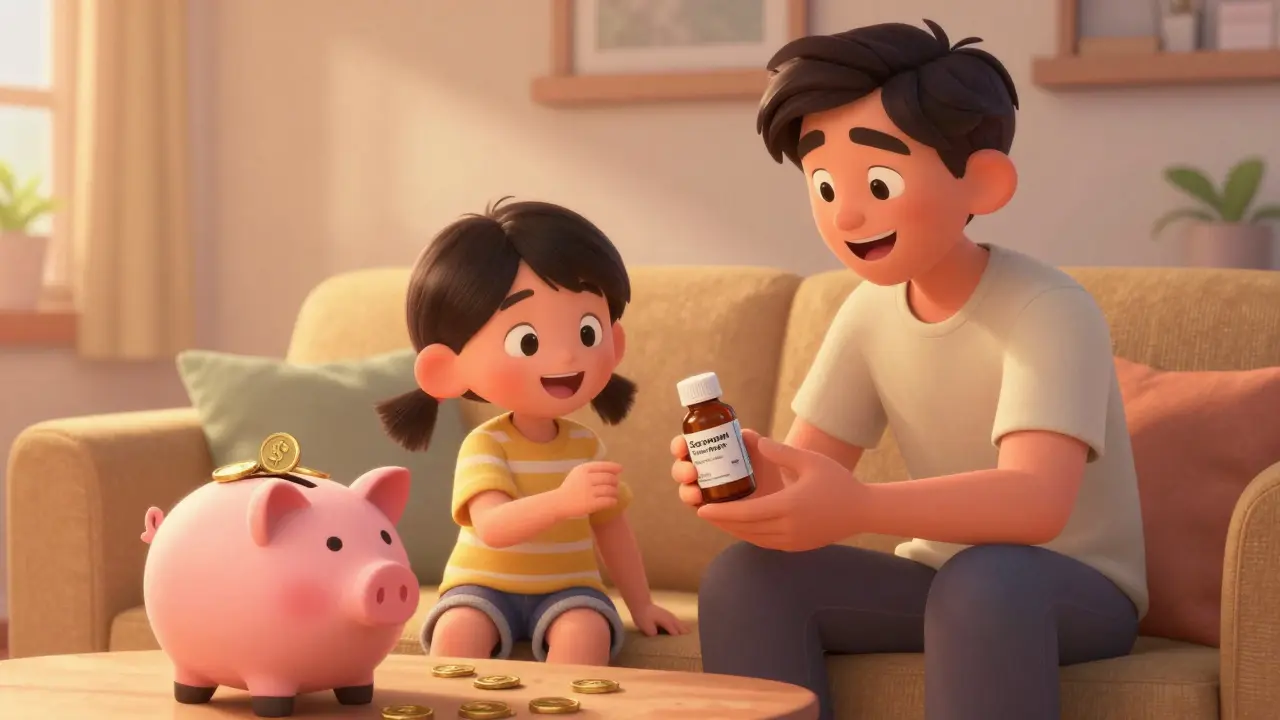
How to Shop Smart for OTC Meds
Making the switch to store brands is easier than you think. Here is a simple checklist to ensure you’re getting the right product:
- Check the Active Ingredient: Look at the "Drug Facts" panel on the back of the box. The first line under "Active Ingredient" is what matters. If the name brand says "Ibuprofen 200mg," the store brand must say the exact same thing.
- Compare Dosages: Ensure the strength per tablet or milliliter matches. Some store brands offer higher concentrations in fewer pills, which can be confusing.
- Watch for Allergies: Scan the "Inactive Ingredients" list if you have known sensitivities to dyes, gluten, or lactose.
- Avoid Double-Dosing: This is crucial. Many cold medicines contain acetaminophen. If you take a store-brand cold flu tablet and then take Tylenol for pain, you might overdose on acetaminophen, which can damage your liver. Always check labels when combining products.
Pharmacists at major chains like CVS and Walgreens are trained to help with this. Don’t hesitate to ask, "Is this store brand equivalent to [Brand Name]?" They can guide you to the exact match.
The Bottom Line on Your Wallet
The market data supports the shift. Store brands now represent about 67% of all OTC sales by volume. Retailers like Walmart and Target have invested heavily in their private-label lines, improving packaging and formulation transparency. In 2023 alone, retailers spent over $1.2 billion on formulation improvements to narrow any perceived quality gap.
By choosing store brands, you aren’t just saving money; you’re participating in a market trend that values efficiency and evidence over branding. For the average household, switching entirely to store-brand OTC meds can save hundreds of dollars annually. That’s money better spent on groceries, travel, or savings.
Are store brand medications FDA approved?
Yes. All store brand OTC medications must undergo the same rigorous FDA approval process as name-brand drugs. They must prove they are bioequivalent, meaning they deliver the same active ingredient into your bloodstream at the same rate.
Why do store brand pills look different?
Trademark laws prevent store brands from looking exactly like name-brand drugs. Therefore, they often differ in color, shape, or size. These changes are due to inactive ingredients like dyes and binders, which do not affect the drug's therapeutic effectiveness.
Can I mix store brand and name brand medications?
You should be very careful. Never mix two products that contain the same active ingredient (e.g., taking both Advil and generic ibuprofen). Check the "Drug Facts" label to avoid accidental double-dosing, which can lead to serious health risks like liver damage from acetaminophen.
Do doctors recommend store brands?
Yes. Studies show that nearly 90% of pharmacists and 82% of physicians use store-brand medications for themselves and their families. They recognize that generics are equally safe and effective while being significantly cheaper.
When should I buy the name brand instead?
Consider the name brand if you are sensitive to specific inactive ingredients (like dyes), if taste is critical (such as in liquid children's medicine), or if you have had a negative reaction to a generic in the past. Otherwise, the store brand is usually the better value.