St. John’s Wort and Prescription Medications: What You Need to Know About Dangerous Interactions
 Jan, 24 2026
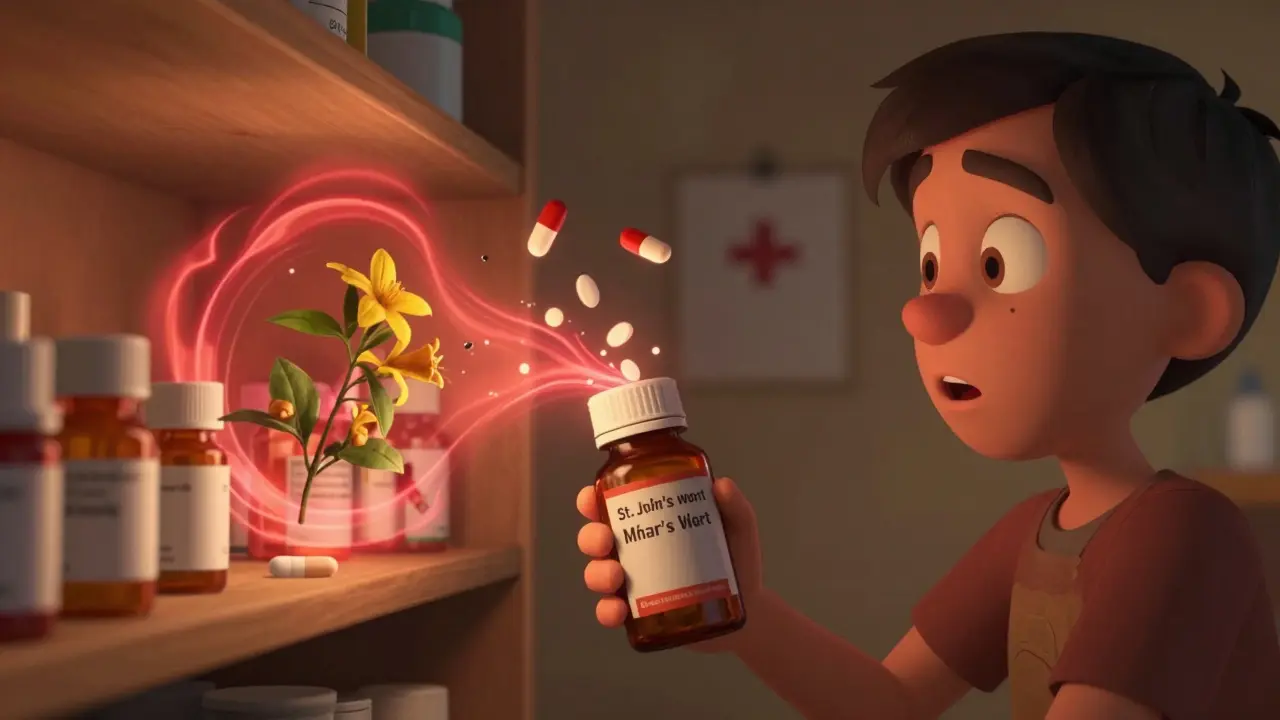
St. John’s Wort might seem like a harmless natural fix for low mood, but it’s not the gentle herb many assume it to be. If you’re taking any prescription medication, this supplement could be quietly sabotaging your treatment-sometimes with life-threatening results. It doesn’t just add to your pills; it changes how your body processes them. And most people have no idea.
How St. John’s Wort Changes Your Body’s Chemistry
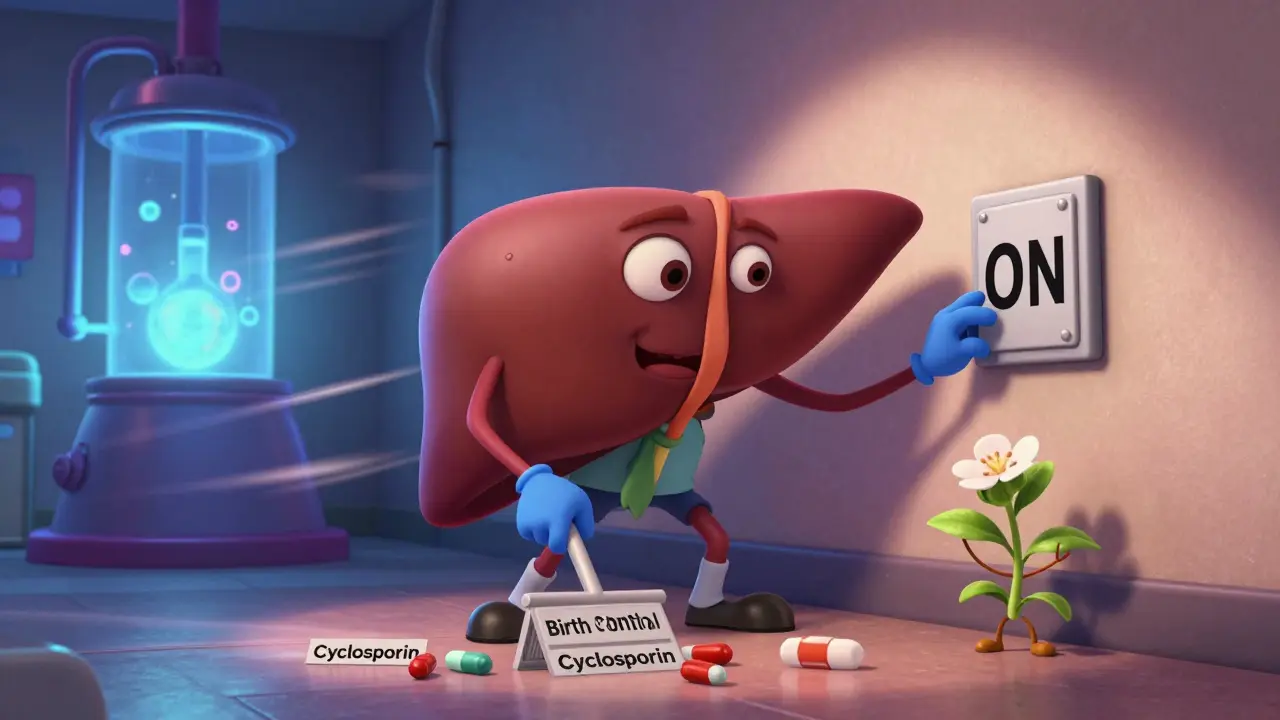
St. John’s Wort doesn’t just sit around. Once you take it, its active compounds-mainly hyperforin and hypericin-start triggering a chain reaction in your liver. They turn on enzymes like CYP3A4 and CYP2C9, which are responsible for breaking down about half of all prescription drugs. This isn’t a minor tweak. It’s like flipping a switch that makes your body treat medications like they’re garbage to be flushed out fast.
That means drugs you rely on-whether it’s your blood thinner, birth control, or antidepressant-get broken down before they can do their job. The result? Lower drug levels in your bloodstream. Your medication stops working, and you don’t even realize why.
It’s not just about speed. St. John’s Wort also affects P-glycoprotein, a protein that controls how drugs move in and out of cells. This adds another layer of disruption, especially for drugs that need to reach specific tissues-like the brain or the lining of your intestines.
Medications That Become Ineffective
Here’s the real list of medications that lose their power when mixed with St. John’s Wort:
- Warfarin (Coumadin) and other blood thinners: St. John’s Wort cuts their levels by up to 25%, raising your risk of dangerous clots. One case study showed a patient developing a pulmonary embolism after starting the herb.
- Phenytoin (Dilantin), carbamazepine (Tegretol), and phenobarbital: These seizure meds become less effective, leading to breakthrough seizures. People with epilepsy have ended up in the ER because they didn’t tell their doctor they were taking the herb.
- Birth control pills: The hormone levels drop fast. Unplanned pregnancies have been documented in women who took St. John’s Wort while on the pill. It doesn’t matter if you’re on the pill, patch, or ring-this interaction is well-documented.
- Cyclosporin and tacrolimus: These immunosuppressants are critical after organ transplants. A drop in their levels can trigger organ rejection. In one case, a kidney transplant patient lost their graft after starting St. John’s Wort.
- Antiretrovirals: HIV medications like efavirenz and protease inhibitors become less effective. This isn’t theoretical-it’s led to treatment failure and drug-resistant strains.
- Methadone: Used for pain and addiction, methadone levels can drop by 30%, leading to withdrawal symptoms or relapse.
- Omeprazole (Prilosec): This common acid reducer loses effectiveness, meaning heartburn returns even if you’re taking it daily.
The list goes on. The Mayo Clinic says over 50 drugs are affected. And because herbal supplements aren’t regulated like prescription meds, the strength of St. John’s Wort varies wildly between brands. One bottle might have enough hyperforin to cause trouble. Another might not. You can’t predict it.
The Serotonin Danger: When St. John’s Wort Turns Deadly
It’s not just about drugs not working. Sometimes, St. John’s Wort makes them work too well-and that’s just as dangerous.
It increases serotonin in the brain. So if you’re already taking an SSRI like sertraline (Zoloft), fluoxetine (Prozac), or escitalopram (Lexapro), you’re stacking two serotonin boosters. That’s a recipe for serotonin syndrome.
Serotonin syndrome isn’t just feeling a little jittery. It’s a medical emergency. Symptoms include:
- High fever
- Rapid heart rate
- Shivering
- Muscle rigidity
- Confusion or hallucinations
- Seizures
It can kill. The American Academy of Family Physicians explicitly warns against combining St. John’s Wort with SSRIs. And it’s not just SSRIs-SNRIs, triptans for migraines, even some opioids can trigger this reaction.
One woman in Australia developed serotonin syndrome after taking St. John’s Wort with her antidepressant. She ended up in intensive care. She didn’t think the herb was a drug. She thought it was safe because it was natural.
What Happens When You Stop Taking It?
Here’s the part no one talks about: stopping St. John’s Wort can be just as risky as taking it.
Once you quit, your liver enzymes slowly return to normal. But your prescription meds? They’re still at the same dose. Now, instead of being broken down too fast, they’re building up in your system.
That means:
- Warfarin levels rise → risk of bleeding
- Birth control hormones spike → nausea, blood clots
- Cyclosporin builds up → kidney damage
- Antidepressants accumulate → serotonin overload
The Therapeutic Goods Administration in Australia documented six cases of this exact scenario-people who stopped St. John’s Wort and ended up with toxic levels of their other meds. Doctors didn’t know to adjust doses because the patient never mentioned the herb.
Why This Isn’t Just a ‘Natural’ Issue
People think ‘natural’ means ‘safe.’ That’s a dangerous myth.
St. John’s Wort is sold in pharmacies, grocery stores, and online with no warning labels in many countries. In the U.S., it’s treated like a vitamin. But in Sweden and the UK, manufacturers are required to label it with clear interaction warnings. In Australia, doctors are trained to ask every patient: “Are you taking any herbal supplements?”
Why the difference? Because the evidence is overwhelming. Over 30 clinical trials show clear, dangerous interactions. The FDA doesn’t regulate supplements like drugs, so companies don’t have to prove safety or warn users. That’s why it’s on your shelf-and why your doctor might not know you’re taking it.

What You Should Do Right Now
If you’re on any prescription medication, here’s what to do:
- Stop taking St. John’s Wort-even if you think it’s helping your mood. The risks far outweigh the benefits.
- Tell your doctor and pharmacist-even if you think it’s not important. They need to know everything you take.
- Don’t switch to another herb-many, like 5-HTP or SAM-e, also affect serotonin and carry similar risks.
- Ask about alternatives-if you need help with depression, talk therapy, FDA-approved antidepressants, or lifestyle changes are safer and more reliable.
If you’ve been taking St. John’s Wort and suddenly feel worse, dizzy, nauseous, or unusually anxious, get medical help immediately. You might be experiencing a drug interaction.
Bottom Line: Natural Doesn’t Mean Safe
St. John’s Wort isn’t a gentle herbal remedy. It’s a potent biochemical agent with a documented history of causing serious harm. It interferes with medications millions rely on to stay alive-blood thinners, transplant drugs, seizure controls, birth control.
There’s no safe dose. No safe combo. No safe time to take it. If you’re on prescription meds, the only safe choice is to avoid it entirely.
Your health isn’t worth gambling on a myth. Ask your doctor what really works-and skip the herbs that could cost you your life.
Can I take St. John’s Wort if I’m not on any medications?
Even if you’re not on prescription drugs, St. John’s Wort isn’t risk-free. It can cause photosensitivity, leading to severe sunburns, and may trigger mania in people with bipolar disorder. It also interacts with over-the-counter drugs like fexofenadine (Allegra) and can worsen anxiety or insomnia. There’s no proven benefit that outweighs these risks.
How long does St. John’s Wort stay in my system after I stop?
The herb’s effects on liver enzymes can last up to two weeks after you stop taking it. That’s why doctors recommend waiting at least 14 days before starting any new medication that interacts with it. Don’t assume it’s gone just because you stopped yesterday.
Are there any herbal alternatives to St. John’s Wort for depression?
There’s no herbal supplement proven safe and effective for treating depression without risks. 5-HTP, SAM-e, and omega-3s have been studied, but they also interact with medications and lack consistent regulation. Evidence-based treatments like cognitive behavioral therapy (CBT) and FDA-approved antidepressants are safer, more reliable, and backed by decades of research.
Why don’t pharmacies warn me about St. John’s Wort interactions?
In the U.S., the FDA doesn’t require supplement manufacturers to prove safety or list drug interactions. Labels often say “natural” or “supportive,” not “dangerous.” Pharmacists may not know about the interaction unless you tell them. Always disclose everything you take-herbs, vitamins, or supplements-when filling prescriptions.
Can St. John’s Wort affect my surgery?
Yes. It can interfere with anesthesia and pain medications, and increase bleeding risk if you’re on blood thinners. Surgeons recommend stopping all herbal supplements at least two weeks before any procedure. Never assume it’s harmless-many patients have had complications because they didn’t mention their supplements.
SWAPNIL SIDAM
January 26, 2026 AT 05:06This hit me hard. I was taking St. John’s Wort for months thinking it was just a chill herb. Turns out my blood pressure med wasn’t working because of it. Had a scare last month. Now I’m off it and talking to my doc about real options. Don’t be like me.
Dan Nichols
January 27, 2026 AT 07:38Stop pretending natural means safe. That’s the dumbest myth in wellness culture. You wouldn’t drink bleach because it’s 'natural' so why treat herbs like magic fairy dust? This article is 100% correct. The FDA doesn’t regulate supplements because they’re not drugs. That’s not a flaw it’s a feature. You want regulation? Take the pill. Don’t play herbal roulette with your liver.
Renia Pyles
January 28, 2026 AT 12:15Oh please. I’ve been taking this stuff for years with my antidepressant and I’m fine. My doctor doesn’t even know. You think Big Pharma is scared of herbs? No they’re scared of people waking up and realizing they don’t need your overpriced antidepressants. This is fearmongering dressed up as science. I feel better than ever. Try it. You might live.
Rakesh Kakkad
January 30, 2026 AT 02:23It is imperative to note that the biochemical modulation induced by hyperforin is not trivial. The induction of CYP3A4 is a well-documented phenomenon in pharmacokinetic literature. One must exercise extreme caution when combining phytochemicals with pharmaceutical agents. The risk of therapeutic failure is not hypothetical. It is statistically significant and clinically validated. Please consult your physician before ingestion.
Nicholas Miter
January 30, 2026 AT 11:05My cousin took this stuff while on warfarin. Didn’t know it was a problem. Ended up in the hospital with a clot. Scary stuff. I told my mom to stop taking all her 'natural' supplements after that. She still takes turmeric though. I just tell her to keep it away from her blood pressure pills. Some people just don’t get it. Hope this post saves someone.
Suresh Kumar Govindan
January 30, 2026 AT 13:41St. John’s Wort is a Trojan horse. Manufactured by corporations that profit from ignorance. The FDA is complicit. The pharmaceutical industry funds research that downplays risks. Your supplement bottle is a weapon. You are being manipulated. Stop trusting labels. Stop trusting 'natural.' Trust data. Trust science. Trust nothing else.
George Rahn
January 31, 2026 AT 11:56They call it 'natural' so we think it’s innocent. But nature doesn’t care about your prescriptions. Nature doesn’t care if you’re on birth control or a transplant. Nature doesn’t care if you live or die. It’s just chemistry. And chemistry doesn’t care about your feelings. This herb is a molecular saboteur. You want peace? Stop playing with fire.
Karen Droege
January 31, 2026 AT 12:14I’m a nurse and I’ve seen this too many times. A patient comes in with a seizure after starting 'just a little herbal mood booster.' Another one with a rejected kidney because they thought 'it’s just tea.' I scream at them gently. I beg them to tell us everything. But they’re ashamed. They think we’ll judge them for taking herbs. We don’t judge. We just want to keep you alive. Please. Tell your doctor. Even if it’s embarrassing. Even if it’s 'just St. John’s Wort.'
Shweta Deshpande
February 2, 2026 AT 11:32I totally get why people turn to this. I was depressed after my mom passed and I didn’t want to take pills. I thought this was my gentle way out. But then I started having crazy anxiety and my period went wild. I didn’t connect it until I read this. I quit cold turkey and went to therapy instead. It was hard at first but now I feel more grounded than ever. No magic herb, just real healing. You’re not weak for needing help. You’re brave for asking for it.
Aishah Bango
February 4, 2026 AT 00:59If you’re taking this and you’re on meds, you’re not just risking your life-you’re risking the lives of everyone around you. What if you have a seizure while driving? What if you bleed out because your blood thinner failed? What if your baby is born because your birth control stopped working? This isn’t personal choice. It’s public danger. Stop being selfish.
Simran Kaur
February 5, 2026 AT 19:17In India, we’ve used herbs for centuries but we also had elders who warned us: 'If you take medicine from the doctor, don’t mix it with the medicine from the earth.' This isn’t new. We knew. Now the world is forgetting. I’ve seen friends in the US take this and get sick. I tell them. They laugh. But I’m not laughing. I’m worried. Please listen. Your body is sacred. Don’t test it.
rasna saha
February 5, 2026 AT 23:01I was so scared to tell my doctor I was taking this. I thought he’d think I’m dumb. But when I did, he didn’t judge. He just said 'thank you for telling me' and adjusted my meds. I feel like a weight lifted. I wish I’d done it sooner. You’re not alone. Just speak up. Your doctor is on your side.
Skye Kooyman
February 7, 2026 AT 05:58So what happens if you stop it? Do you just wait two weeks? Do you get blood tests? Do you need to tell your pharmacist every time you refill? This is so confusing. I’m on three meds. I don’t know what to do next.
James Nicoll
February 7, 2026 AT 06:21So let me get this straight. The FDA lets a plant with documented lethal interactions be sold next to gummy vitamins while regulating aspirin like a controlled substance. And we’re surprised people are confused? This isn’t about St. John’s Wort. This is about capitalism pretending to be healthcare. The real villain isn’t the herb. It’s the system that lets it happen.