Shingles: Antiviral Treatment and Pain Management
 Feb, 1 2026
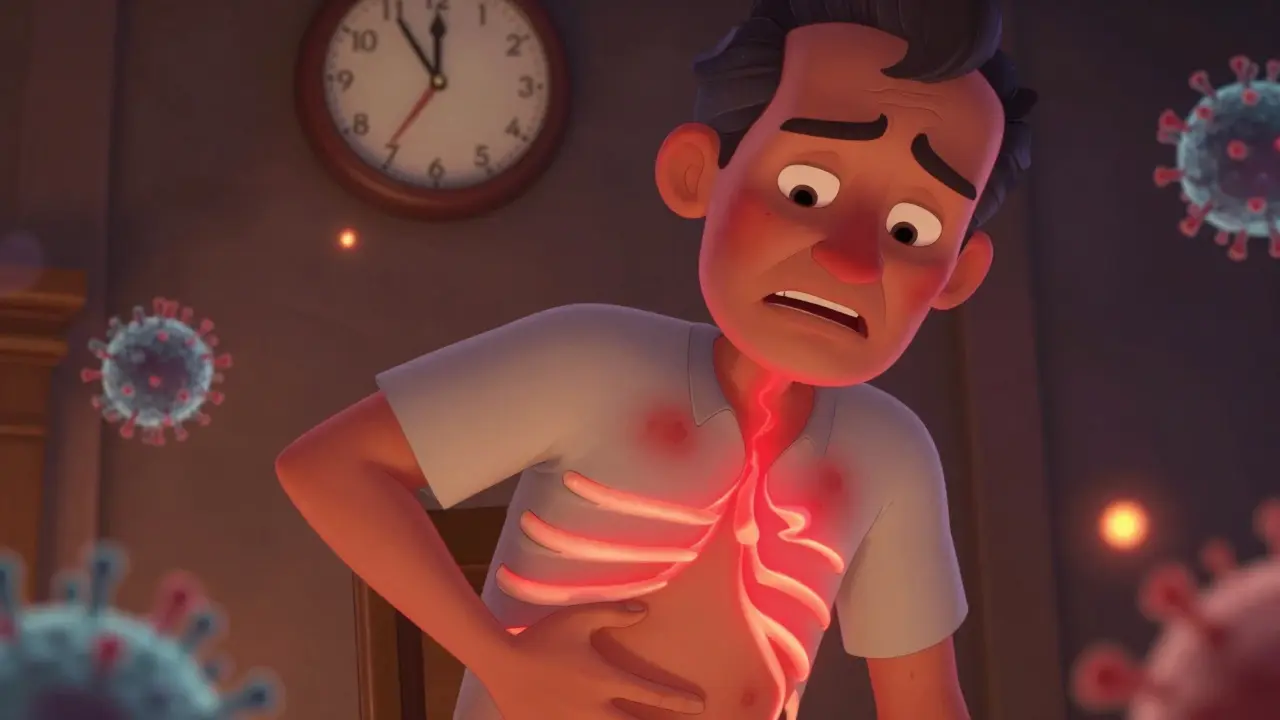
Shingles isn’t just a rash. It’s a sharp, burning pain that can linger for months-or even years-after the blisters fade. If you’ve ever felt that electric sting along one side of your ribcage or forehead, you know it’s not something you can just wait out. The virus behind it, varicella-zoster, has been hiding in your nerves since you had chickenpox as a kid. Now it’s awake, and it’s angry. But here’s the thing: antiviral treatment can change the game-if you act fast.
Time Is Everything
Doctors say you have a 72-hour window to start antiviral meds after the first sign of shingles. That’s not a suggestion. It’s a deadline. The earlier you begin, the better your odds of cutting the pain short and avoiding long-term nerve damage. Delay treatment past three days, and the virus has already spread too far. Your body’s already fighting a full-blown war, and the drugs can’t turn back the clock.
Studies show that starting antivirals within 48 hours cuts the rash duration by nearly half. People who waited more than 72 hours reported pain lasting 30% longer than those who started on day one. That’s not just inconvenient-it’s debilitating. You can’t sleep. You can’t work. You can’t even brush your hair without flinching.
The Three Antivirals: What Works
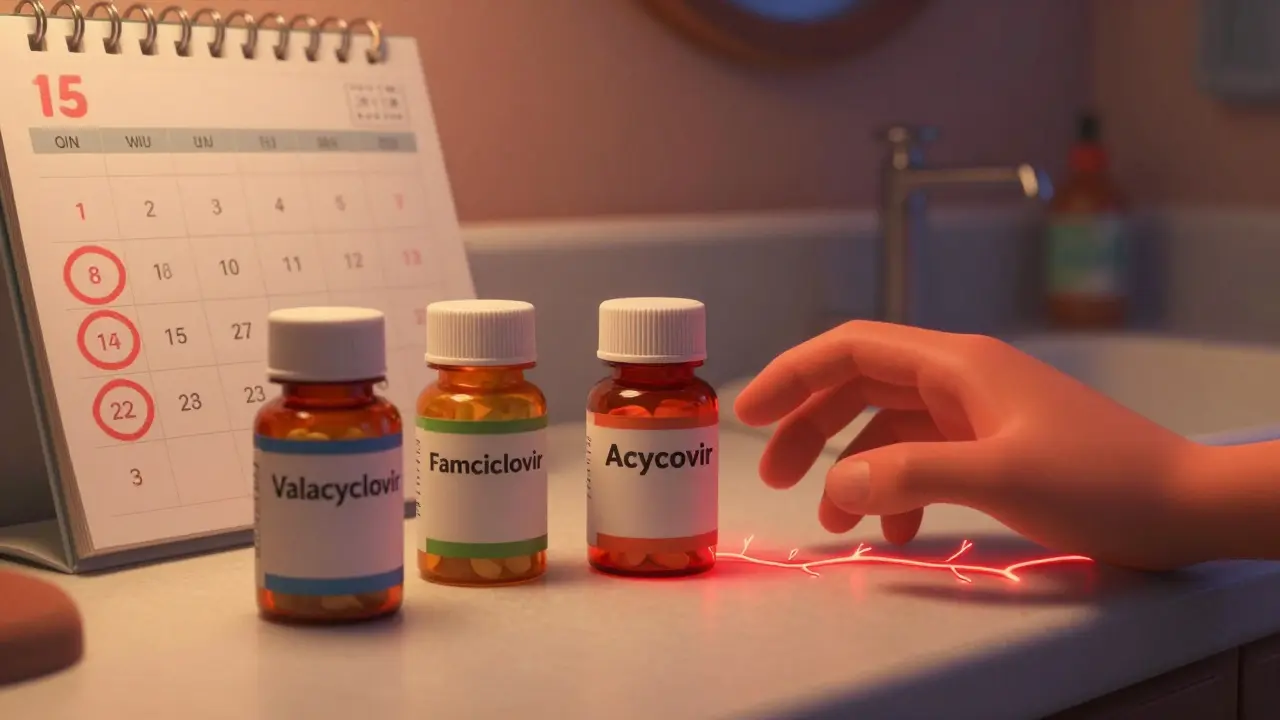
There are three main antiviral drugs used for shingles: acyclovir, famciclovir, and valacyclovir. All of them work the same way-they slow down the virus so your immune system can catch up. But they’re not all the same in practice.
Valacyclovir (Valtrex) is the most popular. It’s taken three times a day for seven days at 1,000 mg per dose. Why? Because it’s easier. You swallow fewer pills. Fewer side effects. And according to recent data, it reduces acute pain more effectively than acyclovir. Acyclovir (Zovirax) requires five doses a day-800 mg each-which means more nausea, more missed meals, more chances to forget a dose. Famciclovir (Famvir) is in the middle: three times a day at 500 mg.
For most people, valacyclovir is the best choice. But if you’re on dialysis or have kidney problems, your doctor might pick acyclovir because it’s easier to adjust the dose. And if you’re immunocompromised-say, from chemotherapy or HIV-your doctor might push for higher doses or longer courses. The goal? Stop the virus before it destroys nerve endings.
Does It Prevent Long-Term Pain?
This is the big question: Can antivirals stop post-herpetic neuralgia (PHN)? That’s the chronic nerve pain that sticks around after the rash clears. About 1 in 5 shingles patients get it. For those over 60, it’s closer to 1 in 3.
The science is mixed. One major Cochrane review says acyclovir doesn’t reduce PHN risk at six months. But other studies-including a 2011 analysis of over 2,000 patients-show a 30% drop in PHN rates when antivirals are started early. Why the contradiction? Maybe it’s about timing. Maybe it’s about which drug. Or maybe it’s about your age, your immune health, and how much nerve damage happened before you even noticed the rash.
Real-world data from PatientsLikeMe tells a clearer story: 62% of people who started antivirals within 48 hours say they avoided chronic pain. That’s not a guarantee, but it’s a strong signal. If you’re over 50, or you’ve had diabetes, or you’re on steroids-don’t gamble. Start the meds now.
When Shingles Hits the Eye
If the rash appears near your eye-on your forehead, nose, or eyelid-you’re in a high-risk zone. This is called herpes zoster ophthalmicus (HZO). Left untreated, it can cause scarring, glaucoma, or even vision loss.
The Zoster Eye Disease Study (ZEDS), published in late 2023, changed everything. Researchers gave people with HZO a low daily dose of valacyclovir (500 mg) for 18 months. Those on the drug had 26% fewer eye complications. Their flare-ups dropped by nearly a third. And here’s the kicker: they needed 22% less pain medication overall. That’s huge. Because gabapentin and pregabalin-the usual go-tos for nerve pain-make older people dizzy. They fall. They break hips.
Now, doctors are starting to recommend long-term antiviral therapy for anyone with eye involvement. It’s not standard everywhere yet, but if your rash is near your eye, ask your doctor about it. This isn’t just about comfort. It’s about keeping your sight.
Pain Management: Beyond the Pills
Antivirals don’t touch the pain directly. They fight the virus. The pain? That’s your nerves screaming. So you need more tools.
Topical treatments help. Lidocaine patches go on for 12 hours, then off for 12. They numb the area without making you sleepy. Capsaicin cream-made from chili peppers-burns at first, then desensitizes nerves over time. Use it four times a day. It’s messy. It stings. But it works for many.
For moderate to severe pain, doctors turn to gabapentin or pregabalin. These are anti-seizure drugs that calm overactive nerves. Start low-300 mg a night-and slowly increase. Side effects? Drowsiness, dizziness, weight gain. But if you’re in constant pain, those are worth trading.
Amitriptyline, an old-school antidepressant, is another option. Taken at night, it helps with both pain and sleep. You don’t have to be depressed to use it. It just works on nerve signals.
Opioids? Avoid them unless you’re in extreme pain for a few days. They don’t fix nerve pain well, and they’re addictive. One study found people on opioids for shingles were more likely to keep using them long after the rash was gone.
The Vaccine That Changes Everything
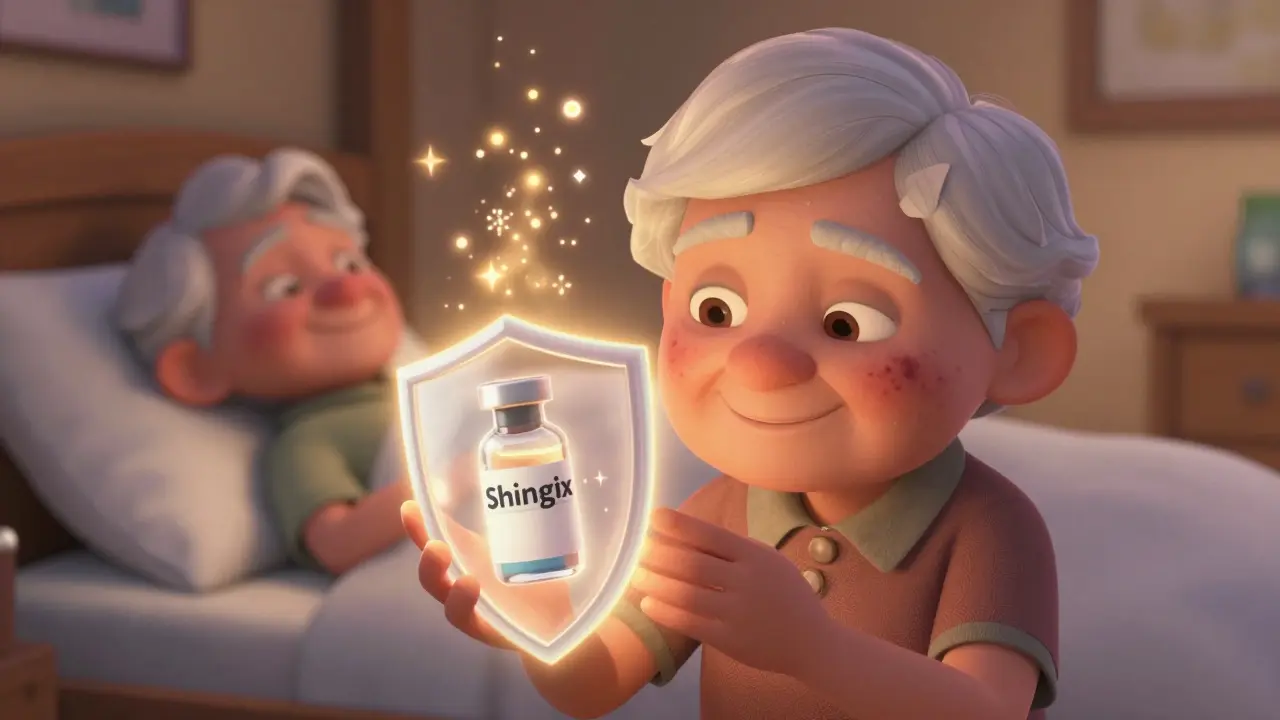
Shingrix is the best tool we have to avoid shingles altogether. It’s not a cure. It’s prevention. Two shots, given 2 to 6 months apart, cut your risk by more than 90%. Even if you get shingles after the vaccine, the rash is milder, the pain is shorter, and PHN is rare.
It’s recommended for everyone over 50-even if you had shingles before, even if you got the old vaccine (Zostavax). Insurance usually covers it. No waiting. Just walk in. If you’re 65 and still haven’t gotten it, you’re leaving yourself exposed.
What Happens If You Ignore It?
Some people think shingles is just a bad rash. It’s not. It’s a neurological event. The virus doesn’t just sit on your skin. It burrows into your nerves. And when it wakes up, it doesn’t ask permission.
Without treatment, you risk: long-term nerve pain, skin infections from scratching, muscle weakness, facial paralysis (if it hits your face), and vision loss. One man in his 70s waited six days to see a doctor. His rash healed. But the pain never left. He’s on gabapentin now. Can’t drive. Can’t sleep. Can’t work. He says he wishes he’d started antivirals on day one.
There’s no magic fix. But there’s a clear path: act fast, take the right meds, manage the pain smartly, and get vaccinated if you haven’t.
What to Do Right Now
- If you feel burning, tingling, or stabbing pain on one side of your body-especially if it’s only on one spot-don’t wait. See a doctor within 24 hours.
- Don’t wait for the rash to show up. Pain alone can mean shingles.
- If you’re over 50, ask your doctor about Shingrix if you haven’t had both doses.
- If the rash is near your eye, go to an eye specialist immediately.
- Keep the area clean and dry. Avoid scratching. Cover it if you’re around people who haven’t had chickenpox or the vaccine.
Shingles doesn’t care if you’re busy. It doesn’t care if you’re scared. It just shows up. But you can still fight back. The tools are here. The science is clear. The clock is ticking. Start now.
Can shingles be cured?
No, there’s no cure for shingles. The virus stays in your nerves for life. But antiviral treatment can stop the outbreak from getting worse, shorten the illness, and reduce the chance of long-term pain. The goal isn’t to eliminate the virus-it’s to control the damage it causes.
How soon do antivirals start working?
You won’t feel better right away. Antivirals don’t numb pain. They slow the virus. Most people notice less new blistering by day 3 or 4. Pain starts easing around day 5. The key is that the rash heals faster-often 2 to 3 days sooner than without treatment.
Can I take over-the-counter pain relievers instead of antivirals?
No. Ibuprofen or acetaminophen might help with mild discomfort, but they don’t touch the virus. If you skip antivirals, you’re leaving your nerves exposed to damage. Painkillers treat symptoms. Antivirals treat the cause. You need both-but antivirals come first.
Is shingles contagious?
You can’t give someone shingles. But you can spread the chickenpox virus to someone who’s never had it or been vaccinated. If they touch the open blisters, they could get chickenpox. Cover the rash, wash your hands often, and avoid pregnant women, newborns, and people with weak immune systems until the blisters crust over.
Why do some people still get PHN even after taking antivirals?
Because the virus may have already damaged nerves before you started treatment. If you waited more than 72 hours, the damage might be done. Age also plays a big role-older nerves heal slower. And some people have genetic factors that make them more sensitive to nerve pain. Antivirals reduce risk, but they’re not a 100% shield.
Can I drink alcohol while taking antivirals?
It’s not dangerous, but it’s not smart. Alcohol can worsen side effects like nausea and dizziness. It also stresses your liver and immune system when you need both to fight the virus. Skip it until the rash is gone and you’re off all meds.
Matt W
February 3, 2026 AT 06:11Just had shingles last year. Started valacyclovir on day two-rash was gone in five days. Pain? Still there, but bearable. Skip the meds and you’re begging for trouble.
Anthony Massirman
February 4, 2026 AT 20:36Shingrix saved my life. Got it at 52. No shingles since. Do it.
Solomon Ahonsi
February 6, 2026 AT 18:16So you’re telling me I need to run to the doctor the second I feel a tingle? What if I’m at work? Or on vacation? This is medical anxiety dressed up as advice.
Nick Flake
February 6, 2026 AT 22:56Shingles isn’t just a disease-it’s a wake-up call from your own body. That virus has been sleeping in your nerves since you were six, waiting for you to get stressed, tired, or just… human. And when it strikes? It doesn’t care about your schedule. It cares about your survival. Antivirals aren’t optional. They’re your last line of defense before your nerves turn against you. Don’t wait for the rash. If you feel it-burning, electric, like a live wire under your skin-act. Now. Your future self will thank you.
larry keenan
February 7, 2026 AT 04:54While the clinical data supporting early antiviral intervention is robust, the effect size for post-herpetic neuralgia reduction remains modest across meta-analyses. The Cochrane review’s null finding at six months cannot be dismissed outright, particularly when considering confounding variables such as baseline immune status and comorbidities. Furthermore, the PatientsLikeMe cohort is inherently self-selecting and lacks controlled methodology. A more rigorous prospective study is warranted before altering standard clinical protocols.
George Firican
February 8, 2026 AT 02:23There’s something profoundly human about the way shingles sneaks up on you-like your body finally decided to hold a grudge from childhood. That virus didn’t just hide-it waited. It watched you grow older, sleep less, stress more, and then it whispered, ‘Now.’ And when it does, you realize how little control you actually have. Antivirals aren’t magic. They’re not even a guarantee. But they’re the closest thing we have to a time machine for your nervous system. If you start early, you’re not just treating a rash-you’re whispering back to your own body, saying, ‘I see you. I’m not letting you win.’ And sometimes, that’s enough.
But here’s the quiet truth no one talks about: the pain doesn’t always leave. Even with valacyclovir. Even with lidocaine patches. Even with gabapentin. Some of us live with it. Not because we ignored it. But because our nerves remember what the virus did. And they don’t forget easily. So if you’re reading this and you’re one of them-yes, it’s still hard. But you’re not alone. We’re all still here, learning how to live with the ghost in our nerves.
And if you’re healthy? Get Shingrix. Not because it’s trendy. Not because your doctor said so. But because your future self, trembling in the dark at 3 a.m. because a breeze hurts too much, will beg you to have done it.
I’ve seen men cry over a rash. I’ve seen women quit jobs because they couldn’t sleep. I’ve seen grandparents who can’t hug their grandchildren without flinching. This isn’t about pills. It’s about dignity. It’s about not becoming a cautionary tale.
So don’t wait for the blisters. Don’t wait for the pain to be ‘bad enough.’ The virus doesn’t care if you’re busy. But you? You still have time to choose.
And choosing now? That’s the bravest thing you’ll do this year.
Vatsal Srivastava
February 9, 2026 AT 15:43Antivirals? Please. The real cure is not getting old. Or having a strong immune system. Or not being a hypochondriac who panics at a tingle. You people treat shingles like it’s the plague. It’s just a rash. Chill out.
Brett MacDonald
February 11, 2026 AT 07:11so like… if u get shingles u gotta take valacyclovir? but what if u r broke? like i dont have insurance and 7 days of valtrex is like 600 bucks. what then? just suffer? 😭
Brittany Marioni
February 11, 2026 AT 11:22I just want to say-thank you for writing this with such clarity. So many people dismiss shingles as ‘just a rash,’ and it’s dangerous. I had it at 48, and the PHN lasted 14 months. I tried everything: patches, gabapentin, acupuncture, even TENS. Nothing worked as well as starting antivirals on day one-which I didn’t do. Please, please, please-don’t make my mistake. Your nerves don’t heal like skin. They’re fragile. And once they’re damaged? It’s not the same. Get vaccinated. Get treated. Don’t wait.
phara don
February 13, 2026 AT 04:37Anyone know if the 18-month valacyclovir regimen for HZO is FDA-approved or still experimental? I’m asking because my doc mentioned it, but I can’t find it in the guidelines.
jay patel
February 14, 2026 AT 08:20so like… i got shingles in 2020 and i waited 5 days because i thought it was a bug bite… and now i still get random zaps in my side at night… like… it’s not even a constant pain… it’s just… a little electric shock when i turn wrong… and i’m 32… why me… why now… why did no one tell me to go to the doctor like… yesterday… i could’ve had a normal life…
also… i’m still scared to go to the doctor because i don’t want them to say ‘i told you so’…
Ansley Mayson
February 14, 2026 AT 17:26Why are we treating this like a medical emergency? It’s just a virus that affects old people. We’re overmedicalizing aging. Let nature take its course. You think every person who gets shingles needs a 7-day drug regimen? That’s corporate pharma propaganda.