Rhodiola and Antidepressants: What You Need to Know About Serotonin Risks
 Jan, 15 2026
Rhodiola-Antidepressant Risk Checker
Critical Warning
Combining Rhodiola rosea with antidepressants can cause serotonin syndrome—a potentially fatal medical emergency. Never take Rhodiola if you're using SSRIs, SNRIs, or MAOIs.
Check Your Risk
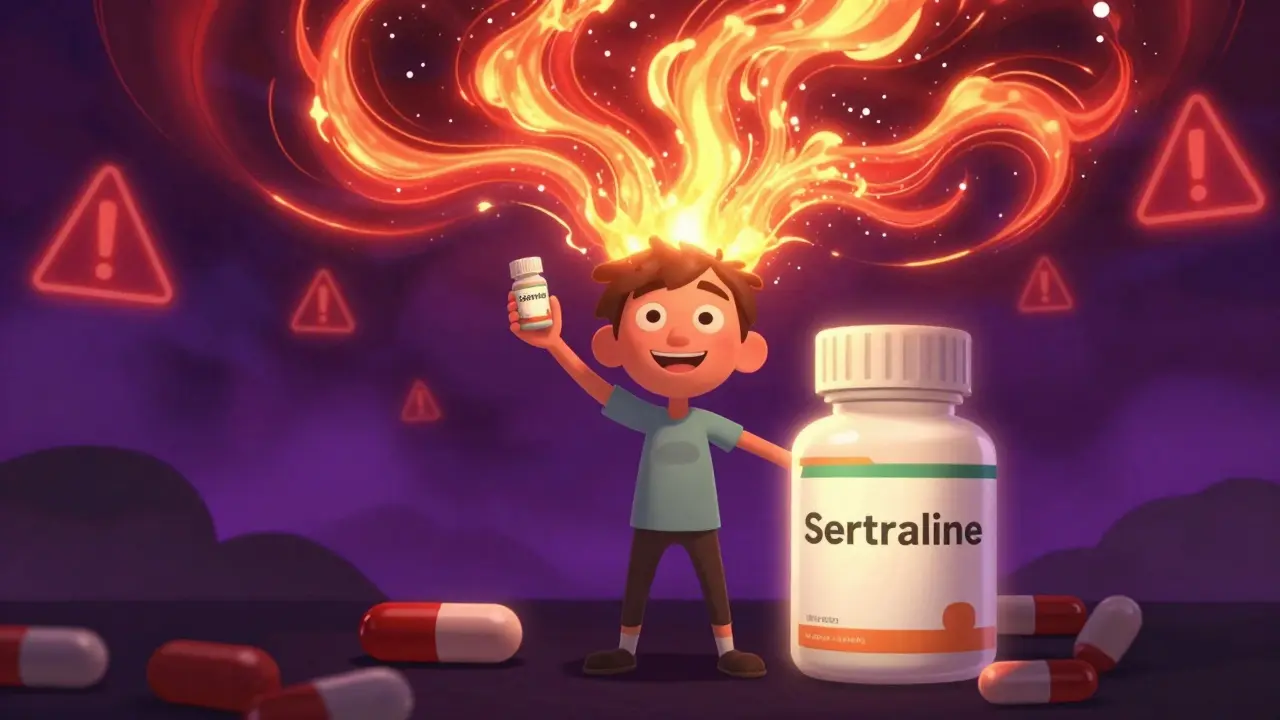
People are turning to rhodiola rosea more than ever. It’s marketed as a natural way to beat stress, fight fatigue, and even lift mild depression. But if you’re taking an antidepressant-especially an SSRI like sertraline, fluoxetine, or escitalopram-what you think is a safe boost could be a silent danger.
Why Rhodiola Isn’t Just Another Herb
Rhodiola rosea grows in cold, high-altitude regions from Scandinavia to Siberia. For centuries, people in Russia and the Baltics used it to handle physical strain and mental exhaustion. Today, it’s sold in capsules, teas, and tinctures with claims like "natural mood support." The active parts-salidroside and rosavin-do have real biological effects. Studies show they can increase serotonin in the brain by blocking enzymes that break it down, especially monoamine oxidase A (MAO-A).That sounds good, right? Until you combine it with antidepressants that also raise serotonin levels. SSRIs and SNRIs stop your brain from reabsorbing serotonin. Rhodiola stops it from being broken down. Together, they create a serotonin overload.
The Real Danger: Serotonin Syndrome
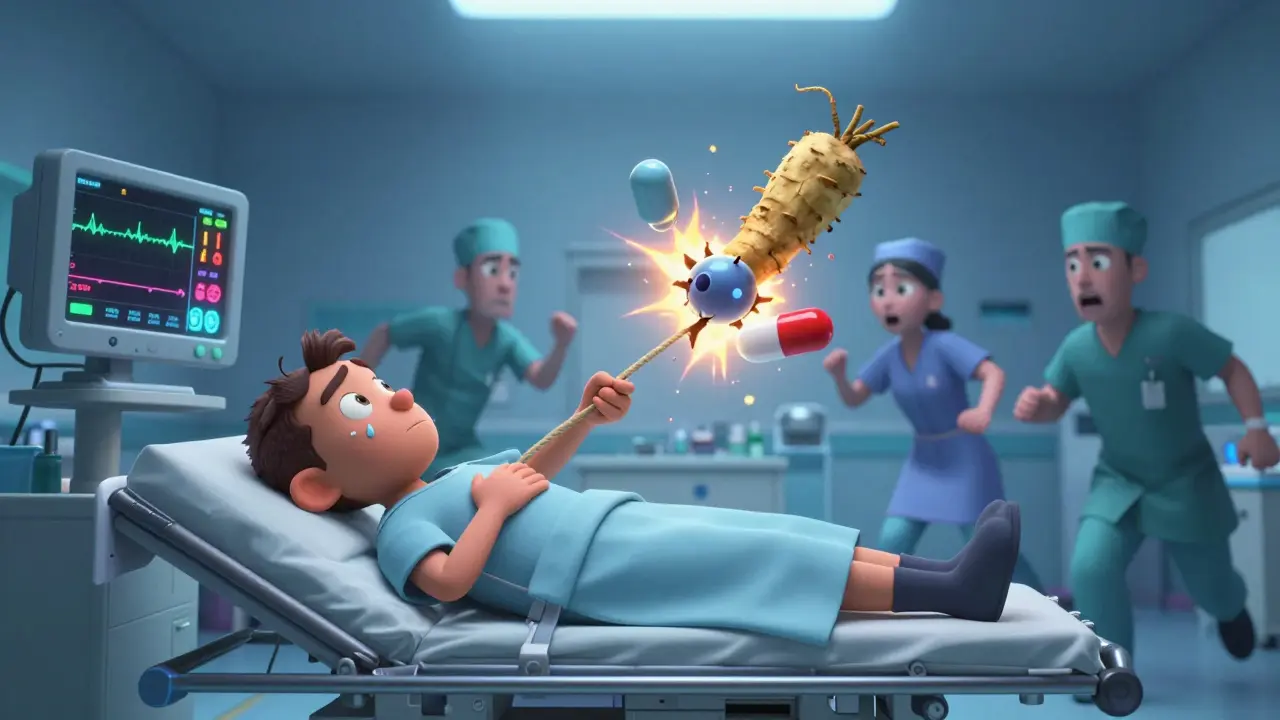
Serotonin syndrome isn’t a myth. It’s a medical emergency. Symptoms include high fever, rapid heartbeat, muscle stiffness, confusion, tremors, and seizures. In severe cases, it can kill.A 69-year-old woman in 2014 developed full-blown serotonin syndrome after taking rhodiola with paroxetine. She ended up in the ICU. That case was published in a medical journal. It wasn’t rare. In 2023, the FDA recorded 127 emergency room visits linked to rhodiola and antidepressants combined-up from just 43 in 2020.
One Reddit user, on r/SSRI, described taking 400 mg of rhodiola with 20 mg of fluoxetine. Within 72 hours, their temperature hit 103.1°F. They had muscle spasms and couldn’t think clearly. They needed IV fluids and sedation. Their ER doctor said it was textbook serotonin syndrome.
What the Experts Say
Dr. Jun J. Mao at Memorial Sloan Kettering has spent years studying herb-drug interactions. He calls rhodiola "high-risk" when paired with antidepressants. His team lists it in their official database with a red flag. The American Psychiatric Association doesn’t just warn-it labels rhodiola as "Category X: Avoid Combination" for all serotonergic antidepressants.The MSD Manual, used by doctors nationwide, says rhodiola can cause "very rapid heart rate" when taken with SSRIs. In documented cases, heart rates jumped above 130 beats per minute within two days.
And it’s not just serotonin. Rhodiola can lower blood pressure by 8-12 mmHg. If you’re on lisinopril or other blood pressure meds, that’s a recipe for dizziness or fainting. It can also drop blood sugar by 15-20 mg/dL. For diabetics on insulin or metformin, that means risking dangerous hypoglycemia.
The Supplement Problem
Here’s the scary part: most people don’t know what’s in their rhodiola.A 2018 study tested 42 rhodiola supplements. Only 13.2% had the amount of salidroside they claimed on the label. Some had none at all. Others had twice the dose. That’s not a quality issue-it’s a safety crisis. You can’t control your risk if you don’t know how much you’re taking.
And labeling? Out of 120 products tested by the FDA in 2021, only 22% mentioned interactions with antidepressants. Compare that to prescription MAOIs, which all carry black box warnings. Rhodiola doesn’t. That’s not an accident. It’s a regulatory gap.
What About "Low Dose"?
Some people argue that if you take a small amount-say, 200 mg per day-it’s safe. A 2015 review in Phytotherapy Research floated the idea, but there’s zero clinical proof. No randomized trials. No long-term safety data. Just theory.And here’s the catch: even "low dose" rhodiola increases serotonin in the brain. In lab studies, a single dose of 360 mg raised serotonin levels by 20-30% in rat brain tissue. That’s enough to tip the balance when combined with an SSRI.
There’s no safe threshold. Not when the interaction is pharmacodynamic-meaning it’s about how the drugs act in your body, not how much is in your blood. Even 100 mg could be enough to trigger symptoms in sensitive people.
Real People, Real Consequences
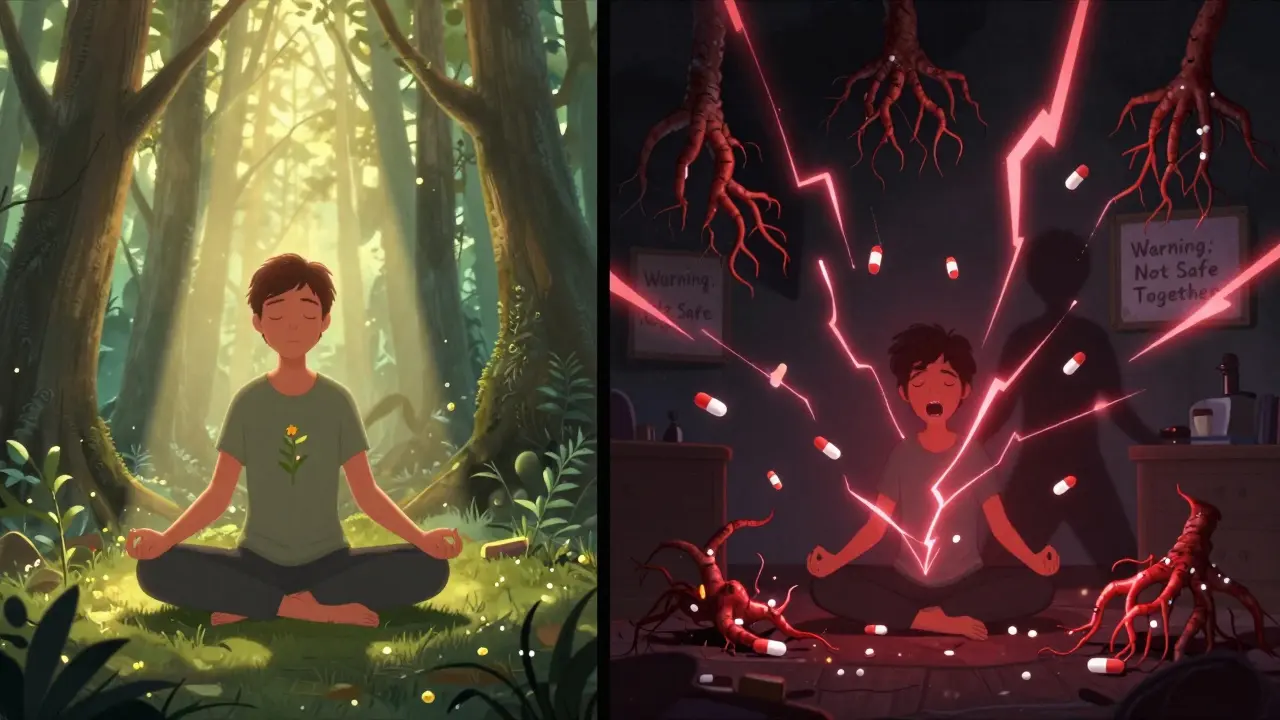
Amazon reviews tell a different story than supplement ads. Out of 142 negative reviews mentioning antidepressants, 68% described serious side effects. One top review: "Tremors, panic attacks, heart racing-ER visit confirmed serotonin toxicity." The reviewer had been taking Lexapro for five years. Added rhodiola for "more energy." Within a week, they were in crisis.On Drugs.com, 94% of 587 comments warn against combining rhodiola with antidepressants. Most say they didn’t know it was risky until it was too late. A 2021 survey found 63.7% of people using both didn’t realize the danger.
Meanwhile, the positive reviews? They’re all from people taking rhodiola alone. "No more burnout," "better focus," "no dry mouth like Zoloft." That’s the key: rhodiola works as a standalone. But it’s not safe with antidepressants.
What Should You Do?
If you’re on an SSRI or SNRI: do not take rhodiola.If you’re thinking about switching from antidepressants to rhodiola: talk to your doctor first. Stopping SSRIs cold turkey can cause withdrawal. Rhodiola doesn’t work fast enough to replace them. And it doesn’t fix the root cause of depression-it just masks symptoms.
If you’ve already taken them together and feel off: stop rhodiola immediately. Watch for fever, confusion, muscle twitching, or a racing heart. Go to the ER. Don’t wait. Serotonin syndrome can worsen in hours.
If you’re considering rhodiola for stress or mild low mood: try proven alternatives. Exercise, sleep hygiene, therapy, and mindfulness have stronger evidence and zero interaction risks.
The Bigger Picture
The rhodiola market hit $287 million in 2022. Sales are rising because people want natural solutions. But natural doesn’t mean safe. St. John’s Wort had the same story-until people started dying from serotonin syndrome. Now, regulators are catching up.The European Medicines Agency added rhodiola to its monitoring list in 2023. By 2025, all supplements sold in the EU must warn about antidepressant interactions. The FDA is moving toward the same rule, with mandatory black box warnings expected by late 2024.
Meanwhile, the NIH is funding a $4.2 million study to measure exactly how much serotonin builds up when rhodiola and escitalopram are taken together. Results won’t be out until 2026. Until then, we’re flying blind.
The truth? Rhodiola has potential. But not when mixed with antidepressants. The science is clear. The cases are real. The risk isn’t worth it.
Jody Fahrenkrug
January 16, 2026 AT 04:54I took rhodiola for a month last winter thinking it’d help with winter blues. Didn’t even know it could interact with my Zoloft until I started sweating like I was in a sauna at 3 a.m. Stopped it immediately. Never again. Glad someone finally wrote this.
Kasey Summerer
January 17, 2026 AT 16:21So let me get this straight… we’re fine with Big Pharma pushing pills with black boxes, but if you want a plant that’s been used for centuries, suddenly it’s a death trap? 🤡 Natural doesn’t mean safe? Bro, so does aspirin. So does alcohol. So does your phone. 😅
kanchan tiwari
January 18, 2026 AT 03:11THIS IS A COVER-UP. The FDA doesn’t want you to know that rhodiola is a natural SSRI killer. Big Pharma bought off the herbal supplement industry. They’re scared people will wake up and realize they don’t need $300/month prescriptions. I’ve seen the documents. The WHO is hiding it too. They don’t want you to know you can heal yourself. 😱
Bobbi-Marie Nova
January 18, 2026 AT 15:04Okay but like… I get why people do it. I was on Lexapro for 3 years. Felt like a zombie. Tried rhodiola because I wanted to feel alive again. Didn’t know it was dangerous. Now I’m off meds and doing therapy + yoga. Still alive. Still happy. Just… less zombified. 🙃
Corey Chrisinger
January 20, 2026 AT 04:17It’s funny how we treat chemistry like it’s magic when it’s in a pill, but when it’s in a root, it’s suddenly "natural" and therefore innocent. The body doesn’t care if serotonin came from a lab or a Siberian mountain. It just reacts. And sometimes, it reacts violently.
brooke wright
January 21, 2026 AT 10:01My cousin took rhodiola with Wellbutrin and ended up in the ER with a heart rate of 148. They thought it was a panic attack until they asked about supplements. She’s lucky she didn’t have a stroke. Why isn’t this on every bottle? Why isn’t this on the box? Why do we let companies sell this like it’s tea?
Nick Cole
January 23, 2026 AT 00:09Stop treating this like a debate. This isn’t about "natural vs synthetic." This is about people dying because they didn’t know. The data is clear. The cases are documented. The warnings are ignored. If you’re on an SSRI and you’re thinking about rhodiola-just don’t. Your brain isn’t a lab experiment. It’s your life.
Riya Katyal
January 24, 2026 AT 02:21Ohhh so now we’re blaming the herb? What about the people who sell it? The influencers who say "this cured my depression"? The YouTube ads with smiling people holding capsules? Someone’s making money off this. And they don’t care if you end up in the ICU.
Henry Ip
January 24, 2026 AT 09:23Listen. I’ve been on citalopram for 8 years. I tried rhodiola once-200mg. Felt weird. Like my thoughts were spinning. I stopped. No drama. No ER. Just… felt off. Don’t assume it’s safe because you feel fine. Your body might be quietly tipping over. Try meditation. Walk outside. Sleep. Those are the real supplements.
waneta rozwan
January 25, 2026 AT 01:54You people are naive. Rhodiola is not the problem. The problem is that you let corporations sell you poison labeled as "wellness." You think you’re being smart by avoiding pills, but you’re just swallowing snake oil with a side of delusion. Wake up. Your mental health is not a Pinterest board.
Nicholas Gabriel
January 26, 2026 AT 19:29Let’s not forget: this isn’t just about rhodiola. It’s about how we treat mental health in general. We treat depression like a bug you can just delete with a pill or a root. But it’s not. It’s a system. And when you mess with one part-like serotonin-you mess with everything. We need better education. We need labels. We need doctors to ask about supplements. Not just prescriptions. This isn’t fear-mongering. It’s responsibility.