Primary Biliary Cholangitis Treatment: What Works in 2025
 Jan, 22 2026
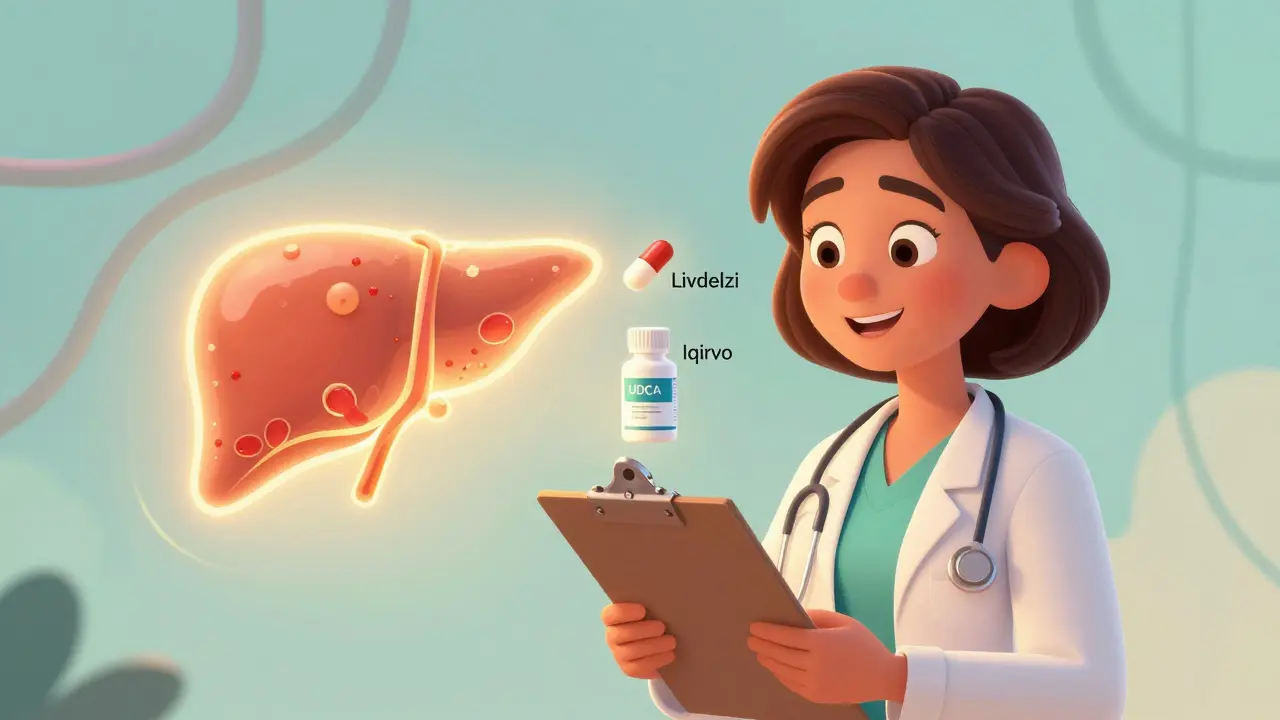
Primary Biliary Cholangitis (PBC) isn’t just another liver condition. It’s a slow-burning autoimmune disease where the body attacks its own bile ducts, leading to bile buildup, liver damage, and eventually cirrhosis if left unchecked. About 9 out of 10 people diagnosed are women, usually between 30 and 65. For decades, the only real treatment was ursodeoxycholic acid (UDCA)-a bile acid that helps flush out toxins. But now, in 2025, the game has changed. Two new drugs have joined the fight, and one older one was pulled off the market entirely. If you or someone you know has PBC, here’s what you actually need to know about treatment today.
UDCA is still the first step-every time
Even with new options, UDCA hasn’t been replaced. It’s still the starting point for every newly diagnosed patient. Taken daily at 13-15 mg per kilogram of body weight, UDCA works by replacing toxic bile acids with gentler ones, helping the liver drain properly and calming down the immune attack. Studies show it works well for 60-65% of people. Those who respond have an 87% chance of surviving 10 years without needing a transplant. Those who don’t? That number drops to 69%.
But here’s the catch: if your alkaline phosphatase (ALP) levels haven’t dropped by at least 40% after a full year on UDCA, you’re considered a non-responder. That’s about 35% of patients. For years, there wasn’t much else to do. Now, there are two solid options.
The old drug that’s no longer an option: Ocaliva
Obeticholic acid (Ocaliva) was approved in 2016 as the first real alternative to UDCA. It worked by activating a receptor in the liver that helped reduce bile acid production. In trials, it helped 46% of patients reach target ALP levels. But over time, the downsides piled up. Severe itching affected more than half of users. Some people had to stop taking it because of it. Worse, long-term data showed a higher risk of serious liver complications and even death in patients with advanced disease.
In September 2025, the FDA pulled Ocaliva from the market. The decision wasn’t made lightly-it followed a vote by an independent advisory panel and years of safety reviews. The message was clear: the risks no longer balanced out the benefits. If you were on Ocaliva, you’re not alone. Many switched to newer drugs. And for most, the switch meant better symptoms and fewer side effects.
Seladelpar (Livdelzi): The new frontrunner
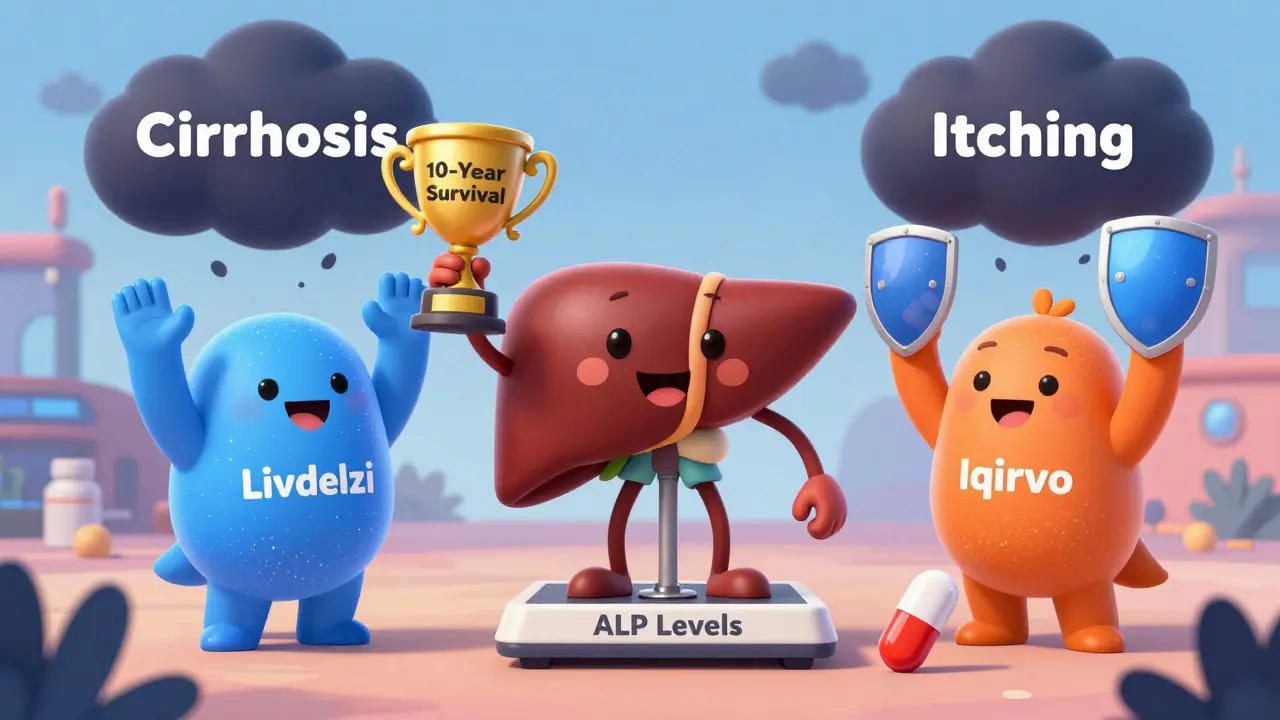
Seladelpar, sold as Livdelzi, got FDA approval in December 2024. It’s a targeted drug that activates the PPAR-delta receptor, which helps reduce inflammation and bile acid buildup. In the Phase 3 RESPONSE trial, 70% of patients saw their ALP drop by at least 15%-compared to just 20% on placebo. Even better, 42% reached full ALP normalization, meaning their levels were back to near-normal range.
What really sets seladelpar apart is how it handles itching-the most miserable symptom of PBC. About 70% of patients deal with constant, disruptive itching. In trials, seladelpar reduced itching scores by 45%, while placebo only brought it down by 15%. That’s not just a number-it’s life-changing. People report sleeping better, not scratching through the night, and being able to focus at work again.
There’s a catch: about 25% of people get worse itching in the first two weeks. That’s why doctors start with 5 mg daily, then bump it to 10 mg after four weeks. Most of those who feel worse at first find relief by week 8. Real-world data from over 390 patients shows 85% stayed on seladelpar after a year, even after switching from Ocaliva.

Elafibranor (Iqirvo): The balanced alternative
Elafibranor, branded as Iqirvo, got approved in November 2024. It’s a dual PPAR-alpha/delta agonist, meaning it works on two pathways at once. It’s simpler to take-just 80 mg once a day, no titration needed. In trials, 56% of patients hit the target ALP reduction, and 21% reached full normalization. That’s solid, but not quite as strong as seladelpar.
Where elafibranor shines is in its side effect profile. It doesn’t worsen itching the way seladelpar sometimes does. It also helps lower triglycerides by 24%, which is a bonus for patients with metabolic issues like fatty liver or high cholesterol. But it’s not perfect. About 18% of users saw a rise in creatinine, a marker of kidney function. That doesn’t mean kidney damage-it’s just something your doctor needs to monitor.
For patients who can’t tolerate the initial itching spike with seladelpar, or who need help with lipid levels, elafibranor is a smart choice. It’s not the most powerful, but it’s reliable and easier to manage.
What about fibrates?
Fibrates-drugs like fenofibrate and bezafibrate-aren’t officially approved for PBC. But they’ve been used off-label for years, especially in Europe. They work by activating PPAR-alpha, which helps clear bile acids and reduce inflammation. Some studies show they can help patients who don’t respond to UDCA, especially when combined with it.
They’re cheap, widely available, and have decades of safety data from use in cholesterol management. Many hepatologists still consider them a viable third-line option, especially where newer drugs are hard to access or too expensive. But they’re not as powerful as seladelpar or elafibranor in large-scale trials.
Monitoring and what success really looks like
There’s no single magic number that means you’re cured. But ALP levels are your best guide. The goal isn’t always perfect normalization. The 2025 guidelines say that a sustained 40% drop in ALP-even if it doesn’t hit normal range-still cuts your risk of liver failure or transplant by a significant amount.
Doctors check ALP every 3 months when you start a new drug, then every 6 months once you’re stable. If ALP stays above 1.67 times the upper limit after 12 months on UDCA, it’s time to add a second drug. Waiting too long increases your risk of scarring.
It’s not just about numbers anymore. The FDA now accepts patient-reported outcomes like the PBC-40 PRO questionnaire as official endpoints in trials. That means how you feel-your energy, your sleep, your ability to live normally-is now part of the treatment equation.
What’s next? The pipeline and the future
The PBC drug market is heating up. Twelve new drugs are in development. Setanaxib, which targets oxidative stress, is in Phase 3 and could be available by 2027. Fecal microbiota transplants (VE-202) are being tested to reset gut-liver communication. There’s even a new FXR agonist called tropifexor that doesn’t cause the same itching problems as older drugs.
But access is still a problem. Medicare and many insurers require proof of UDCA failure and high ALP before covering seladelpar or elafibranor. Denial rates for prior authorization hover around 28%. That means some patients wait months or pay out-of-pocket-sometimes over $500 a month.
What’s clear is this: PBC treatment has moved from “manage symptoms” to “target disease progression.” We’re no longer just slowing things down-we’re trying to reverse damage before it’s too late. The tools are better. The goals are clearer. And for the first time, patients have real choices.
What to do next
If you’ve been diagnosed with PBC:
- Start UDCA right away-don’t delay.
- Get your ALP checked at 6 and 12 months. If it hasn’t dropped enough, talk to your hepatologist about second-line options.
- If you’re on Ocaliva, switch to seladelpar or elafibranor as soon as possible. Most patients feel better within weeks.
- Track your symptoms, not just your labs. Use tools like the PBC-40 PRO to document how you’re feeling.
- Ask about financial assistance programs. Gilead and Genfit both offer co-pay cards and patient support services.
PBC isn’t curable yet. But it’s no longer a death sentence. With the right treatment, many people live full, active lives for decades. The key is acting early-and knowing what options are actually available today.
Can Primary Biliary Cholangitis be cured?
No, PBC cannot be cured yet. But with early treatment and the right medications, disease progression can be slowed or even halted in many patients. The goal is to prevent liver damage, avoid cirrhosis, and reduce the need for a transplant. Many people live normal lifespans with proper management.
What are the signs that PBC treatment isn’t working?
The main sign is persistently high alkaline phosphatase (ALP) levels after 12 months of UDCA. Other signs include worsening fatigue, persistent itching, jaundice (yellowing of skin or eyes), or rising bilirubin levels. If you notice these, talk to your doctor about switching or adding a second-line therapy.
Why was Ocaliva taken off the market?
Ocaliva was withdrawn in September 2025 after long-term safety data showed it increased the risk of serious liver complications and death in patients with advanced PBC. It also caused severe itching in over half of users, leading many to stop taking it. The FDA concluded the risks outweighed the benefits, especially for patients with moderate-to-severe disease.
Which is better: seladelpar or elafibranor?
Seladelpar is more effective at lowering ALP and reducing itching, with 42% of patients achieving ALP normalization compared to 21% with elafibranor. However, seladelpar can worsen itching at first, requiring dose titration. Elafibranor is simpler to take and better for lipid control, making it a better fit for patients with metabolic issues. The choice depends on your symptoms, liver status, and tolerance for side effects.
How often should I get my blood tested for PBC?
When starting or changing treatment, get ALP and liver function tests every 3 months. Once stable, testing every 6 months is usually enough. Your doctor may also check bilirubin, albumin, and INR annually to assess liver health. Always report new symptoms like itching, fatigue, or swelling-these matter as much as lab numbers.
Sharon Biggins
January 23, 2026 AT 23:52Just started UDCA last month and already feel less tired. It’s slow but I’m holding onto hope. Keep going, everyone.
Vatsal Patel
January 24, 2026 AT 09:11Oh great, another medical miracle sold to us by Big Pharma. First they make us suffer for decades, then slap a $500/month label on a pill that 'might' help. And now we’re supposed to be grateful? 🙄
UDCA’s been around since the Jurassic. Seladelpar? Sounds like a sci-fi drug name. Next they’ll sell us gene-edited bile ducts.
Meanwhile, the real cure? Stop eating processed junk, sleep more, and stop stressing about everything. But hey, let’s just keep pumping money into pills that make you itch worse before they help. Classic.
John McGuirk
January 25, 2026 AT 10:39Did you know the FDA pulled Ocaliva because it was linked to a secret Chinese lab study that showed it accelerated liver fibrosis? They buried the data. I’ve got a cousin on it and his ALP spiked after 3 months. Now he’s in a wheelchair.
They don’t want you to know the real reason they pulled it - it was too effective at lowering ALP. They’re scared of what happens if people stop needing transplants. This whole thing’s a cover-up. Ask yourself - who profits from liver failure?
Michael Camilleri
January 26, 2026 AT 14:08People still take this stuff seriously? You’re all just lab rats for the pharmaceutical industrial complex. UDCA? A placebo with a fancy name. Seladelpar? A glorified antihistamine. Elafibranor? Just another statin in disguise.
Real healing comes from fasting, turmeric, and sunlight. I’ve been off all meds for 18 months. My ALP is normal. My skin doesn’t itch. I didn’t need a $600 pill to fix my liver. You’re being manipulated.
And don’t get me started on the PBC-40 PRO questionnaire. That’s not science, that’s marketing. They’re just trying to make you feel like your suffering has value so you’ll keep buying their drugs.
lorraine england
January 27, 2026 AT 12:35I’ve been on seladelpar for 6 months now and wow - the difference is insane. First two weeks were rough, I was scratching like crazy, but by week 6? I slept through the night for the first time in years.
My doctor said my ALP dropped 50%. I’m not cured but I feel like me again. If you’re on the fence, just give it time. The itch gets better. I promise.
Darren Links
January 27, 2026 AT 23:20So now we’re supposed to trust American drug companies? After the opioid crisis, the Vioxx scandal, the Zantac recall? And you’re telling me this time it’s different?
Meanwhile in China, they’ve been using herbal bile duct cleanses for 2000 years. No itching. No $500 pills. Just herbs, acupuncture, and common sense.
Why are we letting a handful of CEOs decide what’s 'effective' for our bodies? We’re not patients - we’re consumers. And they’re selling us hope wrapped in a patent.
Kevin Waters
January 28, 2026 AT 17:55Hey, just wanted to add something practical - if you’re switching from Ocaliva to seladelpar, don’t stop your UDCA. I did that at first and my ALP went haywire. My hepatologist said to keep UDCA going and add the new drug on top.
Also, the itching spike with seladelpar? Totally normal. Took me 3 weeks to get through it. Took a cool shower before bed and wore cotton gloves at night. Didn’t scratch the skin off. It gets better. You’re not alone.
Kat Peterson
January 29, 2026 AT 01:13OMG I just got my first prescription for Iqirvo and I’m SO excited 😭😭😭
Finally, a drug that doesn’t make me feel like I’m being eaten alive from the inside. My husband said I looked like a ghost before - now I actually have color in my face. I’m crying happy tears 🥹
Also, my dog started following me around more. I think he knows I’m better. 🐶💕
Himanshu Singh
January 29, 2026 AT 11:38It’s interesting how we’ve moved from 'treat the symptoms' to 'treat the disease.' That’s not just medical progress - it’s a shift in how we see illness.
For centuries, liver disease was seen as punishment or fate. Now we understand it’s a biological process we can influence. That’s profound.
But let’s not forget: drugs are tools, not magic. The real healing still comes from rest, nutrition, and emotional peace. These pills give us time - but we still have to choose how to use it.
Jamie Hooper
January 31, 2026 AT 06:49Wait so Ocaliva got yanked because people got itchy? LMAO. They should’ve just given them calamine lotion.
Also why’s seladelpar so expensive? My mate in the UK got it for £20 a month on the NHS. Here in the States? $500. Someone’s making bank off our livers.
Also, is it just me or does everyone say 'ALP' like it’s a secret code? It’s just a blood test. Chill.
Husain Atther
February 1, 2026 AT 13:59Thank you for this comprehensive overview. As someone who has watched a close family member navigate PBC for over a decade, I appreciate the clarity and balance in this post.
It’s important to remember that while new drugs offer hope, they are not universal solutions. Individual responses vary, and the emotional toll of chronic illness is often overlooked in clinical data.
What matters most is consistent monitoring, open communication with your care team, and the courage to advocate for yourself - whether that means asking for a second opinion or seeking financial aid.
Progress is real. But healing is personal.