Planning for Patent Expiry: What Patients and Healthcare Systems Need to Do Now
 Feb, 3 2026
When a drug’s patent expires, it doesn’t just mean a cheaper version hits the shelf. It means a system-wide shift-one that can save billions, but only if patients and healthcare providers plan ahead. Right now, we’re in the middle of the biggest wave of patent expirations in history. Between 2025 and 2029, over $90 billion in brand-name drug sales in the U.S. alone will open up to generics and biosimilars. That’s not a distant future. That’s happening now. And if you’re on a chronic medication, you’re already feeling the ripple effects.
Why patent expiry isn’t just about price
Most people think patent expiry = instant discount. But it’s not that simple. A brand-name drug might cost $500 a month. After the patent expires, the first generic might come in at $100. Sounds great, right? But then a second generic enters at $75. Then a third at $60. And suddenly, your pharmacy switches your prescription without telling you. You might not even notice-until you start feeling off.
That’s because generics aren’t identical. They’re bioequivalent, meaning they deliver the same active ingredient at roughly the same rate and amount. But they can have different fillers, coatings, or release mechanisms. For some patients, that’s enough to cause side effects. A 2022 Kaiser Family Foundation survey found that 37% of people on long-term meds reported new symptoms after switching to a generic. Not because the drug didn’t work-but because their body reacted to something new in the pill.
And it’s not just about pills. Biologics-drugs made from living cells-are even trickier. These are used for conditions like rheumatoid arthritis, Crohn’s disease, and certain cancers. Their patents are expiring now too, but the generic versions? They’re called biosimilars. And they’re harder to make. So they’re slower to enter the market. And even when they do, only about 38% of patients switch to them within two years. Why? Because doctors are cautious. Pharmacies don’t always stock them. And insurance plans don’t always push them.
What healthcare systems are doing (and what they should be doing)
Hospitals and health plans aren’t sitting idle. The smart ones started planning two years ago. They set up LOE (Loss of Exclusivity) task forces. These teams include pharmacists, doctors, finance officers, and contract managers. Their job? Track every patent expiration on the horizon. There are over 1,400 patent expirations each year in the U.S. alone. Miss one, and you miss a chance to save millions.
Here’s what they do:
- At 24 months out: Map out which drugs are expiring. Check for secondary patents-because drugmakers often file dozens of them to delay generics.
- At 18 months: Analyze the pipeline. How many generics are coming? Are any biosimilars approved? What’s the expected price drop?
- At 12 months: Decide which drug to switch to. Is it the cheapest? The most reliable? The one with the fewest reported side effects?
- At 9 months: Update clinical guidelines. Train staff. Make sure doctors know what to prescribe.
- At 6 months: Send letters to patients. Explain the change. Offer support. Answer questions.
Systems that follow this timeline save 22% more than those that wait. One health system in the Midwest saved $4.7 million on a single heart medication by switching to a generic six months early. Another saved $12 million across three drugs by locking in contracts before prices dropped.
But not everyone can do this. Smaller clinics, rural hospitals, and independent pharmacies often don’t have the staff or software to track 1,400 expirations. That’s where tools like Symphony Health’s PatentSight come in. Used by 65% of top health systems, these platforms flag expirations, predict price drops, and even suggest alternatives.
What patients need to know
If you’re taking a drug that’s about to lose its patent, here’s what you need to do:
- Know your drug. Is it a small molecule (like atorvastatin or metformin) or a biologic (like adalimumab or rituximab)? Small molecules have faster, cheaper generic switches. Biologics take longer and cost more.
- Ask your pharmacist. When your prescription is refilled, ask: “Is this the same as before?” If the pill looks different, or the name changed, ask why.
- Don’t assume cheaper is better. If you feel worse after a switch, tell your doctor. It’s not “all in your head.” It might be a filler, a coating, or a different release time.
- Check your insurance. Some plans push certain generics. Others don’t cover biosimilars at all. Ask: “Will my copay change?” and “Is there a preferred generic?”
- Don’t stop taking your med. If you’re told you’ll be switched, don’t skip doses. Work with your provider to make the change safely.
Medicare Part D beneficiaries had a rough time in 2022. Forty-two percent were switched to a different drug without warning. Twenty-eight percent were confused about why. That’s preventable. Patients deserve clear, timely communication.
The hidden traps
Drug companies don’t just wait for patents to expire. They fight it. Here’s how:
- Patent thickets. One drug might have 50+ patents-not just on the active ingredient, but on the shape of the pill, the time it releases, the color of the coating. These aren’t real innovations. They’re legal barriers.
- Pay-for-delay. Sometimes, the brand-name maker pays a generic company to stay off the market. The FTC says this cost Americans $13 billion in 2023 alone.
- Product hopping. A company releases a slightly modified version-say, a new extended-release pill-and tells doctors to switch patients. Then they patent that new version. It’s not innovation. It’s a delay tactic.
The 2023 CREATES Act cracked down on some of these tricks. And the FDA is speeding up approvals for complex generics. But they’re still happening. And they’re still costing patients money.
What’s coming next
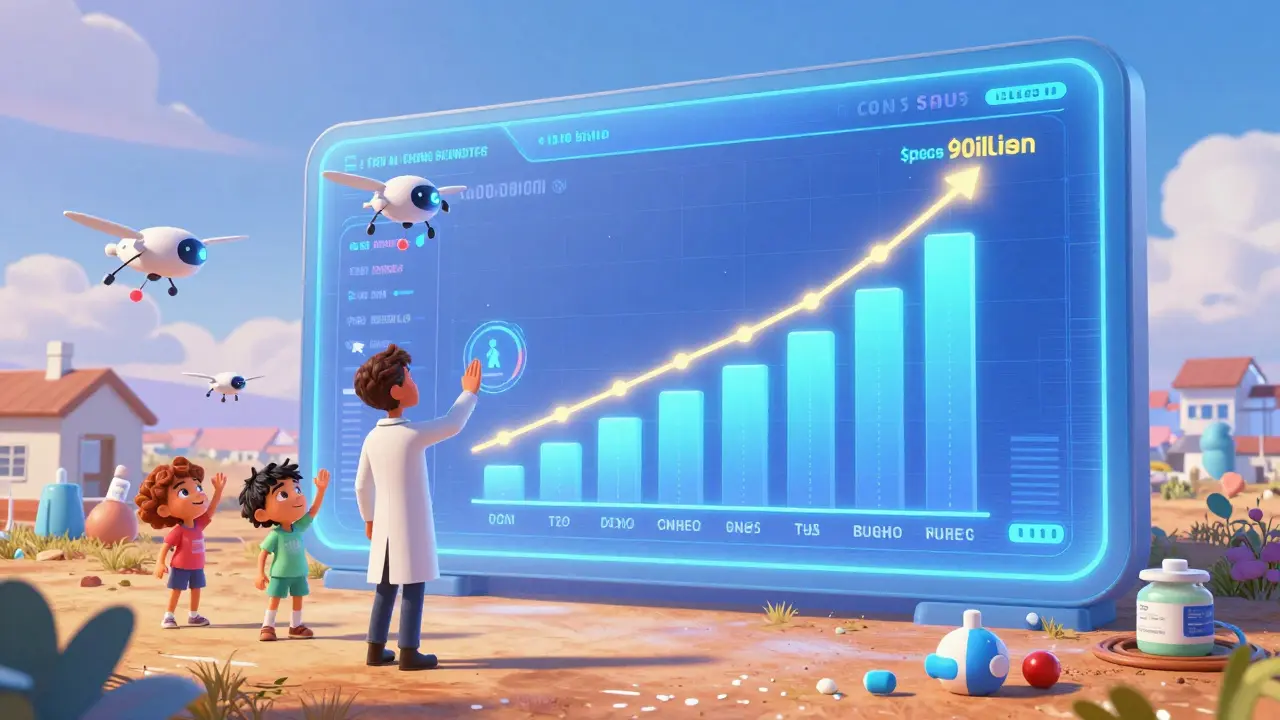
By 2028, biosimilars could save the U.S. $150 billion. But only if we get past the slow adoption. Right now, only 27% of biologic prescriptions are filled with biosimilars. Compare that to 90%+ for small-molecule generics. Why the gap? Because biosimilars are harder to make. They’re more expensive to develop. And doctors still don’t trust them fully.
But change is coming. The Inflation Reduction Act lets Medicare negotiate prices for drugs after patent expiry-starting in 2026. That will force manufacturers to lower prices faster. The FDA’s new rules are cutting approval times for complex generics from 18 months to 12. And AI tools are now predicting patent expirations with 89% accuracy-up from 65% just two years ago.
The future isn’t just cheaper drugs. It’s smarter systems. Systems that track expirations, educate patients, and negotiate contracts before the price drops-not after.
What you can do today
You don’t need to be a hospital administrator to act. Here’s your checklist:
- Look up your current medication. Search “[Drug Name] patent expiry 2026” online. You’ll find databases like Drugs.com or the FDA’s Orange Book.
- Call your pharmacy. Ask if your drug has a generic. Ask if a biosimilar is available. Ask if your insurance prefers one.
- Talk to your doctor. Say: “I heard this drug might lose its patent soon. What does that mean for me?”
- Keep a log. Note how you feel before and after any switch. Write down side effects. Bring it to your next appointment.
- Advocate. If your plan won’t cover a cheaper option, ask why. File a complaint with your state insurance commissioner if needed.
Patent expiry isn’t a problem to be solved. It’s an opportunity to reset. To save money. To improve access. To make healthcare fairer. But only if we act-before the switch happens.
What happens to drug prices after a patent expires?
Drug prices typically drop by 80-85% within one year of generic entry. For small-molecule drugs like statins or blood pressure pills, you might see prices fall from $500/month to under $50. But for complex drugs like biologics, the drop is slower-often 20-40% in the first year-because biosimilars take longer to develop and get approved.
Can I ask my doctor to switch me to a generic before my patent expires?
Yes, if the generic is already approved and available. Many doctors are open to switching early if it means lower costs and no loss of effectiveness. But some may wait until the patent officially expires to avoid confusion or supply issues. Always ask-don’t assume.
Why do some generics cause side effects when the brand didn’t?
Generics must match the brand in active ingredient, strength, and how fast it enters your bloodstream. But they can use different inactive ingredients-like dyes, fillers, or coatings. These can affect how the drug is absorbed or how your body reacts. If you feel worse after switching, tell your doctor. It’s not rare, and it’s not all in your head.
Are biosimilars as safe as the original biologic drugs?
Yes. The FDA approves biosimilars only after proving they are highly similar to the original drug-with no clinically meaningful differences in safety, purity, or potency. They’re not copies, but they’re not risky. The main barrier to use isn’t safety-it’s cost, access, and doctor familiarity.
How can I find out when my drug’s patent expires?
Check the FDA’s Orange Book at fda.gov/orangebook. You can search by drug name. You can also use free tools like Drugs.com or GoodRx, which often list patent expiration dates and generic availability. For biologics, look for the “reference product” and check if any biosimilars have been approved.
What if my insurance won’t cover the generic?
Ask for a formulary exception. Your doctor can submit a letter explaining why the brand is necessary. If that fails, contact your state insurance commissioner’s office. Many states have laws requiring insurers to cover generics unless there’s a medical reason not to. You’re not alone-this happens to thousands every month.
Caleb Sutton
February 3, 2026 AT 19:42The system is rigged. Big Pharma doesn't want you to know this, but every time a patent expires, they just tweak the pill color and file a new patent. They're not selling medicine-they're selling illusion. And you? You're the sucker paying for it. No one's talking about the pay-for-delay deals. No one's naming names. But I know. I've seen the documents. This isn't healthcare. It's a legalized robbery.
Katherine Urbahn
February 5, 2026 AT 11:27It is, indeed, a matter of considerable concern that patients are being transitioned to generic medications without adequate notice or clinical oversight. The notion that bioequivalence equates to therapeutic equivalence is, frankly, a dangerous oversimplification. The inactive ingredients-excipients-can induce idiosyncratic reactions, particularly in patients with autoimmune conditions or severe allergies. One must not underestimate the physiological impact of lactose, dyes, or even the coating agents employed in tablet manufacturing.
Joseph Cooksey
February 6, 2026 AT 12:41Let’s be real here-most people think generics are just as good because the FDA says so. But the FDA doesn’t test for how your body feels at 3 a.m. when you’re trying to sleep after a switch. I’ve seen patients go from stable to spiraling-headaches, nausea, mood swings-all because the new generic had a different release profile. And don’t even get me started on how pharmacies, with zero clinical training, decide which generic to dispense based on what’s cheapest that week. It’s not healthcare. It’s inventory management dressed up in a lab coat.
Meanwhile, the drug companies? They’re laughing. They’ve got lawyers filing patents on the *shape* of the pill. The *texture* of the coating. The *shade of blue* on the tablet. That’s not innovation. That’s a legal loophole with a side of greed.
Joy Johnston
February 7, 2026 AT 22:56I work in a hospital pharmacy, and I can tell you-this is exactly why we started our LOE team two years ago. We track every expiration, every biosimilar approval, every price forecast. We don’t wait until the last minute. We prepare. We train staff. We write patient letters. We even have a color-coded dashboard. It’s not glamorous, but it saves lives. One patient on a biologic for RA was switched to a biosimilar six months early-we monitored her closely, she stayed stable, and we saved $8,000 per year on her med alone. It’s possible. It just takes discipline.
And yes, patients should ask. Ask your pharmacist. Ask your doctor. Write down how you feel. Bring it to your appointment. That’s not being difficult. That’s being your own advocate.
Shelby Price
February 9, 2026 AT 13:48So… I just got switched to a new generic last month. My blood pressure dropped a bit too low. I didn’t think much of it until I read this. Now I’m wondering if it’s the filler. I’ve got my doctor’s appointment next week. I’ll bring my log. Maybe I’m overthinking it? 🤔
Jesse Naidoo
February 10, 2026 AT 04:57I’ve been on the same med for 12 years. Last month, they switched me without telling me. I felt like crap for three weeks. My wife said I was ‘acting weird.’ I thought I was depressed. Turns out, it was the coating on the new pill. Now I have to go back to the brand-costs me $400/month. My insurance says ‘no exception.’ I called my state commissioner. They said ‘wait 30 days.’ Meanwhile, I’m on the couch, wondering if I’m going to die because some pharmacist picked the cheapest option.
Daz Leonheart
February 10, 2026 AT 17:19you got this. seriously. dont panic. if you feel off after a switch, talk to your doc. dont let them brush you off. keep notes. even just a few lines. you’re not crazy. this stuff matters. and you’re not alone. i’ve been there. you’re doing better than you think.
Amit Jain
February 11, 2026 AT 06:16India has been using generics for decades. We know how to make them. The problem in US is not quality, it is trust. Doctors don’t trust generics because they never learned about them in school. Patients don’t trust because they were scared by stories. We need education. Not fear.
Keith Harris
February 11, 2026 AT 21:33Oh please. ‘Bioequivalent’? That’s just corporate speak for ‘close enough so we don’t get sued.’ You think the FDA tests every batch? Nah. They sample. One pill from a thousand. Meanwhile, the real issue? The drug companies are paying off regulators to delay biosimilars. And you’re out here asking if your headache is from the filler? Wake up. This isn’t about chemistry. It’s about power. And they’re winning.
Kunal Kaushik
February 13, 2026 AT 01:14Wow, this is so important 🙏 I just found out my mom’s biologic is expiring next year. I’m going to call her pharmacy tomorrow. I didn’t even know this was a thing. Thank you for writing this. Really. ❤️
Harriot Rockey
February 15, 2026 AT 01:11Reading this made me feel seen. I’ve been on the same med for 8 years. Last year, I switched to a generic and got a weird rash. My doctor said ‘it’s probably stress.’ But I kept going back. Eventually, they switched me back. Turns out, the generic had a dye I’m allergic to. I’m so glad someone’s talking about this. You’re not crazy. Your body knows. Listen to it.
Geri Rogers
February 15, 2026 AT 17:49Y’all need to stop being passive. If your insurance won’t cover the generic, demand a formulary exception. Call your state commissioner. Tweet it. Tag your rep. This isn’t a ‘maybe’ issue-it’s a human rights issue. I’ve filed 17 complaints in the last year. Guess what? Two of them got changed. You think change happens by waiting? No. It happens because someone spoke up. So speak up.
Samuel Bradway
February 17, 2026 AT 07:54My pharmacist just told me my new generic is made in China. I didn’t even know that. I’m not scared, but… I’m curious. Is that normal? Should I care?
pradnya paramita
February 18, 2026 AT 09:23From a pharmacoeconomic standpoint, the LOE forecasting models must integrate patent litigation timelines, AND the regulatory pathway complexity of biosimilars under the Biologics Price Competition and Innovation Act (BPCIA). Failure to account for inter-patent linkage or exclusivity extensions via REMS programs results in suboptimal formulary decisions. The 1,400 expirations/year figure is accurate, but the real challenge lies in dynamic portfolio rebalancing under PBM formulary constraints.