Medicaid and Generics: How Generic Drugs Save Money for Low-Income Patients
 Nov, 21 2025
For millions of low-income Americans on Medicaid, the difference between a brand-name drug and its generic version isn’t just about the label-it’s about whether they can afford to take their medicine at all. In 2023, 91% of all prescriptions filled through Medicaid were for generic drugs. And yet, those same generics made up only about 18% of the program’s total drug spending. That’s the power of generics: they deliver the same medical results at a fraction of the cost.
Why Generics Are the Backbone of Medicaid
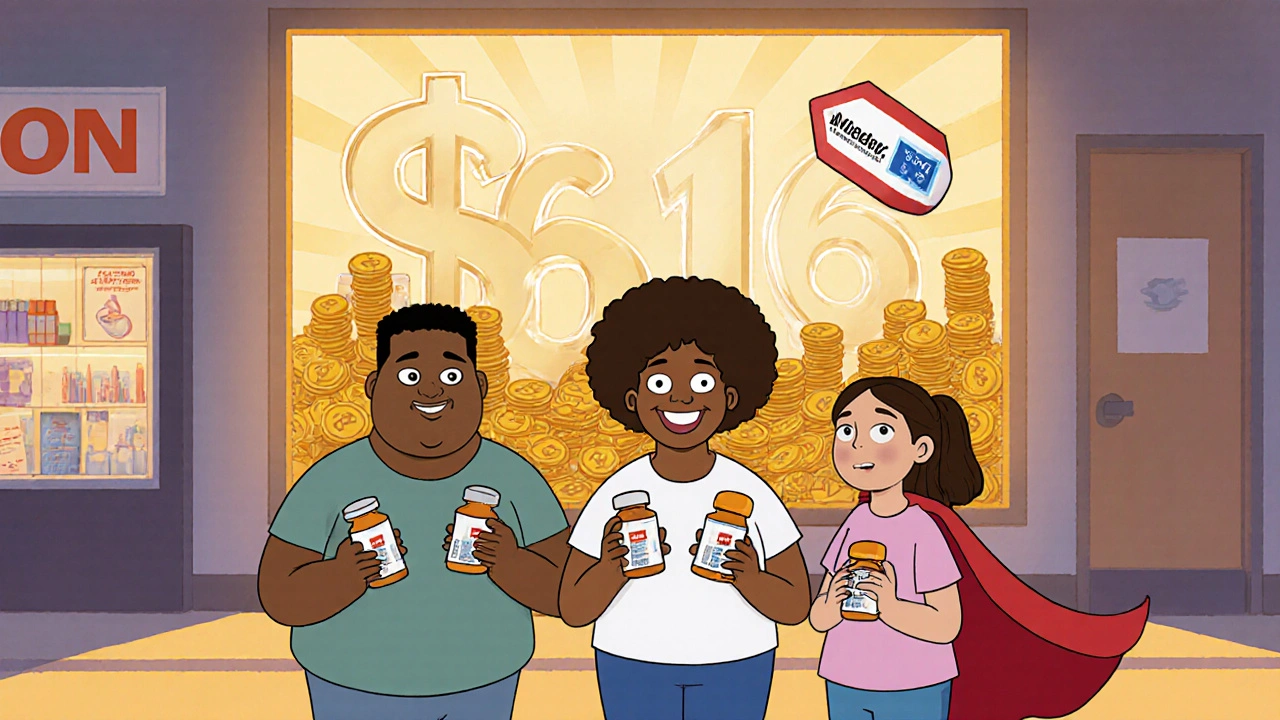
Medicaid doesn’t just cover low-income patients-it’s designed to stretch every dollar as far as possible. That’s where generic drugs come in. Unlike brand-name medications, which are protected by patents and sold at premium prices, generics are chemically identical copies that hit the market after patents expire. They don’t need to repeat expensive clinical trials. That means manufacturers can sell them for much less-and Medicaid takes full advantage. The numbers tell the story. In 2023, the average copay for a generic drug under Medicaid was just $6.16. For a brand-name drug? $56.12. That’s nearly nine times more. For someone living paycheck to paycheck, that difference isn’t just a number-it’s the difference between filling a prescription and skipping it. And it’s not just about what patients pay at the counter. Medicaid negotiates deep discounts through the Medicaid Drug Rebate Program (MDRP), created in 1990. Under this rule, drugmakers must give states a rebate for every prescription filled. In 2023, those rebates cut Medicaid’s gross drug spending by over half-$53.7 billion saved in one year alone. That’s money that goes back into covering more people, more services, and more medications.How Much Do Generics Actually Save?
The savings aren’t just theoretical. From 2009 to 2019, generic drugs saved the U.S. healthcare system an estimated $2.2 trillion. In 2022 alone, generics and biosimilars saved $408 billion. For Medicaid, that’s not just a win for the budget-it’s a lifeline for patients. Consider this: 93% of generic prescriptions cost less than $20 at the pharmacy. That’s not a guess. That’s data from the Association for Accessible Medicines. Compare that to brand-name drugs, where only 59% fall under that price point. For a diabetic on insulin, a parent managing their child’s asthma, or an elderly person with high blood pressure, that low cost means consistent treatment. And consistent treatment means fewer hospital visits, fewer emergencies, and better long-term health. Even when the list price of a generic drug drops, the patient’s copay doesn’t always follow. Some states have raised copays for generics over the years, even as the wholesale price fell. That’s a disconnect that’s frustrating for patients. One Reddit user, MedicaidMom2023, shared that her daughter’s asthma inhaler switched to a generic-her copay dropped from $25 to $3-but it took three weeks and multiple phone calls to get approval. That delay, while rare, shows how bureaucracy can still get in the way of savings.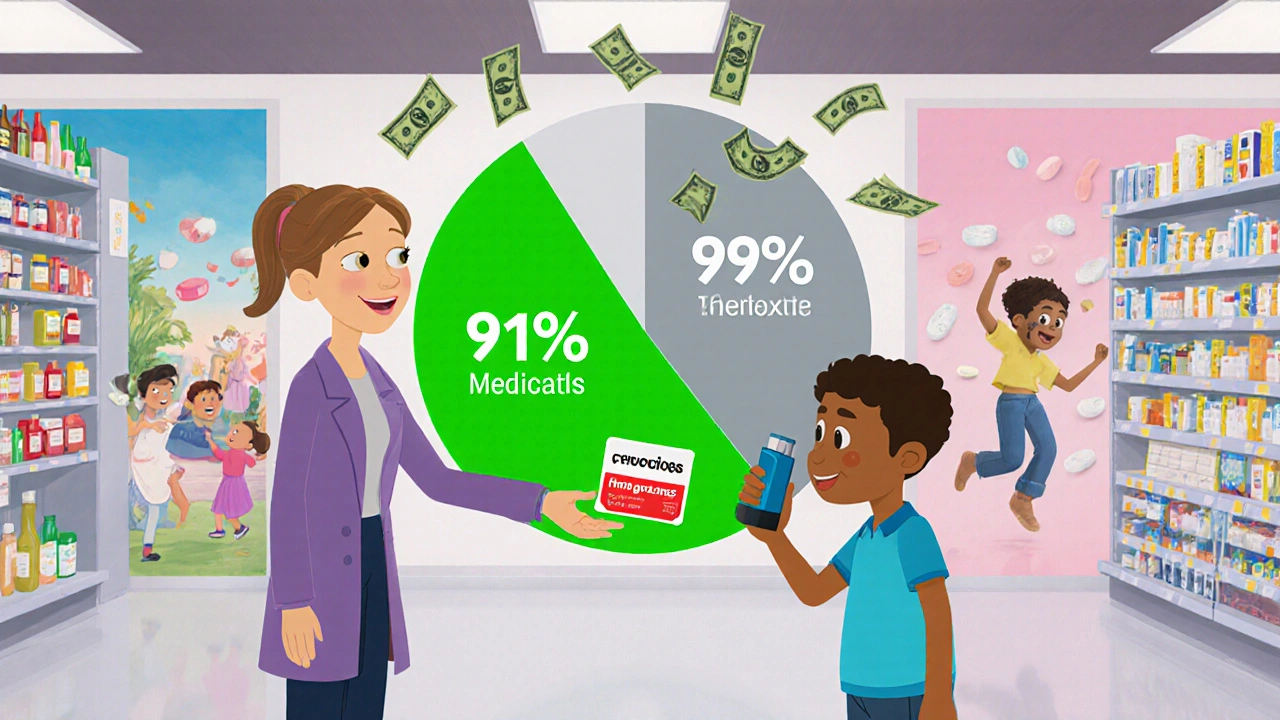
Medicaid Gets Better Prices Than Other Programs
You might think Medicare or the VA gets the best deals on drugs. But data from the Congressional Budget Office shows Medicaid gets the lowest net prices in the entire federal system. Why? Because of the mandatory rebate system. For brand-name drugs, Medicaid gets an average rebate of 77% of the retail price. For specialty drugs, it’s 60%. For high-cost drugs, it’s 63%. Compare that to private insurers, who often get rebates in the 20-30% range. Even Medicare Part D, which covers seniors, had a generic fill rate of 86% in 2022-lower than Medicaid’s 91%. The result? Medicaid spends less per prescription than any other major program. And it’s not just because of the rebates. Medicaid also has strict formularies-lists of approved drugs-that prioritize generics. If a doctor prescribes a brand-name drug, the pharmacy will automatically substitute a generic unless the doctor writes “dispense as written” or there’s a medical reason not to.The Hidden Costs: PBMs and Specialty Drugs
But not everything is smooth sailing. Behind the scenes, Pharmacy Benefit Managers (PBMs)-middlemen who negotiate drug prices on behalf of Medicaid-take a cut. An Ohio audit in 2025 found that PBMs collected 31% fees on $208 million in generic drug sales in just one year. That’s $64 million in fees on drugs meant to be cheap. That money doesn’t go to the patient. It doesn’t go to the state. It goes to corporate intermediaries. And while generics dominate in volume, they don’t dominate in cost. The real spending pressure comes from specialty drugs-medications that cost over $1,000 per prescription. In 2021, these drugs made up less than 2% of Medicaid prescriptions but more than half of total drug spending. That’s why Medicaid net spending jumped from $38 billion in 2021 to over $60 billion in 2024. To fight this, the Centers for Medicare & Medicaid Services (CMS) launched the GENEROUS Model in 2024. It’s a pilot program designed to reduce costs by better managing which drugs are covered and how they’re prescribed. It’s still early, but the goal is clear: keep generics front and center, while finding ways to control the skyrocketing prices of high-cost drugs.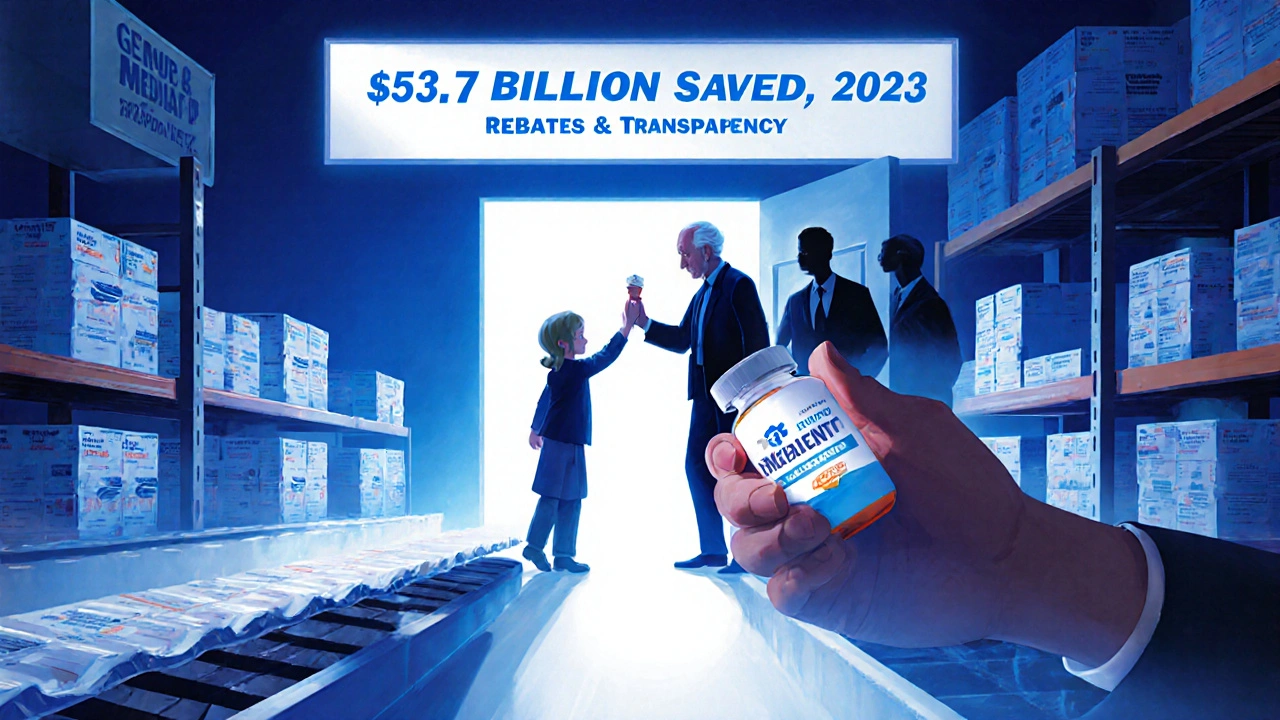
What Low-Income Patients Need to Know
If you’re on Medicaid, here’s what you should remember:- Generics are almost always the first choice-and they’re just as effective.
- Your copay for a generic is usually under $10, often as low as $3 or $5.
- If your doctor prescribes a brand-name drug, ask if a generic is available.
- Some states require prior authorization for certain drugs, even generics. Don’t be afraid to call your state’s Medicaid office if you’re waiting too long.
- Formularies vary by state. Check your state’s Medicaid website to see which drugs are covered and at what tier.
Cecily Bogsprocket
November 22, 2025 AT 22:20It’s wild how something so simple-switching to a generic-can mean the difference between breathing easy and ending up in the ER. I’ve seen it with my mom. Her blood pressure med? Generic. $3 copay. She takes it every day like clockwork. Brand name? She’d skip it. And then we’d be back to doctor visits, tests, the whole cycle. It’s not just about money-it’s about dignity. Being able to take your medicine without guilt or panic? That’s healthcare that works.
Generics aren’t ‘cheap’-they’re smart. And the fact that Medicaid gets better deals than Medicare? That’s the kind of policy we should be screaming about, not ignoring.
I wish more people understood this. Not just patients, but lawmakers. This isn’t charity. It’s economics. It’s public health. It’s common sense.
Emma louise
November 24, 2025 AT 11:35Oh wow, another ‘generics are magic’ fairy tale. Let me guess-next you’ll tell me the FDA just magically waved a wand and said ‘this pill is the same’? No clinical trials? No quality control? Please. The real story? Big Pharma is getting shafted so bureaucrats can feel good about cutting costs. And don’t get me started on those PBMs-they’re the real villains, not the generics.
Oh wait-you already said that. So you’re just a copy-paste activist. Congrats. You’ve read one article and now you think you’re a policy expert. 🙄
Mira Adam
November 24, 2025 AT 17:08You think this is about drugs? No. This is about control. The state tells you what you can take, how much you pay, and when you can get it. The generic isn’t saving you-it’s conditioning you. You’re not empowered-you’re optimized. The system doesn’t want you healthy. It wants you compliant. A $3 pill keeps you quiet. A $56 pill? That’s a rebellion. And rebellion is dangerous.
They don’t care if you live. They care if you’re predictable.
Generics are the opiate of the poor. Not because they’re ineffective-but because they’re too effective at keeping you alive without demanding anything from the system. That’s not mercy. That’s management.
Miriam Lohrum
November 25, 2025 AT 08:39Interesting how the data shows generics are both the hero and the quiet casualty. They save billions, but they’re also the first to get hit when states raise copays. The system rewards volume, not equity. And the fact that PBMs skim 31% off generic sales? That’s not a glitch-it’s the design.
It’s not that generics are failing. It’s that the middlemen have turned them into a revenue stream instead of a lifeline. The real tragedy isn’t the price of the pill-it’s who pockets the difference.
archana das
November 27, 2025 AT 03:41In India, we know generics well. Our doctors prescribe them first. We don’t have Medicaid, but we have people who walk 10 km to get medicine because they can’t afford the rest. So when I read this, I feel hope. Not because it’s perfect-but because someone is trying. The system is broken everywhere. But here, at least, someone is naming the problem.
Generics are not a compromise. They are justice. Simple. Clear. Powerful.
Thank you for writing this. It matters.
Emma Dovener
November 28, 2025 AT 13:29One thing people overlook: formulary tiers. If your state’s Medicaid formulary lists a generic as Tier 3, your copay could still be $20-even if the wholesale price is $1. It’s not about the drug. It’s about the bureaucracy. And if your pharmacy doesn’t have the right form on file? You wait. For weeks. I’ve seen it. The system assumes you’ll give up. Most do.
Check your state’s formulary. Know your tier. Call if it’s wrong. It’s tedious. But it’s the only leverage you’ve got.
Sue Haskett
November 29, 2025 AT 20:09Let’s not forget: the 91% generic fill rate? That’s because of automatic substitution laws. Pharmacists can swap the brand for the generic without asking-unless the doctor says ‘dispense as written.’ That’s huge. That’s systemic change. That’s policy working exactly as intended.
And yes, sometimes it takes three weeks to get approval for a generic inhaler-that’s a failure of the prior authorization system, not the generic itself. Fix the bureaucracy, not the medicine.
Also: biosimilars are coming. And they’re going to be a game-changer for insulin, rheumatoid arthritis, and cancer drugs. We’re not done yet.
Generics aren’t perfect. But they’re the closest thing we have to healthcare that doesn’t bankrupt you.
Rhiana Grob
November 30, 2025 AT 09:40The numbers here are undeniable. But what strikes me most is the quiet resilience of the people who live inside this system. They don’t post about it on social media. They don’t march in protests. They just show up, pay their $3, and take their pills. And they do it every day, without fanfare.
That’s the real story. Not the rebates. Not the PBMs. Not even the policy. It’s the millions of people who, despite everything, still choose to live. Generics make that possible.
Let’s not reduce them to statistics. They’re the reason someone gets to see their kid graduate. To go to work. To hold their grandparent’s hand.
That’s worth protecting.
Rebecca Price
December 2, 2025 AT 05:04Emma louise, you’re right-PBMs are the real crooks. But you’re wrong to blame the system for wanting to save money. The real problem? We treat healthcare like a luxury, not a right. Generics aren’t the villain. They’re the only thing keeping this house from burning down.
And yes, the FDA approves generics. They have to meet the same bioequivalence standards as brand-name drugs. Same active ingredient. Same absorption rate. Same safety profile. The only difference? The label.
So if you think generics are ‘inferior,’ you’re not protecting patients-you’re protecting corporate profits.
Also: emoticons are not arguments. 😑
shawn monroe
December 3, 2025 AT 01:24GENERIC = 91% OF PRESCRIPTIONS 😱
BRAND = 18% OF SPENDING 😳
REBATES = $53.7 BILLION SAVED IN ONE YEAR 💸
PBMs SKIMMED $64 MILLION OFF $208M IN GENERICS 🤬
BIOSIMILARS = $100B/YEAR POTENTIAL 💥
THIS ISN’T HEALTHCARE. THIS IS A FINANCIAL WAR ZONE.
And guess who’s getting shot? The people who need the pills the most. The system isn’t broken-it’s rigged. And if you’re not mad, you’re not paying attention.
TL;DR: Generics are the only thing keeping the poor alive. PBMs are the real drug dealers. Fight back. 🛡️💊