Lot Number Tracking: How the FDA Identifies Problem Batches in the Food Supply
 Mar, 15 2026
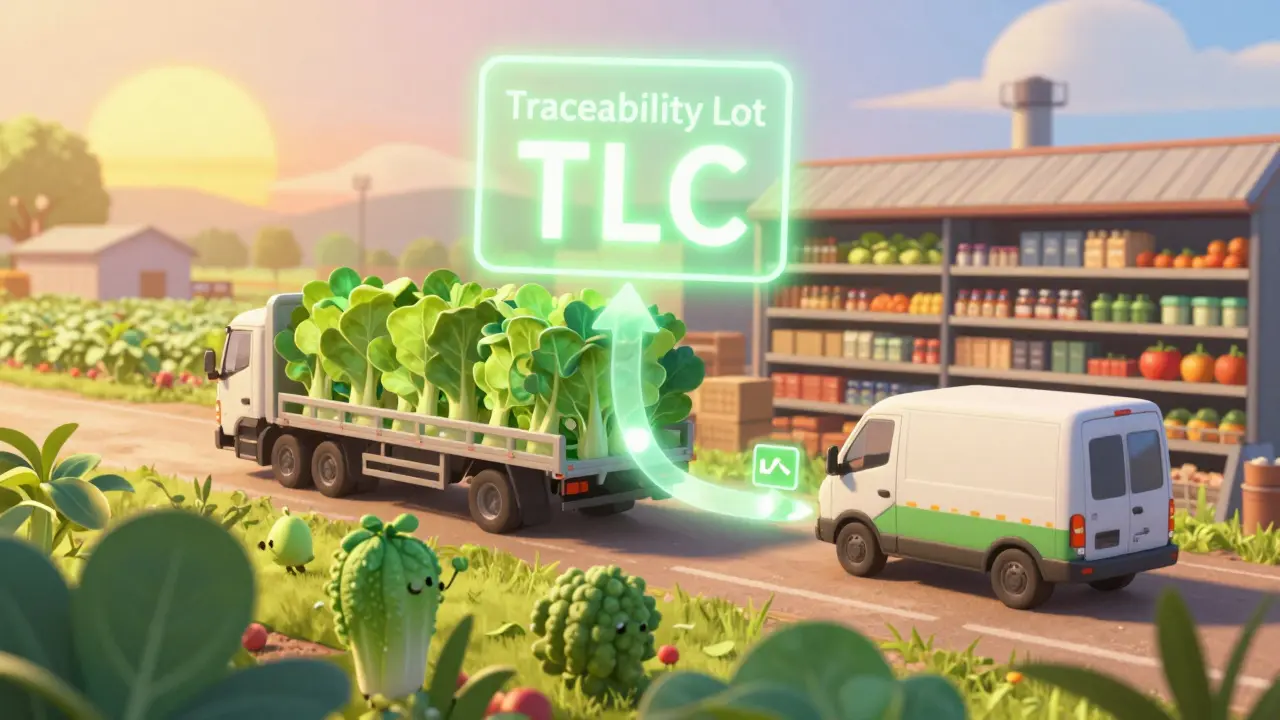
The FDA doesn’t wait for a outbreak to spread before acting. When a contaminated batch of spinach or peanut butter hits the market, time is the biggest enemy. Every hour delayed means more people get sick. That’s why, since 2022, the FDA has been using a powerful tool called the Traceability Lot Code (TLC) to track problem batches in real time. This isn’t just a label on a box-it’s the backbone of a national system designed to cut outbreak response times from weeks to hours.
What Exactly Is a Traceability Lot Code?
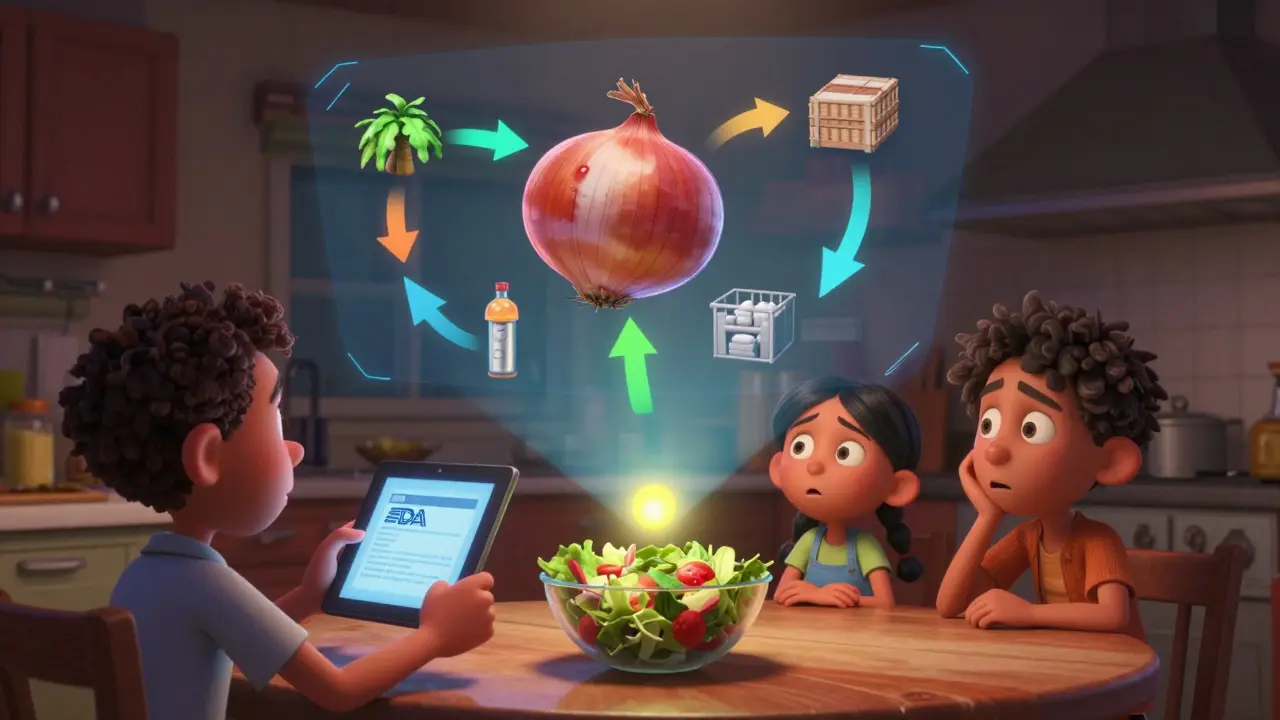
A Traceability Lot Code (TLC) is a unique identifier-usually a mix of letters and numbers-that links a specific group of food products to every step they took from farm to shelf. Unlike old-style lot numbers, which companies used internally for quality control, the TLC is mandatory, standardized, and shared across the entire supply chain. It’s assigned only at three critical points: when raw agricultural products are first packed (like a bag of lettuce), when seafood is received on land after being caught, and when food is transformed-say, when tomatoes are turned into salsa or milk is pasteurized into cheese.The TLC must stay the same throughout the supply chain. If a processor turns a truckload of onions into diced onions, they can’t just make up a new code. They must keep the original TLC and link it to the new product. This creates a clear chain: you can follow a contaminated onion back to the farm it came from, even if it passed through three different warehouses and two processing plants.
How the FDA Uses TLCs During Outbreaks
When a foodborne illness cluster is reported, the CDC flags it. The FDA then pulls records from any company in the supply chain that handled the suspect product. They don’t ask for files-they ask for specific data: the TLC, where it was assigned, how much was moved, and who received it. This data is called the Key Data Element (KDE), and companies must provide all seven KDEs within 24 hours of an FDA request.Before the TLC system, investigators had to piece together invoices, shipping logs, and internal codes. It was like solving a puzzle with half the pieces missing. Now, with a single TLC, the FDA can map out an entire distribution path. In pilot tests from 2019 to 2021, this cut tracing time from an average of 10 days down to under 24 hours. That speed means fewer people get sick. The FDA estimates the system could reduce outbreaks by 20-30% over time.
Which Foods Are Covered?
Not every food item needs a TLC. The FDA only requires it for foods on the Food Traceability List (FTL), which includes high-risk items linked to the most frequent outbreaks. That means leafy greens, tomatoes, onions, fresh-cut fruits, certain cheeses, eggs, nut butters, and specific seafood like shrimp and tuna. These foods make up about 15% of the U.S. food supply by volume but are responsible for over 70% of foodborne illness outbreaks.Why not include everything? Because the system needs to be practical. If every single food item had to carry a TLC, small farms and mom-and-pop shops would be buried in paperwork. The FDA focused on where the risk is highest. But critics argue the list is too narrow. Melons, for example, have caused major outbreaks, yet they’re not on the list. Consumers Union says this leaves dangerous gaps.
How Companies Implement TLCs
Companies have flexibility in how they create their TLCs. They can use a Julian date + product code, a random string, or even their existing internal lot number-if it meets the rules. The key is that it must be unique, traceable, and passed along with every transfer. The FDA doesn’t care what the code looks like, only that it’s consistent and documented.Large companies often update their ERP systems to handle TLCs automatically. A 2023 Food Logistics survey found 72% of big firms modified their existing software. Smaller businesses, about 7%, still rely on spreadsheets or handwritten logs. The FDA offers free training modules and technical help through its Traceability Assistance Program, launched in January 2023.
One big headache? Tandem coding. Many companies already had their own lot systems. Now they’re being told to add another layer. Tyson Foods and others worried this would double their workload. But the FDA clarified: your current lot code can be your TLC, as long as it’s passed through the chain. No need to duplicate unless you want to.
Technology and the Future
The TLC system doesn’t require blockchain or barcodes. Paper records are still allowed. But electronic records are strongly encouraged because they’re easier to search, export, and share. The FDA wants data in CSV or similar formats so it can be pulled into their systems quickly.Big retailers like Walmart and Kroger have gone further. Since 2019, Walmart has required its leafy green suppliers to use blockchain systems that track each pallet. These systems exceed TLC requirements but show what’s possible. The FDA is now funding pilot projects to test how IoT sensors and blockchain can work with the TLC system. By 2028, we may see real-time alerts when a batch leaves a facility-before it even hits a store.
Compliance and the Timeline
The rule became official in December 2022, but companies weren’t expected to be ready until January 20, 2026. In September 2023, the FDA proposed a 30-month extension, pushing the deadline to July 20, 2028. Why? Because 65% of companies reported difficulty integrating TLCs into legacy systems, and 71% said coordinating with suppliers was the hardest part.A survey by the United Fresh Produce Association found 78% of member companies had already adjusted their systems. But only 42% of small and mid-sized businesses even knew about the rule. That’s why the 2023 Farm Bill included $25 million to help small farms comply.
Challenges and Criticisms
The system is powerful, but it’s not perfect. Experts like Mike Taylor, former FDA deputy commissioner, warn that without standardized data formats, TLCs could end up trapped in silos-each company using its own system, making it hard to connect the dots across the network.International alignment is another issue. The EU launched its Digital Product Passport in January 2023, which uses different tracking standards. If a shipment of cheese moves from the U.S. to Germany, will the codes match? The FDA held its first joint workshop with EU regulators on March 15, 2023, to start solving that.
Implementation costs are real. The FDA estimates $6.5 million a year for the industry, but the payoff is $60 million in saved outbreak costs. For small farms, $42,500 on average was spent to comply. That’s steep, but many say it’s cheaper than a recall or a lawsuit.
What Comes Next?
The FDA is already looking ahead. Commissioner Robert Califf said melons and ready-to-eat foods are under review for inclusion on the FTL. That could expand the system to cover more high-risk items. The next big push is for electronic data standards-something the FDA plans to release in mid-2024. Once that’s in place, systems across the country will speak the same language.For now, the TLC system is working. Outbreaks are being contained faster. Contaminated products are being pulled before they reach thousands of homes. And every time a farmer, packer, or distributor assigns a TLC, they’re not just following a rule-they’re helping protect a family’s dinner table.
What is a Traceability Lot Code (TLC)?
A Traceability Lot Code (TLC) is a unique alphanumeric identifier assigned to a specific batch of food on the FDA’s Food Traceability List. It must be maintained and passed along the supply chain to link the product to its origin and movement history. Unlike internal lot codes, TLCs are mandatory and must be shared with regulators during investigations.
Which foods require a TLC under FDA rules?
The FDA requires TLCs for foods on the Food Traceability List (FTL), which includes leafy greens, tomatoes, onions, fresh-cut fruits and vegetables, certain cheeses, eggs, nut butters, and specific seafood like shrimp and tuna. These represent about 15% of the U.S. food supply and are linked to the majority of foodborne illness outbreaks.
When do companies need to start using TLCs?
The original compliance date was January 20, 2026, but the FDA proposed a 30-month extension in September 2023. The new deadline is July 20, 2028. This gives businesses more time to update systems, train staff, and coordinate with suppliers.
Can a company use its existing lot code as a TLC?
Yes. The FDA explicitly states that any existing lot code can serve as the Traceability Lot Code, as long as it is unique, passed along the supply chain, and linked to the required Key Data Elements. Companies do not need to create a separate code unless they choose to.
What happens if a company doesn’t comply with TLC rules?
Non-compliance can lead to regulatory action, including detention of products, refusal of entry, or legal penalties. While the FDA is focused on education and support, especially for small businesses, failure to provide requested traceability data during an investigation is a violation of the Food Traceability Rule and may trigger enforcement.
Prathamesh Ghodke
March 16, 2026 AT 11:32Srividhya Srinivasan
March 17, 2026 AT 18:54Stephen Habegger
March 19, 2026 AT 17:34Justin Archuletta
March 20, 2026 AT 07:41Sanjana Rajan
March 22, 2026 AT 00:52Kyle Young
March 22, 2026 AT 19:28Aileen Nasywa Shabira
March 24, 2026 AT 02:51Kendrick Heyward
March 25, 2026 AT 16:08lawanna major
March 25, 2026 AT 23:48Ryan Voeltner
March 26, 2026 AT 01:14Linda Olsson
March 26, 2026 AT 19:50Ayan Khan
March 27, 2026 AT 18:06Emily Hager
March 29, 2026 AT 00:44Melissa Starks
March 30, 2026 AT 15:13Lauren Volpi
March 30, 2026 AT 22:00