How to Use Travel Health Clinics for Pre-Trip Medication Planning
 Feb, 2 2026
Planning a trip abroad? Skipping a travel health clinic might seem like a time-saver, but it’s one of the biggest risks you can take with your health. Every year, thousands of travelers get sick from preventable diseases - not because they didn’t know better, but because they didn’t plan ahead. The truth is, your local doctor probably won’t know what vaccines or pills you need for a jungle trek in Bolivia or a city tour in Mumbai. That’s where travel health clinics come in. These aren’t just pharmacies with a few shots. They’re specialized centers that build your personal health plan for the road - vaccines, pills, advice, and emergency backup - all tailored to where you’re going, how long you’ll stay, and what your body can handle.
Why General Doctors Don’t Cut It
Your family doctor knows your medical history. That’s great. But do they know if malaria is resistant to chloroquine in Cambodia? Or that yellow fever vaccine can’t be given to someone over 60 with a thymus disorder? Probably not. Travel health clinics focus on one thing: international travel risks. According to the CDC, specialists spot 37% more health risks than general practitioners during pre-travel visits. That’s not a small gap. It’s the difference between getting a shot for typhoid or ending up in a hospital with a fever you could’ve avoided. A 2022 study in the Journal of Travel Medicine found travelers who used these clinics had up to 72% fewer illnesses. Why? Because they don’t just hand you a list. They ask: Where exactly are you sleeping? Are you eating street food? Are you hiking above 2,500 meters? These details change everything.What Happens at a Travel Health Clinic Visit
Most visits last 30 to 45 minutes. You’ll walk in with your itinerary - countries, dates, activities - and leave with a clear plan. Here’s what they do:- Review your medical history: Do you have diabetes? Are you on blood thinners? Are you pregnant? These factors change what medications are safe for you.
- Check your vaccine record: Are you up to date on routine shots like measles or tetanus? Many travelers don’t realize they need boosters before leaving.
- Match vaccines to your destination: Yellow fever? Required in parts of Africa and South America. Only given at CDC-registered clinics. Typhoid? Oral or shot, depending on your trip length. Hepatitis A? Almost always recommended.
- Prescribe prophylactic meds: Not just for malaria. Some clinics give you antibiotics for traveler’s diarrhea, altitude sickness pills, or even anti-nausea meds for long flights.
- Give you a written plan: What to take, when to start, what to do if you get sick. No guesswork.
Medications You Might Get - And When to Start
It’s not enough to just get a prescription. Timing matters. Take malaria pills wrong, and you’re at risk. Here’s what you’ll likely hear:- Atovaquone-proguanil (Malarone): Start 1-2 days before travel. Take daily. Stop 7 days after leaving. Best for short trips.
- Doxycycline: Start 1-2 days before. Take daily. Stop 28 days after. Cheaper than Malarone, but you must avoid sun exposure.
- Mefloquine: Start 2-3 weeks before. Take weekly. Can cause mood changes - not for everyone.
- Acetazolamide (Diamox): For high-altitude trips. Start 24-48 hours before climbing. Helps prevent altitude sickness.
- Azithromycin: For traveler’s diarrhea. Take 500 mg at first sign of symptoms. Not for daily use - only when needed.
The CDC warns that 28% of preventable malaria cases happen because people didn’t start their pills early enough. If you wait until you’re on the plane, it’s too late for some meds. That’s why clinics push for 4-8 weeks before departure. You need time for vaccines to work, for pills to build up in your system, and for your body to adjust.
Where to Find a Clinic - And What It Costs
There are over 1,200 travel health clinics in the U.S. as of 2024. They fall into three main types:- University or hospital clinics (like UCLA, Stanford, Mayo): Most comprehensive. Often charge $150-$250. Insurance rarely covers them, but they handle complex cases - like travelers with HIV, organ transplants, or chronic conditions.
- Retail clinics (CVS MinuteClinic, Walgreens): Cheaper - around $129. Good for simple trips to low-risk areas. But they won’t handle complex medical histories or give you detailed advice on altitude or food safety.
- Private travel clinics: Often run by infectious disease specialists. May be pricier but offer the deepest expertise. Best if you’re going somewhere remote or have multiple health concerns.
For yellow fever vaccine? You must go to a CDC-registered clinic. There are only 256 in the U.S. You’ll get an official International Certificate of Vaccination - a little yellow card - that some countries require to enter. It’s valid for life now, so keep it with your passport.
What to Bring to Your Appointment
Don’t walk in blind. Bring:- Your full travel itinerary - countries, cities, dates, and planned activities (e.g., “safari in Kenya,” “hiking in Nepal,” “street food tour in Vietnam”)
- Your vaccination record - even if it’s just a printout from your doctor or state health site
- A list of all current medications - including supplements and OTC pills
- Your medical history - especially chronic conditions, allergies, or past travel illnesses
- Your insurance card - some clinics bill insurance for vaccines, even if the consultation isn’t covered
Be honest. If you’re planning to drink tap water or skip mosquito nets, tell them. They’ll adjust your advice. If you’re traveling with kids or elderly relatives, mention it. Their needs are different.
What If You’re Leaving in Two Weeks?
It’s not ideal - but it’s not hopeless. Many clinics, including UC Davis and Mayo, will still see you. You won’t get all the vaccines (some need weeks to work), but you can still get:- Yellow fever vaccine (if needed)
- Typhoid shot
- Traveler’s diarrhea antibiotics
- Altitude sickness meds
- Strong advice on water safety, insect bites, and food risks
Some vaccines - like hepatitis A and rabies - can be given on a fast schedule. Others, like Japanese encephalitis, won’t be possible. But even last-minute advice can cut your risk in half.
What You Won’t Get - And Why
Travel clinics don’t give you:- Antibiotics to take every day
- Anti-malarial pills for countries with no malaria risk
- Unnecessary vaccines
Some clinics overprescribe. A 2024 study in Clinical Infectious Diseases found that too many travelers get azithromycin without clear instructions on when to use it. That leads to misuse - and antibiotic resistance. Good clinics teach you to use meds only when symptoms appear. Not as a daily shield.
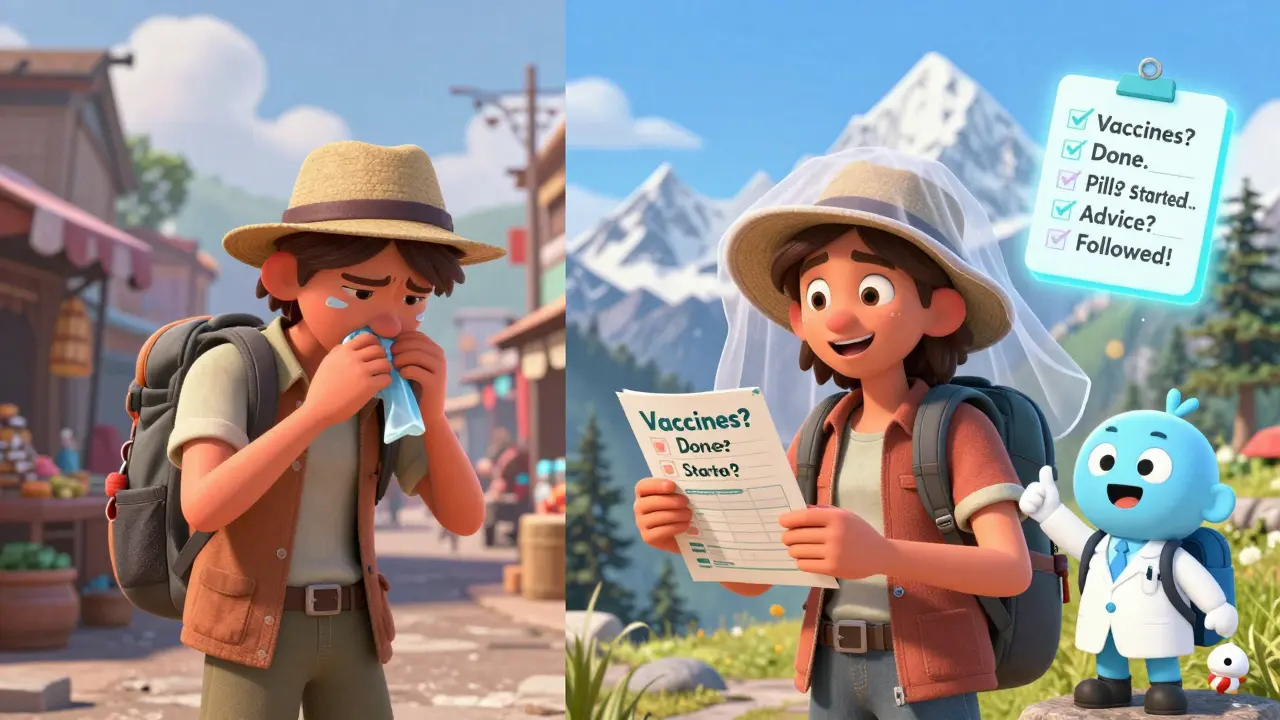
What Comes After the Visit
Most clinics now offer digital access to your records. You’ll get:- A printable vaccination record
- Medication schedule with start/stop dates
- Emergency contact info for local clinics abroad
- Advice on what to pack - insect repellent, water filters, first-aid kit
Some even send you reminders via text or email: “Start your malaria pills in 3 days.”
And if you lose your meds? Ask for a backup prescription. Most clinics will email you a copy or give you a printed version you can take to a local pharmacy abroad.
The Bigger Picture
Only 18% of international travelers use travel clinics. That’s shocking - especially since 62% of travelers to sub-Saharan Africa do. Why the gap? Cost, time, and the myth that “it’s not that dangerous.” But here’s what most people don’t realize: the cost of one day in a foreign hospital - with no insurance - can be ten times what you paid for your clinic visit.Travel health clinics aren’t about fear. They’re about control. You’re not just buying shots and pills. You’re buying peace of mind. You’re saying: I’ve done my homework. I’m ready. And that’s the best thing you can pack before you leave.
Do I need a travel health clinic if I’m only going to Europe?
Even in Europe, you might need vaccines. Hepatitis A is common in parts of Eastern Europe. Tick-borne encephalitis is a risk in forested areas of Austria, Czechia, and Slovenia. Travel clinics check your vaccine history and recommend what’s needed for your exact route - not just your destination country. They also give you advice on food safety and emergency care abroad.
Can I get malaria pills from my regular pharmacy?
You can get the pills, but not the right ones. Not all malaria zones have the same resistance patterns. What works in Thailand might not work in Ghana. Travel clinics use CDC guidelines updated every quarter to pick the right drug. They also check your medical history - some pills aren’t safe if you have depression, liver issues, or are pregnant. Your pharmacist won’t know that.
How far in advance should I schedule my appointment?
Ideally, 4 to 8 weeks before you leave. Some vaccines need multiple doses over weeks. Malaria pills need to start before you arrive. But even if you’re leaving in 2 weeks, go anyway. You can still get critical vaccines like yellow fever and typhoid, plus antibiotics and advice that can keep you safe.
Are travel clinics covered by insurance?
Usually not the consultation fee. But many insurance plans cover the cost of vaccines - especially hepatitis A, typhoid, and rabies. Always ask the clinic to bill your insurance for vaccines separately. Retail clinics like CVS often accept insurance for vaccines too. The consultation itself is typically out-of-pocket.
What if I have a chronic illness like diabetes or asthma?
Travel clinics are especially important for you. They’ll review your meds, check if your condition affects your travel risks, and advise on managing it abroad - like carrying extra insulin, avoiding dehydration at high altitudes, or knowing where to find medical care. Many clinics coordinate with your primary doctor to make sure nothing gets missed.
Do I need to bring my passport?
Not always, but it helps. Some countries require proof of yellow fever vaccination based on your passport’s entry stamps. If you’ve traveled to a country with yellow fever risk in the past, they’ll need to know. Bring it if you have it - it speeds things up.
Can I get travel meds if I’m not a U.S. citizen?
Yes. Many clinics serve international travelers. Bring your vaccination records from your home country. If you’re traveling from outside the U.S., check if your destination requires proof of vaccination - some countries require it even for transit. The clinic will guide you based on your origin, destination, and route.