How to Store Emergency Kits to Maximize Medication Shelf Life
 Jan, 19 2026
When a storm knocks out power for days or a wildfire forces you to evacuate on short notice, your emergency meds could be the difference between life and death. But if they’ve been sitting in a hot bathroom or a sunlit drawer, they might not work when you need them most. The truth is, medication shelf life isn’t just about the date on the bottle-it’s about how you store it.
Why Storage Matters More Than You Think
Most people think if a pill hasn’t expired, it’s fine. That’s not true. The FDA says temperature, humidity, and light are the three biggest killers of medicine potency. A 2018 study in the Journal of Emergency Medicine found epinephrine auto-injectors lost 37% of their effectiveness after just 72 hours in a hot car during a simulated disaster. That’s not a small drop-it’s enough to make a life-saving dose useless. In 2022, the CDC tracked over 1,200 emergency cases where people couldn’t use their meds because of improper storage. Half of those cases involved insulin, asthma inhalers, or heart medications. These aren’t just inconvenient failures-they’re preventable tragedies.What Temperature Is Safe?
The golden rule: keep meds between 59°F and 77°F (15°C to 25°C). That’s room temperature in most homes. But don’t assume your home is safe. Attics, garages, and windowsills can hit 100°F in summer. Even a kitchen near the stove or a bedroom above a radiator can get too hot. For insulin, epinephrine, and other refrigerated meds, you need 36°F to 46°F (2°C to 8°C). If the power goes out, that’s your biggest risk. Merck’s 2021 testing showed insulin loses 15% potency after just 12 hours above 46°F. That’s why the American Diabetes Association now recommends keeping a 48-hour supply in a portable cooler with ice packs rated for 72+ hours.Humidity Is the Silent Killer
Bathrooms are the worst place for meds. Not because of germs-because of steam. Every shower releases moisture into the air. The International Council for Harmonisation (ICH) says humidity above 60% starts breaking down pills. A 2019 University of Florida study found acetaminophen tablets stored in 75% humidity lost 28% of their ability to dissolve in the body-meaning they won’t get absorbed. The American College of Emergency Physicians found meds stored in bathrooms degrade 40% faster than those kept in kitchen cabinets. That’s not a myth-it’s lab-tested fact. Keep your emergency meds in a closet, a drawer in your bedroom, or a dedicated storage box on a shelf away from moisture.Light Can Destroy Your Meds
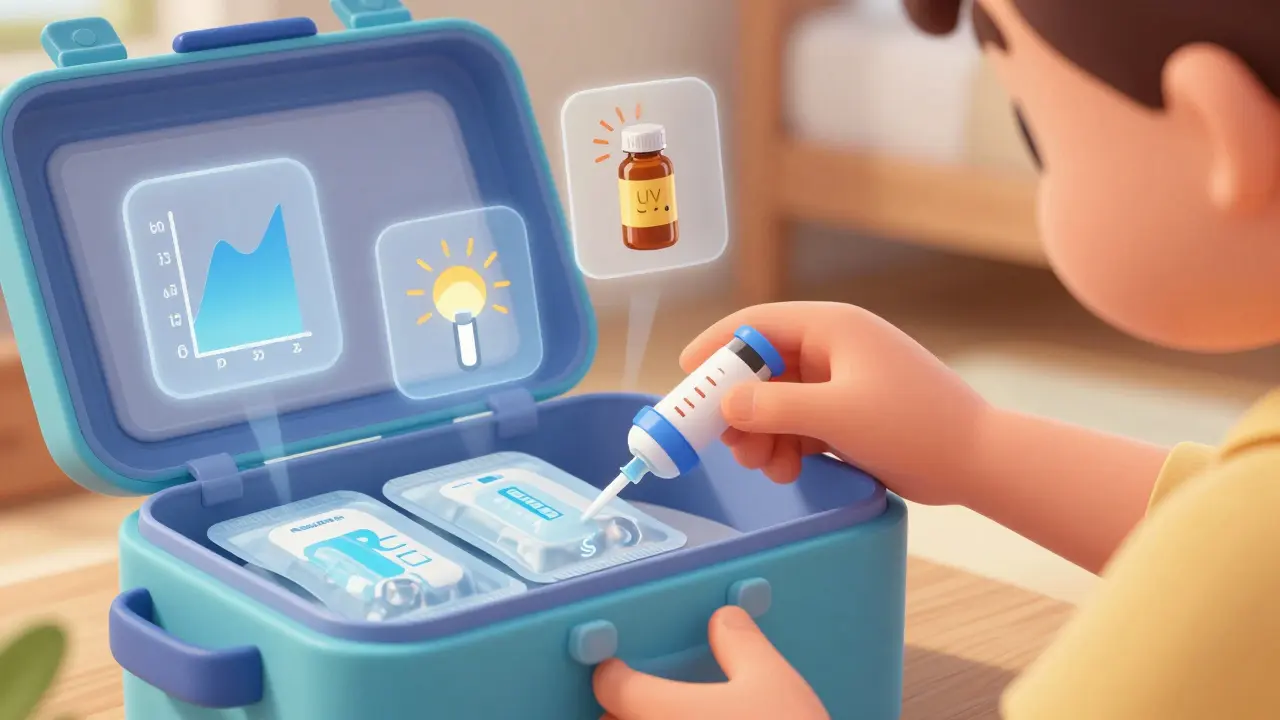
Sunlight isn’t just bad for your skin-it’s bad for your pills. UV rays break down chemical bonds. Amoxicillin capsules exposed to direct sunlight for 48 hours lost 42% of their active ingredient, according to the Journal of Pharmaceutical Sciences. Even indirect light over weeks adds up. Keep all meds in their original bottles. Those bottles aren’t just for labeling-they’re designed to block light. Clear plastic? Not good. Amber glass? Better. If you’ve transferred pills to a pill organizer, you’ve already reduced their shelf life. Only use organizers for daily doses, not long-term storage.Vacuum Sealing Works-But Only for Solids
Dr. Michael Rhodes at Intermountain Healthcare found vacuum-sealing solid medications like aspirin, antibiotics, or blood pressure pills extends their usable life by 1-2 years beyond the printed expiration date. One Reddit user, u/SurvivalMedic99, reported his vacuum-sealed amoxicillin from 2019 worked perfectly during a 2022 emergency. But here’s the catch: this only works for tablets and capsules. Liquids-insulin, liquid antibiotics, eye drops-don’t benefit. They’re still vulnerable to temperature and contamination. Vacuum sealing a bottle of insulin? It won’t help. You still need cold storage.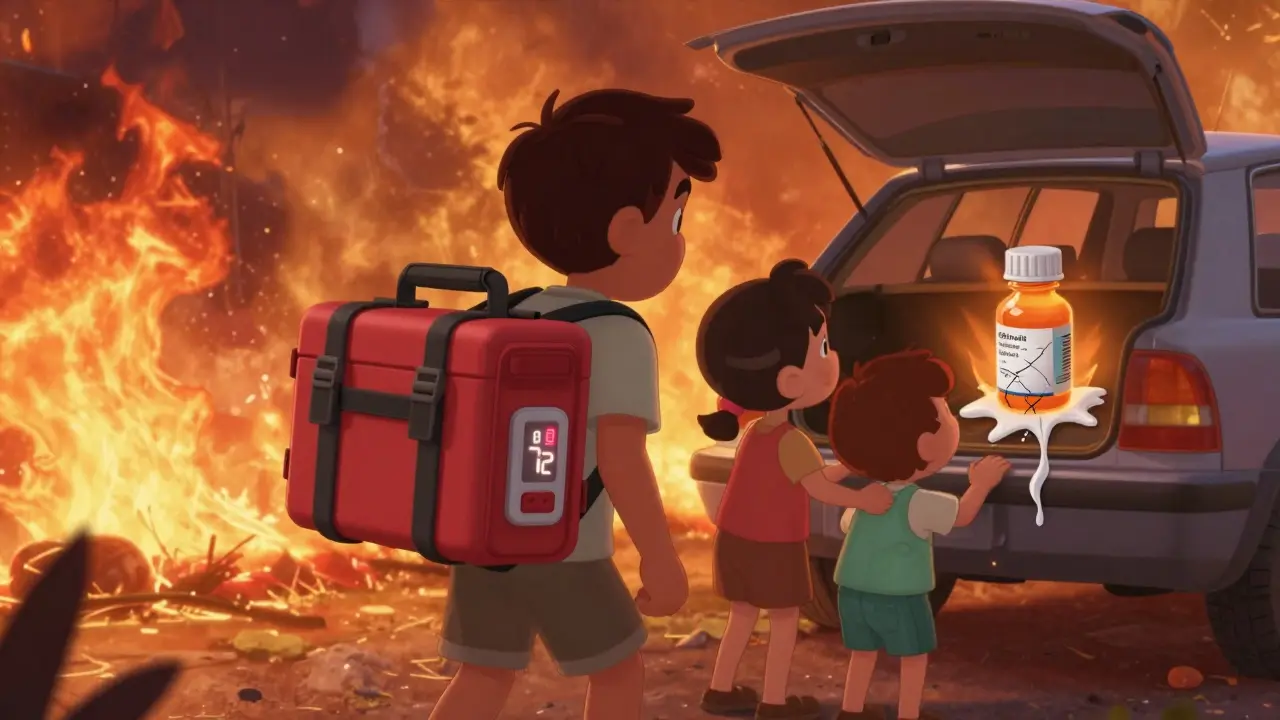
Use a Temperature Monitor
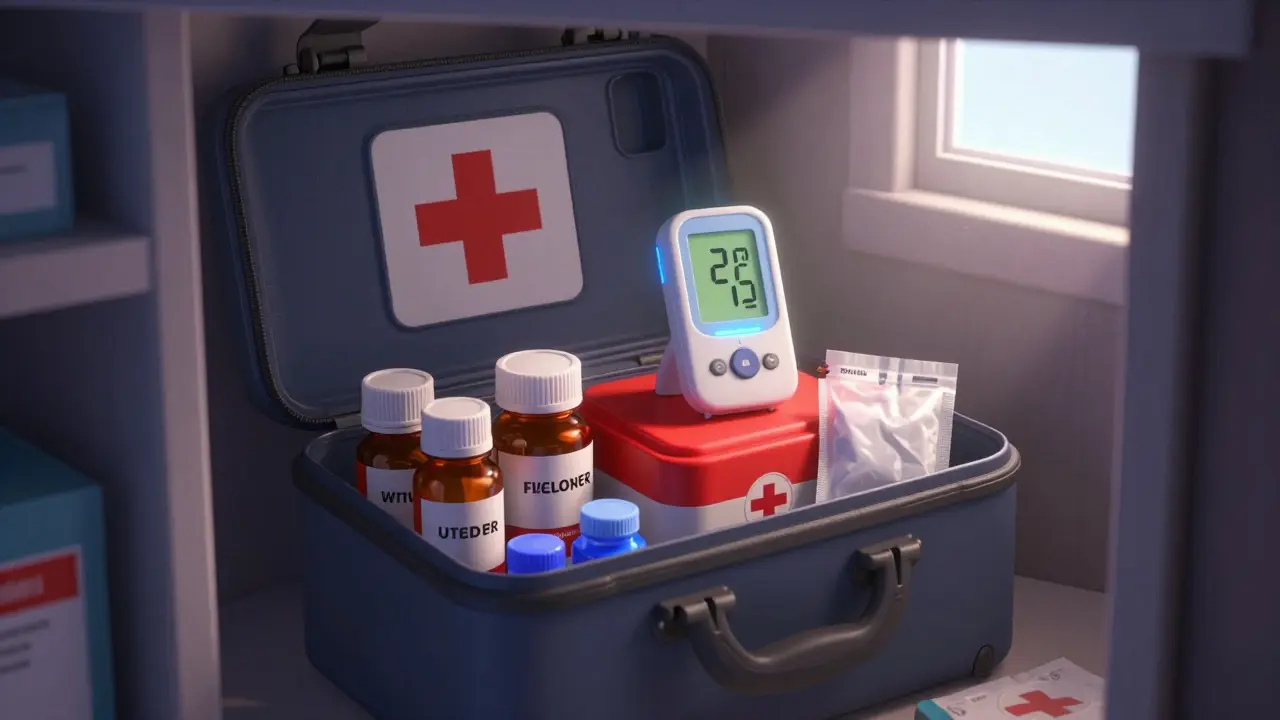
You can’t guess if it’s too hot. You need proof. ANSI/AAMI ST79:2017 requires temperature devices with ±0.5°F accuracy in medical emergency kits. That’s not overkill-it’s essential. Look for small digital loggers that record hourly temps. Some even send alerts to your phone. Amazon reviews show products with built-in monitoring get 4.6/5 stars. Those without? 3.2/5. The top complaint? “Inadequate temperature control during extended outages.” Put one in your kit. Check it every time you do your monthly inspection. If it hits 80°F for more than 2 hours, replace anything sensitive-especially insulin or epinephrine.Keep Everything in Original Containers
The FDA says 62% of emergency medication errors happen because people don’t know what they’re taking. Labels have the National Drug Code (NDC), dosage, expiration date, and prescribing doctor. Take that off? You’re gambling. Even if the bottle is ugly or bulky, keep it. Transfer pills to a small container only if you’re carrying them in a go-bag for evacuation. But when you get to safety, put them back in the original bottle. The FDA’s 2022 testing showed original containers maintain integrity 33% better than transferred ones over 12 months.What About the Toilet Tank Trick?
You’ve heard it: put your insulin in the toilet tank to keep it cool during a power outage. It sounds clever. But here’s what Consumer Reports found in August 2021: the water in a toilet tank stays 15-20°F cooler than room air for only 8-12 hours. After that, it warms up. And if someone flushes? You’ve got a wet, contaminated bottle. It’s better than leaving it on the counter-but not by much. A battery-powered medical cooler that runs for 72+ hours is the real solution. They cost $60-$120. For insulin users, that’s cheaper than a hospital visit.Check Your Kit Monthly
Don’t wait for a disaster to find out your meds are useless. Set a calendar reminder: every month, on the same day, open your kit. Do this:- Check the temperature log.
- Look at expiration dates. Don’t ignore them.
- Inspect pills: Are they discolored? Crumbly? Smell weird? Toss them.
- Check liquid meds for cloudiness or particles.
- Replace epinephrine auto-injectors every 12-18 months-even if the date says 2027. They lose 15% potency per year, even in perfect conditions.
- Rotate stock: put the oldest meds in front so you use them first.
What’s New in 2026?
Big changes are happening. In January 2023, the FDA approved Tresiba® insulin that stays stable at 86°F for 56 days. That’s a 400% improvement. Soon, more critical meds will follow. The Department of Homeland Security now recommends a 14-day supply-not 7 days. Climate change means longer power outages. Lawrence Berkeley National Lab found average emergency outages jumped from 1.3 hours in 2000 to 18.5 hours in 2022. And the FDA is testing blockchain tracking for meds. Imagine knowing exactly how hot your insulin got during a storm-real-time, from your phone. That’s coming.What to Do Now
Start with what you have. Don’t wait for the perfect kit. Here’s your 3-step plan:- Find a cool, dry, dark place. A bedroom closet. Not the bathroom. Not the kitchen.
- Put all meds back in original bottles. Add a small digital thermometer.
- Set a monthly reminder to check temps and dates. Replace anything if you’re unsure.
Final Thought
Your emergency meds aren’t just supplies. They’re your lifeline. If you take care of them now, you won’t be begging for help when the lights go out. A little effort today saves panic tomorrow.Can I still use expired medication in an emergency?
The FDA says most solid medications retain at least 90% potency for years past their expiration date-if stored properly. But never rely on expired epinephrine, insulin, or nitroglycerin. Those can fail without warning. If you’re in a true emergency and have no other option, using an expired pill is better than nothing-but replace it immediately after.
Should I store my emergency kit in the fridge?
Only if you have refrigerated meds like insulin or certain antibiotics. For everything else-pills, inhalers, bandages-keep it at room temperature. Fridges have moisture, which can ruin tablets. If you do store meds in the fridge, keep them in a sealed container to protect from humidity.
What’s the best container for an emergency kit?
A hard plastic storage box with a tight seal-like a tackle box or tool box-is ideal. Avoid soft bags. They don’t protect from moisture, light, or pressure. Look for ones with a foam insert to keep bottles from rattling. Add silica gel packets to absorb extra moisture.
How much medication should I keep in my emergency kit?
The CDC and Department of Homeland Security now recommend at least a 14-day supply. For chronic conditions like diabetes or heart disease, aim for 30 days if possible. Don’t just copy your prescription refill schedule-think about how long you might be stuck without access to a pharmacy.
Can I store emergency meds in my car?
No. Even in winter, car interiors can hit 120°F. In summer, they’re worse. That’s far beyond the safe range for any medication. If you must keep a small supply in your car, use a temperature-controlled medical cooler-not just a glove compartment.
Are generic medications less stable than brand names?
No. The FDA requires generics to have the same active ingredients and stability as brand-name drugs. If your generic metformin is stored the same way as the brand, it will last just as long. The difference is in the fillers and coating-not the shelf life.
What if I live in a very hot climate?
Use a small insulated cooler with a reusable ice pack. Keep it in the coolest part of your home-like a basement or interior closet. If you have insulin or other temperature-sensitive meds, consider investing in a battery-powered medical cooler that maintains 36-46°F for days. It’s worth the cost.
Should I include over-the-counter meds in my emergency kit?
Yes. Pain relievers, antihistamines, anti-diarrheal meds, and antacids are critical. People forget these, but they prevent small problems from becoming emergencies. Store them with your prescription meds, following the same temperature and humidity rules.
Jerry Rodrigues
January 20, 2026 AT 06:26Dee Monroe
January 21, 2026 AT 18:47Alex Carletti Gouvea
January 22, 2026 AT 08:35Philip Williams
January 23, 2026 AT 03:24Ben McKibbin
January 24, 2026 AT 02:35Melanie Pearson
January 25, 2026 AT 03:32Ashok Sakra
January 26, 2026 AT 14:29Gerard Jordan
January 26, 2026 AT 15:38MARILYN ONEILL
January 27, 2026 AT 16:55shubham rathee
January 28, 2026 AT 09:02Kevin Narvaes
January 28, 2026 AT 20:34Jarrod Flesch
January 29, 2026 AT 11:21Barbara Mahone
January 29, 2026 AT 13:20Andrew Rinaldi
January 30, 2026 AT 12:37