How to Protect Your Privacy When Disposing of Medications
 Dec, 20 2025
Throwing away old pills might seem like a simple chore, but if you don’t handle the packaging right, you’re risking more than just clutter. Your prescription bottle isn’t just plastic and paper-it’s a mini file of your personal health data. Name, address, doctor’s name, what you were prescribed, even your insurance ID. All of it, printed clearly on the label. And if that bottle ends up in the trash where someone else can find it, you’re handing out the keys to your identity.
It’s not just theory. In 2023, a Consumer Reports survey found that 54% of Americans didn’t realize prescription labels contain enough information for identity thieves. That same survey showed 78% of people were worried about privacy when tossing out meds. And it’s not just fear-real cases happen. One woman in Ohio discovered $1,200 in fraudulent insurance charges after someone dug through her trash, pulled out her oxycodone bottle, and used her info to get more pills. That’s not rare. A 2021 study in the Journal of the American Pharmacists Association found 42% of prescription bottles thrown in home trash still had readable labels.
Why Your Prescription Label Is a Target
Prescription labels aren’t just for pharmacy use. They’re packed with Protected Health Information (PHI)-the kind that’s protected under HIPAA. That includes your full name, date of birth, address, phone number, prescription number, dosage, and even the condition you’re being treated for. Identity thieves don’t need much to open credit accounts, file fake tax returns, or even get medical care in your name. A single bottle with clear labels gives them everything they need.
It’s not just about stealing your identity. Some people use this info to get prescription drugs illegally. Opioids, ADHD meds, anxiety pills-they’re all in demand on the black market. If your bottle says “Oxycodone 10mg, 30 tablets,” and your name is on it, you’ve just made it easy for someone to claim they’re you.
The FDA, DEA, and HHS all agree: destroying personal info on medication packaging isn’t optional. It’s a basic privacy safeguard. And yet, a 2023 CVS Health training report found that 68% of patients skip this step entirely when disposing of meds at home.
What You Should Never Do
Don’t just toss the bottle in the trash with the label still readable. That’s the #1 mistake. Even if you take the pills out, the label stays. And if you leave it on, you’re leaving your health history out in the open.
Don’t rely on recycling. Most recycling centers don’t check labels. They sort by plastic type, not privacy. Your bottle might end up in a bin with hundreds of others, and no one’s going to scratch off your name.
Don’t flush everything. The FDA has a Flush List of 15 specific medications that should be flushed immediately because they’re highly dangerous if accidentally ingested-like fentanyl patches or certain painkillers. But for 95% of medications, flushing isn’t needed and can harm the environment. The EPA estimates 3.2 million pounds of pharmaceuticals end up in U.S. waterways every year. Flushing unnecessarily adds to that.
The Best Way: Drug Take-Back Programs
If you want the highest level of privacy protection, use a drug take-back program. These are run by law enforcement, pharmacies, or hospitals. You drop off your unused meds-bottle and all-and they’re destroyed safely, with no one ever seeing your personal info.
The DEA runs National Prescription Drug Take Back Days twice a year. In April 2024, they collected over 821,000 pounds of medications across 6,000 sites nationwide. But you don’t have to wait for those days. Most chain pharmacies like Walgreens, CVS, and Rite Aid have year-round drop-off boxes inside their stores. They’re locked, secure, and monitored.
According to a 2024 Pharmacy Times poll, 89% of people who used take-back programs felt “very confident” their privacy was protected. That’s the highest satisfaction rate of any disposal method. And it’s the only one where you don’t have to do anything to the label yourself.
Mail-Back Envelopes: A Private, Convenient Option
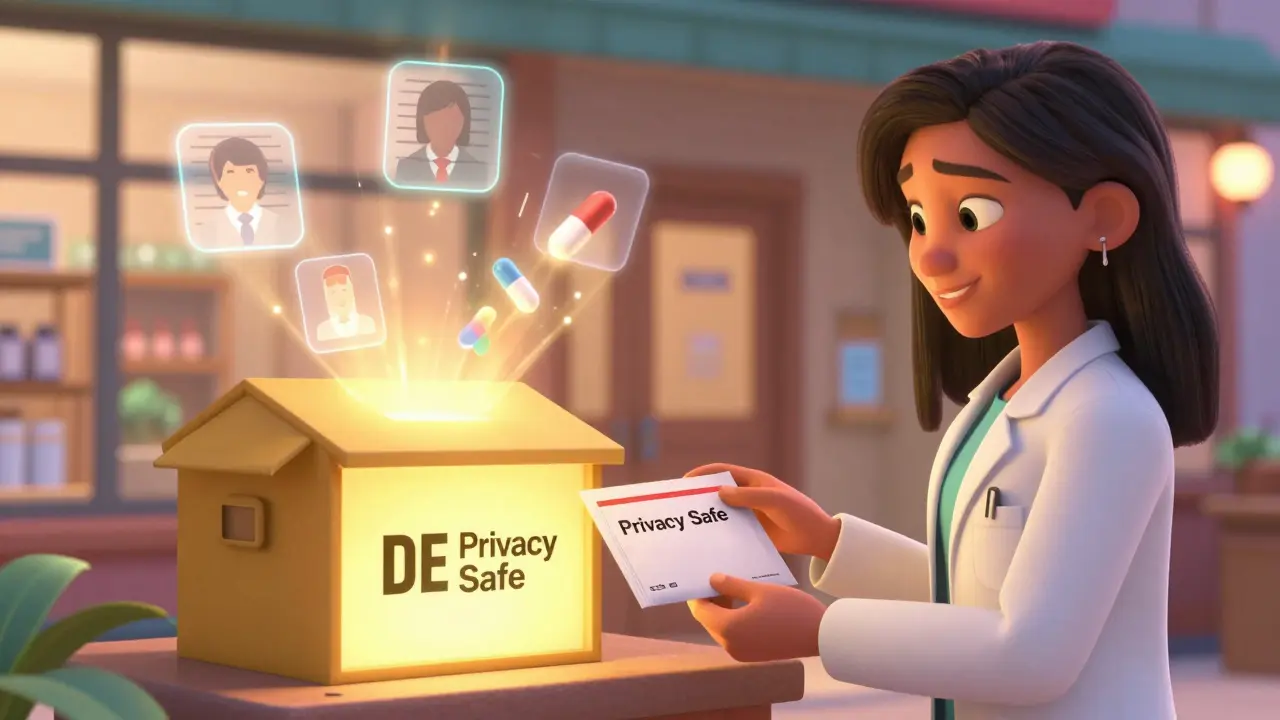
If you don’t live near a drop-off location, mail-back envelopes are a solid alternative. Companies like Walgreens and DisposeRx sell these for $2.99 to $6.99. You put your meds (still in the bottle) inside, seal it, and mail it to a certified disposal facility.
These envelopes are designed so your info stays hidden. You don’t need to scratch off the label-the facility handles everything. The DEA and EPA both approve these programs, and they’re especially useful for elderly patients or those without reliable transportation.
They’re not free, but they’re cheaper than dealing with identity theft. The average cost of a data breach involving health records? $498 per record, according to IBM’s 2023 report. One envelope prevents that risk entirely.
At-Home Disposal: Do It Right
If you can’t access a take-back or mail-back option, the FDA says you can dispose of most meds in your trash-but only if you follow these five steps exactly:
- Take the pills out of their original bottle.
- Mix them with something unappetizing-used coffee grounds, cat litter, or dirt. This makes them unappealing to kids or pets and discourages anyone from digging through the trash.
- Put the mixture into a sealed container-a jar, plastic tub, or even a ziplock bag. This prevents leaks and keeps it contained.
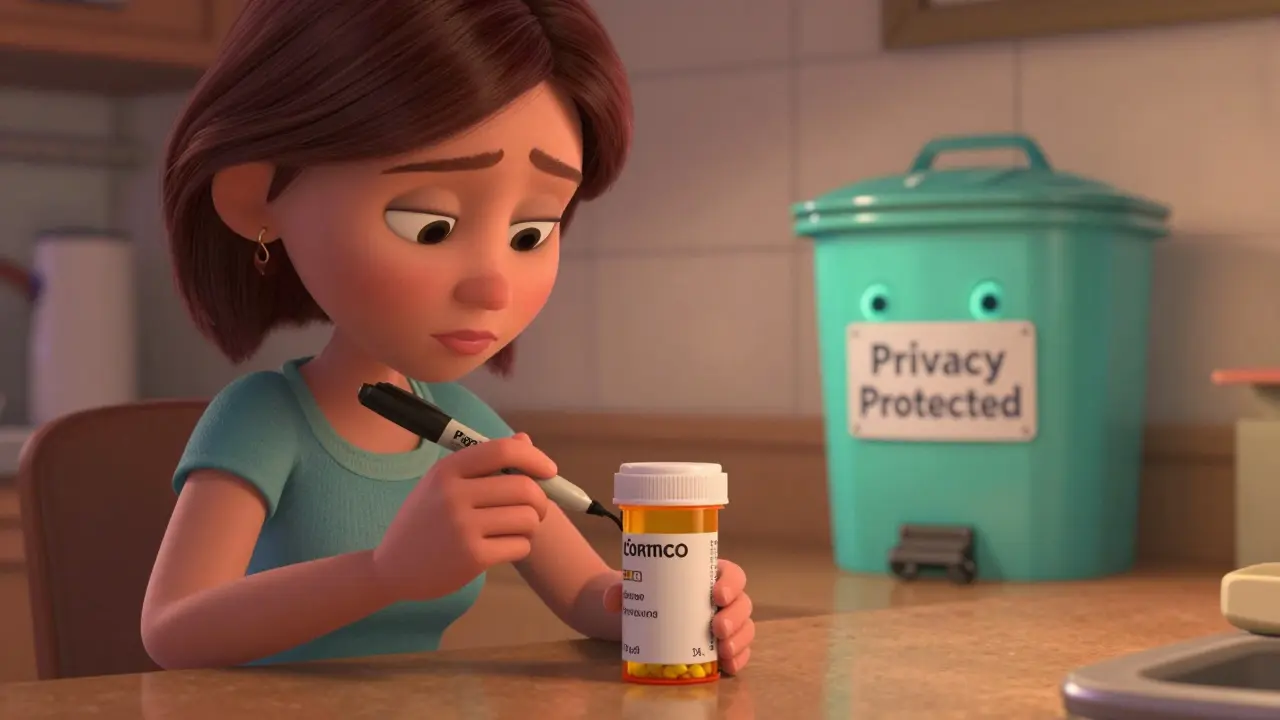
- Remove or destroy all personal info on the empty bottle. Use a permanent marker to black out your name, address, and prescription number. Or use duct tape to cover the label completely. Don’t just peel it off-most plastic labels won’t come off cleanly, and even a partial label can be read.
- Throw the sealed container and the blanked-out bottle in the trash.
Pro tip: Use a Sharpie Industrial marker. Regular Sharpies can smudge. Industrial ones are designed for hard surfaces and won’t fade. A pack costs under $5 and lasts for years.
According to a University of Michigan study, 47% of people struggle to remove labels from plastic bottles. That’s why covering them is better than trying to peel them off. A thick layer of black marker or duct tape is faster, more reliable, and just as effective.
Deactivation Pouches: A One-Step Solution
Products like DisposeRx pouches are gaining popularity. You pour your pills into the pouch, add water, shake it, and the activated carbon inside neutralizes the medication. The pouch then becomes safe for trash disposal.
The big advantage? Many of these pouches come with a built-in label cover. You put the bottle inside the pouch before shaking, so the label is automatically hidden. Some even have a tear-off section for the label. It’s one step instead of five.
They cost about $1.50 to $3 per pouch. Pfizer’s 2023 analysis found they’re cost-effective compared to the risk of identity theft. And according to a 2024 Yelp review, users call them “finally a simple privacy solution.”
What About the Flush List?
The FDA updates its Flush List regularly. As of May 2024, it includes 15 medications that should be flushed immediately if you can’t get to a take-back site. These are drugs with high abuse potential or extreme danger if accidentally ingested by children or pets.
Examples include:
- Fentanyl patches
- Tapentadol
- Buprenorphine
- Hydrocodone/acetaminophen (in some cases)
Don’t guess. If you’re unsure, check the FDA’s website or use the free DisposeRx app, which tells you if your medication is on the list. The app also reminds you to remove the label before flushing.
What’s Changing in 2025 and Beyond
Privacy rules around medication disposal are tightening. In March 2024, the HHS Office for Civil Rights announced 17 new settlements totaling $4.2 million for healthcare facilities that failed to properly dispose of PHI-including prescription labels. That’s a clear signal: this isn’t just a personal safety issue anymore. It’s a legal one.
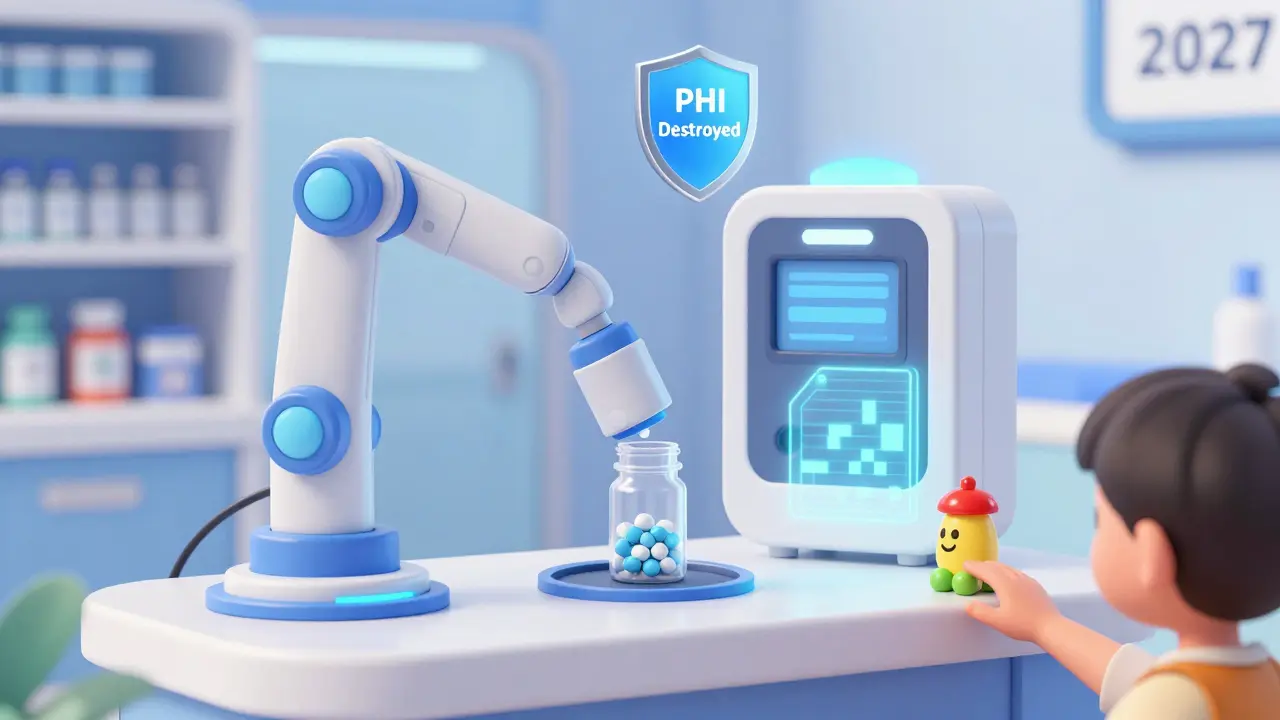
By 2026, industry analysts predict most new medication packaging will include built-in privacy features-like tear-off label sections or QR codes that delete data when scanned. By 2027, 40% of major pharmacies plan to install smart kiosks that automatically destroy labels and pills in one step.
And if the Safe Drug Disposal Act of 2024 passes, the federal government will spend $50 million a year to expand take-back programs nationwide-with privacy protection as a mandatory requirement.
Final Checklist: Your Privacy Protection Plan
Here’s what to do every time you dispose of meds:
- Check if your medication is on the FDA Flush List → if yes, flush it immediately (but still remove label).
- Look for a take-back drop-off at your pharmacy → use it if possible.
- If no drop-off, use a mail-back envelope → worth the $3 investment.
- If doing it yourself: remove pills, mix with coffee grounds, seal in container, black out label with permanent marker.
- Never recycle prescription bottles without destroying the label.
- Keep a Sharpie in your medicine cabinet. It takes 10 seconds.
Privacy isn’t complicated. It’s just consistent. One bottle, one marker, one minute. That’s all it takes to stop someone from stealing your identity.
Can I just throw away my old pill bottle without doing anything to the label?
No. Leaving the label readable puts your personal health information at risk. Identity thieves and drug seekers regularly go through trash looking for prescription bottles. Even if you take the pills out, the label still contains your name, address, doctor’s info, and what medication you took. Always scratch it out, cover it with tape, or use a permanent marker before tossing it.
Is it safe to flush medications down the toilet?
Only if the medication is on the FDA’s Flush List. That list includes powerful opioids and other drugs that are extremely dangerous if accidentally ingested. For most medications, flushing is unnecessary and harms the environment. The EPA estimates millions of pounds of pharmaceuticals enter U.S. waterways every year from improper flushing. When in doubt, check the FDA website or use the DisposeRx app.
Do pharmacies really collect old medications safely?
Yes. Chain pharmacies like Walgreens, CVS, and Rite Aid have secure, DEA-approved drop-off boxes inside their stores. These are locked, monitored, and collected by licensed disposal companies. The medications are incinerated under federal regulations. No one sees your name or prescription details. In fact, 89% of people who use these programs say they feel very confident about their privacy.
What if I can’t get to a pharmacy or mail-back program?
Use the FDA’s at-home method: remove pills from the bottle, mix them with used coffee grounds or cat litter, seal the mixture in a container, and throw it in the trash. Then, cover your empty bottle’s label completely with a permanent marker or duct tape. It takes five minutes, but it’s the only way to protect your info if you don’t have other options.
Why do I need to remove the label if I’m already mixing the pills with coffee grounds?
Because the bottle itself can still be found and read. Someone might not care about the trash mixture, but they’ll take the bottle if they see your name on it. The label is the real risk-not the pills. Even empty bottles with readable labels have been used to commit insurance fraud, get fake prescriptions, or steal identities. Destroying the label is non-negotiable.
Hannah Taylor
December 22, 2025 AT 01:38Jason Silva
December 23, 2025 AT 21:08Theo Newbold
December 25, 2025 AT 05:50Cara C
December 26, 2025 AT 08:15Michael Ochieng
December 28, 2025 AT 03:23Erika Putri Aldana
December 29, 2025 AT 19:40Orlando Marquez Jr
December 30, 2025 AT 19:46Jackie Be
December 31, 2025 AT 02:31John Hay
December 31, 2025 AT 17:15Swapneel Mehta
January 1, 2026 AT 06:20Ben Warren
January 2, 2026 AT 10:08Teya Derksen Friesen
January 2, 2026 AT 20:01Sandy Crux
January 4, 2026 AT 02:15