How to Handle Missed Doses Safely without Doubling Up
 Mar, 30 2026
The Morning Panic: What Happens When You Forget Your Meds
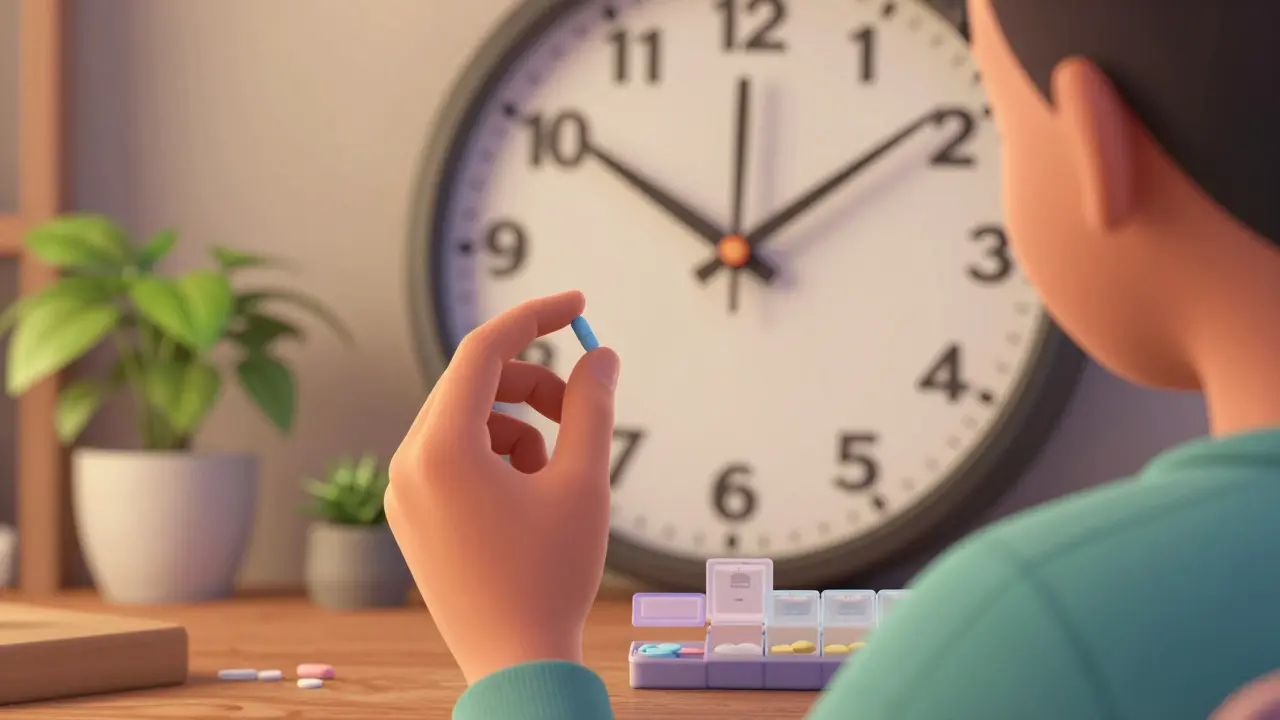
It happens to almost everyone. You wake up at 10 am, realize it’s way past your usual 7 am routine, and your heart sinks because you haven’t taken your morning pills yet. The immediate instinct is often to just swallow them all now. But doing so creates a hidden danger that can land you in the hospital. As someone living in Edinburgh, I see how vital proper medication adherence is for our community health.
We often assume that taking a double dose makes up for lost time. That assumption is statistically incorrect. According to data from the Medicines and Healthcare products Regulatory Agency, taking double doses accounts for a significant portion of preventable hospital admissions related to medication errors in England. The core principle here is simple: never double up to compensate for a missed one. This rule protects you from toxicity levels that can become life-threatening very quickly.
Why Doubling Up Is Dangerous for Your Body
Your body processes medicine based on something called a half-life, which determines how long a drug stays active in your system. If you take two pills close together, you spike the concentration in your blood beyond the safe zone. For medications with a narrow therapeutic index, like warfarin or digoxin, this margin is razor-thin. A study published in JAMA Internal Medicine showed that a majority of patients who doubled their warfarin dose experienced dangerously high INR values, putting them at immediate risk of major bleeding.
Think of it like driving a car. You wouldn’t press the gas pedal to the floor because you were running late; you just get back on track. Your kidneys and liver have to work overtime to clear that excess load. Professor Jane Chen from Johns Hopkins University notes that these errors cost millions annually in healthcare spending. We have to stop thinking of pills as units to be completed daily and start seeing them as timed chemical interventions.
The Midpoint Rule and Timing Windows
So, what actually do you do when you remember? It depends entirely on how much time has passed until your next scheduled dose. Most clinical guidelines follow a “midpoint rule.” If you remember the missed dose less than half the time away from your next dose, you can usually take it. However, if more than 50% of that interval has passed, you should skip it and wait for the next scheduled time.
Schedule
Missed By Less Than
Action Required
Once Daily
Same Day
Take immediately
Twice Daily
6 Hours Late
Take immediately
Three Times Daily
4 Hours Late
Take immediately
Night Shift
Before Next Dose
Skip if close
This logic applies broadly to stable conditions. For example, NHS clinical guidelines specify that for once-daily medicines, you should take the missed dose as soon as remembered on the same calendar day. But if you realize it the following morning, skipping is safer. Twice-daily medications typically allow a six-hour window before omission becomes necessary.
Special Protocols for High-Risk Medications
Some drugs require tighter management than others. These fall into risk categories defined by the National Patient Safety Agency. “Red” risk medications include antiepileptics and anticoagulants where missing a dose carries immediate harm potential. “Green” risk drugs, like many statins, generally have a lower urgency for single missed doses.
Anticoagulants (Warfarin): The guidance found in the Warfarin Anticoagulant Record is specific. If you forget a dose and remember before midnight, take it. If you remember after midnight, skip it. This prevents the risk of overdosing before the International Normalized Ratio test.
Blood Pressure Meds: Agents like amlodipine have short half-lives. Clinical surveys indicate that 53% of clinicians recommend using the midpoint rule strictly here. Taking a dose too close to the next one can cause hypotension, leading to falls and dizziness.
Oral Contraceptives: These are notoriously sensitive to timing. The Australian Prescriber specifies that active tablets forgotten within 12 hours of the usual time should be taken immediately. However, delays exceeding 12 hours may reduce contraceptive protection. Always keep backup condoms handy during these slip-ups.
Modern Drugs: GLP-1 Agonists and Diabetes Care
With the rise in prescriptions for GLP-1 medications like semaglutide and tirzepatide, we see unique protocols emerging. Unlike daily pills, these are weekly injections. Guidance from UCLA Health states doses can be taken within 4 days of the missed date. Beyond that, you restart at your regular schedule.
Interestingly, clinical trial data suggests that resuming after two missed doses can cause gastrointestinal discomfort for nearly 24% of patients. This means rushing back into a full dose schedule after a long gap isn't always comfortable. Slowing the reintroduction might help manage nausea or stomach issues.

When Instructions Are Missing or Unclear
Here is a frustrating reality: a systematic review found that roughly 25% of medications designated as high-risk lacked clear missed dose instructions in their patient leaflets. If your leaflet says nothing about forgetting a dose, you cannot guess. You must ask your pharmacist.
Inconsistent advice is common. Patient reviews on pharmacy services show confusion when different pharmacists give different timelines for the same drug. The Royal Pharmaceutical Society criticizes this inconsistency. If you rely on a Patient Information Leaflet, check the specific section on “What to do if you miss a dose.” If it is vague, the NHS “Medicines A-Z” online service is a reliable secondary source updated weekly.
Tools and Strategies to Prevent Future Misses
Prevention is better than cure. Adoption of digital adherence tools has grown significantly, with uptake among type 2 diabetes patients now over 50%. Apps like MyTherapy report reducing missed dose incidents by more than 40% through automated reminders.
Setting alarms is basic, but effective. Link your medication routine to another habit, like brushing your teeth or pouring breakfast tea. For complex regimens, consider a weekly blister pack dispensed by your local pharmacy. Community pharmacy Medicines Use Reviews have been shown to reduce missed dose incidents by nearly 30%. These reviews allow a professional to check your understanding of every bottle on your shelf.
Summary of Key Safety Principles
- Never Double: Doubling increases overdose risk significantly.
- Check the Clock: Use the midpoint rule for most standard pills.
- Know Your Drug: Some meds like Warfarin have strict midnight cutoffs.
- Ask Questions: Consult your pharmacist if the leaflet is unclear.
- Use Tech: Apps and blister packs improve consistency.
What should I do if I miss a dose of Warfarin?
If you remember before midnight, take your dose. If you remember after midnight, skip that day and resume normal dosing. Never take two tablets to catch up, as this drastically increases bleeding risk.
Can I take my oral contraceptive late?
Yes, if you are less than 12 hours late. Take the tablet immediately. If it has been more than 12 hours, contraception may be compromised and you should use backup methods for 7 days.
Is it safe to double up on blood pressure medication?
No. Doubling blood pressure medication can cause sudden drops in blood pressure, leading to dizziness, fainting, and falls. Stick to the prescribed timing window.
What is the midpoint rule for missed pills?
This rule states that if you realize you missed a dose less than halfway to your next scheduled dose, take it. If you are past the halfway point, skip the missed dose and wait for the next one.
Where can I find specific instructions for my prescription?
Check the Patient Information Leaflet included in the box. If unclear, consult the NHS Medicines A-Z website or visit your local community pharmacist for a Medicines Use Review.
Kendell Callaway Mooney
March 30, 2026 AT 18:07Just take it if you remember before lunch and skip it otherwise.
Christopher Curcio
April 1, 2026 AT 07:03Pharmacokinetics dictates accumulation rates when intervals breach therapeutic windows so steady state maintenance requires strict adherence to half-life parameters.
Calvin H
April 2, 2026 AT 20:10Sounds like a lot of noise just to tell us not to eat twice as much poison.
dPhanen DhrubRaaj
April 3, 2026 AT 11:29back home we often just wait till next time because pills cost money here and waste feels bad sometimes i dont know much about warfarin though
Brian Yap
April 3, 2026 AT 14:05Yeah thats pretty common in my neighbourhood too mate just gotta listen to the docs mostly
emma ruth rodriguez
April 4, 2026 AT 12:06It is imperative that patients strictly adhere to the prescribed temporal boundaries regarding dosage administration to mitigate adverse physiological outcomes.
William Rhodes
April 5, 2026 AT 14:07Stop being so stiff people want simple answers not a lecture from the ivory tower just do what the paper says!
Cameron Redic
April 6, 2026 AT 04:32Most people reading this won't even care they just want a quick fix for their laziness anyway its always about convenience not health.
RONALD FOWLER
April 6, 2026 AT 18:16That is quite harsh everyone struggles with routine honestly trying to be kind is better than tearing down others.
Angel Ahumada
April 7, 2026 AT 19:44the essence of compliance is not merely following orders but understanding the metaphysical connection between body and substance consumption
Marwood Construction
April 9, 2026 AT 15:32Actually clinical guidelines provide empirical data rather than metaphysical speculation when defining safety protocols.
Dan Stoof
April 10, 2026 AT 21:49I love how life depends on tiny little tablets! It makes you think wow!!!
Jonathan Sanders
April 11, 2026 AT 14:46Oh sure keep dreaming until the side effects kick in and ruin your Tuesday evening plans.
Katie Riston
April 12, 2026 AT 16:30There is so much nuance to consider when thinking about medication schedules and how our bodies react to chemicals. It really changes everything when you realize timing matters more than the pill itself. We often forget that metabolism varies wildly between different individuals so what works for one person fails for another completely. The stress of remembering also adds another layer of anxiety that nobody talks about enough in these articles. You have to build a system that fits your actual life instead of fighting against your biology constantly. I used to set alarms everywhere but now I prefer linking it to existing habits like coffee time. Sometimes the fear of missing is worse than the risk of missing actually happening. Our healthcare system assumes perfect humans who never sleep in late nights or drink wine on weekends. But real people live messy lives where plans change without warning often. If we shift focus to harm reduction rather than perfection we save more lives overall. Ignorance causes far more harm than simple forgetfulness ever could manage alone. We need better education so everyone knows why doubling up causes damage to organs quickly. Trusting professionals helps but reading labels carefully saves skin in emergencies sometimes. Communication with pharmacists should be normalised rather than seen as weak or ignorant. Ultimately safety comes from knowledge combined with realistic expectations of daily human behaviour patterns. Everyone deserves a clear path forward when mistakes happen instead of panic setting in.