Heart Arrhythmias from Medications: Warning Signs and How to Manage Them
 Mar, 21 2026
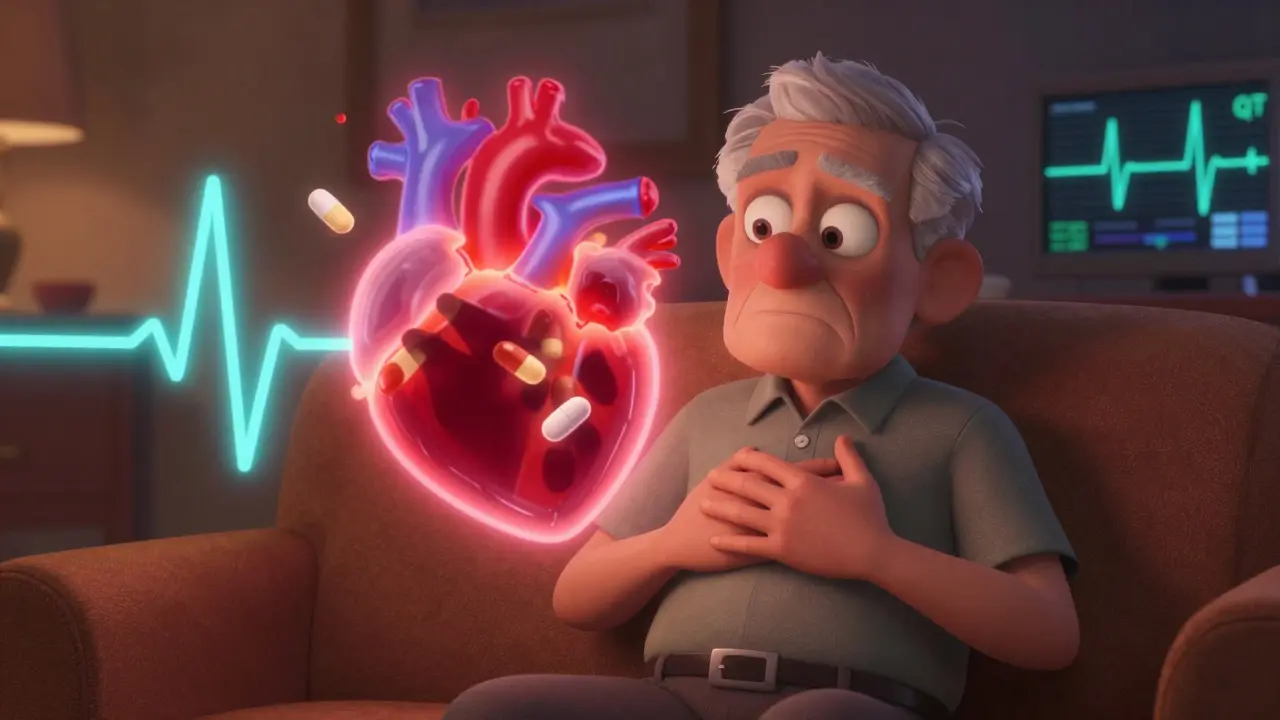
When you take a pill to treat one problem, you don’t expect it to trigger another-especially something as serious as an irregular heartbeat. But medication-induced arrhythmias are more common than most people realize. They can happen with drugs you’ve taken for years, or even with something as simple as an antibiotic or an antihistamine. The good news? Recognizing the warning signs early can prevent hospital visits, serious complications, or even death.
What Exactly Is a Medication-Induced Arrhythmia?
An arrhythmia is when your heart beats too fast, too slow, or in an irregular pattern. When a medication causes this, it’s called a drug-induced arrhythmia. It doesn’t mean the drug is "bad"-it just means your body reacts in a way that disrupts the electrical signals controlling your heartbeat. Over 400 commonly used medications have been linked to this issue. That includes drugs for depression, high blood pressure, infections, diabetes, and even heart conditions themselves.
The most dangerous type involves QT interval prolongation-a measurement on an ECG that shows how long it takes your heart to recharge between beats. When this interval gets too long, it can trigger a life-threatening rhythm called torsades de pointes. This isn’t rare. About 3-5% of people taking certain antibiotics or antifungals experience this. And it’s worse if you’re older, have low potassium or magnesium, or are taking more than one of these drugs at once.
Which Medications Are Most Likely to Cause Problems?
Not all drugs carry the same risk. Some are well-known offenders:
- Antibiotics: Macrolides like azithromycin and fluoroquinolones like levofloxacin can prolong the QT interval. Risk peaks in the first week of use.
- Antidepressants and antipsychotics: Medications like citalopram, sertraline, and haloperidol are linked to arrhythmias, especially at higher doses.
- Antiarrhythmics: Ironically, drugs meant to fix arrhythmias-like flecainide or amiodarone-can make them worse. Flecainide can turn atrial flutter into a dangerous 1:1 rhythm.
- Digoxin: Used for heart failure and atrial fibrillation, digoxin toxicity causes fast heart rates with blockages. It’s most dangerous in people with kidney problems or low magnesium.
- Diuretics: These can drop potassium and magnesium levels, setting the stage for arrhythmias.
- Cholesterol drugs: Statins rarely cause issues, but in rare cases, they trigger atrial fibrillation.
- Cancer drugs: Trastuzumab (Herceptin) can cause inflammation in heart tissue, leading to atrial fibrillation in 2-5% of patients.
People of African ancestry with the S1103Y gene variant and those of East Asian descent with the R1193Q variant are at significantly higher risk. These genetic differences aren’t routinely tested for-but they matter. If you’ve had a drug reaction before, it’s worth discussing genetic screening with your doctor.
Warning Signs You Can’t Ignore
Most people don’t feel arrhythmias until they’re serious. But there are clues:
- Palpitations-a fluttering, pounding, or skipping feeling in your chest. Reported by 70-80% of affected patients.
- Dizziness or lightheadedness-especially when standing up. This happens in 40-50% of cases.
- Fatigue-unusual tiredness that doesn’t go away with rest. Affects 30-40%.
- Chest discomfort-not always sharp pain. Sometimes just pressure or tightness. Seen in 15-20%.
- Fainting or near-fainting-this is a red flag. Only 5-10% experience it, but it means your heart isn’t pumping enough blood.
Don’t wait until you pass out. If you start feeling any of these after starting a new medication-or even increasing a dose-talk to your doctor. Don’t assume it’s "just anxiety" or "getting older."
Who’s at Highest Risk?
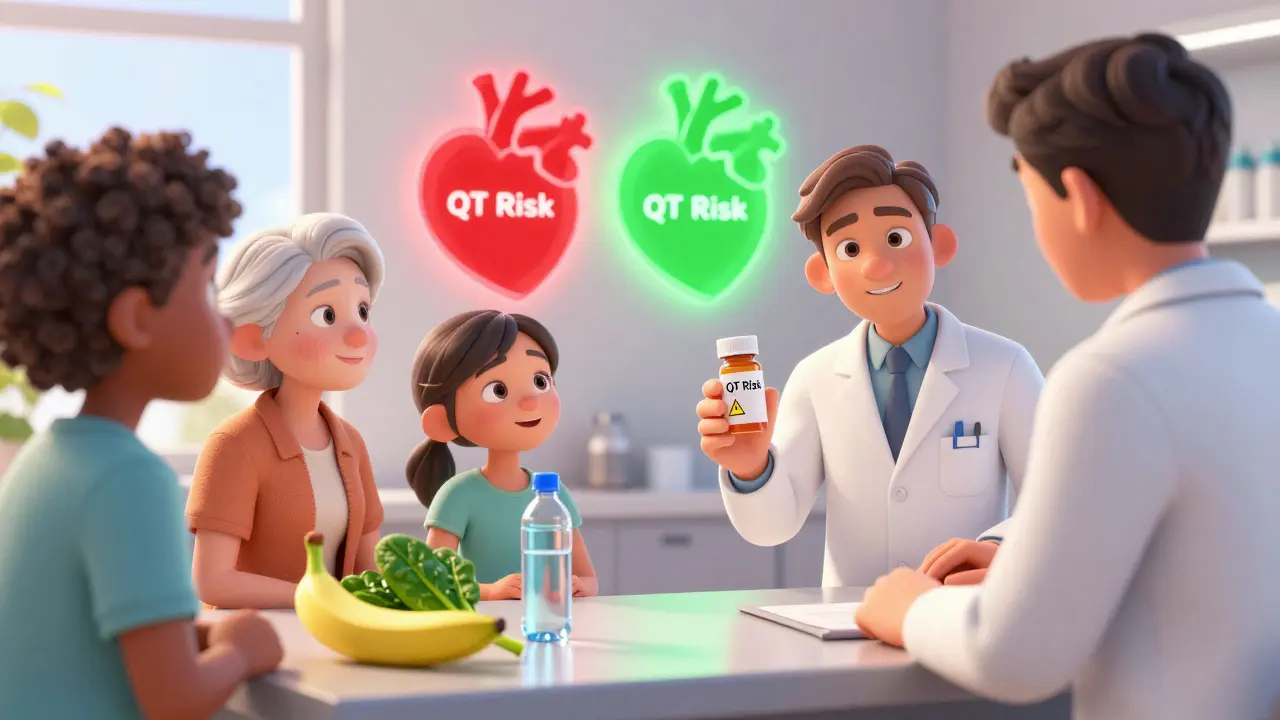
It’s not just about the drug. Three major factors stack the deck:
- Age 65+: Over 60-70% of severe cases involve older adults. Their kidneys process drugs slower, and they often take multiple medications.
- Electrolyte imbalances: Low potassium (affects 20%) or low magnesium (10-15%) makes arrhythmias much more likely. Diuretics, vomiting, or poor diet can cause this.
- Excessive alcohol: More than three drinks a day triples your risk. Even weekend binges can trigger episodes.
Also, combining QT-prolonging drugs increases risk by 300-500%. For example, taking azithromycin with an antidepressant like citalopram is dangerous. Many patients don’t realize their pharmacist or doctor hasn’t checked for these interactions.
How Are These Arrhythmias Managed?
The first step is always stopping or adjusting the drug-when possible. In 75-85% of cases, simply changing the dose or switching medications resolves the problem. Here’s how it works:
- Stop the trigger: If you’re on a high-risk drug and symptoms appear, your doctor may switch you to a safer alternative. For example, replacing azithromycin with amoxicillin.
- Correct electrolytes: IV or oral potassium and magnesium are often given. Target levels: potassium above 4.0 mEq/L and magnesium above 2.0 mg/dL.
- Monitor with ECG: Baseline ECG before starting high-risk drugs is standard. A repeat ECG within 72 hours catches changes early.
- Adjust beta-blockers: If metoprolol is causing slow heart rate (bradycardia), reducing the dose helps in 60-70% of cases. A few patients may need a pacemaker if the drug is essential for heart rhythm control.
- Consider ablation: For persistent cases, catheter ablation fixes the problem in 5-10% of patients. Surgery is needed in less than 2%.
For people on long-term high-risk meds like amiodarone, regular blood tests and ECGs are non-negotiable. Some hospitals now use digital tools that alert doctors if a patient’s ECG shows QT prolongation.
What You Can Do to Lower Your Risk
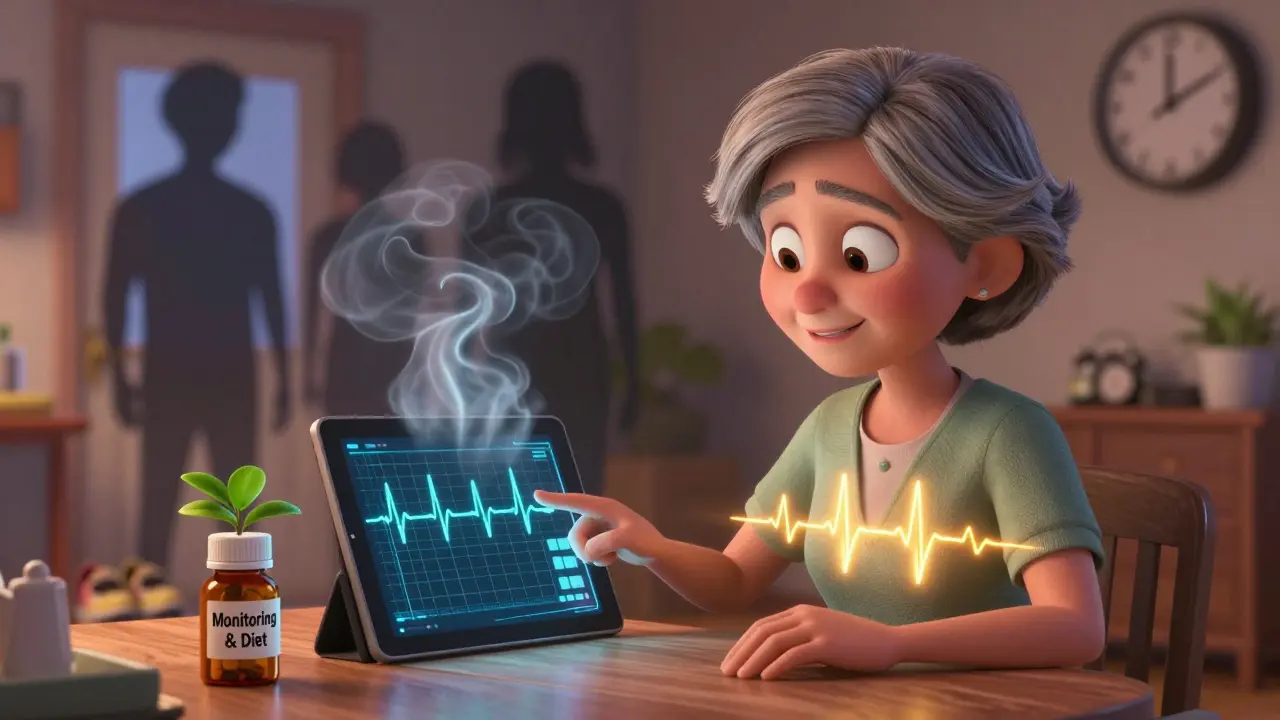
Prevention is the best treatment. Here’s what works:
- Keep a full medication list: Include supplements and OTC drugs. Many people don’t realize antihistamines like diphenhydramine (Benadryl) can cause arrhythmias.
- Ask your doctor: "Is this drug linked to heart rhythm problems?" It’s a simple question that saves lives.
- Limit caffeine and alcohol: Caffeine causes palpitations in 25-30% of people. It’s rarely deadly alone, but combined with other risks, it tips the scale.
- Eat potassium-rich foods: Bananas, spinach, potatoes, and beans help maintain healthy levels. Avoid excessive salt-it worsens fluid shifts.
- Stay active and sleep well: Regular walking, 30 minutes a day, and 7-9 hours of sleep improve heart resilience.
- Know your family history: If close relatives had sudden cardiac events or unexplained fainting, tell your doctor. It might point to hidden genetic risks.
Why This Matters Now More Than Ever
Drug-induced arrhythmias cause 100,000-150,000 hospitalizations each year in the U.S. alone, costing over $1.2 billion. That’s not just numbers-it’s people. Many of these cases are preventable. The FDA has added black box warnings to 25 medications since 2010, and eight more were added in 2022. That’s not random-it’s a response to real harm.
Emerging tools are helping. A clinical decision support system launching in 2024 will use age, kidney function, current meds, and genetic data to calculate your personal risk before a prescription is written. In the next five years, experts predict a 30-40% drop in severe cases thanks to better screening and awareness.
For now, your best defense is knowing the signs, asking questions, and never ignoring symptoms. Your heart doesn’t always warn you before it’s too late. But you can be the one to catch it early.
Can over-the-counter drugs cause arrhythmias?
Yes. Common OTC medications like antihistamines (diphenhydramine in Benadryl), decongestants (pseudoephedrine), and even some herbal supplements (e.g., licorice root) can prolong the QT interval or raise blood pressure enough to trigger arrhythmias. Always check labels and talk to your pharmacist before taking new OTC drugs, especially if you’re on heart medication.
I feel fine but my ECG shows QT prolongation-should I be worried?
Yes. Many people with prolonged QT don’t have symptoms until they have a dangerous event. If your ECG shows this, your doctor will likely stop or change your medication, check your electrolytes, and repeat the test. Don’t wait for dizziness or fainting to act. Early intervention prevents emergencies.
Can stress or anxiety mimic arrhythmia symptoms?
Absolutely. Anxiety can cause palpitations, dizziness, and chest tightness that feel identical to arrhythmias. But if you’ve recently started a new medication, don’t assume it’s just stress. The combination of medication and anxiety can increase risk. Your doctor should rule out drug-induced causes before labeling it as anxiety.
Are there safe alternatives to drugs that cause arrhythmias?
Often, yes. For example, instead of azithromycin, amoxicillin is a safer antibiotic. For depression, sertraline may be replaced with bupropion, which has lower arrhythmia risk. For nausea, ondansetron can be swapped for metoclopramide in high-risk patients. Always discuss alternatives with your doctor-don’t stop meds on your own.
Should I get genetic testing for arrhythmia risk?
It’s not routine yet, but if you’ve had unexplained fainting, a family history of sudden cardiac death, or a reaction to a medication, genetic testing may be worth considering. The S1103Y and R1193Q variants are strongly linked to higher risk. Testing is available through specialized cardiac genetics clinics and could guide future prescribing decisions.
Nishan Basnet
March 23, 2026 AT 06:26Had no idea something as simple as Benadryl could mess with your heart rhythm. I’ve been taking it for years for allergies, and now I’m paranoid. But seriously, this post should be mandatory reading for anyone over 50. My dad went to the ER last year after starting a new antibiotic-turns out, his potassium was low and the combo was a ticking time bomb. Glad I’m checking my meds now.
Also, spinach and bananas are now on my weekly list. Small changes, big difference.
Timothy Olcott
March 25, 2026 AT 03:32OMG THIS IS SO TRUE!!! 🚨 I got zigzag heart on my ECG after that Z-pack and thought I was dying. Turned out it was just azithromycin + my multivitamin. Docs don’t tell you shit. #MedicationMeltdown #HeartAttackWaitlist
Nicole James
March 26, 2026 AT 10:57Of course the FDA only acts after hundreds die-capitalism prioritizes profit over life. The pharmaceutical industry funds research, controls guidelines, and silences whistleblowers. Did you know that amiodarone was pulled in Europe for years before the U.S. caught up? And now they’re adding "digital tools" like it’s some kind of miracle? It’s not innovation-it’s damage control with a tech veneer. The real solution? Abolish profit-driven medicine.
And don’t get me started on genetic testing being "not routine." That’s because they don’t want you to know who’s disposable.
Casey Tenney
March 27, 2026 AT 16:33You’re not "just anxious." You’re not "getting older." You’re being poisoned by a pill you didn’t know was dangerous. Stop ignoring symptoms. Stop trusting doctors who don’t ask about your OTC meds. Your life isn’t a gamble.
Get tested. Get informed. Or don’t. But don’t act surprised when it’s too late.
Bryan Woody
March 27, 2026 AT 22:50Let me guess-you’re one of those people who thinks "it won’t happen to me" until your heart starts doing the cha-cha.
Look, I’ve been a nurse for 22 years. I’ve seen 37-year-olds collapse because they took citalopram with a Z-pack and thought "it’s just a cough." Meanwhile, their potassium was at 3.1. I’m not mad-I’m just disappointed.
Here’s the thing: if you’re on more than three meds, you’re playing Russian roulette with your heart. Get your ECG, check your electrolytes, and stop treating your pharmacist like a vending machine. And yes-bananas help. No, they’re not a cure. But they’re better than nothing.
And if you think this is overhyped, go read the FDA’s 2022 black box warnings. Then come back and tell me this isn’t real.
Also: statins don’t cause AFib in 99.9% of cases. Stop blaming them. It’s the combo drugs, the diuretics, and the energy drinks. Not the cholesterol pill you’ve been on for a decade.
Jackie Tucker
March 28, 2026 AT 23:48How quaint. A 12-point list on how to not die from pharmaceutical negligence. How dare we expect patients to be proactive when the system is designed to keep them passive.
And yet, the article treats this as a personal responsibility issue rather than a systemic failure. We’re told to eat bananas while the FDA approves new QT-prolonging drugs every quarter. The real question isn’t whether you’re taking Benadryl-it’s why your doctor didn’t screen you before prescribing it.
Also, "ask your doctor"? That’s like saying "ask your landlord if the building is fireproof."
matthew runcie
March 30, 2026 AT 19:43Appreciate the breakdown. I’ve been on sertraline for 8 years and never knew it could do this. My doc never mentioned it. Guess I’ll be asking next visit.
Also, I’m adding spinach to my smoothie. Why not.
Shaun Wakashige
April 1, 2026 AT 17:15lol this is why I only take ibuprofen and melatonin. Everything else is just asking for trouble. 🤷♂️
Solomon Kindie
April 2, 2026 AT 20:43Medications are just chemical weapons disguised as help. The system doesn’t care if you live or die as long as you keep paying. QT prolongation? That’s not a side effect-that’s a feature designed to keep you coming back. Your heart is just a revenue stream.
Genetic testing? Nah. They’d rather you die quietly than admit they didn’t test enough people. And don’t get me started on how they market drugs to elderly women while ignoring the real risks. It’s all about the profit margin.
Stop blaming the patient. The real villain is the FDA’s revolving door with Big Pharma.
Also typo: it’s not "flecainide" it’s "flecanide" lol
Johny Prayogi
April 3, 2026 AT 07:27THIS IS GOLD. 🙌 I’m a pharmacist and I see this every day. People take 5+ meds and think they’re fine. One guy was on azithromycin, citalopram, and hydrochlorothiazide-all QT-prolonging. He didn’t even know. We flagged it and switched him. He’s now fine.
Also, OTC meds? Huge blind spot. Benadryl, Sudafed, NyQuil-they’re all landmines. Talk to your pharmacist. They’re not just pill dispensers. They’re your last line of defense.
And yes, bananas help. But so do oranges, sweet potatoes, and a damn glass of water. Stay hydrated. It’s free.
Also-yes, genetic testing isn’t routine. But if you’ve had unexplained fainting? Get it. It’s worth it.
Allison Priole
April 5, 2026 AT 02:06I’ve been thinking about this since I read the article. I’m 58, on a beta-blocker for AFib, and take a daily antihistamine for seasonal allergies. I never connected the dots. Now I’m switching to a non-drowsy one and asking my doctor for a potassium check. Also, I started walking 30 minutes a day-just to feel better. Not because I’m scared, but because I want to live well.
It’s not about fear. It’s about awareness. And awareness? That’s power.
Also, I’ve been eating more beans. They’re cheap, filling, and good for your heart. Who knew?
Sandy Wells
April 5, 2026 AT 12:53The article is well-researched. However, the suggestion that patients should self-manage cardiac risk through dietary adjustments and doctor consultations is fundamentally inadequate. The burden of medical literacy should not rest on the individual, particularly when pharmaceutical marketing actively obscures risk profiles. The systemic failure lies in the absence of mandatory pre-prescription cardiac screening for all patients over 50 on polypharmacy regimens. Until that is implemented, this discussion remains performative.
Also, the term "chill observer" is an oxymoron when applied to human physiology. The heart does not chill. It beats. Or it stops.