Generic Copays vs Brand Copays: Average 2024 Costs Explained
 Jan, 21 2026
When you fill a prescription in 2024, the amount you pay at the pharmacy isn’t just the price of the medicine. It’s shaped by your insurance plan’s copay structure-and whether you’re getting a generic or brand-name drug can make a huge difference in your wallet.
What’s the real cost difference?
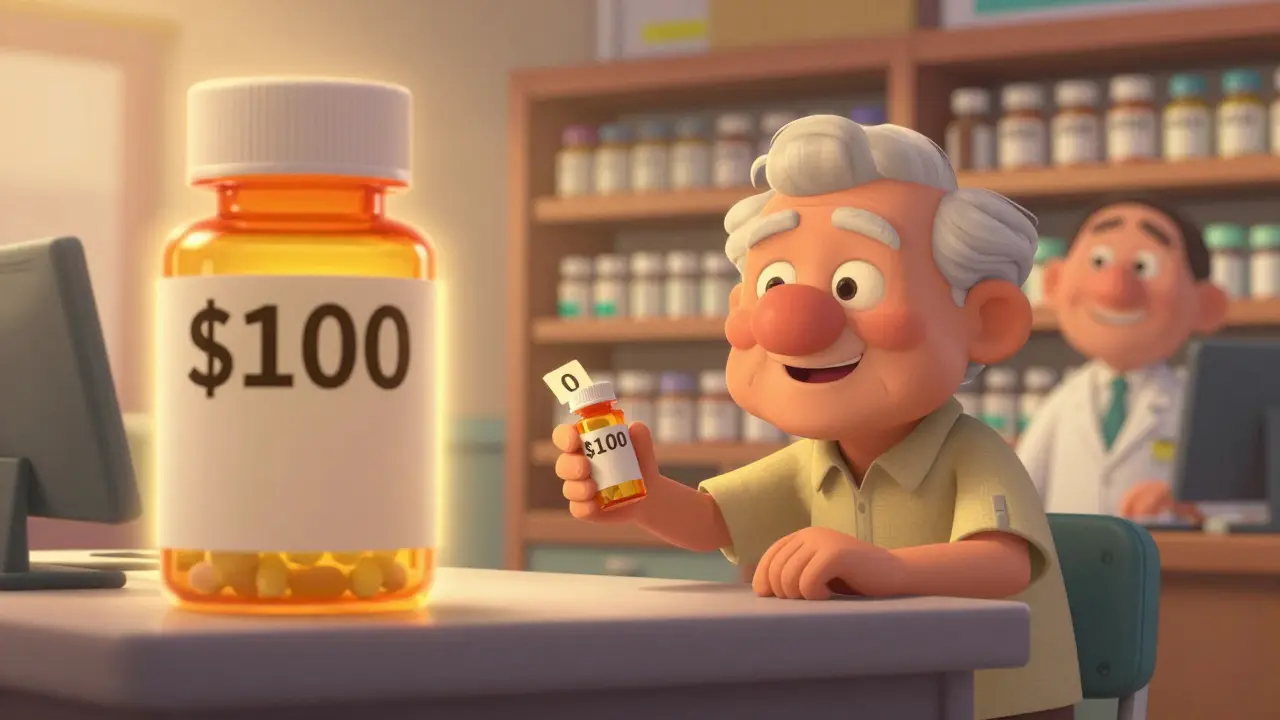
For most people on Medicare Part D or commercial insurance, generic drugs cost far less than brand-name versions. In 2024, the average copay for a preferred generic was between $0 and $4.50. Some plans even offered $0 copays for generics. That’s not a typo. You could walk out with a 30-day supply of lisinopril, metformin, or atorvastatin and pay nothing. Brand-name drugs? That’s a different story. The median copay for a preferred brand was $47. For non-preferred brands-drugs your plan doesn’t encourage-you could easily pay $100 or more per prescription. That’s more than 20 times the cost of a generic, even before you factor in coinsurance.How Medicare Part D tiers work
Medicare drug plans use a four-tier system to sort medications by cost:- Tier 1: Preferred Generics - Usually $0 to $4.50
- Tier 2: Non-Preferred Generics - Around $7
- Tier 3: Preferred Brands - Median $47
- Tier 4: Non-Preferred Brands - Median $100
Extra Help? Lower caps for low-income beneficiaries
If your income is limited, you might qualify for Extra Help-a federal program that cuts drug costs even further. In 2024, the maximum copay for generics was $4.50, and for brand-name drugs, it was $11.20. That’s a lifeline for people on fixed incomes. But if you don’t qualify, you’re on the hook for the full plan’s copay structure.Why brand-name drugs cost so much more
Generics are chemically identical to brand-name drugs. They have the same active ingredients, same dosage, same safety profile. The difference? Marketing, patents, and corporate pricing. Brand-name companies spend millions on advertising and patent protection. Once the patent expires, other manufacturers can make the same drug for pennies. But insurance plans still charge you a lot more for the original brand-because they’re not always incentivized to push the cheaper option. Even worse, some pharmacies are forced by wholesalers to pay higher prices for generics if they want to keep stocking expensive brand-name drugs. That’s called a “tying arrangement.” It’s not illegal, but it drives up the cost of generics in some places, making the price gap even wider.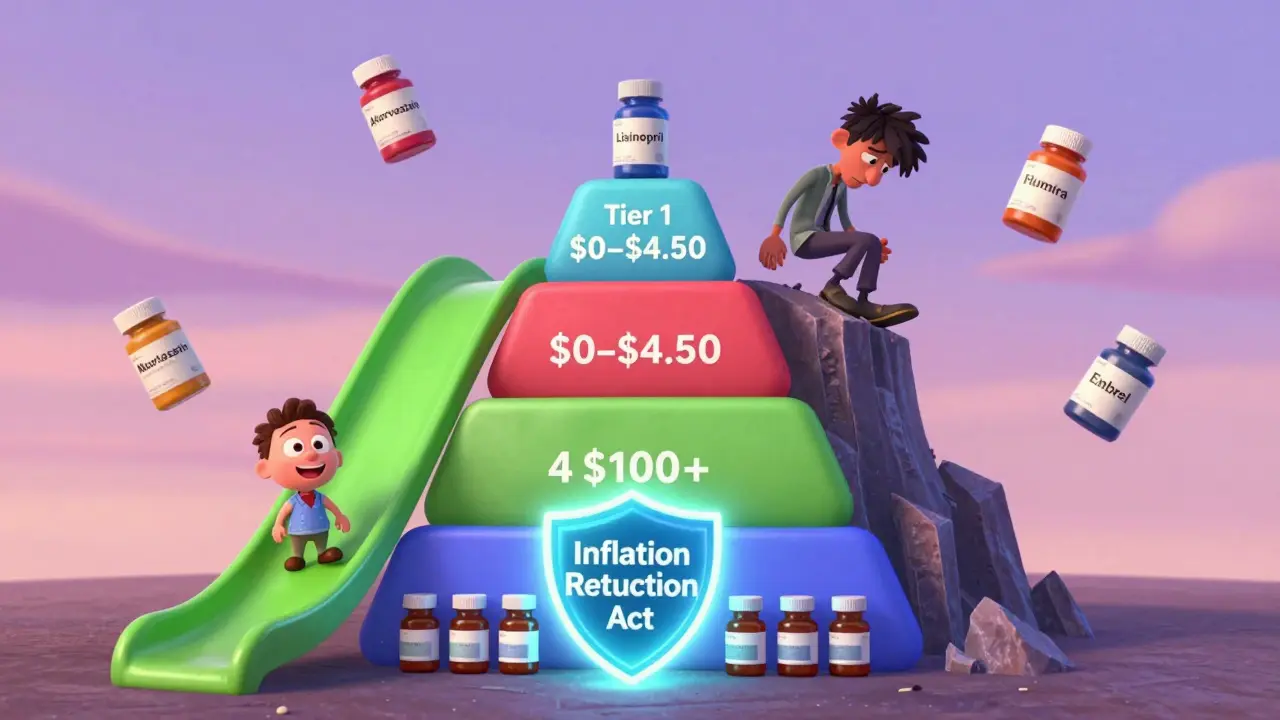
What happens when you’re in the coverage gap?
Medicare Part D has a coverage gap-also called the “donut hole.” In 2024, once you and your plan had spent $1,700 on drugs, you entered this phase. You still had to pay, but now you paid 25% of the drug’s cost, whether it was generic or brand. The good news? The Inflation Reduction Act capped insulin at $35 per month. That applies to both generic and brand insulin. So if you’re on insulin, you’re protected.Commercial insurance plans are even wilder
Some commercial insurers use a “Member Pay the Difference” rule. Here’s how it works: if your doctor prescribes Lipitor (brand), but there’s a generic version (atorvastatin) available, your plan will pay for the generic. Then they make you pay the difference between the two prices-on top of your regular copay. One Reddit user described paying $42 extra just because his doctor wrote “dispense as written.” Even though he didn’t ask for the brand, he still got stuck with the bill. That’s not a mistake. That’s policy.What real people are paying
A survey by the Medicare Rights Center found that 63% of people using brand-name drugs struggled to afford them. Only 28% of people on generics had the same problem. One beneficiary in Florida reported paying $95 for a 90-day supply of a non-preferred brand drug. The generic version? $15. His doctor wouldn’t switch him because of side effects-but he still had to pay the full $95. Meanwhile, plans with $0 generic copays got 4.7 out of 5 stars in user reviews. Plans with high generic copays? Around 3.2. People notice the difference.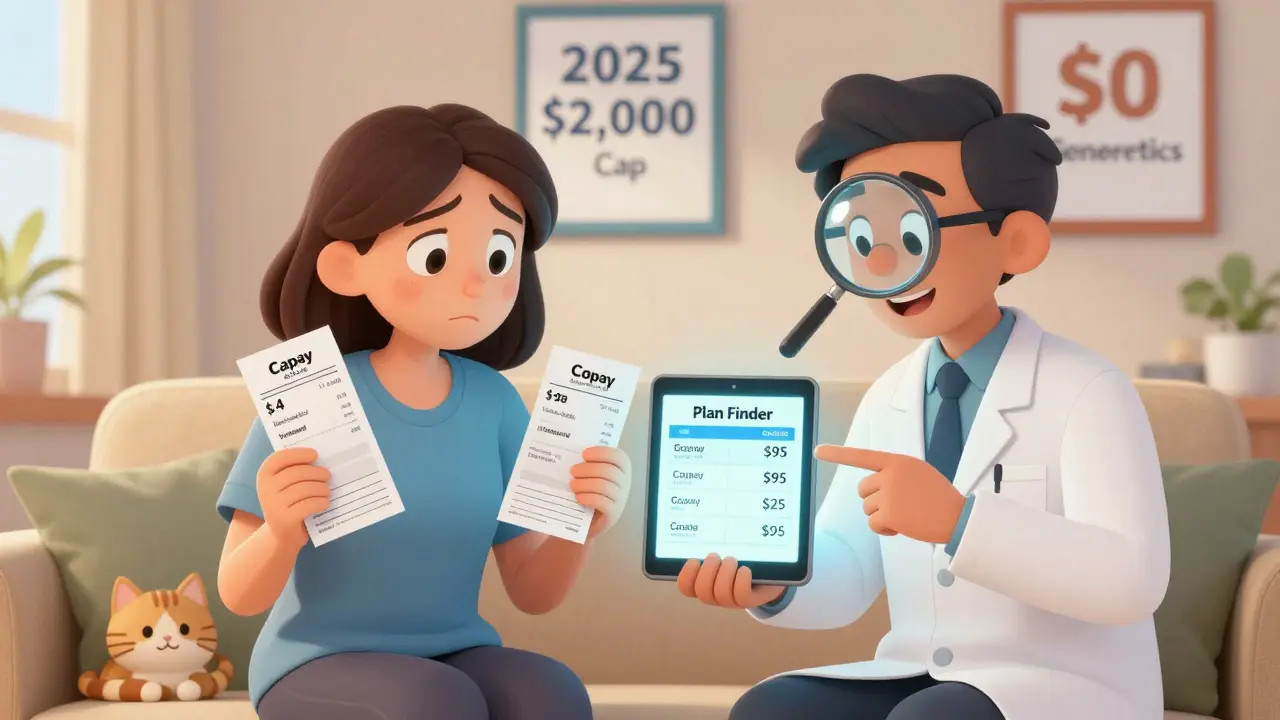
How to save money in 2024
You don’t have to just accept what your plan charges. Here’s what actually works:- Check your plan’s formulary-It’s required to be published by October 15 each year. Look up your exact medications.
- Ask for therapeutic alternatives-72% of Medicare plans have a preferred generic that works just as well as your brand drug.
- Compare plans annually-Your best plan this year might not be next year. Use the Medicare Plan Finder tool. It updates daily.
- Ask about cash prices-Sometimes, paying cash at Walmart or Costco is cheaper than your copay. A 30-day supply of metformin can cost $4 cash.
- Use mail-order pharmacies-Many plans offer lower copays for 90-day supplies.
Oladeji Omobolaji
January 22, 2026 AT 18:58Man, this is wild. In Nigeria, we just pay cash for meds and hope they don’t run out. No insurance, no tiers, no $0 copays-just pray the pharmacy has your pill. I’m glad y’all got some structure, even if it’s messed up.
dana torgersen
January 24, 2026 AT 09:54Okay, so… generics are $0?? Like… free?? I mean, I know they’re the same chemically, but why does it feel like the system is *punishing* me for being healthy?? I take metformin daily, and my plan charges $5… but I saw a cash price of $3 at Walmart?? WHY DO THEY DO THIS TO US??
Janet King
January 24, 2026 AT 22:19It is important to understand that formulary tiers are designed to encourage cost-effective prescribing. Patients should always review their plan’s formulary annually and request therapeutic alternatives when appropriate. Many physicians are unaware of the cost differences and may default to brand-name prescriptions without considering alternatives.
Anna Pryde-Smith
January 25, 2026 AT 17:19THEY’RE SCAMMING US. I got stuck with a $95 copay for a brand because my doctor didn’t know the generic was just as good. I had to call my pharmacy three times, beg my doctor to change it, and then wait two weeks. Meanwhile, my insulin was capped at $35-why not EVERYTHING?? This is healthcare apartheid.
Stacy Thomes
January 27, 2026 AT 00:27YOU CAN SAVE MONEY. I switched to mail-order for my 90-day supply of lisinopril. My copay dropped from $12 to $4. I used the Medicare Plan Finder. I cried. I saved $96 a year. You can too. Don’t wait. Do it now. Your wallet will thank you.
Dawson Taylor
January 27, 2026 AT 19:37The structural incentives within pharmacy benefit management systems create perverse outcomes. The alignment of manufacturer rebates with formulary placement often misrepresents true cost efficiency to the consumer. A $0 generic copay may mask underlying market distortions.
Laura Rice
January 28, 2026 AT 05:04I just found out my 78-year-old neighbor pays $110 for her brand-name blood pressure med… and she doesn’t even know she could get the same thing for $10. I sat with her for two hours, looked up her plan, called her doctor, and got her switched. She cried. I cried. This is what we’re supposed to do for each other. We can’t just scroll and sigh-we have to act.
Andrew Smirnykh
January 28, 2026 AT 23:16Interesting how the U.S. system incentivizes brand loyalty despite identical efficacy. In Japan, generics dominate over 80% of prescriptions. Their regulatory framework ensures bioequivalence is strictly enforced. Here, we have the science-but not the policy alignment.