Five Essential Rules for Taking Medication Safely
 Dec, 22 2025
Every year, over a million people in the U.S. end up in the emergency room because of medication errors. Many of these aren’t accidents-they’re preventable. Whether you’re taking one pill a day or managing five different medications, getting it right isn’t optional. It’s life or death. The truth is, most people don’t know how to take their meds safely. They assume the label says it all, or that their doctor explained everything. But here’s the reality: if you’re not following five basic rules, you’re playing Russian roulette with your health.
Right Patient: It’s Not Just Your Name
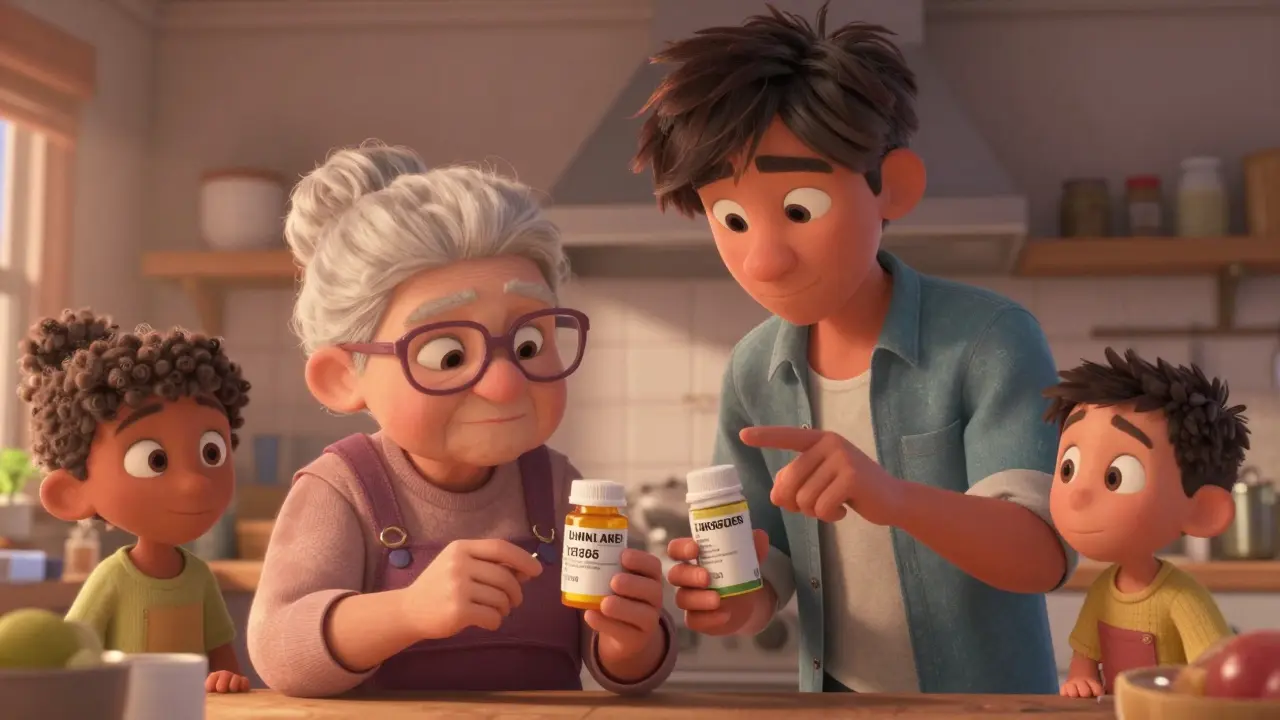
You’d think this one’s obvious. But how many times have you seen someone grab a pill bottle off the counter and take it without checking? Or worse-take someone else’s meds because they look similar? This isn’t just a hospital problem. At home, it’s even more common. Elderly parents, kids with chronic conditions, caregivers juggling multiple prescriptions-all are at risk.The fix is simple: always verify two things before you take anything. First, your full name on the label. Second, your date of birth. That’s it. No room numbers, no bed numbers, no assumptions. If your bottle says “John Smith” but you’re Jane Smith, stop. Call your pharmacy. This rule alone cuts errors by 30% in hospitals. At home, it’s just as powerful. A 2023 study found that 12% of medication mix-ups among seniors happened because they grabbed the wrong bottle by mistake. Double-checking your identity on the label prevents that.
Right Drug: Look Beyond the Brand Name
You might know your medicine as “Lipitor.” But what’s the actual drug inside? Atorvastatin. And that matters. Why? Because there are dozens of drugs that look, sound, or even smell alike. Insulin and heparin. Zyrtec and Zoloft. Adderall and Abilify. One wrong letter, one misheard word, and you’re in trouble.Pharmacies use “Tall Man Lettering” to help-like HYDROmorphone vs. HYDROxyzine. But you need to do your part. Always read the generic name on the label. If it’s different from what your doctor told you, ask. If the pill looks different from last time-color, shape, size-ask. Don’t assume it’s the same. A 2022 report from the Institute for Safe Medication Practices showed that 25% of all medication errors involved look-alike or sound-alike drugs. You don’t need to be a pharmacist. Just be suspicious. If something feels off, it probably is.
Right Dose: Bigger Isn’t Better
I’ve seen people crush pills because they’re hard to swallow. I’ve seen others split tablets without knowing if they’re scored. I’ve seen grandparents double up because they missed a dose yesterday. All dangerous. Dosing isn’t one-size-fits-all. It’s based on your weight, kidney function, age, and even what else you’re taking.For example, if you’re over 65, your body processes drugs slower. That means the same dose that was safe at 40 could be toxic now. If you have kidney disease, your doctor should adjust your dose-especially for painkillers, blood pressure meds, or diabetes drugs. And never take extra doses to “catch up.” That’s how overdoses happen. The CDC says 15% of pediatric dosing errors occur because caregivers guess the amount. Don’t guess. Use the measuring cup that came with the medicine. If you lost it, call your pharmacy. They’ll send you a new one. For insulin or blood thinners? Always double-check with your pharmacist. These are high-alert drugs. One mistake can land you in the ICU.

Right Route: Don’t Swallow What’s Meant for Your Skin
This one catches people off guard. You wouldn’t think it’s possible to take a patch orally or inject a cream. But it happens. More often than you’d believe. A 2023 study from the Agency for Healthcare Research and Quality found that 16% of medication errors involved the wrong route. Someone took a transdermal patch and thought it was a pill. Someone injected eye drops. Someone swallowed a suppository.Always check how your medicine is meant to be used. Is it oral? Topical? Inhaler? Injection? Suppository? Read the label. Look for symbols: a circle with a line through it means “do not swallow.” A dropper icon means “eye drops only.” If you’re unsure, ask your pharmacist to show you. Don’t rely on memory. Even if you’ve taken it for years, formulations change. A cream you used for eczema last year might now be a different strength or meant for a different body part. Always confirm the route before you use it.
Right Time: Timing Matters More Than You Think
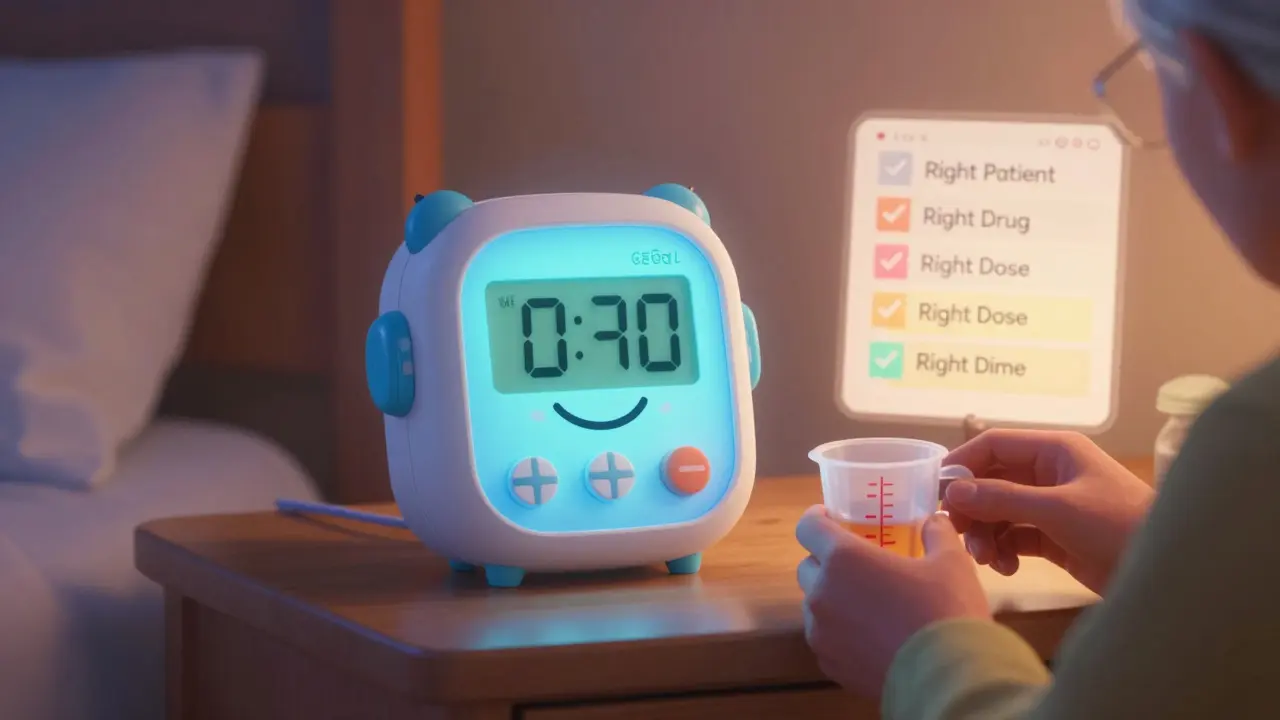
Some meds work best on an empty stomach. Others need food. Some need to be taken exactly 12 hours apart. Miss that window, and the drug doesn’t work-or worse, it becomes toxic.Take antibiotics. If you’re supposed to take them every 8 hours, taking them at 8 a.m., 5 p.m., and 1 a.m. is better than 8 a.m., 8 p.m., and 8 a.m. again. That’s a 16-hour gap. The bacteria get a chance to come back. Same with blood pressure meds. Taking them at night instead of morning can cut stroke risk by 20%, according to a 2022 study in The Lancet. But if you take them too late, you might wake up needing to pee all night.
Use a pill organizer. Set phone alarms. Write down your schedule. For people on five or more meds, the Kaiser Family Foundation found that 61% of seniors had taken a pill at the wrong time in the past year. That’s not laziness-it’s complexity. Your brain can’t keep track of all that. Use tools. Apps like Medisafe or MyTherapy can send alerts and even tell you if you’re due for a refill. If you’re on chemotherapy or insulin? Timing is non-negotiable. Even 15 minutes off can affect results. Don’t wing it.
Extra Rules You Can’t Ignore
The five rules above are the foundation. But safety doesn’t stop there. Here’s what else you need to know:- Right Reason: Why are you taking this? If your doctor prescribed it for high blood pressure, but you’re using it for headaches, stop. That’s misuse. Ask your pharmacist: “What is this for?”
- Right Documentation: Keep a written list of every medication you take-name, dose, time, reason. Update it every time something changes. Bring it to every appointment. Doctors miss things. Your list won’t.
- Right Response: Are you feeling worse? Dizzy? Nauseous? Rash? That’s not normal. Don’t ignore it. Call your doctor. Some side effects show up weeks later.
- Right Storage: Heat, light, and moisture ruin medicine. Don’t keep pills in the bathroom. Don’t leave them in the car. Store them in a cool, dry place. Check expiration dates. Old meds don’t just lose strength-they can turn toxic.
- Right Questions: Always ask: “What are the side effects?” “Can I drink alcohol with this?” “Will this interfere with my other meds?” “Is there a cheaper version?” Don’t be shy. You’re paying for this. You deserve to understand it.
What Happens When You Skip These Rules?
Let’s be real. You might think, “I’ve skipped the right time before and nothing happened.” Maybe. But one time is all it takes. A 2023 CDC report found that 1 in 5 medication errors leads to serious harm-hospitalization, organ damage, even death. And the cost? Over $42 billion a year globally. That’s not just money. It’s lives.One woman in Ohio took her husband’s blood thinner because she thought it was her vitamin. She bled internally and died within 72 hours. A man in Florida doubled his diabetes dose to “get it under control.” He slipped into a coma. A teenager took her mom’s painkiller for a headache. She had a seizure. These aren’t rare. They’re preventable.
Medication safety isn’t about being perfect. It’s about being careful. It’s about asking. Double-checking. Writing things down. Using tools. If you do these five rules every time, you cut your risk of harm by more than half. That’s not a guess. That’s data from the Institute for Healthcare Improvement and the CDC.
Final Tip: Make It a Habit
Don’t wait until you’re in the ER to start caring. Start today. Put your pill organizer on the kitchen counter. Set three alarms for your meds. Write your list on a sticky note and stick it to your mirror. Ask your pharmacist one question every time you pick up a prescription. Make safety part of your routine-like brushing your teeth.You don’t need to be a doctor. You just need to be awake. Pay attention. Ask questions. Don’t assume. Your life depends on it.
What should I do if I miss a dose of my medication?
Don’t double up unless your doctor says so. Check the label or call your pharmacist. For most medications, if you remember within a few hours of the missed dose, take it. If it’s close to the next dose, skip it. Never take two at once unless instructed. For blood thinners, insulin, or seizure meds, always call your doctor immediately.
Can I crush my pills if they’re hard to swallow?
Only if the label or your pharmacist says it’s okay. Many pills-especially extended-release or enteric-coated ones-are designed to release slowly. Crushing them can cause too much medicine to enter your system at once, leading to overdose. For example, crushing a time-release opioid can be fatal. Always ask before crushing.
Why do some medications need to be taken with food?
Some drugs are hard on your stomach and need food to reduce irritation. Others need fat to be absorbed properly-like certain antibiotics or cholesterol meds. Taking them on an empty stomach can make them less effective or cause nausea. Always follow the label instructions. If it says “with food,” eat something light-like toast or yogurt-not just a sip of coffee.
How do I know if my medication is expired?
Check the expiration date printed on the bottle or box. It’s usually listed as month/year. If it’s past that date, don’t use it. Some meds, like insulin or liquid antibiotics, lose potency quickly-even before the date. If the pill looks cracked, discolored, or smells strange, throw it out. Your pharmacy can help you dispose of expired meds safely.
Should I keep all my meds in one place?
No. Keep them in their original containers with labels. This helps you verify the name, dose, and instructions. Store them in a cool, dry place away from kids and pets. Don’t mix different meds in one pill box unless you’re sure of each one. Label each compartment with the day and time. Use a pill organizer only if you’re confident you’ve sorted them correctly.
What if I’m taking supplements or herbal remedies?
They count as medications too. St. John’s Wort can make birth control fail. Garlic supplements can thin your blood. Ginkgo can interfere with antidepressants. Always tell your doctor and pharmacist about every supplement you take-even if you think it’s “natural.” Many serious drug interactions come from herbal products people don’t mention.
Lindsey Kidd
December 24, 2025 AT 06:09Blow Job
December 25, 2025 AT 20:04Christine Détraz
December 26, 2025 AT 03:16Aurora Daisy
December 26, 2025 AT 21:10Gray Dedoiko
December 27, 2025 AT 21:25EMMANUEL EMEKAOGBOR
December 28, 2025 AT 04:30CHETAN MANDLECHA
December 28, 2025 AT 08:35Jillian Angus
December 29, 2025 AT 17:25Joseph Manuel
December 29, 2025 AT 23:15Pankaj Chaudhary IPS
December 31, 2025 AT 00:32Ajay Sangani
December 31, 2025 AT 04:58John Pearce CP
January 1, 2026 AT 00:51