Economic Impact of Patent Expiration: How Drug Prices Drop After Patents Expire
 Nov, 20 2025
When a drug’s patent expires, something powerful happens: prices don’t just dip-they plummet. For patients paying hundreds a month for a prescription, this isn’t just a policy change. It’s a lifeline. The moment generic manufacturers can legally sell the same medicine, competition kicks in, and the cost collapses. In the U.S., drugs like Eliquis and Humira saw prices drop by over 80% within a few years after their patents ran out. But not every drug follows the same pattern. Some stay expensive for years, even after the patent technically expires. Why? Because the system isn’t as simple as it sounds.
How patent expiration triggers a price crash
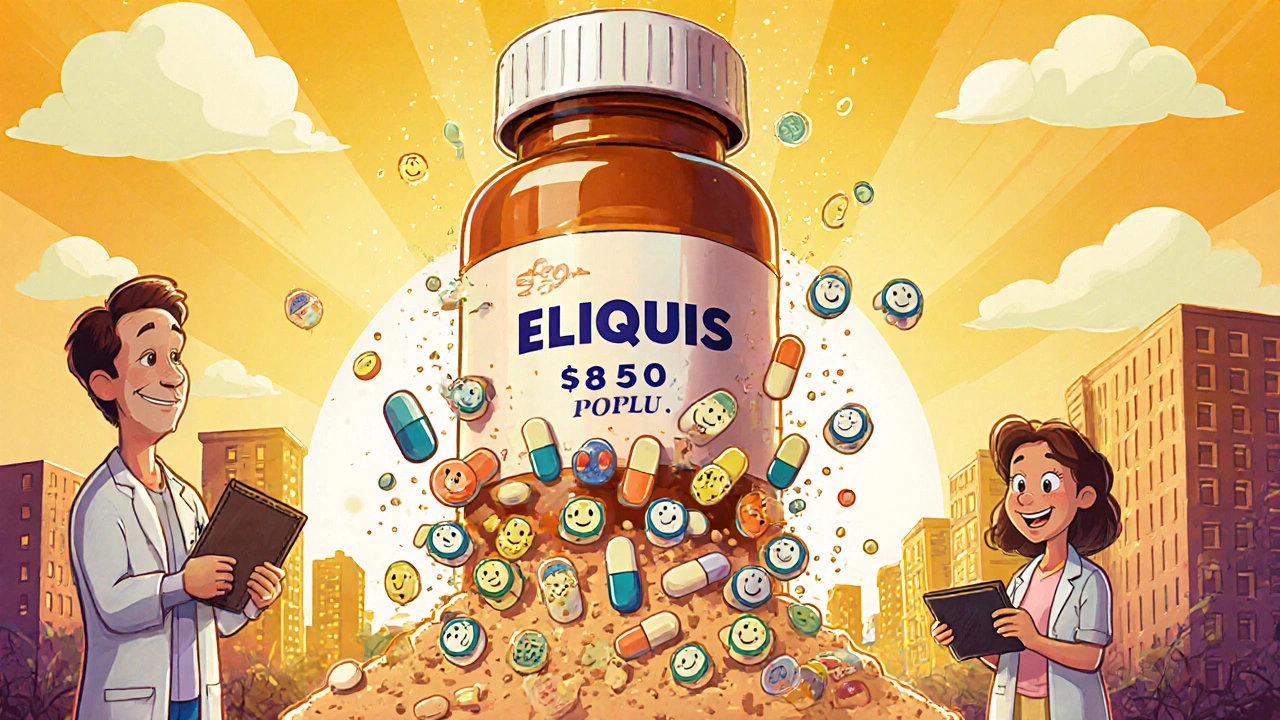
Patents give drug companies exclusive rights to sell a medicine for about 20 years. During that time, they set high prices to recoup research costs and make profits. Once the patent expires, any company can make a generic version. The first generic usually brings prices down by 15-20%. The second and third generics push it further. By the time five or ten companies are selling the same drug, prices often drop 80-90%. Take Eliquis (apixaban), a blood thinner. Before its patent expired in 2020, patients paid around $850 a month. After generics hit the market, the same drug cost as little as $10. That’s not a typo. The same active ingredient. Same effectiveness. Same side effects. Just a fraction of the price. This pattern repeats across dozens of drugs every year. The FDA approved 870 generic drugs in 2023 alone-up 12% from the year before. Most of these are simple pills. But complex drugs, like injectables or biologics, take longer. These require more testing to prove they work the same way. That delay keeps prices high longer.Why some drugs don’t get cheaper, even after patents expire
Not all patent expirations lead to instant price drops. Some companies use what’s called a “patent thicket.” That means filing dozens of secondary patents on tiny changes-like a new pill coating, a slightly different dosage schedule, or a new delivery method. These aren’t new drugs. They’re tweaks. But they block generics from entering the market. Humira (adalimumab), a top-selling arthritis drug, is the textbook example. Its original patent expired in 2016. But AbbVie, the maker, filed over 130 follow-up patents. That delayed generic competition until 2023. Even then, prices didn’t immediately drop. Why? Because insurance companies and pharmacy benefit managers were locked into rebate deals with AbbVie. The biosimilars (generic versions of biologics) were cheaper, but insurers didn’t always put them on preferred lists. So patients still paid high prices. Same thing happened with Ozempic and Wegovy (semaglutide). The base patent expires in 2026, but the company has filed 142 patents across different formulations. Experts estimate these could delay real competition until 2036. That’s 10 years beyond the original patent. This isn’t illegal. It’s legal strategy-and it’s widespread. A 2025 report from I-MAK found that 78% of new patents filed for drugs in the U.S. weren’t for new medicines. They were for old ones with minor changes. And 70% of the top 100 prescribed drugs had their market exclusivity extended at least once. For patients, this means years of high prices even after the patent should’ve expired.Price drops vary wildly by country
The U.S. doesn’t have the biggest price drops. It has the biggest potential drops-and the most resistance. A 2023 study of 505 drugs across eight rich countries showed that after eight years, U.S. drug prices fell 82%. Canada: 48%. Germany: 58%. Switzerland: just 18%. Why the difference? In Europe, governments negotiate drug prices directly. They set a reference price based on what other countries pay. If a drug is too expensive, they won’t cover it. That forces companies to lower prices or lose market access. In the U.S., there’s no central negotiation for most drugs. Insurance companies and pharmacy benefit managers handle pricing behind closed doors. They often favor brand-name drugs because they get bigger rebates. That means even when generics are available, patients might not get the lowest price unless their insurer changes its formulary. The FDA says generics enter the U.S. market an average of 30 months after patent expiry. In Europe, it’s 12 to 18 months. That extra time costs patients billions.
Who benefits-and who gets left behind
The winners are clear: patients, insurers, and government programs like Medicare. The Congressional Budget Office estimates that generic and biosimilar competition will save the U.S. healthcare system $1.7 trillion over the next decade. That’s money that goes back into care, not drug bills. But not everyone benefits equally. A 2023 Kaiser Family Foundation survey found that 68% of insured adults saw lower out-of-pocket costs when generics launched. But 22% said their insurance didn’t switch to the cheaper version right away. Some patients had to wait months, or even years, to get the lower price. Pharmacists face another hurdle: state laws. In 49 states, they can automatically swap a brand-name drug for a generic-unless the doctor writes “dispense as written.” But for biologics, substitution rules are all over the place. Some states require a doctor’s approval. Others don’t allow it at all. That confusion delays adoption. And then there’s the supply chain. Making generic drugs requires high-quality active ingredients. Many of these come from India and China. When there’s a shortage, or a quality issue, production slows. That can delay generics from reaching shelves-even after they’re approved.What’s changing-and what’s not
Regulators are starting to push back. In 2023, the U.S. Patent Office cracked down on “patent thickets,” rejecting dozens of low-quality follow-up patents. The European Commission proposed limits on supplementary protection certificates, which extend patent life. The FDA is speeding up reviews for complex generics. The Inflation Reduction Act also introduced Medicare drug price negotiations. Now, the government can directly negotiate prices for 10 high-cost drugs each year. That’s a big shift. Some drugmakers are responding by delaying generic entry to avoid triggering these negotiations. But the core problem remains: the system still rewards delaying competition. Companies spend billions on legal teams to extend exclusivity. They don’t spend that money to make better drugs. They spend it to keep prices high.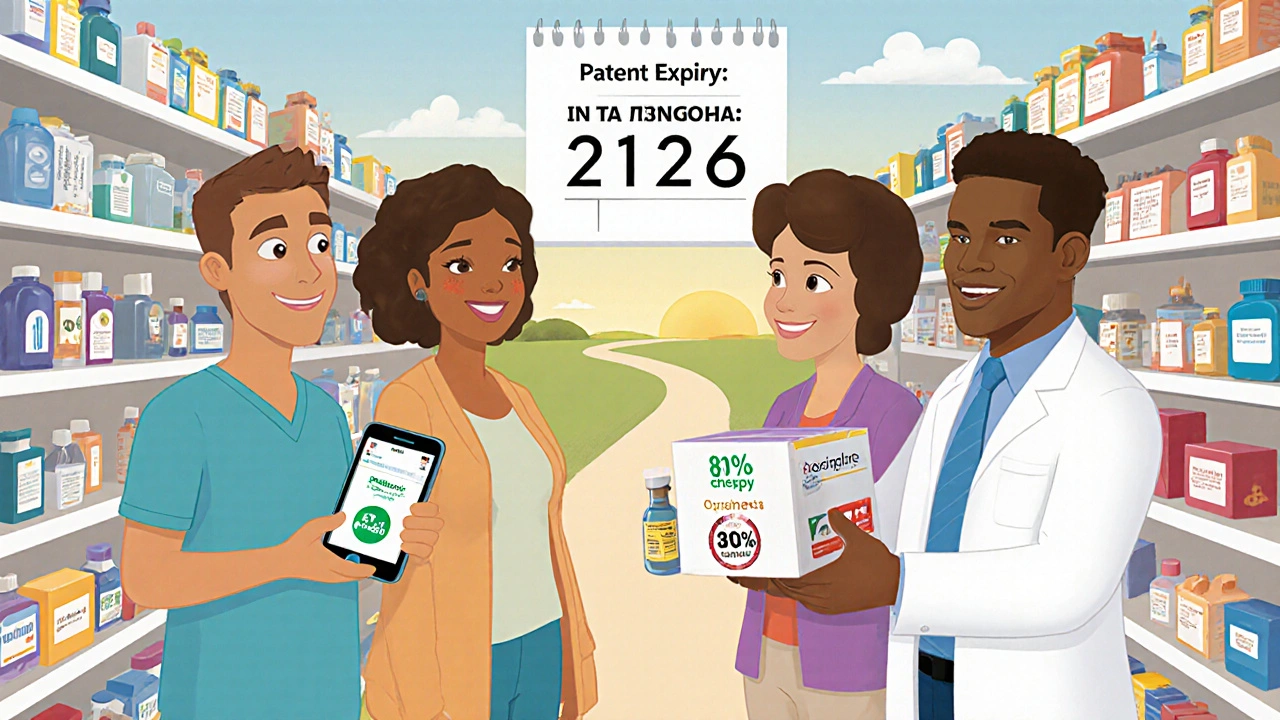
What patients can do
You don’t have to wait for the system to fix itself. Here’s what works:- Ask your doctor if a generic is available. Don’t assume the brand is the only option.
- Check your insurance formulary. If your drug isn’t on the preferred list, ask for a prior authorization to switch.
- Use pharmacy discount apps like GoodRx. They often show prices lower than your insurance copay.
- For biologics like Humira or Enbrel, ask about biosimilars. They’re not always cheaper at first, but they get better over time.
- Track patent expiration dates. Websites like DrugPatentWatch list when key drugs go generic. If your drug is coming up, start planning ahead.
Paula Jane Butterfield
November 21, 2025 AT 09:00Just had to share this-my mom switched from Eliquis to the generic last year and her copay went from $700 to $12. She didn’t even know she could ask for it. Docs don’t always tell you, and insurance doesn’t always auto-switch. But GoodRx saved her life, literally. Thanks for laying this out so clearly. I’m sharing this with every person I know on Medicare.
Simone Wood
November 22, 2025 AT 06:20Let’s be real-this whole system is a corporate welfare scheme disguised as innovation. Big Pharma doesn’t invent cures, they invent legal loopholes. Patent thickets? That’s not R&D, that’s rent-seeking with a law degree. And don’t get me started on how PBMs pocket rebates while patients bleed out. This isn’t capitalism, it’s feudalism with pill bottles.
Swati Jain
November 23, 2025 AT 16:29Oh please, the US is the only country where ‘free market’ means ‘let the rich buy health and the poor die waiting.’ In India, we get generics within weeks-same pills, same labs, same quality. But here? You need a PhD in insurance fine print just to get a $10 pill. And yet we’re told ‘innovation’ justifies $800/month for a drug that costs $2 to make. The irony is thicker than Humira’s patent thickets.
Meanwhile, my cousin in Bangalore gets her arthritis meds for $3 a month. She doesn’t have insurance. She doesn’t need it. Because in her country, medicine isn’t a profit center-it’s a human right. We’re not behind in science. We’re behind in morality.
Florian Moser
November 24, 2025 AT 20:23This is one of the most well-researched and clear explanations of drug pricing I’ve ever read. The data on patent thickets and the comparison between U.S. and European systems is spot-on. The fact that 78% of new patents are for minor modifications isn’t just shocking-it’s criminal. And the suggestion to use GoodRx and check formularies? Practical, actionable advice that could save lives. Thank you for writing this.
jim cerqua
November 25, 2025 AT 21:32THIS IS A SCAM. A MASSIVE, MULTI-BILLION DOLLAR, LIVING, BREATHING, SCAM. They’re not selling medicine-they’re selling hostage situations. You need your drug? Pay $800. Or don’t take it and die. And the worst part? The people running this? They’re not even hiding it. They’re proud. They give TED Talks about ‘innovation’ while their lawyers file patent #137 on a different color coating. I’m not angry. I’m disgusted. And I’m not alone.
My uncle died because he couldn’t afford the brand version after his insurance switched back. They didn’t even tell him the generic was available. That’s not negligence. That’s murder by bureaucracy.
Donald Frantz
November 26, 2025 AT 00:44Interesting breakdown, but you’re missing the supply chain angle. Most generic APIs come from China and India, and when the FDA shuts down a facility over contamination, it can delay availability for over a year-even after patent expiry. That’s not Big Pharma’s fault. That’s regulatory backlog and global fragility. Also, biosimilars aren’t ‘cheaper generics’-they’re complex biologics requiring massive clinical validation. The 30-month delay isn’t just corporate greed-it’s technical reality.
That said, the patent thicket abuse is indefensible. The PTO needs to stop rubber-stamping trivial patents. But let’s not pretend the solution is simple.
Sammy Williams
November 27, 2025 AT 22:02Y’all are overcomplicating this. If your drug’s patent expired and you’re still paying $500, just go to Walmart. Their $4 list has generics for like everything. I got my blood pressure med for $7 last month. No insurance needed. Stop overthinking it. The system’s broken, but you don’t have to be a victim.
Julia Strothers
November 28, 2025 AT 22:38Who’s really behind this? The WHO? The UN? The globalists pushing ‘affordable medicine’ so they can control our health? This isn’t about price-it’s about control. Why are we letting foreign labs make our pills? Why are we letting bureaucrats in Europe dictate what Americans can pay? This is a slow-motion takeover. And they’re using ‘generic drugs’ as the Trojan horse. Wake up. This is about sovereignty, not savings.
Erika Sta. Maria
November 30, 2025 AT 03:58Actually, you’re all wrong. Patents aren’t the problem-it’s the *concept* of ownership over biology. If a molecule exists in nature, how can anyone ‘own’ it? The real villain is the Cartesian illusion that life can be commodified. The generics aren’t cheaper because of competition-they’re cheaper because the patent was always a moral fraud. You’re fighting the symptom, not the disease: capitalism itself. Also, your spelling is wrong. It’s ‘pharmaceutical’ not ‘pharmecutical’.
Nikhil Purohit
November 30, 2025 AT 06:33Big thanks for this. I’m from India and we see generics every day-but I never realized how much the U.S. system is rigged. My cousin works in a pharma lab here and says the same thing: 90% of the patents they file are just tweaks. The real innovation? That’s happening in academic labs. But the money? All goes to lawyers and lobbyists. I hope more people see this. Maybe if we push for transparency, things can change. Thanks again for the clarity.