Dupuytren’s Contracture: Understanding Hand Deformity and Effective Treatment Options
 Dec, 31 2025
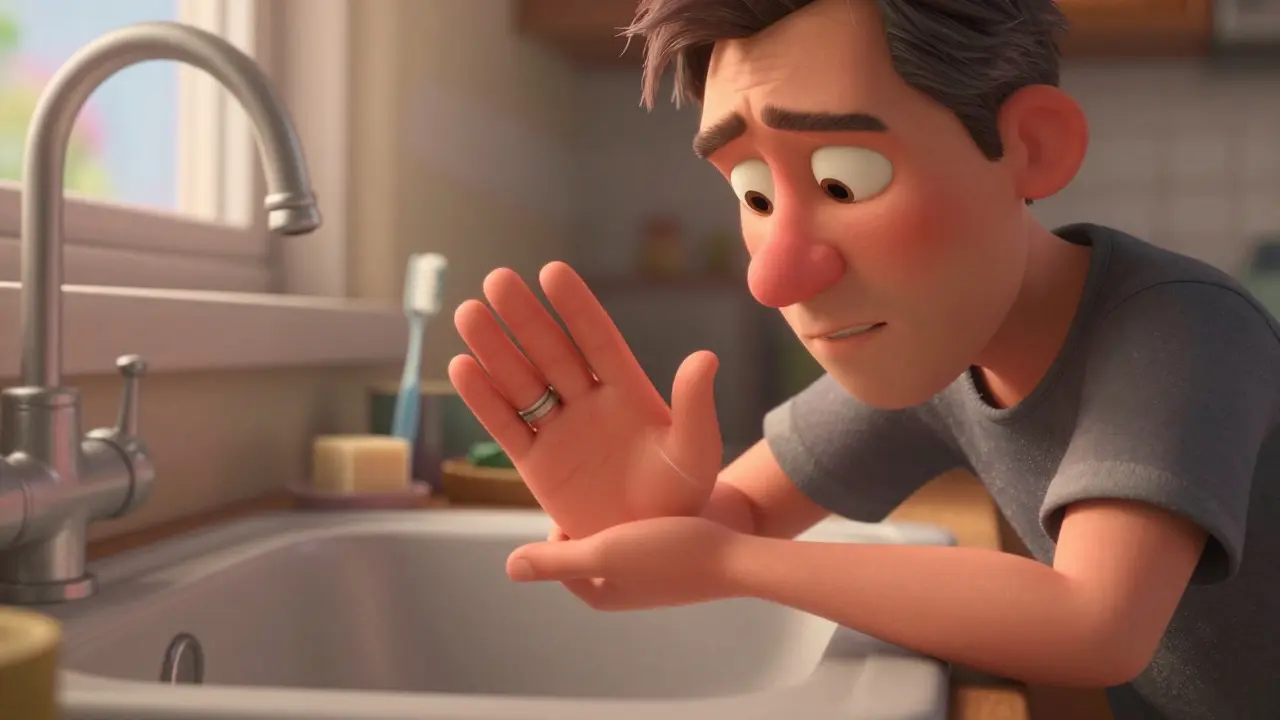
Imagine trying to shake someone’s hand, but your fingers won’t straighten. Or washing your face, only to realize you can’t flatten your palm against the sink. For people with Dupuytren’s contracture, these everyday moments become frustrating, even painful. It’s not just a bent finger-it’s a slow, invisible grip tightening around your ability to use your hand normally.
What Exactly Is Dupuytren’s Contracture?
Dupuytren’s contracture starts deep in the palm, where a layer of tissue called the palmar fascia thickens and turns into tough cords. These cords pull the fingers-usually the ring and little finger-down toward the palm. It doesn’t hurt at first. Many people notice a small lump or dimple in the palm and ignore it. But over time, those cords tighten like ropes, and the fingers get stuck in a bent position.
The condition is named after Baron Guillaume Dupuytren, the French surgeon who first described it in 1831. Today, we know it affects 3-6% of people in Western countries, and that number jumps to nearly 30% in men over 65 with Northern European roots. It’s not caused by overuse or injury. Genetics play a huge role. If a parent or sibling has it, your risk jumps from 8% to 68%.
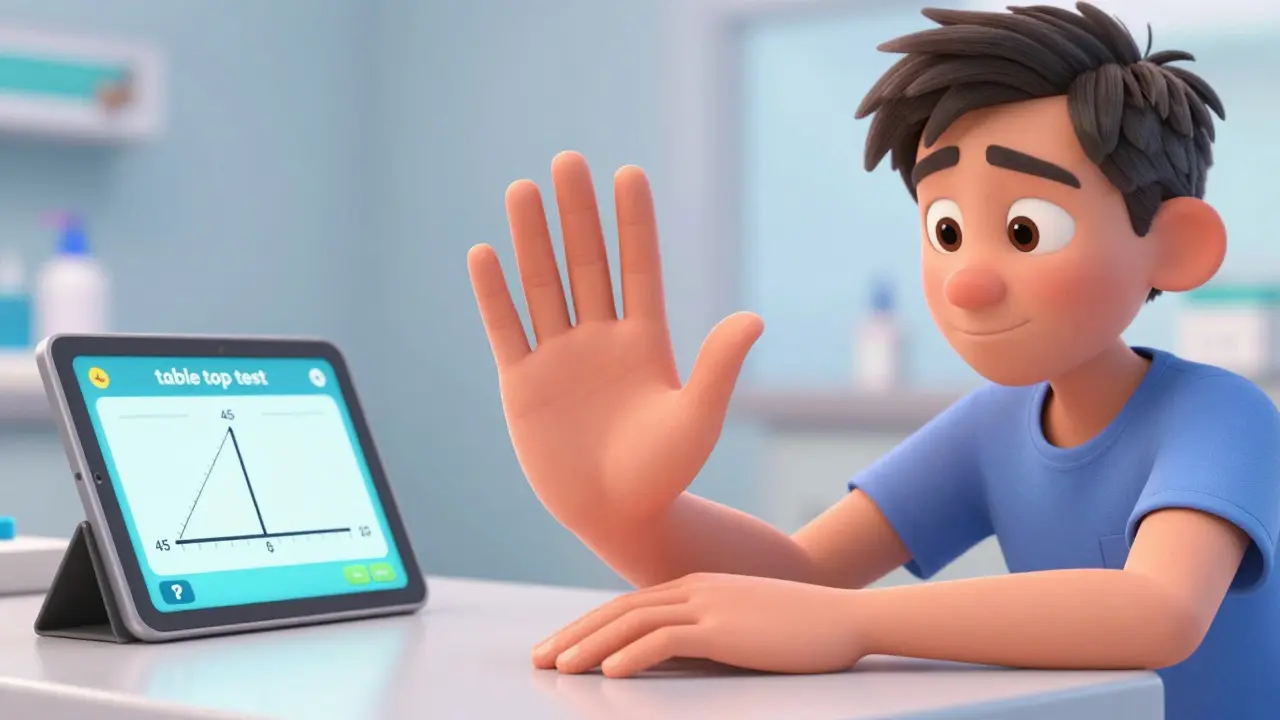
Doctors use a simple test to spot it: the "table top test." Try placing your palm flat on a table. If your fingers don’t lie flat, you likely have a contracture. Clinical guidelines say intervention is usually considered when the metacarpophalangeal joint (the knuckle) bends more than 30 degrees, or the proximal interphalangeal joint (the middle knuckle) bends more than 20 degrees.
How Does It Progress?
The progression is usually slow, but not always predictable. Some people live with mild nodules for decades without change. Others see rapid tightening within a year or two.
Stage 1: Small, painless lumps appear near the base of the ring or little finger. These are made of abnormal cells called myofibroblasts that produce too much collagen-types I and III, the same stuff in scar tissue. These nodules are 0.5 to 2 cm wide and feel like hard peas under the skin.
Stage 2: The lumps turn into cords that stretch from the palm into the fingers. These cords can be 2-8 mm thick and generate contractile forces stronger than 10 Newtons-enough to bend a finger firmly.
Stage 3: The fingers start bending visibly. At 10-30 degrees of flexion, you might notice difficulty putting on gloves or holding a glass. This is when many people start seeking help.
Stage 4: Contracture exceeds 45 degrees. Fingers are permanently curled. You can’t shake hands, use utensils, or even fit your hand into a pocket. Grip strength drops by an average of 35%. A 2023 survey of over 1,200 patients found 89% struggled with gripping, 76% had trouble with personal hygiene, and 68% faced work limitations.
Bilateral involvement is common-about half of patients have it in both hands. But it’s rarely symmetrical. One hand is usually worse by 15-25 degrees.
Treatment Options: What Actually Works?
There’s no cure for Dupuytren’s contracture. But there are several ways to restore function. The right choice depends on how bad the contracture is, your age, your job, your risk of recurrence, and your tolerance for recovery time.
Needle Aponeurotomy: Quick Fix, High Recurrence
This minimally invasive procedure uses a needle to cut the cord under local anesthesia. It’s done in a doctor’s office. Recovery is fast-most people can use their hand the next day. Success rates for early-stage cases hit 80-90%. A guitarist in Michigan reported regaining full finger extension in 48 hours and returned to playing professionally.
But the cords often come back. Studies show 30-50% of patients need another treatment within three years. It’s not ideal for people with severe contractures or those who’ve had prior surgery. Cost: $1,500-$3,000 per procedure.
Collagenase Injection (Xiaflex): Dissolving the Cord
Approved by the FDA in 2013, Xiaflex is an enzyme that breaks down collagen. It’s injected directly into the cord. The next day, the doctor manipulates the finger to snap the cord. It’s effective for metacarpophalangeal joints-65-78% success rate based on large clinical trials.
But it’s expensive: $3,500-$5,000 per injection. And it requires strict follow-through. If you don’t do the daily finger stretches for at least 24 hours after the injection, success drops from 85% to 65%. Side effects include swelling, bruising, and sometimes nerve irritation. One Reddit user described "intense pain during finger straightening" but still called it life-changing.
Open Fasciectomy: The Gold Standard
This is the traditional surgery where the surgeon removes the abnormal tissue. It gives the best long-term correction-90-95% of patients get near-full finger extension right after surgery. Recurrence is lower than needle aponeurotomy: 20-30% at five years.
But recovery is long. You’ll need 6-12 weeks of physical therapy. Complications happen in 15-25% of cases: nerve damage (3-5%), infection, or stiffness. Costs range from $8,000 to $15,000.
Dermofasciectomy: Lower Recurrence, Longer Recovery
This advanced version removes both the diseased tissue and the overlying skin. A skin graft is then placed. It’s more complex, but recurrence drops to just 10-15% at five years. Ideal for patients with severe or recurring disease. Recovery takes 3-6 months. It’s often recommended for younger patients or those with strong family history.
What Doesn’t Work (And Why)
Many patients try things that sound logical but don’t help. Stretching gloves? A 2023 survey found 28% of users reported skin breakdown with no meaningful improvement. Corticosteroid injections? They may ease pain in early nodules, but only 30% respond-and they can thin the skin. The European Wound Management Association advises against them as a primary treatment.
Physical therapy alone won’t reverse a cord. It helps after treatment, but not before. And there’s no evidence that diet, supplements, or alternative therapies change the course of the disease.
Recovery and Long-Term Care
After any procedure, rehab is non-negotiable. Studies from Ohio State show patients who completed over 80% of their prescribed therapy regained 95% of their pre-contracture range of motion. Those who skipped sessions? Only 75% recovery.
Home exercises are simple but require discipline: 5-10 minutes of finger extension stretches, 4-6 times a day. Adherence drops sharply after three months-from 70% to 45%. Use a goniometer app like "Hand Meter" to track progress. It’s been validated to match clinical measurements 95% of the time.
Follow-up visits every 3-6 months are crucial. Recurrence can start silently. A new nodule or slight bend might be missed without monitoring.

Who Should Consider Treatment?
Not everyone needs intervention. Dr. Kevin Chung from Michigan Medicine says 40% of people with less than 30 degrees of contracture never develop functional problems over 10 years. If you can still use your hand for daily tasks, watchful waiting is reasonable.
But if you can’t shake hands, button shirts, or hold a phone, it’s time to act. Early treatment doesn’t mean better long-term results. A 15-year study found no difference in function between those treated early versus those who waited. So don’t rush into surgery just because you see a lump.
What’s on the Horizon?
The future of Dupuytren’s treatment is promising. A gene therapy targeting TGF-β1 is in early trials and showed a 40% reduction in cord thickness after six months. A new device called the "Fasciotome," cleared by the FDA in March 2023, uses ultrasound-guided needles to cut cords in just 12 minutes-down from 30.
Stem cell therapy from adipose tissue is also being tested. A 2023 pilot study at UPMC showed a 55% drop in recurrence at two years. These aren’t available yet, but they’re coming fast.
The market for Dupuytren’s treatments is growing-$450 million in the U.S. alone-and is expected to grow 6.8% annually through 2028. More options mean better outcomes.
Living With It
Dupuytren’s contracture isn’t life-threatening. But it steals independence. It affects manual laborers most-3.2 times more likely to lose work capacity than office workers. It can isolate people who can’t shake hands or hold a grandchild’s hand.
But it’s manageable. With the right treatment, timing, and commitment to rehab, most people regain function and return to normal life. The key is not to ignore early signs, not to rush into surgery, and not to give up on rehab.
If you’ve noticed your fingers bending, or your palm won’t lie flat, see a hand specialist. Don’t wait until you can’t hold a coffee cup. Early detection doesn’t always mean early treatment-but it always means better control.
Can Dupuytren’s contracture go away on its own?
No. Dupuytren’s contracture doesn’t reverse itself. The cords that form in the palm are made of dense, abnormal tissue that doesn’t dissolve or break down naturally. While the progression can be slow and sometimes stable for years, once a finger starts bending, it won’t straighten without intervention. Some people live with mild cases for decades without worsening, but the condition itself doesn’t disappear.
Is Dupuytren’s contracture painful?
Usually not. The initial nodules may feel tender or achy, especially when pressed, but the contracture itself is typically painless. Pain is more common in the early stages, when the tissue is actively forming. Once the cords tighten and pull the fingers, most patients report discomfort from limited movement-not direct pain. If you’re experiencing sharp or persistent pain, it could signal another issue, like tendonitis or arthritis, and should be evaluated.
Can I prevent Dupuytren’s contracture?
No, you can’t prevent it if you’re genetically predisposed. Smoking, heavy alcohol use, and diabetes may increase your risk slightly, but they don’t cause it. There’s no proven way to stop it from developing. The best you can do is monitor your hands for early signs-like lumps or dimples-and get checked if you notice your palm won’t lie flat on a surface. Early detection doesn’t prevent it, but it helps you plan treatment before function is lost.
Does insurance cover Dupuytren’s treatments?
Yes, most insurance plans in the U.S. and UK cover treatment when it affects hand function. Needle aponeurotomy, collagenase injections, and surgery are typically covered if your contracture exceeds 30 degrees at the knuckle or 20 degrees at the middle joint. Cosmetic or non-functional cases may not qualify. Always check with your provider-some require documentation from a hand specialist or proof of failed conservative care before approving surgery or injections.
How do I know which treatment is right for me?
It depends on three things: how bad the contracture is, your age and activity level, and your risk of recurrence. If you’re younger and active, and your fingers are bent less than 45 degrees, needle aponeurotomy might be ideal for quick recovery. If you’re older or have had recurrence before, fasciectomy offers longer-lasting results. Collagenase is good for those who want to avoid surgery but can commit to daily stretching. A hand surgeon will measure your contracture, review your medical history, and discuss your goals-like returning to guitar playing or gardening-to recommend the best fit.
Jenny Salmingo
January 1, 2026 AT 12:06I never knew something so small could steal so much from you. My grandma had this and she’d cry trying to hold my baby. Now I check my palms every night. If I feel a lump, I go straight to the doc. No waiting.
Frank SSS
January 1, 2026 AT 15:59So basically, it’s just genetic laziness that turns your hand into a claw? And we pay thousands to fix it? Someone’s making bank off our body’s failures.
Paul Huppert
January 2, 2026 AT 13:42That table top test is so simple but so telling. I did it last year and my pinky didn’t lie flat. Thought it was just stiff from typing. Turns out I had a nodule. Went in, got checked. Best decision ever.
Hanna Spittel
January 3, 2026 AT 19:28Did you know Big Pharma invented this to sell Xiaflex? 🤔 They don’t want you to heal naturally. Watch the documentary on YouTube titled ‘Hand Cuffs’.
Brady K.
January 3, 2026 AT 21:14Let’s be real - if you’re not doing your 6x daily stretches, you’re just wasting everyone’s time. Surgery isn’t a magic button. It’s a contract. You sign it with your discipline. No excuses.
Kayla Kliphardt
January 5, 2026 AT 14:27My mom had this. She never told anyone until she couldn’t hold her knitting needles. I wish she’d gone sooner. It’s not just about function - it’s about dignity.
John Chapman
January 7, 2026 AT 00:23Just had Xiaflex last month. Felt like my hand was being torn apart for 48 hours… but now I can hold my coffee again. 😭👌 Worth every second of pain.
Urvi Patel
January 7, 2026 AT 11:39In India we don’t have this problem because we don’t sit like Westerners with our hands limp. We use our hands to work, not to type and scroll. Maybe if you moved more you wouldn’t need surgery
anggit marga
January 7, 2026 AT 19:42So you’re telling me a white man’s disease is now a medical industry? My people in Nigeria don’t get this. Maybe it’s the GMO food or the vaccines. Either way, I’m not falling for this
Joy Nickles
January 7, 2026 AT 20:46Wait wait wait-so you’re saying the cords DON’T dissolve? But I read on Reddit that apple cider vinegar and turmeric can reverse it??? I’ve been taking it for 3 months and my pinky is like… slightly less bent?? I think it’s working???
Emma Hooper
January 8, 2026 AT 05:09I’ve seen this in my dad’s hands. He’s 72, never had surgery, just does the stretches like a monk. Now he can still grip his cane, peel potatoes, and pet his dog. No fancy procedures. Just grit. And maybe a little luck. Don’t let the doctors scare you into cutting. Sometimes patience is the real scalpel.