Drug Allergies: Penicillin, NSAIDs, and Desensitization Protocols Explained
 Feb, 7 2026
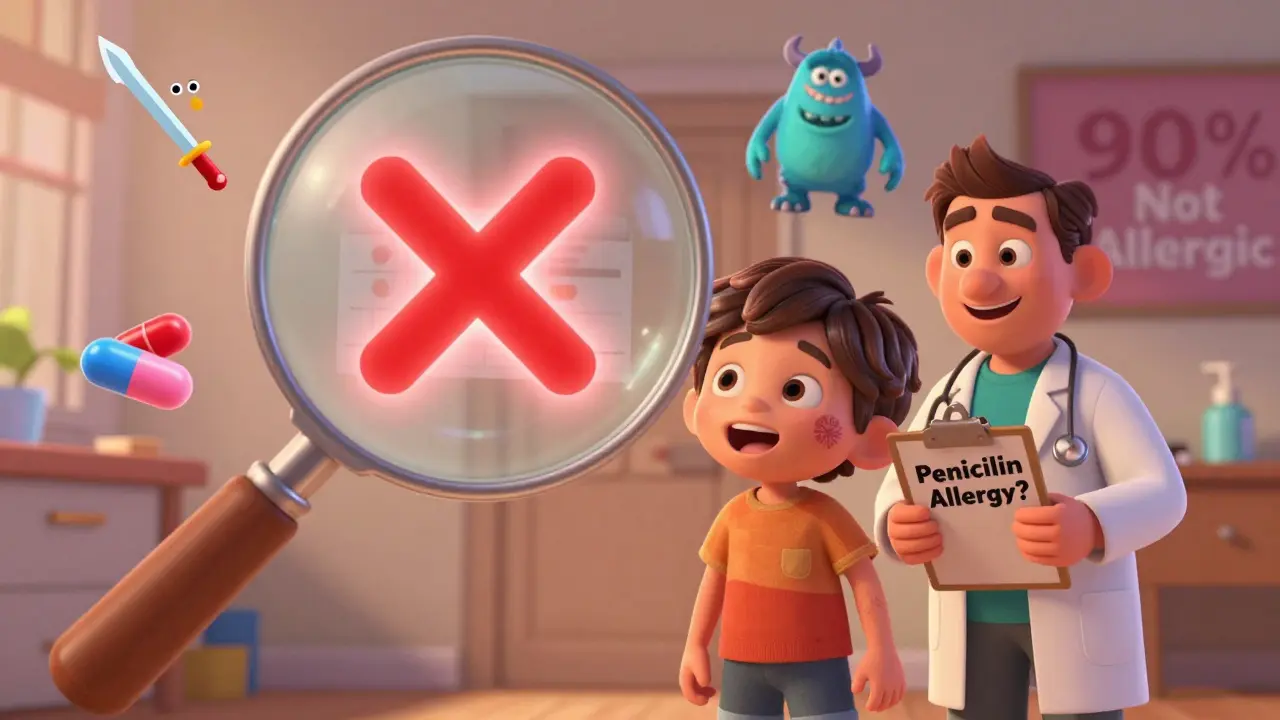
More than 10% of people in the U.S. say they’re allergic to penicillin. That’s one in ten. But here’s the twist: up to 90% of them aren’t actually allergic. Many were misdiagnosed as kids after a rash or stomach upset, and the label stuck. The result? They’re given stronger, costlier antibiotics - and hospitals pay extra, sometimes $500 more per admission. This isn’t just about one drug. It’s about how we handle drug allergies - and how we can fix them.
What Makes a Drug Allergy Real?
Not every bad reaction is an allergy. A rash from amoxicillin? Could be viral. Nausea after ibuprofen? Might be your stomach, not your immune system. True drug allergies are immune-driven. They happen fast - within minutes to an hour - and involve IgE antibodies. Symptoms include hives, swelling, trouble breathing, low blood pressure, or anaphylaxis. These are dangerous. And they’re real.But here’s the catch: most people who think they’re allergic to penicillin or NSAIDs never got tested. Skin tests can show if you’re truly allergic. For penicillin, a negative skin test followed by a single dose of amoxicillin (a drug challenge) is the gold standard. If you pass that, you’re not allergic. You can take penicillin again - safely.
Penicillin Allergy: The Most Common Mislabel
Penicillin is the most reported drug allergy in history. But the data doesn’t lie. A 2020 guide from the American Academy of Allergy, Asthma & Immunology found that most people who report penicillin allergy can tolerate it after proper testing. Why? Because skin tests use two reagents: penicillin G and PPL (Prepared Penicillin Polylysine). The problem? Up to 70% of patients who react to PPL don’t react to penicillin itself. That means a positive test doesn’t mean allergy - it means confusion.Doctors used to rely on PPL because it was easy to make. Now, they know better. If you have a history of penicillin allergy, skip the guesswork. Get tested. If you’re cleared, you open up a world of safer, cheaper antibiotics. Penicillin isn’t outdated. It’s precise. It kills the right bugs without wrecking your gut flora like broad-spectrum drugs do.
NSAID Allergies: A Different Beast
NSAIDs - like aspirin, ibuprofen, and naproxen - cause reactions differently. Most aren’t IgE-mediated. Instead, they block enzymes that control inflammation, triggering stuffy noses, hives, or asthma attacks in sensitive people. This is called NSAID-exacerbated respiratory disease or urticaria. It’s not a classic allergy, but it’s still serious.Desensitization for NSAIDs works differently too. Instead of a one-time IV protocol, you take small, increasing doses daily. A common method starts at 30 mg of aspirin, then moves to 60 mg, 100 mg, 150 mg, and finally 325 mg - all over hours or days. Once you reach the target dose, you stay on it. This isn’t temporary. It’s maintenance. You need to keep taking it daily to stay tolerant. Stop, and you might lose protection.
This is why NSAID desensitization is often used for people with chronic conditions - like asthma or chronic hives - who need daily pain relief or heart protection from low-dose aspirin. It’s not about one dose. It’s about long-term control.
How Desensitization Works: The Science Behind the Protocol
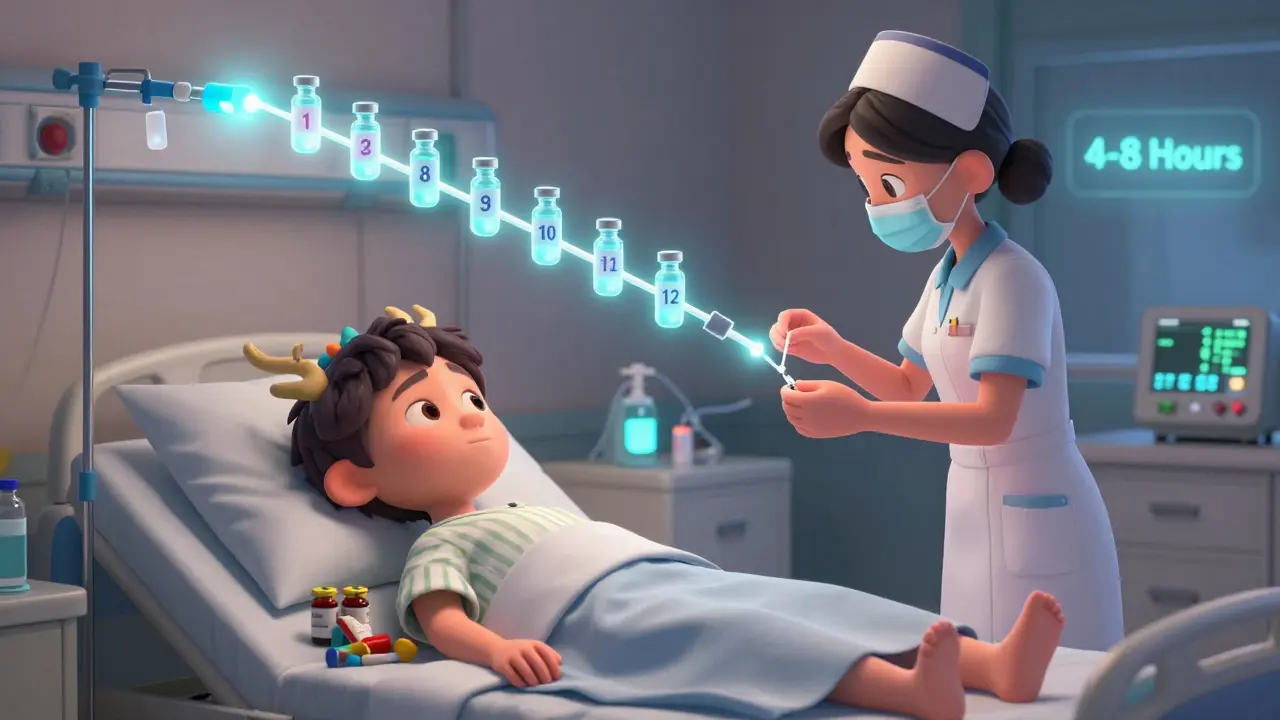
Desensitization doesn’t cure your allergy. It temporarily tricks your immune system into ignoring the drug. You’re not becoming tolerant forever. You’re just buying time - for one treatment course.The standard 12-step protocol, used at places like Brigham and Women’s Hospital, starts with a tiny fraction of the full dose - as low as one ten-thousandth. You get it every 15 to 20 minutes. Each step doubles the dose. You might start at 0.001 mg and work up to 500 mg over 4 to 8 hours. For penicillin, some teams use a faster version: tripling the dose every 15 minutes, finishing in under two and a half hours.
The solutions are carefully mixed. Solution 1 is 100 times weaker than the final dose. Solution 2 is 10 times weaker. Solution 3 is the full strength. You begin with Solution 1, then move up. All of this happens under strict supervision - with epinephrine, oxygen, and IV fluids ready. If you get a severe reaction - like dropping blood pressure or throat swelling - the process stops. No exceptions.
It works for more than just penicillin. Cefazolin, ceftriaxone, nafcillin, even chemo drugs like paclitaxel. There are protocols for oral antifungals like itraconazole and voriconazole. The key? You need no other option. If you have a life-threatening infection and can’t use anything else, desensitization becomes your lifeline.
Who Gets Desensitized - and Who Doesn’t
Not everyone qualifies. The rules are strict:- You must have a confirmed immediate reaction - within one hour - to the drug.
- There must be no safe alternative.
- You need to be stable. No active asthma attack, no uncontrolled heart issues.
- You must be in a facility with full emergency support.
Children are a gray area. Most protocols were built for adults. But kids with cancer, cystic fibrosis, or severe infections need these drugs too. A 2019 review in the Journal of Allergy and Clinical Immunology Practice found that pediatric allergists often have to adapt adult protocols. There’s no official pediatric guideline yet. That’s a gap.
And what about non-IgE reactions? Like delayed rashes or liver inflammation? Those are trickier. Some teams now try desensitization for these too - even if they’re not classic allergies. The science is still evolving.
Why This Matters Beyond the Hospital
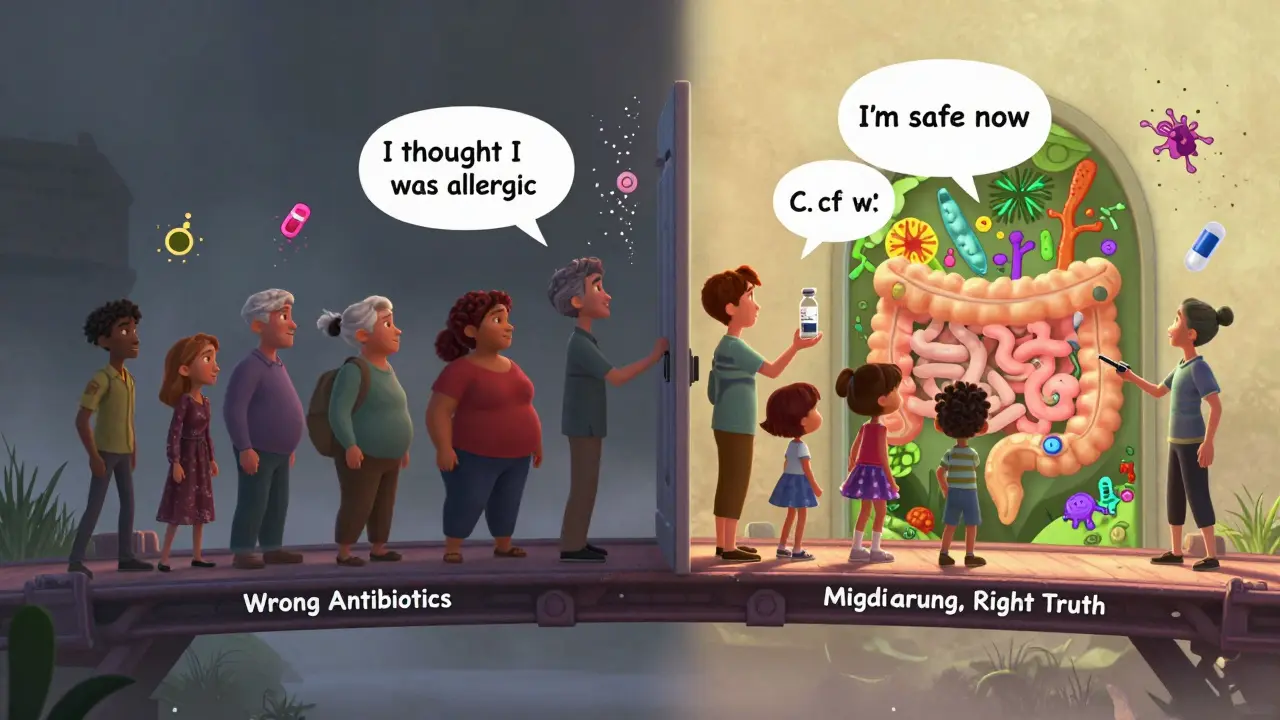
When you’re labeled penicillin-allergic, doctors avoid it. They pick vancomycin, clindamycin, or fluoroquinolones. These drugs are broader. They kill good bacteria. They increase the risk of C. diff infections. They cost more. And they’re linked to antibiotic resistance.Correcting a misdiagnosis isn’t just safer - it’s smarter. It helps hospitals cut costs. It helps patients recover faster. It helps preserve antibiotics for when we really need them.
Desensitization isn’t magic. It’s medicine. It’s not for everyone. But for those who need it - the person with sepsis who can’t take anything else, the cancer patient allergic to their only effective chemo - it’s life-saving.
What to Do If You Think You’re Allergic
If you’ve been told you’re allergic to penicillin or NSAIDs:- Don’t assume it’s true. Many aren’t.
- Ask your doctor about skin testing or a drug challenge.
- If you need the drug again - like for surgery or an infection - ask if desensitization is an option.
- Never try to self-desensitize. This is dangerous and must be done in a controlled setting.
The goal isn’t to avoid drugs. It’s to use the right ones. Penicillin isn’t the enemy. Misinformation is.
Can you outgrow a penicillin allergy?
Yes - but not because your body changed. Most people never had a true allergy to begin with. The immune system doesn’t usually “outgrow” IgE-mediated reactions. Instead, the label was wrong. Up to 80% of people who had a penicillin reaction as a child will test negative by adulthood. The best way to know? Get tested. A negative skin test and a supervised dose of amoxicillin confirm you’re safe.
Is desensitization safe?
When done correctly, yes - and it’s much safer than using a less effective or more toxic drug. The risk of a reaction during desensitization is low, around 5-10%, and most are mild - like itching or flushing. Severe reactions are rare, especially in experienced centers. The procedure is stopped immediately if any warning signs appear. Epinephrine is always on hand. Still, it’s not a DIY procedure. It must be done in a hospital or allergy clinic with full emergency support.
Can you desensitize to multiple drugs at once?
No. Each desensitization is done one drug at a time. Even if you’re allergic to penicillin and aspirin, you can’t do both together. Each protocol has its own dosing schedule, timing, and risks. Trying to combine them increases danger and lowers success rates. You’ll need separate sessions - one for each drug.
What happens if I stop taking the drug after desensitization?
For penicillin and most antibiotics, tolerance fades quickly - within 24 to 72 hours. If you need the drug again later, you’ll have to go through desensitization all over again. For NSAIDs like aspirin, the tolerance lasts only as long as you keep taking it daily. Stop the daily dose, and you lose protection. That’s why NSAID desensitization is often used for long-term conditions, not one-time treatments.
Are there alternatives to desensitization?
Yes - but they’re often worse. For penicillin allergy, alternatives include vancomycin, clindamycin, or fluoroquinolones. These are broader-spectrum antibiotics. They’re more expensive, can cause diarrhea or C. diff, and contribute to antibiotic resistance. For NSAIDs, steroids or acetaminophen might help with pain, but they don’t work for heart protection or chronic inflammation. Desensitization isn’t perfect - but it’s often the best option when no other drug works.
Ashley Hutchins
February 7, 2026 AT 08:28so like i got penicillin labeled allergic when i was 5 after a rash and now im 32 and still avoiding it like its poison lmao
turns out i was just sick with a virus and my skin freaked out
why do docs not test this shit??
my last infection cost me 2k because they gave me vanco instead of penicillin
my insurance is gonna kill me
Lakisha Sarbah
February 7, 2026 AT 09:59i never knew most people who think theyre allergic to penicillin actually aint
my mom had a reaction as a kid and we just accepted it as fact
im gonna ask my allergist about testing next visit
if i can actually take it again, that could save me so much money and stress
Ariel Edmisten
February 9, 2026 AT 01:15testing works. simple. cheap. life changing.
if you think you’re allergic, get checked.
Savannah Edwards
February 9, 2026 AT 08:01as someone who grew up in a household where every illness was treated with ibuprofen and then panic, i never realized how much we were avoiding safe meds out of fear
my grandma had a rash once at 12 and now she refuses every painkiller except tylenol
but she has chronic arthritis and her knees are failing because she cant take naproxen
the whole system is built on myths
desensitization sounds scary but honestly, if you need it, its better than living in pain or getting a C. diff infection from a broad-spectrum antibiotic
we need more education on this
not just in hospitals but in schools, in primary care, in every doctor’s office
why are we still letting old labels dictate modern medicine?
AMIT JINDAL
February 9, 2026 AT 16:03lol u guys are so naive 😂
penicillin allergy is real for many ppl
my cousin died from anaphylaxis at 19 after being 'cleared' by some 'modern' test
tests arent perfect
and u think desensitization is safe??
it's like playing russian roulette with your immune system 😅
if u wanna gamble, go ahead
but dont make it sound like its magic
real doctors know better
trust the history, not the lab
and btw, why are u so obsessed with penicillin??
there are 1000 other antibiotics 😒
Niel Amstrong Stein
February 11, 2026 AT 13:39so like… we’re all just walking around with outdated medical labels like they’re tattoos
‘penicillin allergic’ stamped on our forehead since age 6
and no one ever asks ‘wait, how do you know?’
it’s wild
we treat medicine like it’s astrology
‘oh i had a rash once, so i’m allergic’
but we’d never say ‘oh i had a headache once, so i’m allergic to sunlight’
we need to stop treating drug reactions like fate
they’re data points
not destiny
and desensitization? yeah, it’s not magic
but it’s science with a safety net
and honestly? i’d rather trust a hospital with epinephrine ready than a doctor who just picks the most expensive drug because they’re scared to ask questions 💊🩺
Mary Carroll Allen
February 12, 2026 AT 03:22OMG this is the most important thing i’ve read all year
i literally thought i was allergic to ibuprofen because i got a rash once after a tooth extraction
turns out i had a viral infection and the meds just made it worse
my doctor never tested me
so i’ve been taking tylenol for 8 years for migraines
and it barely works
im crying rn
i need to call my allergist tomorrow
im so mad at how little we’re taught about this
why is this not common knowledge??
why is this not on every patient intake form??
we’re literally killing our own microbiomes with unnecessary antibiotics because we dont ask questions
someone needs to make a viral tiktok about this
like, NOW
Joey Gianvincenzi
February 13, 2026 AT 11:16While the article presents compelling epidemiological data regarding penicillin misclassification, it is imperative to acknowledge the potential for iatrogenic harm should desensitization protocols be implemented without rigorous adherence to established clinical guidelines.
Furthermore, the conflation of non-IgE-mediated reactions with true IgE-mediated anaphylaxis risks undermining the foundational principles of allergic disease classification.
It is not merely a matter of cost-efficiency; it is a matter of clinical precision.
The medical community must not be swayed by anecdotal narratives or economic incentives at the expense of patient safety.
Desensitization, while valuable in select contexts, remains a high-risk intervention requiring multidisciplinary oversight.
Therefore, while the premise is compelling, the execution must be governed by evidence, not enthusiasm.
Amit Jain
February 13, 2026 AT 23:15you all are so gullible
they’re just trying to sell you more penicillin
pharma companies make billions off antibiotics
why do you think they suddenly care about your ‘misdiagnosis’?
they want you to take it again so they can sell you more
and desensitization? that’s just a way to get you hooked on hospital visits
they make money off every step
and what about the kids? you think they’re testing them properly?
nope
they’re just rushing through it because insurance won’t pay for real allergy workups
stop falling for the system
if you’re allergic, you’re allergic
don’t let corporate medicine talk you into a lab experiment
and don’t believe everything you read on reddit
they’re paid to write this stuff 😏