Aplastic Anemia from Medications: Early Signs and Urgent Actions
 Jan, 28 2026
Medication-Induced Aplastic Anemia Symptom Checker
This tool helps you recognize potential warning signs of medication-induced aplastic anemia. It is not a diagnosis, but a guide to help you identify when to seek immediate medical attention. Early detection saves lives.
Are you taking any high-risk medications?
Do you experience any early symptoms?
- Never stop prescription medication without consulting your doctor
- Early detection is critical - symptoms often appear weeks before severe complications
- Complete blood count (CBC) is the essential diagnostic test
- 70% of medication-induced cases are already severe by diagnosis
Most people assume that if a medicine makes them feel tired or gives them a headache, it’s just a minor side effect. But sometimes, what feels like a bad day is actually your bone marrow shutting down. Medication-induced aplastic anemia doesn’t come with a warning label you can easily spot. It creeps in slowly-fatigue that won’t lift, bruises that appear for no reason, fevers that come and go. And if you ignore it, it can turn deadly within weeks.
What Exactly Is Medication-Induced Aplastic Anemia?
Aplastic anemia isn’t just low blood counts. It’s when your bone marrow stops making red blood cells, white blood cells, and platelets altogether. This isn’t temporary. It’s not the kind of low iron you fix with supplements. It’s a complete failure of your body’s blood factory. And in about 5 to 10% of cases, it’s caused by medications.
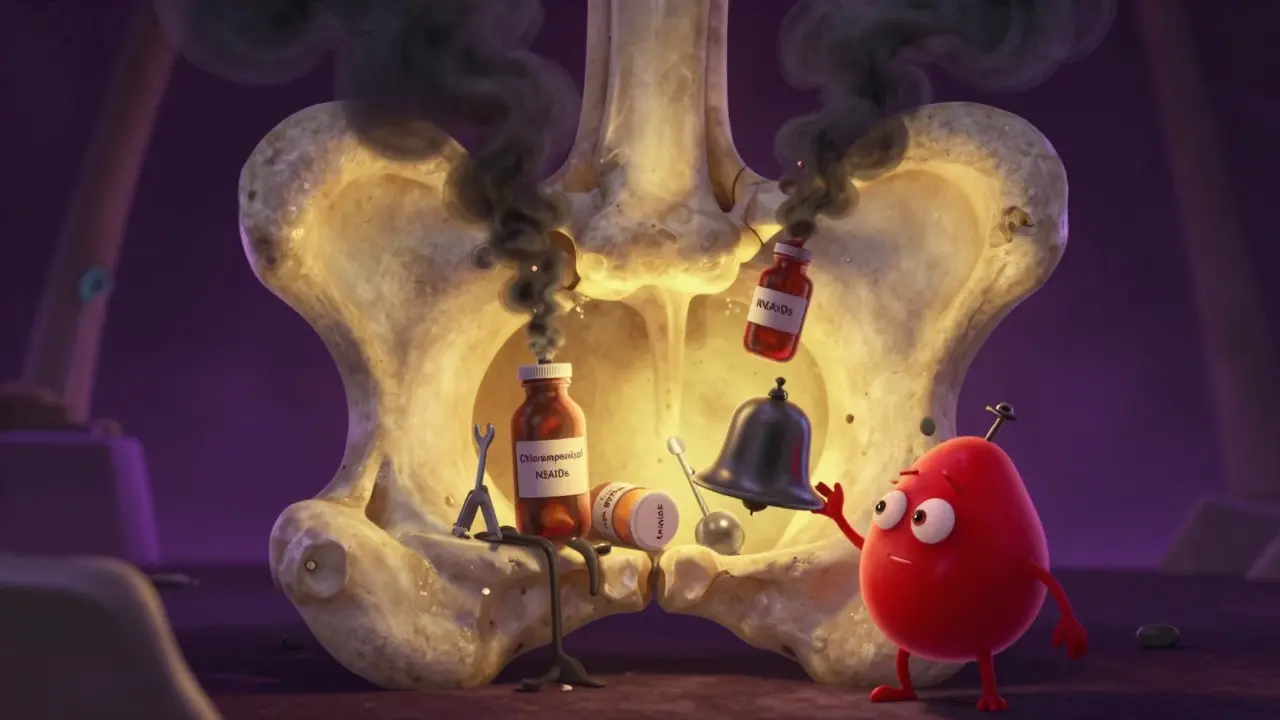
Some drugs don’t just cause side effects-they trigger your immune system to attack your own bone marrow. Others directly poison the stem cells that make new blood. The most notorious offenders include chloramphenicol, an old antibiotic once widely used for serious infections, now restricted due to its high risk of causing bone marrow failure, carbamazepine, a seizure medication that can cause immune-mediated destruction of blood stem cells, and gold compounds, used decades ago for rheumatoid arthritis and still found in some older prescriptions. Even common painkillers like NSAIDs, including ibuprofen and naproxen, have been linked to rare cases.
What makes this dangerous is how easily it’s missed. Many patients think they’re just run down from stress or a virus. But unlike a cold, this doesn’t get better on its own. And unlike normal drug side effects, the damage doesn’t reverse when you stop the medicine-unless you act fast.
Early Signs You Can’t Afford to Ignore
The first signs are subtle. They’re the kind of things you brush off: “I’m just tired.” “I’ve been under a lot of pressure.” But if you’re on a high-risk medication and you notice any of these, don’t wait.
- Persistent fatigue that doesn’t improve with sleep or rest
- Unexplained bruising-especially multiple bruises appearing at once, without bumping into anything
- Recurrent low-grade fevers (99-101°F) that come and go
- Prolonged recovery from minor infections like a sore throat or a cut that won’t heal
- Unintentional weight loss of 5-10 pounds over a few weeks
- Bleeding gums or nosebleeds without trauma
These aren’t random symptoms. They’re your body screaming that your blood counts are dropping. The Colorado Blood Cancer Institute, a leading center for blood disorders found that in 68% of cases, patients noticed these signs 4 to 6 weeks before diagnosis. And by then, many were already in danger.
Here’s the hard truth: by the time you feel really sick, it’s often too late. The worst cases happen because people waited too long. Blood tests show abnormalities weeks before symptoms become obvious. That’s why early detection isn’t about waiting for the worst-it’s about catching it before it gets bad.
How Doctors Diagnose It
If your doctor suspects something’s wrong, they’ll start with a complete blood count (CBC), a simple blood test that measures red cells, white cells, and platelets. Normal levels? Hemoglobin above 12 g/dL for women, 13 g/dL for men. Neutrophils above 1,500 per microliter. Platelets above 150,000.
When those numbers drop below those thresholds, especially if all three are low at once (called pancytopenia, the hallmark of aplastic anemia), it’s a red flag. But a CBC alone isn’t enough. The real diagnosis comes from a bone marrow biopsy, a procedure where a small sample of bone marrow is taken from the hip bone. In aplastic anemia, the marrow looks empty-less than 25% of normal cellularity. That’s the gold standard.
Severe cases meet at least two of these criteria: reticulocyte count below 40,000, neutrophils below 500, or platelets below 20,000. About 70% of medication-induced cases are already severe by the time they’re diagnosed. That’s why speed matters.
What to Do Immediately If You Suspect It
If you’re on a high-risk medication and you’re experiencing those early signs, here’s what you do-right now:
- Stop the suspected medication-but only after talking to your doctor. Don’t just quit cold turkey if it’s something like carbamazepine, which can cause seizures if stopped abruptly. Call your prescriber immediately.
- Get a CBC within 24 hours. Don’t wait for your next appointment. Go to an urgent care or ER if your clinic can’t do it same-day.
- Request a bone marrow biopsy if pancytopenia is confirmed. The Mayo Clinic, a top authority on blood disorders recommends this within 72 hours if blood counts are critically low.
- Go to the ER if you have a fever above 100.4°F. That’s not a cold. That’s a medical emergency. With low white blood cells, even a minor infection can become life-threatening within hours.
Studies show that patients who acted within two weeks of noticing symptoms had survival rates under 10%. Those who waited more than eight weeks? Survival dropped to 45%. That’s not a small difference. It’s the difference between living and dying.
Why This Is So Often Missed
Doctors aren’t negligent. But here’s the problem: most family practitioners have never seen a case of medication-induced aplastic anemia. A 2022 Medscape survey found that only 47% could correctly name the top five drugs linked to it. Many patients are told they have “viral fatigue” or “anxiety.” One patient on Reddit shared that her doctor dismissed her bruising as “just thin skin.” She was diagnosed with severe aplastic anemia six weeks later.
And it’s worse in rural areas. Only 38% of community clinics have immediate access to hematologists. Many can’t even run a CBC the same day. That delay can cost lives.
Patients who kept a written list of all their medications-including over-the-counter drugs and supplements-had their diagnosis delayed by an average of 6.2 fewer days. That’s because when you show up with a full list, doctors can connect the dots faster.
What Happens After Diagnosis
If caught early, stopping the drug is often enough. In 85% of mild cases, blood counts begin to recover within four weeks. But if it’s severe, you’ll need more. Options include:
- Immunosuppressive therapy, using drugs like horse anti-thymocyte globulin and cyclosporine to calm the immune system
- Bone marrow transplant, the only cure, especially for younger patients with a matched donor
- Blood transfusions, to keep you alive while your marrow recovers
The European Society for Blood and Marrow Transplantation, a leading global authority updated its guidelines in January 2024 to recommend early immunosuppressive therapy for medication-induced cases, with 78% of patients responding well.
And here’s the hopeful part: with prompt treatment, 5-year survival rates now exceed 85%. That’s almost as good as idiopathic cases. But only if you catch it early.
How to Protect Yourself
If you’re prescribed a high-risk drug-chloramphenicol, carbamazepine, gold salts, or even long-term NSAIDs-here’s your action plan:
- Ask for a baseline CBC before starting the medication
- Get another CBC one week after starting, then again at four weeks
- Keep a written list of every medication you take, including dosages and start dates
- Download a tracking app like the one launched by the Aplastic Anemia and MDS International Foundation, which lets you log symptoms and blood counts
- Never restart a drug that caused aplastic anemia-even if you recovered. The risk of relapse is 90%.
There’s no magic pill to prevent this. But awareness saves lives. The FDA and EMA now require stronger warnings on labels. But the real protection comes from you-knowing the signs, asking for tests, and speaking up before it’s too late.
Can over-the-counter drugs cause aplastic anemia?
Yes. While rare, NSAIDs like ibuprofen and naproxen have been linked to cases of medication-induced aplastic anemia. The risk is very low-far lower than with drugs like chloramphenicol-but it’s real. If you’ve been taking these daily for months and notice unexplained bruising, fatigue, or fevers, get a blood test. Don’t assume it’s harmless.
How long does it take for symptoms to appear after starting a drug?
It varies. For some drugs like chloramphenicol, symptoms can show up in as little as two weeks. For others like carbamazepine, it might take two to six months. The key is that symptoms often appear gradually. Don’t wait for them to get worse. If you’re on a high-risk drug and feel persistently unwell, get tested early.
Is aplastic anemia from medication permanent?
Not always. If caught early and the drug is stopped, the bone marrow can recover on its own. About 60% of mild cases recover fully within six months. But if it progresses to severe aplastic anemia, recovery requires medical treatment like immunosuppressive therapy or a transplant. The damage isn’t always reversible, but survival is still very possible with prompt care.
Can you get aplastic anemia from antibiotics?
Yes. Chloramphenicol is the most well-known, but sulfonamides (like Bactrim) and some penicillin derivatives have also been linked. These drugs are rarely used today because of the risk, but they’re still prescribed in certain situations. Always ask your doctor if there’s a safer alternative, especially if you’re on long-term antibiotics.
What should I do if I’ve had aplastic anemia before and need medication again?
Never take the same drug again. Even if you fully recovered, restarting it carries a 90% risk of severe relapse. Tell every doctor you see about your history. Wear a medical alert bracelet. Your past diagnosis is a permanent red flag for future medications.
Are children at risk for medication-induced aplastic anemia?
Yes, though it’s rare. Children on anticonvulsants like carbamazepine or phenytoin are at higher risk. Symptoms are often mistaken for normal childhood illnesses-fatigue, low-grade fevers, frequent colds. Parents should insist on a CBC if symptoms persist beyond a week or if bruising appears without injury. Early detection in children improves survival dramatically.
Final Thought: Don’t Wait for a Crisis
You don’t need to be afraid of your medications. But you do need to be alert. Aplastic anemia from drugs is rare-but when it happens, it’s fast, silent, and deadly. The people who survive are the ones who noticed the small things early. The ones who asked for a blood test before it was too late. The ones who didn’t trust that “it’s just stress.”
If you’re on a drug with known bone marrow risks, keep track. Know the signs. Ask questions. And if something feels off-get checked. Your life might depend on it.